
Explore our custom OEM catalog engineered via high-tonnage compaction powder metallurgy, metal injection molding (MIM), and precision casting.








As global OEM industrial buyers navigate supply chain volatility, decarbonization mandates, and the rising cost of multi-axis CNC subtractive machining, China’s sintered metal manufacturing ecosystem has evolved into a high-precision, technologically mature powerhouse. Ningbo Jiehuang Chiyang Electronic Tech Co., Ltd. (JHMIM) stands at the forefront of this transformation, operating a 28,000 m² state-of-the-art facility dedicated to powder metallurgy (PM), metal injection molding (MIM), precision aluminum/zinc die casting, and 5-axis CNC secondary finishing.
Modern powder metallurgy is no longer restricted to basic porous oil-impregnated bushings. Today's industrial-grade sintered parts achieve relative theoretical densities exceeding 985% (via MIM) and 92-95% (via high-density press-and-sinter metallurgy), delivering mechanical properties equivalent to wrought alloys. By substituting traditional multi-step subtractive machining with near-net-shape sintering, tier-1 OEMs routinely eliminate up to 70% of material scrap while reducing unit costs by 30% to 50% across high-volume assembly lines.
Procurement executives and senior design engineers must balance dimensional tolerances, structural fatigue strength, component mass, and capital tooling investment. Choosing the correct metal forming technology early in the Design for Manufacturability (DFM) phase determines long-term total cost of ownership (TCO).
Best suited for small, highly complex geometries (< 100 grams, up to 286 grams) requiring intricate 3D features, internal threads, undercuts, and thin walls down to 0.5mm. Delivers 96-99% theoretical density.
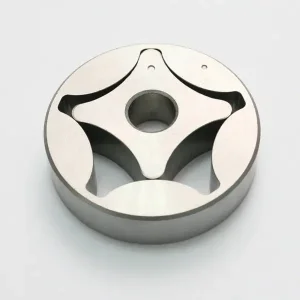
Ideal for medium-to-large high-volume structural components (spur/helical gears, pulleys, oil pump rotors) pressed along a single axis up to 150 mm in diameter using 10,000 kN automated presses.
Optimal for lightweight structural housings, electronic enclosures, heat sinks, and decorative components requiring low density, high thermal conductivity, and fine surface finishing.
| Manufacturing Process | Relative Density (%) | Tensile Strength (MPa) | Dimensional Tolerance | Geometric Complexity | Economic Volume (MOQ) |
|---|---|---|---|---|---|
| Metal Injection Molding (MIM) | 96.0% - 99.5% | 550 - 1,650 (Standard dependent) | ±0.3% to ±0.5% (±0.05mm) | Extremely High (3D Undercuts) | 2,000 pcs |
| Press & Sinter PM | 88.0% - 95.0% | 350 - 950 (Post-heat treat) | ±0.1% to ±0.3% (Axial) | Moderate (2.5D Prismatic) | 5,000 pcs |
| Aluminum / Zinc Die Casting | Theoretical Cast Density | 180 - 330 | ±0.1mm - ±0.2mm | High (Thin Wall Housings) | 2,000 pcs |
| 5-Axis CNC Machining | 100% (Solid Wrought Bar) | Base Metal Dependent | ±0.005mm - ±0.01mm | Limited by Tool Access | 1 - 500 pcs (Low Volume) |
| Direct Metal Laser Sintering (DMLS) | 98.5% - 99.8% | Equivalent to MIM/Wrought | ±0.1mm | Infinite (Organic Internal Channels) | 1 - 50 pcs (Rapid Prototype) |
Precision sintering is a highly controlled thermo-chemical and physical transformation. JHMIM implements rigorous step-by-step quality control checkpoints across the entire production timeline.
Spherical elemental or pre-alloyed metal powders (D50 particle sizes ranging from 5µm to 25µm for MIM, and 45µm to 150µm for conventional PM) are blended with proprietary multi-component thermoplastic paraffin/polyolefin binder systems.
Feedstock is injected into multi-cavity hardened tool steel molds using computerized injection units, or compacted under 1,000-ton CNC mechanical/hydraulic presses to produce uniform "green parts" with controlled green density.
Green parts undergo a two-stage extraction process: catalytic or solvent debinding removes the primary binder matrix, creating micro-porous pathways, followed by thermal debinding inside atmosphere-controlled pre-sintering zones.
Components are heated up to 1,380°C under high vacuum, hydrogen (H₂), or endothermic gas atmospheres. Solid-state atomic diffusion closes micro-voids, causing predictable isotropic shrinkage of 15-20% into solid metal.
While near-net-shape sintering fulfills most dimensional features, critical sealing faces, sub-micron bearing bores, and deep lateral threads receive secondary processing: Vacuum Carburizing, Carbonitriding, Steam Treatment (for corrosion/wear barrier sealing), Magnetic Tumbling, PVD Coating, and 5-axis CNC Milling. All finished components undergo automated 100% optical sorting and CMM verification.
JHMIM formulates and sinters materials compliant with MPIF Standard 35, ISO 22068, DIN 30910, and ASTM B883 specifications. Our R&D team collaborates with the Chinese Academy of Sciences (CAS Ningbo) to deliver customized powder chemistries.
17-4PH (UNS S17400): Precipitation-hardened stainless steel delivering yield strengths up to 1,100 MPa after H900 heat treatment. Ideal for high-stress surgical clamps, firearm actuators, and aerospace latches.
316L (UNS S31603): Ultra-low carbon austenitic stainless steel offering superior pitting corrosion resistance in saline and medical environments.
Fe-2Ni, Fe-8Ni, FN-0205, FN-0208: Carburized low-alloy steels designed for high-impact resistance, high dynamic fatigue durability, and extreme tooth-load resistance in automotive timing gears, planetary planetary gearboxes, and heavy power tools.
Ti-6Al-4V (Grade 5) & Ti-CP: Biocompatible, ultra-lightweight titanium alloys for medical implants, aerospace brackets, and luxury wearable frames.
Fe-Si, Fe-Ni (Permalloy): High magnetic permeability soft magnetic materials used in micro-solenoids, actuators, and electronic sensors.
Our engineered sintered metal parts are deployed across demanding global operating environments, satisfying stringent safety, wear, and weight benchmarks.
Under IATF 16949 quality management, JHMIM manufactures Variable Valve Timing (VVT) rotors, oil pump drive gears, transmission synchronizer hub keys, ABS sensor rings, and electric vehicle drive actuator pins. Sintered iron-nickel alloys ensure high fatigue strength under cyclic shock loads.
Surgical endoscopic articulators, laparoscopic grasper jaws, biopsy forcep hinges, and titanium scalpel handles demand surgical-grade surface finishes and zero-toxicity materials. MIM technology permits complex internal articulation channels impossible to mill conventionally.
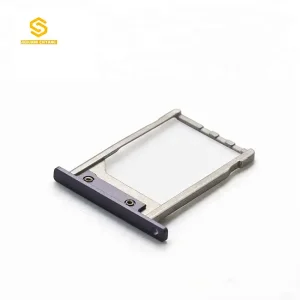
From multi-axis hinges for foldable smartphone screens to high-density stainless steel smartwatch cases, SIM tray ejection mechanisms, and camera bezel rings, JHMIM delivers mirror-polished cosmetic components with tight structural tolerances.
Hardened iron sector gears, high-pressure hydraulic valve spools, sintered stainless steel fluid filter porous discs, and industrial power tool ratchet mechanisms engineered to withstand continuous friction, abrasive media, and thermal stress.
Modern international procurement strategy requires a comprehensive evaluation of material yield, energy consumption, logistics freight, and import tariff tariffs.
Subtractive machining converts up to 60-80% of solid bar stock into waste metal chips. Sintering utilizes almost 98% of virgin powder, insulating OEM buyers from raw material commodity price surges.
By consolidating multi-part subassemblies into a single molded/sintered component, assembly line labor costs drop dramatically, while cutter wear and tool breakage downtime are fully eliminated.
Powder metallurgy is recognized as a green manufacturing technology. Lower processing energy per part and 100% recyclability of internal sprue/runner systems align with global corporate net-zero targets.
To ensure seamless integration into European, North American, and Asian assembly lines, JHMIM enforces a zero-defect quality culture backed by complete documentation and regulatory compliance.
Our quality assurance laboratory is equipped with Zeiss CMMs, Keyence 3D Optical Profilometers, X-ray CT internal void scanners, ICP-OES chemical spectrum analyzers, Metallographic Density Testers, and automated salt-spray corrosion chamber testing. 100% key dimensions are verified prior to export approval.
Full compliance with ISO 9001:2015 and IATF 16949 quality management protocols. Material certificates (EN 10204 3.1), PPAP Level III documentation, REACH, RoHS, and Conflict Minerals declarations are issued standard with every production batch. All shipments feature lot-level MES tracking barcode integration.
Browse additional high-precision parts manufactured for global automotive, gear transmission, and industrial equipment clients.





In-depth answers to key manufacturing, DFM, lead time, and intellectual property questions raised by industrial design engineers and procurement directors.