
Featured Sintered & Molded Metal Products (Part I)
Precision components manufactured under IATF 16949 & ISO 9001 certified processes.





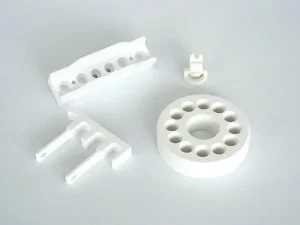

The Landscape of Sintered Metal Manufacturing in China
As global OEMs navigate structural shifts in material efficiency, energy transition, and supply chain resilience, choosing a premier China Sintered Metals Supplier has evolved from a simple cost reduction exercise into a core strategic advantage. Modern powder metallurgy (PM) and Metal Injection Molding (MIM) represent the pinnacle of net-shape manufacturing.
99.5% Material Utilization
Unlike subtractive CNC machining which turns up to 70% of raw billet into scrap metal chips, sintered metal technology compresses fine alloy powders directly into complex geometries, achieving unmatched material utilization and minimal carbon footprint.
High Density & Mechanical Strength
Advanced solid-state and liquid-phase sintering technologies allow modern Chinese manufacturers to achieve component densities exceeding 98-99.5% of theoretical density. This yields tensile strength, fatigue limits, and magnetic permeability comparable to wrought forged metals.
Unprecedented Geometric Freedom
Combining the design flexibility of plastic injection molding with the structural integrity of high-grade stainless steel, titanium, and tool steel alloys, MIM produces multi-axis undercuts, internal threads, and thin-walled features without multi-stage secondary machining.
Global Technology Trends in Powder Metallurgy & Sintered Materials
The global powder metallurgy industry is undergoing a paradigm shift driven by additive manufacturing convergence, advanced atomization techniques, and ultra-high temperature vacuum sintering. Ningbo Jiehuang Chiyang Electronic Tech Co., Ltd. (JHMIM) stands at the forefront of these metallurgical innovations.
1. Nano-Spherical Powder Atomization
Modern powder production relies on gas and plasma atomization yielding perfectly spherical powder particles under 15 microns. This tight particle size distribution enhances flowability, maximizes tap density, and prevents micro-void formation during binder mixing and debinding operations.
2. Titanium MIM (TiMIM) Breakthroughs
Once restricted by high chemical reactivity with oxygen at elevated temperatures, modern vacuum-shielded furnace technologies enable commercial-scale Ti-6Al-4V titanium sintering. TiMIM parts deliver a 45% weight reduction over steel while remaining bio-inert for surgical and aerospace uses.
3. Warm Compaction & High-Pressure Pressing
Utilizing automated 1,000-ton press equipment with heated dies (120°C–150°C), warm compaction increases green density prior to furnace insertion, enabling iron-copper-nickel sintered gears to withstand extreme torsional loads in modern electric drive transmissions.
| Process Metric | Traditional Press & Sinter | Metal Injection Molding (MIM) | Precision Die Casting | 5-Axis CNC Machining |
|---|---|---|---|---|
| Geometric Complexity | Moderate (2.5D shapes) | Extreme (3D complex shapes) | High (Thin-wall housings) | High (Tool access constrained) |
| Material Compatibility | Fe, Cu, Bronze, Ni Steel | 17-4PH, 316L, Ti, W, Tool Steel | Al, Zn, Mg Alloys | Virtually all machinable metals |
| Density Ratio (% Theoretical) | 85% – 92% | 96% – 99.5% | 88% – 95% (Porosity prone) | 100% (Wrought billet) |
| Dimension Tolerance | ±0.05 mm | ±0.01 mm – ±0.03 mm | ±0.05 mm | ±0.005 mm |
| Material Scrap Rate | < 3% | < 2% (Recyclable feedstock) | < 5% (Sprue recycling) | 40% – 85% Scrap waste |
| Economical Mass Volume | > 5,000 units | > 2,000 units | > 2,000 units | 1 – 500 units |
Global Enterprise Procurement: Why Partnering with China Suppliers Works
Procurement executives in North America, Europe, and Japan face continuous pressure to balance component piece prices with absolute quality reliability and supply chain risk mitigation. China's mature powder metallurgy ecosystem offers unparalleled vertical integration.
Complete Ecosystem
From localized elemental powder suppliers to specialized vacuum debinding furnace builders and secondary PVD coating houses, China’s industrial clusters in Ningbo and Zhejiang eliminate cross-border logistics bottlenecks during tooling and sampling.
Rapid Tooling & Prototyping
By pairing internal metal 3D printing (Direct Metal Laser Sintering) with high-speed CNC EDM mold toolmaking, sample prototypes can be delivered in under 10–14 days, accelerating OEM time-to-market dramatically.
Substantial TCO Savings
Converting multi-component assemblies or intricate machined forgings into a single near-net-shape sintered component yields unit cost savings ranging from 30% to 60%, amortizing initial tooling costs within first-run production batches.
IP & Confidentiality Guarantee
Leading suppliers operate under strict enterprise security frameworks, offering legally enforceable non-disclosure agreements (NDAs) and digital file encryption to safeguard original customer CAD models and proprietary designs.
Metallurgical Engineering: Material Grades & Sintering Kinetics
Understanding the microstructural phase transformations during liquid-phase and solid-state sintering is vital for matching alloy performance to end-use mechanical stress.
17-4PH Stainless Steel (UNS S17400)
A martensitic precipitation-hardening stainless steel providing high strength, hardness, and excellent corrosion resistance. Sintered 17-4PH components undergo H900 or H1070 heat treatments to reach tensile strengths exceeding 1,150 MPa, making them ideal for surgical jaws, automotive actuators, and firearm parts.
316L Stainless Steel (UNS S31603)
Austenitic stainless steel with elevated molybdenum content, offering superior pitting corrosion resistance in chloride environments. With high ductility and non-magnetic characteristics, MIM 316L is widely used in smartwatch cases, marine hardware, and implantable medical housings.
Fe-Ni-Cu Structural Steels (MPIF 35)
Engineered iron-nickel-copper powder blends designed for press-and-sinter power transmission gears. Controlled thermal debinding followed by belt furnace sintering yields homogeneous grain structures capable of undergoing induction hardening for heavy-duty gear teeth.
The Three Sintering Phases Explained by JHMIM Senior Engineers
1. Solvent & Thermal Debinding: Paraffin wax and polymer binders are extracted using chemical solvent wash followed by thermal degradation in a nitrogen atmosphere at 400°C–600°C.
2. Neck Formation & Solid-State Diffusion: As temperature rises to 85% of absolute melting point (1200°C–1380°C), atomic diffusion occurs across contact points between powder particles, initiating pore sphere-ization.
3. Pore Elimination & Grain Growth: Prolonged isothermal holding minimizes grain boundary void volume, resulting in isotropic mechanical properties and uniform volumetric shrinkage (typically 15%–20%).
Macro Industry Solutions & Application Engineering
JHMIM engineers customized powder metallurgy and die casting solutions tailored to the strict validation requirements of modern high-tech sectors.
Automotive & Electric Vehicles
Variable Valve Timing (VVT) rotors, turbocharger vanes, electric parking lock gears, seat recliner mechanisms, and sensor housings manufactured under IATF 16949 quality control systems.
Medical & Surgical Devices
Biocompatible 316L and Ti6Al4V endoscopic grasper jaws, surgical stapler components, orthopedic tool heads, and dental bracket fixtures requiring high cleanroom compliance and precision micro-tolerances.
Consumer Electronics
Ultra-thin foldable smartphone hinges, smartwatch titanium bezels, fiber optic connector sleeves, and audio driver housings finished with mirror polishing or PVD decorative coatings.
Industrial Equipment & Tools
Heavy-duty planetary gearboxes, hydraulic pump valve plates, power tool clutch ratchets, and wear-resistant tungsten carbide nozzles built to endure extreme friction and cyclic loading.
Quality Assurance, Regulatory Compliance & Localized Engineering Support
Seamless international procurement requires strict adherence to global engineering compliance, transparent documentation, and localized communication channels.
Comprehensive Quality Control
Our quality management center features Zeiss 3D Coordinate Measuring Machines (CMM), Keyence optical profile measurement systems, metallographic grain structure analyzers, and inductively coupled plasma (ICP) spectrometers for raw powder verification.
Regulatory Compliance
All materials produced by Ningbo Jiehuang Chiyang Electronic Tech Co., Ltd. comply strictly with international EU REACH, RoHS, and Conflict Minerals regulations, backed by downloadable material safety datasheets (MSDS) and full heat lot traceability.
Dedicated OEM Logistics & Support
With multi-lingual engineering sales leads fluent in English and German, we provide 24/7 DFM (Design for Manufacturability) support, streamlined DDP/FOB shipping options, and inventory buffer stocking programs for key tier-1 clients.
Featured Sintered & Molded Metal Products (Part II)
Explore our full suite of custom powder metallurgy, die casting, and MIM solutions.



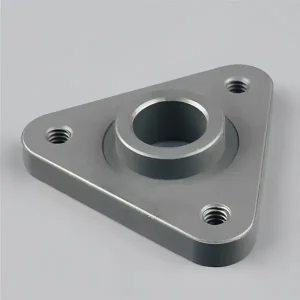


Technology Roadmap & Future Industry Outlook (2025–2030)
The next decade will see complete digitalization of the powder metallurgy sintering thermal loop, expanding into hybrid additive-sintering processes and green zero-carbon production methods.
AI-Powered Finite Element Simulation
Integrating FEA simulation software during mold design allows engineers to predict volumetric binder burnout rates and isotropic shrinkage distortions down to 5-micron precision, eliminating manual mold iteration cycles.
Micro-MIM (Parts < 0.1 Grams)
Driven by surgical robotics and micro-optics, Micro-MIM leverages sub-micron ultrafine metal powders to produce pinhead-sized gear teeth and fluidic valves with wall thicknesses down to 50 micrometers.
Green Hydrogen Sintering
Replacing traditional cracked ammonia or natural gas atmosphere furnaces with green hydrogen loops eliminates carbon monoxide emissions during debinding, helping global OEMs achieve Scope 3 supply chain decarbonization.
Frequently Asked Questions (FAQ) - Sintered Metals Procurement
Deep-dive technical answers to help engineering and sourcing teams evaluate sintered metal suppliers.
Accelerate Your Product Design with China's Premier Sintered Metal Supplier
Submit your 2D drawings (PDF) and 3D CAD models (STEP/IGES) for a free, comprehensive DFM review and detailed price quotation within 48 hours.
Strict NDA Enforcement Protection | IATF 16949 Certified | Global Express Logistics