
Featured Sintered Components & Precision Hardware
Explore high-density OEM sintered parts manufactured to strict ISO 9001 and IATF 16949 standards with automated compaction and atmosphere-controlled sintering furnaces.







1. Global Macroeconomic & Industrial Landscape of Sintered Parts
The global demand for high-precision, structural metal components is undergoing a foundational paradigm shift. Advanced mechanical assemblies across automotive electrification, medical technology, robotics, aerospace, and industrial automation increasingly require intricate geometric profiles with stringent dimensional tolerances. Traditional subtractive manufacturing (5-axis CNC milling, turning, hobbing) is plagued by escalating raw material scrap rates, excessive tool wear on tough alloys, and protracted cycle times.
As a near-net-shape processing technology, powder metallurgy (PM)—encompassing press-and-sinter powder compacting and Metal Injection Molding (MIM)—has emerged as the premier solution for global OEMs seeking to optimize Total Cost of Ownership (TCO) while achieving structural integrity comparable to wrought metal standards.
In today's global supply chain environment, international buyers face rising labor overheads and energy volatility in Western markets. Consequently, tier-1 industrial procurement directors are re-engineering their supplier matrices toward specialized Chinese powder metallurgy clusters. China’s advanced sintered part ecosystem combines raw material synthesis (spherical water/gas atomized powders) with high-tonnage automated pressing infrastructure and state-of-the-art continuous vacuum sintering technology.
2. China’s Factory 4.0: Supply Chain Resilience & Manufacturing Engineering
Modern Chinese sintered part manufacturers have evolved far beyond basic low-cost volume output. Leading suppliers in coastal industrial hubs such as Ningbo and Zhejiang have integrated Industry 4.0 IoT frameworks, smart batch monitoring, and automated robot-assisted part loading. This transformation ensures unmatched batch-to-batch consistency and complete metallurgical traceability.
High-Tonnage CNC Compaction
Equipped with 100-ton to 1,000-ton (10,000 kN) multi-level hydraulic and mechanical press systems capable of compacting complex multi-step gears, pulleys, and asymmetrical structural components with uniform green density distribution.
Precision MIM & Debinding
State-of-the-art solvent and catalytic debinding units paired with high-vacuum sintering furnaces for stainless steel (17-4PH, 316L), titanium alloys (Ti-6Al-4V), and tungsten heavy alloys, achieving densities up to 98% of theoretical maximum.
In-House Tooling & DFM
Full computer-aided Engineering (CAE) mold flow simulation and wire-EDM/CNC tool-making facility. Our senior engineers conduct free Design for Manufacturability (DFM) reviews to prevent stress concentrations and shrinkage distortion.
Technical Standard & Material Performance Matrix
Below is a technical comparison of standardized powder metallurgy material compositions and mechanical performance ratings used in high-load industrial applications:
| MPIF / ISO Standard | Common Material Grade | Sintered Density (g/cm³) | Tensile Strength (MPa) | Yield Strength (MPa) | Primary Industrial Application |
|---|---|---|---|---|---|
| MPIF 35: FC-0208 | Iron-Copper Steel | 6.8 - 7.2 | 420 - 650 | 350 - 500 | Automotive gears, engine sprockets, power tool drive components |
| MPIF 35: FN-0205 | Nickel-Steel Alloy | 7.0 - 7.4 | 550 - 880 | 400 - 650 | High-torque planetary gears, oil pump rotors, structural brackets |
| MPIF 35: MIM-316L | Austenitic Stainless Steel | 7.5 - 7.7 | 480 - 550 | 180 - 240 | Medical instruments, food processing machinery, marine hardware |
| MPIF 35: MIM-17-4PH | Precipitation Hardened SS | 7.5 - 7.7 | 900 - 1150 | 750 - 950 | Lock mechanisms, aerospace latch components, surgical handles |
| ISO 5755: CTG-1001 | Sintered Bronze / Copper | 6.2 - 6.6 | 180 - 220 | 100 - 140 | Self-lubricating sleeve bearings, motor shaft bushings, wear plates |
3. Industry-Specific Applications for Sintered Metal Parts
Sintered metal technologies are versatile engineering solutions. Depending on component geometry, mechanical load profiles, and chemical exposure, Chinese factories provide tailored manufacturing routes across four principal industrial sectors:
Automotive & Electric Vehicles (EV)
Sintered parts play a dominant role in modern powertrains and steering systems. Typical components include Variable Valve Timing (VVT) rotors and vanes, belt tensioner pulleys, transmission synchronizer rings, EPS electric power steering gears, and ABS sensor rings.
Medical Instruments & Surgical Handpieces
Medical-grade MIM processes utilizing 316L and 17-4PH stainless steel produce precise micro-scale surgical components such as endoscopic jaw clamps, scalpel handle mounts, orthopedic drill housings, and orthodontic brackets with complex organic contours.
Industrial Power Tools & Smart Hardware
Power tool planetary gearboxes require exceptional yield strength and wear resistance. Sintered iron-copper and nickel-alloy gears undergo specialized steam treatment and induction hardening to endure severe torsional shocks in cordless drills and impact wrenches.
4. Technical Selection: Choosing Between Sintering, MIM, CNC & Die Casting
Selecting the appropriate manufacturing process is vital to avoiding cost overruns and material failures. Below is an engineering evaluation framework to assist procurement specialists and design engineers in identifying the optimal process path based on part weight, geometric complexity, and annual volume.
| Manufacturing Process | Ideal Weight Range | Geometric Complexity | Dimensional Tolerance | Economical MOQ | Material Capabilities |
|---|---|---|---|---|---|
| Powder Metallurgy (PM) | 10g - 2.5kg | Medium (2.5D shapes, multi-step shafts, spur gears) | ±0.03mm - ±0.08mm | 5,000+ pcs | Iron, Copper, Bronze, Alloy Steels, Soft Magnetic Alloys |
| Metal Injection Molding (MIM) | 0.2g - 250g | Very High (3D undercuts, internal threads, micro-wall) | ±0.05mm - ±0.10mm | 2,000+ pcs | Stainless Steels (316L, 17-4PH), Titanium, Tool Steels |
| CNC Machining | Any size | Medium to High (Tool-access dependent) | ±0.005mm - ±0.02mm | 1 - 500 pcs | All machinable metals, Aluminum, Brass, Titanium, Steels |
| Aluminum / Zinc Die Casting | 50g - 15kg | High (Thin-walled housings, deep cavities, cooling fins) | ±0.10mm - ±0.20mm | 2,000+ pcs | Aluminum Alloys (ADC12, A380), Zinc Alloys (Zamak 3, 5) |
Additional Specialized Sintered & Molded Components
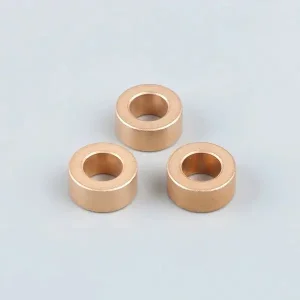
Browse our extended product portfolio featuring high-precision sintered sleeve bearings, custom MIM structural gears, stainless steel components, and die-cast spare parts.




5. Rigorous Quality Control Framework & Certification Standards
Evaluating cross-border suppliers requires transparent evidence of quality management systems. Premier Chinese suppliers operate under internationally recognized automotive and industrial quality management frameworks, guaranteeing zero-defect delivery across large production batches.
Certifications & System Audits
Facilities maintain certified IATF 16949:2016 (Automotive Quality System) and ISO 9001:2015 standard accreditation. Full PPAP (Production Part Approval Process) Level 3 documentation, including FMEA, Control Plans, and Process Capability Studies (Cpk > 1.67), is supplied with new tool sampling.
Metrology & Advanced Lab Inspection
Quality labs feature Zeiss 3D Coordinate Measuring Machines (CMM), optical vision profile projectors, X-ray flaw detection for internal void analysis, carbon-sulfur analyzers, and density testing instruments based on Archimedes' principle.
Secondary Operations & Finishing
In-house post-sintering secondary processing capabilities include high-precision CNC sizing/coining, resin impregnation for fluid sealing, steam blackening treatment, induction heat treatment, surface tumbling, and PVD coating.
6. Frequently Asked Questions (FAQ) - Sintered Parts Sourcing
Address key technical, logistical, and commercial inquiries regarding powder metallurgy and metal injection molding procurement from China.
Optimize Your Supply Chain With Precision Sintered Solutions
Send your engineering drawings today to receive a comprehensive Design for Manufacturability (DFM) assessment and an itemized commercial quotation within 48 hours. Secure direct factory pricing, certified material quality, and reliable international delivery.