
Featured Sintered & Molded Metal Products (Batch 1)
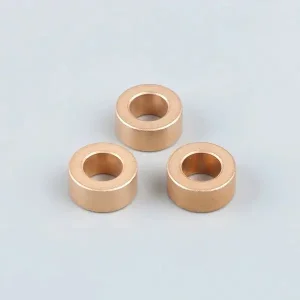
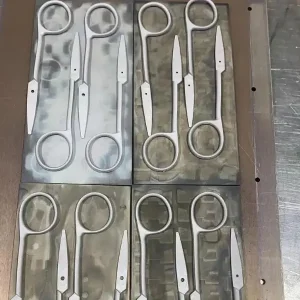
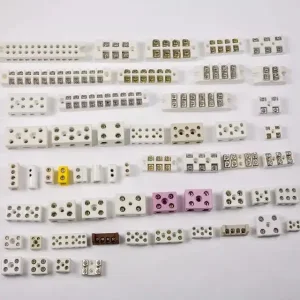
Explore primary OEM powder metallurgy components, sintered iron gear sets, bronze sleeve bearings, and surgical handles manufactured under IATF 16949 quality controls.





Executive Summary: Engineering Science of Sintered Powdered Metal
Powder metallurgy (PM) and Metal Injection Molding (MIM) represent the pinnacle of net-shape alloy fabrication. By bypassing conventional melting and machining, China's leading PM factories achieve high material utilization (>95%), controlled micro-porosity, and extraordinary mechanical repeatability.
Solid-State vs. Liquid-Phase Sintering
Sintering is a thermal process where compacted metallic particles coalesce below their principal melting point. In Solid-State Sintering, atomic diffusion occurs across contact points via surface, grain boundary, and volume diffusion mechanisms. In contrast, Liquid-Phase Sintering (LPS) introduces a lower-melting alloy additive that melts during thermal holding, capillary action pulling solid grains together to eliminate residual pores, reaching density levels exceeding 98% of theoretical maximums.
Conventional Press & Sinter vs. MIM
Conventional Press-and-Sinter relies on uniaxial hydraulic compaction of elemental or pre-alloyed powders (100–150 μm particle size) inside hardened tool steel dies, achieving 2.5D geometries ideal for gears and bushings. Metal Injection Molding (MIM) blends fine powder (<20 μm) with thermoplastic binders, enabling 3D complex shapes similar to plastic injection molding, reaching wrought-like mechanical properties after debinding and high-temperature vacuum sintering.
Pore Topology & Tribological Control
Uniquely, powder metallurgy enables micro-porosity manipulation. Open, interconnected porosity (15–25 vol%) allows vacuum-impregnation with synthetic lubricants to produce self-lubricating bronze sleeve bearings. Closed porosity (<3 vol%), achieved through repressing, warm compaction, or Sinter-HIP, yields fatigue strength comparable to forged carbon steel, suitable for automotive transmission gears.
Metallurgical Performance Matrix: Common Sintered Alloy Grade Specifications
| Material Class | MPIF / DIN Grade | Sintered Density (g/cm³) | Tensile Strength (MPa) | Yield Strength (MPa) | Primary Industrial Application |
|---|---|---|---|---|---|
| Sintered Iron-Copper Steel | MPIF FC-0208-50 | 6.8 - 7.2 | 450 - 650 | 350 - 480 | Automotive timing gears, power tool pinions |
| Austenitic Stainless Steel | MIM 316L / DIN 1.4404 | 7.6 - 7.9 | 520 - 580 | 200 - 250 | Medical surgical tools, mini ball valves, fluid hardware |
| Martensitic Stainless Steel | MIM 17-4PH / DIN 1.4542 | 7.5 - 7.8 | 1100 - 1300 | 950 - 1100 | High-stress aerospace latches, lock mechanisms, weapon parts |
| Sintered Oil-Retaining Bronze | MPIF CT-1000-K26 | 6.4 - 6.8 | 180 - 220 | 110 - 140 | Self-lubricating sleeve bushings, micro-motor bearings |
| Titanium Alloy | Ti-6Al-4V (Ti-Grade 5) | 4.35 - 4.45 | 880 - 980 | 790 - 860 | Biomedical implants, aerospace brackets, titanium scalpel handles |
China Factory 4.0: Supply Chain Resilience & Cost Optimization
China’s powder metallurgy industry has evolved beyond low-cost labor into a technology-driven manufacturing ecosystem. Integrating automated compaction, real-time IoT atmosphere furnaces, and localized raw material atomization networks ensures unparalleled resilience.
High-Precision CNC & Servo Compactors
Modern Chinese factories utilize multi-axis fully electric servo-hydraulic pressing systems (ranging from 10 tons to 1000 tons). Multi-plate tool adapters permit independent movement of multiple upper and lower punches, enabling density uniformity across complex multi-step geometries without density gradients or green cracks.
Continuous Gas-Controlled Sintering Lines
Equipped with computerized mesh-belt continuous furnaces and vacuum debinding-sintering integrated units, atmosphere zones are controlled using purified Hydrogen, Dissociated Ammonia, or Argon gas. Real-time dew point measurement (<-50°C) prevents decarburization and oxidation, ensuring pristine metallic bonding.
Complete Upstream Raw Material Ecosystem
Proximity to domestic water atomization and gas atomization powder production clusters reduces raw material lead times to days. Custom alloy masterbatches (Fe-Ni, Fe-Cu, Stainless, Tool Steels, Titanium powders) are compounded in-house with proprietary binder formulations, lowering overall unit manufacturing costs by 30-50%.
Technology Roadmap & Future Innovations (2025–2035)
The powder metallurgy landscape is rapidly evolving to meet next-generation industrial demands. Chinese advanced factories are leading breakthroughs in Sinter-HIP densification, additive powder hybridization, micro-sintering, and decarbonized green metallurgy.
1. Sinter-HIP & Ultra-High Temperature Sintering
By combining vacuum sintering with integrated Hot Isostatic Pressing (Sinter-HIP) at pressures up to 10 MPa in argon atmosphere, internal micro-voids are completely collapsed. Furthermore, ultra-high temperature sintering (>1350°C) accelerates pore rounding and grain growth, granting dynamic fatigue endurance required for aerospace turbine brackets and high-torque EV reduction gears.
2. Convergence of Binder Jetting (BJT) & PM
Additive manufacturing via Metal Binder Jetting (BJT) bridges the gap between prototyping and mass production. Using similar spherical powders as MIM, BJT eliminates custom hard tooling costs for low-to-medium batch sizes while sharing the same debinding and sintering furnace infrastructure, allowing seamless transition from rapid prototype to mass MIM tooling.
3. Micro-Sintering & Titanium MIM (TiMIM)
The rise of wearable technology and minimally invasive surgical robotics demands sub-millimeter component geometries. Micro-MIM utilizes nano-scale metallic powders and specialized micro-injection molding screws, holding structural features down to 0.05mm wall thickness. Additionally, Titanium MIM (TiMIM) processing prevents oxygen pickup, meeting stringent ASTM F2885 bio-medical standards.
4. Green Metallurgy & Zero-Carbon Sintering
Aligning with global ESG mandates, premier Chinese manufacturers are adopting green powder metallurgy practices. This includes catalytic debinding using bio-derived solvents, green hydrogen-fueled sintering furnaces, continuous waste-heat recycling loops, and re-atomized recycled scrap metal powders, cutting carbon emissions per kilogram of metal produced by over 60%.
Macro Industry Solutions & Turnkey Engineering Applications
Tailored powder metallurgy solutions designed specifically to address mission-critical operating environments across demanding global industries.
Automotive & E-Mobility
Mass production of Variable Valve Timing (VVT) rotors, oil pump gears, electric power steering (EPS) lock sleeves, wiper motor gears, and planetary gearboxes. High fatigue resistance achieved through sinter-hardening and surface plasma nitriding.
Medical & Biotech Tools
Fabrication of biocompatible MIM 316L and Titanium (Ti-6Al-4V) components including laparoscopic grasper jaws, scalpel handles, dental bracket bases, and orthopedic joint articulation hardware with 100% full-density surface finish options.
Consumer Electronics & 5G
Ultra-thin foldable smartphone hinges, smart wearable watch cases, camera module brackets, and optical fiber connector housings made from nickel-iron soft magnetic alloys and high-polish stainless steels.
Heavy Industrial & Power Tools
Heavy-duty impact wrench anvils, bevel gears for angle grinders, mini stainless steel ball valves, hydraulic pump gerotors, and porous oil-impregnated bronze sleeve bearings engineered for extreme shock loads.
Global OEM Procurement & Total Cost of Ownership (TCO) Framework
When sourcing sintered powder metal parts from China, overseas Procurement Directors must evaluate total value, taking tooling amortization, Design for Manufacturability (DFM) yields, and quality compliance into account.
1. Tooling Amortization Strategy
High-volume PM production utilizes Tungsten Carbide die inserts capable of exceeding 1,000,000 stroke cycles. For lower volumes or initial market testing, high-chromium tool steel (Cr12MoV or D2) molds lower upfront capital expenditure (CAPEX) by up to 60%. At volume thresholds (>50,000 units/year), tooling costs drop to negligible fractions of unit price.
2. DFM Rules for Cost Reduction
Optimizing geometry for powder compaction yields drastic savings:
- Avoid sharp perpendicular corners; incorporate a minimum 0.2mm radius to prevent punch chipping.
- Maintain uniform wall thicknesses to prevent differential thermal shrinkage during sintering.
- Ensure die-ejection draft angles (1° to 2°) are integrated on outer vertical surfaces.
3. Secondary Operation Evaluation
While sintered parts emerge near-net-shape, critical bearing surfaces or sub-micron threads may require secondary processing. Evaluating automated CNC sizing (coining), magnetic tumbling deburring, induction surface hardening, or vacuum oil impregnation ensures optimal balance between unit piece price and functional assembly demands.
Quality Management, Compliance & Global Logistics
Rigorous metallurgical validation guarantees that every shipment delivered to North American, European, and Asian tier-1 clients complies with international industrial standards.
Certifications & Quality Management
Full adherence to IATF 16949 (Automotive Quality Standard), ISO 9001, and ISO 13485 (Medical Devices). Full APQP project management and PPAP Level 3 documentation (including Control Plans, FMEA, MSA, and Capability Studies Cpk > 1.67) provided for all automotive orders.
Advanced Laboratory Inspection
In-house quality labs equipped with ZEISS 3D Coordinate Measuring Machines (CMM), Optical Profile Projectors, Metallographic Grain Structure Analyzers, X-ray Fluorescence (XRF) material analyzers, ASTM B276 Porosity Testing, and Density Determination balances.
Environmental Compliance & IP Protection
Strict compliance with EU REACH, RoHS directives, and Conflict Minerals regulations. Complete intellectual property protection reinforced by enforceable Non-Disclosure Agreements (NDAs), encrypted file management, and segregated customer mold storage vaults.
Featured Sintered & Molded Metal Products (Batch 2)
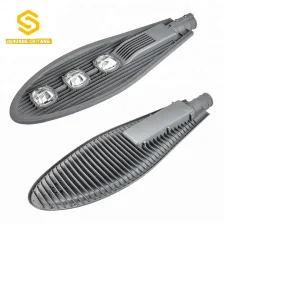
Explore secondary OEM powder metallurgy assemblies, die casting lighting housings, MIM stainless steel parts, wiper motor components, and engine cylinder casting blocks.





Frequently Asked Questions (FAQ) & Technical Insights
Expert technical answers to essential procurement, design, and manufacturing queries regarding sintered metal components from China.
Request a Technical DFM Review & Quote Today
Partner with China’s premier sintered powder metal manufacturer. Send us your 2D (PDF) and 3D (STEP) CAD drawings to receive a comprehensive Design for Manufacturability (DFM) assessment and itemized quotation within 48 hours.