
The Evolution of High-Density Sintered Stainless Steel Components
The global manufacturing ecosystem is currently undergoing a structural transformation toward energy-efficient, net-shape component production. At the center of this movement is sintered stainless steel technology—a precision metallurgical process that bridges the gap between raw powder chemistry and high-performance structural components. Powder metallurgy (PM) and Metal Injection Molding (MIM) utilizing stainless steel powders (predominantly 316L, 17-4PH, 304L, and 420 grades) have transitioned from niche alternative processes to primary design solutions across automotive, medical device, aerospace, and consumer electronics industries globally.
Historically, complex stainless steel parts required multi-axis CNC subtractive machining, leading to material waste exceeding 60%, high tool wear, and excessive energy consumption. Advanced sintering processes overcome these inefficiencies by compacting micro-sized metal powders under extreme pressure and thermal consolidation within vacuum or controlled hydrogen/nitrogen atmosphere furnaces. The resulting sintered components achieve relative densities from 92% to over 98%, unlocking mechanical properties, tensile strength, and corrosion resistance closely matching or exceeding forged materials.
Industry Solutions Showcase
Explore key precision-engineered sintered components manufactured by Tier-1 Chinese suppliers for global OEM applications.








Why China Leads Global Sintered Stainless Steel Production Efficiency
The concentration of precision metal powder metallurgy suppliers in China—particularly in industrial hubs such as Ningbo, Zhejiang, and Guangdong—has established an unprecedented competitive ecosystem. Purchasing managers and engineering leads worldwide leverage Chinese sintering manufacturers not merely for unit cost savings, but for total lead-time reduction, tooling turnaround speeds, and complete vertical integration.
Chinese sintering plants integrate powder synthesis, atomization, custom feedstock formulation, tool design, MIM molding/pressing, vacuum debinding, sintering, and secondary CNC machining under a single roof. This eliminates third-party logistical delays and quality disputes between vendors.
Using advanced Moldflow simulations and in-house wire-EDM/CNC toolrooms, Chinese suppliers complete complex multi-cavity sintering molds in 20 to 30 days—a timeline typically taking 8 to 12 weeks in Western Europe or North America.
Equipped with continuous mesh belt sintering furnaces and multi-atmosphere vacuum debinding furnaces (Cremer, Shimadzu), Chinese factories operate 24/7 automated continuous runs, reducing energy overhead and stabilizing lot-to-lot thermal consistency.
Sintered Stainless Steel Material Grade Benchmarks
Engineering comparison matrix for common sintered stainless steel alloys utilized across MIM and PM manufacturing.
| Grade (MIM/PM) | Microstructure | Sintered Density (g/cm³) | Tensile Strength (MPa) | Yield Strength (MPa) | Hardness | Primary Industrial Application |
|---|---|---|---|---|---|---|
| MIM-316L | Austenitic | 7.60 – 7.80 | 520 – 580 | 200 – 240 | 65 – 75 HRB | Medical instruments, marine hardware, chemical valves, watch cases |
| MIM-17-4PH | Precipitation Hardening | 7.55 – 7.75 | 1,050 – 1,250 (H900) | 950 – 1,100 | 38 – 44 HRC | Aerospace fasteners, auto actuators, firearm parts, surgical jaws |
| MIM-420 | Martensitic | 7.40 – 7.60 | 1,200 – 1,500 | 1,000 – 1,200 | 48 – 54 HRC | Surgical scalpels, wear-resistant gears, cutter blades, lock teeth |
| MIM-304L | Austenitic | 7.55 – 7.70 | 500 – 550 | 210 – 230 | 60 – 70 HRB | Consumer electronics, food-grade filter funnels, shaft sleeves |
| MIM-HK30 | Heat Resistant Austenitic | 7.50 – 7.65 | 550 – 620 | 280 – 320 | 80 – 90 HRB | Engine turbocharger vanes, exhaust components, furnace fittings |
Localized Application Scenarios for Sintered Stainless Steel
How global enterprises deploy sintered parts to solve complex geometry and high-reliability operational demands.
1. Automotive & EV Transmission
Components: Engine oil pump rotors, Variable Valve Timing (VVT) sprockets, ABS sensor rings, turbocharger wastegate levers, and latch lock core fittings.
Requirement: High fatigue strength, tight concentricity (±0.02mm), and resistance to continuous oil degradation at elevated temperatures. MIM 17-4PH and sintered stainless alloys deliver net-shape splines without hobbing.
2. Medical Technology & Surgical Tools
Components: Endoscopic grasper jaws, scalpel blade holders, orthopedic drill guides, and dental surgical tools.
Requirement: Biocompatibility, resistance to repeated autoclave sterilization cycles, and micro-scale detail accuracy. MIM-316L and MIM-420 provide corrosion-free, mirror-polished surface options.
3. Consumer Electronics & 3C
Components: Foldable smartphone hinges, smart watch internal frames, camera ring bezels, and micro gear shafts.
Requirement: Ultra-thin wall sections (down to 0.3mm), high aesthetic appeal, surface plating readiness (PVD, anodizing), and high mechanical yield strength.
4. Fluid Control & Porous Filtration
Components: Drinking water filter funnels, pneumatic silencers, chemical spargers, and flame arrestors.
Requirement: Controlled, uniform pore size structure (ranging from 0.5 to 100 microns) via specialized coarse sintering, providing high mechanical integrity and chemical resistance.
5. Industrial Hardware & Lock Security
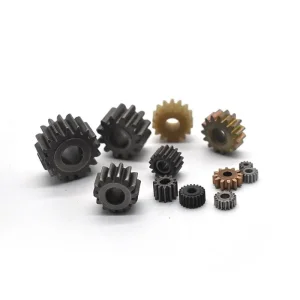
Components: High-security lock cylinders, motor shaft sleeves, planetary gearbox micro gears, and power tool impact pawls.
Requirement: Exceptional wear resistance, anti-pick complex geometry, and high surface hardness post-carburizing or heat treatment.
6. Aerospace & Defense Hardware
Components: Fuel nozzle components, bracket fittings, firearm sights, trigger assemblies, and drone control actuators.
Requirement: Light-weighting via topological optimization, ultra-high tensile strength, and zero internal void defects confirmed by X-ray CT scanning.
Industry Trends Shaping the Future of Powder Sintering
The powder metallurgy landscape is moving rapidly beyond traditional press-and-sinter boundaries. Key technological breakthroughs driven by Chinese OEM factories and global academic partnerships include:
- Micro-MIM Technology: Mass production of metal components weighing less than 0.05 grams with feature sizes below 50 micrometers, targeting micro-robotics and invasive surgical tools.
- Binder Jetting & Sintering Hybridization: Combining 3D Binder Jetting printing with industrial vacuum sintering furnaces to eliminate expensive tooling costs for low-volume, high-complexity prototype production.
- Green & Hydrogen-Based Debinding: Transitioning from chemical solvent debinding to environmentally sustainable thermal catalytic debinding utilizing green hydrogen gas atmospheres, drastically cutting VOC emissions.
- AI-Driven Automated Optical Inspection (AOI): Utilizing inline 3D machine vision and deep-learning visual algorithms to inspect 100% of sintered parts for surface micro-cracks, dimensional drift, and flash defects at high speed.
Global Procurement Checklist: Auditing Chinese Sintering Suppliers
When international procurement teams audit Chinese sintered stainless steel suppliers and factories, fulfilling rigorous Quality Assurance standards is imperative. B2B buyers should evaluate the following key parameters prior to tooling sign-off:
1. Quality Management Systems
Verify active certification for IATF 16949 (Automotive Quality Standard), ISO 9001, and where applicable, ISO 13485 (Medical Devices). Ensure complete trace-ability from raw powder batch numbers to final sintered shipments.
2. Powder Chemical Integrity
Request ICP-OES elemental analysis certificates for nickel, chromium, molybdenum, and carbon content. Carbon control during debinding is critical; excess carbon leads to brittleness, while carbon depletion degrades corrosion resistance.
3. In-House Metrology & Testing
Confirm factory access to Coordinate Measuring Machines (CMM), Optical Profilometers, Density Balance Testers (Archimedes method), Salt Spray Corrosion Test Chambers, and Universal Tensile Testing Machines.
Expanded Sintered Component Portfolio
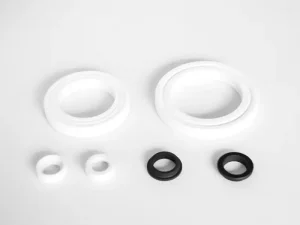
Browse additional high-precision OEM products manufactured with custom metallurgy and state-of-the-art tooling.



Frequently Asked Questions (Sintering Engineering)
Conventional Powder Metallurgy (PM) utilizes uniaxial mechanical pressing of coarse powders, making it ideal for 2D or 2.5D geometric shapes like gears, bushings, and flat plates with high production speeds. Metal Injection Molding (MIM) mixes ultra-fine metal powder with a polymer binder feedstock, injecting it into a mold like plastic. MIM allows fully 3D complex geometries—such as internal threads, cross-holes, undercuts, and thin walls—achieving higher relative density (>96%).
When sintered under high-vacuum conditions (10⁻³ mbar or higher) with pure hydrogen backfill, sintered 316L achieves a density of 7.65–7.80 g/cm³ (over 97% of wrought theoretical density). Because surface interconnected porosity is eliminated, its salt spray corrosion resistance (ASTM B117) frequently exceeds 480–720 hours without red rust, matching wrought stainless steel performance.
During the thermal sintering cycle, binder removal leaves a porous skeleton that consolidates as temperatures approach the liquidus line. Linear shrinkage typically ranges between 12% and 18% depending on powder loading and alloy formulation. Chinese OEM tooling engineers factor this exact volumetric shrinkage factor into CAD cavity design to guarantee net tolerances of ±0.3% to ±0.5% as-sintered.
Yes. Martensitic (MIM-420) and precipitation-hardening (MIM-17-4PH) grades respond exceptionally well to standard heat treatments (such as H900, H1025 conditioning or vacuum quenching) to achieve hardness up to 52 HRC. Furthermore, high-density sintered stainless steel can be hand-polished, electropolished, PVD coated, passivation treated, or CNC machined for ultra-critical tolerances (±0.005mm).
To receive a detailed DFM report and transparent cost breakdown within 48 hours, buyers should provide 3D CAD models (STEP, IGES, or X_T format) alongside 2D technical drawings (PDF) specifying critical dimensions, material grade (e.g., 316L, 17-4PH), target density, annual order volume, and secondary finishing requirements.
For custom MIM stainless steel components, typical production MOQs start at 2,000 to 5,000 pieces per batch to optimize setup efficiency. Tooling build and initial T1 sample delivery take approximately 25 to 35 days. Mass production lead times typically range from 2 to 4 weeks depending on batch size and post-processing steps.