
High-Precision Hardware & Thermal Sensor Sheath Solutions
Explore our custom manufacturing capabilities engineered for high-temperature thermal management, powder metallurgy, and complex industrial OEM applications.
Engineering Excellence in Thermocouple Protection Tubes
In modern industrial process control, accurate pyrometry relies heavily on the structural integrity and thermal responsiveness of thermocouple protection tubes under hostile conditions.
The Role of Protective Sheathing in Severe Process Conditions
Thermocouples—whether Type K, N, R, S, or B—are sensitive temperature-measuring devices composed of dissimilar metal wires joined at a sensing junction. Exposed directly to molten non-ferrous alloys, aggressive chemical vapors, high-velocity particulate gas streams, or extreme thermal shocks above 1400°C, bare thermocouple wires suffer rapid mechanical failure, thermal degradation, and sensor drift due to oxidation or chemical contamination.
A thermocouple protection tube serves as a gas-tight, mechanical, and chemical barrier. Selecting the right thermocouple protection sheath ensures consistent thermal conductivity while isolating the sensor from corrosive slag, molten zinc/aluminum, reducing or oxidizing furnace atmospheres, and intense mechanical pressure.
Why Global Procurement Chiefs Source from China Suppliers
China has emerged as the global nexus for advanced material synthesis, combining dense industrial clusters in Zhejiang, Jiangsu, and Shandong with complete supply chains for high-purity ceramic powders (Alumina Al₂O₃, Silicon Nitride Si₃N₄, Silicon Carbide SiC) and high-temperature superalloys (Inconel, Molybdenum, Tungsten-Rhenium).
Leading China thermocouple protection tube suppliers leverage automated cold isostatic pressing (CIP), slip casting, ceramic injection molding (CIM), and high-pressure sintering (HIP) to achieve near-theoretical density. This advanced process control yields exceptional resistance to thermal shock, flexural strength over 800 MPa, and extended operational lifespans at a fraction of the total cost of ownership (TCO) compared to traditional Western producers.
Material Engineering Specifications Matrix: Ceramic vs. Alloy Sheaths
Different thermal applications require distinct material matrices. Below is an engineering comparison of the primary materials used in China-manufactured thermocouple protection tubes.
| Material Classification | Max Operating Temp (°C) | Thermal Shock Resistance | Chemical Corrosion Resistance | Primary Industrial Application | Gas-Tightness Rating |
|---|---|---|---|---|---|
| High-Purity Alumina (Al₂O₃ 99.7%) | 1700°C - 1800°C | Moderate | Excellent against acidic gases & oxidizing environments | Laboratory kilns, glass melting, precious metal pyrometry | 100% Hermetic / Gas-Tight |
| Silicon Nitride (Si₃N₄) | 1400°C - 1500°C | Outstanding | Non-wetting to molten aluminum, zinc, and non-ferrous alloys | Aluminum smelting, continuous casting, low-pressure die casting | High Pressure Density |
| Silicon Carbide (RSiC / NBSiC) | 1600°C - 1650°C | Excellent | High erosion & abrasion resistance in particulate gas streams | Waste incineration, cement kilns, fluidized bed boilers | Porous (Requires inner tube) |
| Zirconia Toughened Alumina (ZTA) | 1500°C - 1600°C | High | Superior impact & mechanical stress resistance | Petrochemical reactors, high-velocity gas burners | Hermetic / Dense |
| Inconel 600 / 601 Superalloy | 1150°C - 1250°C | Superior | Resistant to carburization and nitriding atmospheres | Heat treatment furnaces, annealing lines, petrochemical piping | 100% Seamless Metallic |
| Molybdenum / Tungsten Alloys | 1900°C - 2200°C | High | Unmatched performance in non-oxidizing vacuum / inert gases | Vacuum sintering furnaces, monocrystalline silicon growth | Hermetic Metallic |
State-of-the-Art Manufacturing & Precision Fabrication
Modern China thermocouple protection tube suppliers utilize computerized material synthesis and strict non-destructive quality checks to guarantee flawless mechanical performance.
1. Isostatic Pressing & CIM Molding
To eliminate internal voids, micro-cracks, and structural density gradients, top-tier Chinese manufacturers employ Cold Isostatic Pressing (CIP) up to 200 MPa or high-precision Ceramic Injection Molding (CIM). This yields uniform wall thickness, high dimensional tolerance, and eliminates mechanical stress points along the longitudinal axis of long protection tubes (up to 2000 mm in length).
2. Atmosphere Controlled Sintering
Sintering is executed in computer-controlled vacuum furnaces, gas-pressure sintering (GPS) chambers, or reducing hydrogen atmosphere kilns at temperatures ranging from 1700°C to 1950°C. Controlled grain growth yields high fracture toughness ($K_{IC} \ge 6.5 \text{ MPa}\cdot\text{m}^{1/2}$ for Silicon Nitride) and prevents pinhole gas leakage across the ceramic envelope.
3. Precision Machining & Threading
Following firing, protection tubes undergo diamond grinding, ultrasonic drilling, and precision CNC threading to accommodate standard industrial fittings (NPT, BSP, G threads, or custom mounting flanges). Closed ends are formed with seamless, hemispherical profiles to ensure uniform heat conduction across the sensor junction without stress concentration.
Macro Industry Solutions & Localized Application Scenarios
Customized thermocouple protection tubes serve as vital components across a diverse range of critical global process industries.
Non-Ferrous Metal Smelting & Aluminum Casting
In molten aluminum, zinc, and copper processing, liquid metal corrosion and flux slag erosion pose severe threats to temperature sensors. China Silicon Nitride ($Si_3N_4$) protection tubes feature a non-wetting surface chemistry that resists chemical attack by molten aluminum alloys up to 1000°C. Their exceptional thermal shock resistance allows direct immersion into molten metal baths without preheating, dramatically reducing furnace downtime and pyrometer replacement frequency in low-pressure die casting (LPDC) foundries.
Petrochemical Processing & Sulfur Recovery Units
Refineries, coal gasification plants, and Claus sulfur recovery units operate under extreme pressures with hydrogen sulfide ($H_2S$) and sulfur dioxide ($SO_2$) gas streams at temperatures exceeding 1300°C. Heavy-wall Inconel 600/601 or dual-sheath Alumina-Silicon Carbide protection tubes withstand severe sulfidation, hydrogen embrittlement, and thermal cycling, preserving thermocouple calibration integrity over multi-year continuous production runs.
Photovoltaic Solar Cell & Semiconductor Wafer Manufacturing
Growing single-crystal silicon ingots (Czochralski process) and diffusion sintering in semiconductor manufacturing require contamination-free furnace environments at temperatures above 1450°C. Ultra-pure 99.7% Alumina ($Al_2O_3$) and Recrystallized Silicon Carbide (RSiC) thermocouple protection sheaths eliminate trace metal ion vapor contamination, maintaining cleanroom standards while providing rapid thermal feedback to automatic PID temperature controllers.
Waste-to-Energy Incinerators & Cement Rotary Kilns
Municipal solid waste incinerators and cement kilns present a harsh combination of high mechanical abrasion from flying clinker particles, molten fly ash slag, and fluctuating corrosive gases ($HCl, SO_x$). Reaction-Bonded Nitride-Coupled Silicon Carbide (NBSiC) protection tubes deliver high Mohs hardness (9.2+) and erosion resistance, protecting sensors located in calciner towers, tertiary air ducts, and combustion chambers.
Global Corporate Procurement: OEM Customization Guide
Evaluating Chinese thermocouple protection tube suppliers requires a systematic verification of engineering capabilities, quality assurance protocols, and OEM compliance.
1. Dimensional & Tolerancing Review
When submitting 2D/3D engineering drawings (STEP, IGES, PDF), verify critical parameters including outer diameter (OD), inner diameter (ID), wall thickness uniformity (eccentricity ≤ 0.05 mm), straightness per meter (≤ 0.5 mm/m), and tip closure thickness to ensure fast thermal response times without compromising mechanical wall strength.
2. Gas-Tightness & Helium Testing
For high-vacuum or hazardous gas applications, insist on 100% Helium Mass Spectrometer Leak Detection ($< 1 \times 10^{-9} \text{ mbar}\cdot\text{L/s}$). Certified China suppliers provide lot-traceable inspection certificates, X-ray flaw detection for internal micro-cracks, and CMM dimensional reporting prior to international dispatch.
3. Supply Chain & Duty Logistics
Leading suppliers offer turnkey export packaging—custom wooden crates with shock-absorbing foam inserts—preventing transit damage during sea or air freight. Inquire about DDP (Delivered Duty Paid) shipping options, custom HS code classification (e.g., HS 6903.90 for refractory ceramic articles), and flexible OEM order quantities.
Frequently Asked Questions by Industrial Engineers
Expert responses to critical questions regarding Thermocouple Protection Tube selection, installation, material limits, and custom ordering.
Explore Full Sintered & Die Cast Manufacturing Portfolio
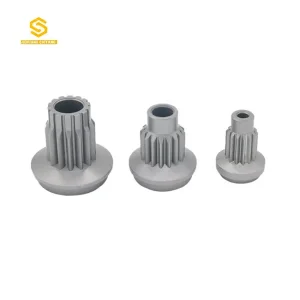
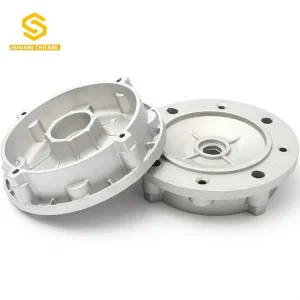
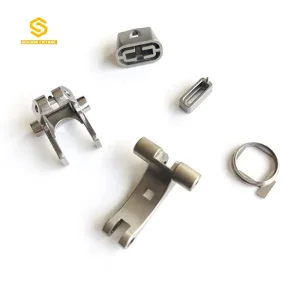
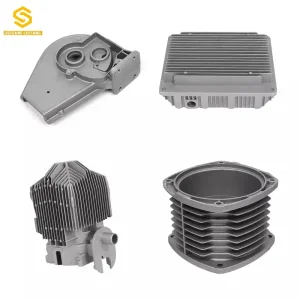
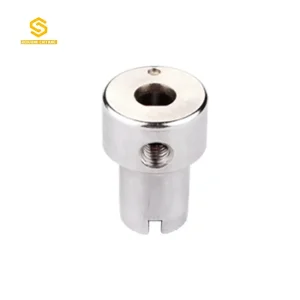
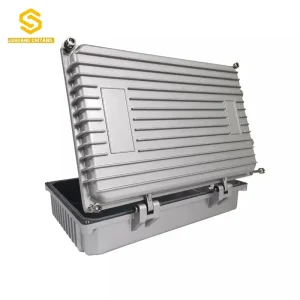
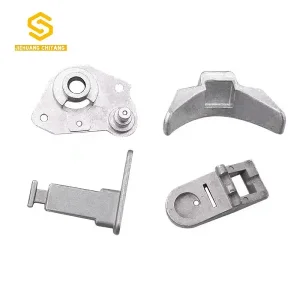
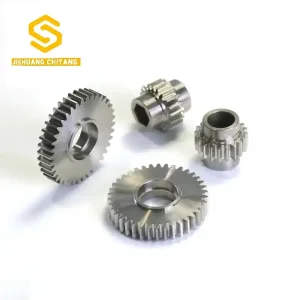
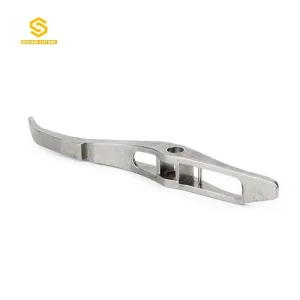
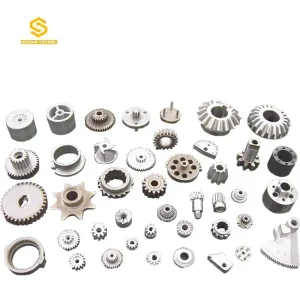
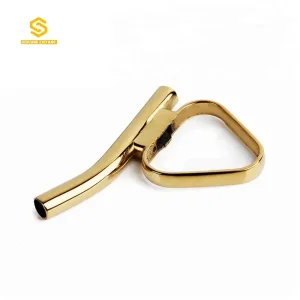
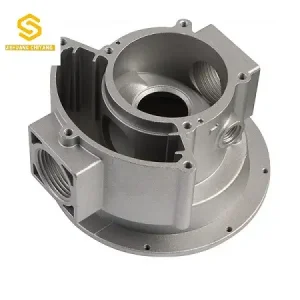
In addition to temperature sensing components, our certified facilities produce precision sintered gears, powder metallurgy hardware, and die cast assemblies.
Request a Free DFM Engineering Review & Quotation
Send us your 2D/3D technical drawings (STEP, PDF, DWG) for custom Thermocouple Protection Tubes, Advanced Ceramics, or Powder Metallurgy components. Our engineering team provides transparent quotations and manufacturability feedback within 48 hours.