
Featured Precision Metal & Metallurgy Solutions
Explore our core manufacturing processes engineered for high-precision medical, automotive, and industrial applications. Standard and customized production capabilities backed by ISO 13485 and IATF 16949 standards.
The Paradigm Shift to Titanium Scalpels in Modern Surgery
As surgical procedures become increasingly delicate, minimally invasive, and integrated with advanced intraoperative diagnostics like MRI (Magnetic Resonance Imaging), the demand for high-performance surgical scalpels has undergone a radical transformation. Traditional carbon steel and stainless steel (such as 420 or 316L) scalpel blades and handles—while cost-effective—present inherent physical limitations, including magnetic interference, higher specific weight, and susceptibility to chemical degradation under aggressive chemical sterilization regimes.
Non-Magnetic Intraoperative MRI Safety
Medical-grade Titanium alloys (Ti-6Al-4V Grade 5 and Grade 23 ELI) exhibit completely paramagnetic/non-magnetic characteristics. In high-field MRI operating theaters (1.5T to 3.0T+), steel scalpels pose severe projectile risks and cause severe image distortion artifacts. Titanium scalpels guarantee 100% intraoperative MRI compatibility, allowing neurosurgeons and cardiovascular specialists to perform real-time image-guided micro-incisions without instrument displacement or thermal heating risk.
Superior Ergonomics & Tactile Sensitivity
With a density of approximately 4.43 g/cm³—roughly 56% that of stainless steel—titanium scalpel handles reduce surgeon hand fatigue during multi-hour micro-surgeries. The lower inertia improves tactile feedback, enabling precise depth control when navigating critical nerve clusters, vascular walls, and delicate ophthalmic structures.
China’s Titanium Scalpel Supply Chain & Factory Capabilities
Securing high-tier medical devices requires more than just standard machining; it demands an integrated industrial chain spanning raw sponge titanium refinement, specialized gas atomization powder production, precision tooling design, and automated cleanroom assembly. Chinese OEM manufacturing hubs offer global enterprise buyers unmatched technical depth and cost efficiency.
1. Raw Material Sourcing & Purity
Anchored near world-class titanium refining centers (such as Baoji Titanium Valley), Chinese scalpel factories utilize vacuum arc remelting (VAR) Grade 5 (Ti-6Al-4V) and Grade 23 (Ti-6Al-4V ELI - Extra Low Interstitial) ingots. This ensures exceptionally low oxygen (<0.13%) and iron content, fulfilling ASTM F136 specifications for implantable and surgical instrument applications.
2. TiMIM vs. Micro-CNC Dual Technology
Leading Chinese suppliers leverage two complementary manufacturing routes: Titanium Metal Injection Molding (TiMIM) for ultra-complex, high-volume ergonomic scalpel handles with internal channels, and 5-axis Swiss CNC precision turn-milling for ultra-sharp micro-blade holders and specialized surgical adapters.
3. Scale Economy & Cost Compression
By vertically integrating mold building, debinding, vacuum sintering, electropolishing, and anodizing under one roof, Chinese OEM factories reduce unit production costs by 30% to 50% compared to Western manufacturers without compromising ISO 13485 quality compliance.
Metallurgical Deep-Dive: Titanium Alloys vs. Conventional Steel
Selecting the ideal alloy for surgical scalpel manufacturing involves balancing yield strength, fracture toughness, biological inertness, and wear resistance. Below is an engineering comparison matrix evaluated under medical compliance standards.
| Material Parameter | Titanium Ti-6Al-4V ELI (Grade 23) | Commercial Pure Titanium (Grade 2) | Stainless Steel (316L Medical) | Surgical Carbon Steel (Fe-C) |
|---|---|---|---|---|
| Density (g/cm³) | 4.43 | 4.51 | 7.98 | 7.85 |
| Tensile Strength (MPa) | 860 - 960 | 480 | 580 - 680 | > 1000 |
| Yield Strength (MPa) | 790 | 345 | 290 | 850 |
| Magnetic Permeability (µ) | 1.00005 (Paramagnetic) | 1.00005 (Paramagnetic) | 1.008 - 1.05 (Slightly Ferromagnetic) | > 100 (High Ferromagnetic) |
| Biocompatibility (ISO 10993) | Class VI / Excellent | Class VI / Excellent | Moderate (Nickel Release Risk) | Poor (Corrosion Prone) |
| Autoclave Sterilization Life | > 1,000 Cycles | > 1,000 Cycles | ~ 300 Cycles (Pitting Risk) | Single-Use Only |
| Surface Anodization Options | Full Color Spectrum (Type II/III) | Color Anodizable | Passivation / Coating Only | Black Oxide / Uncoated |
Manufacturing Methodology: TiMIM vs CNC Machining
For complex surgical scalpel handles featuring quick-release bayonet mechanisms, ergonomic knurling, internal balance weights, and custom laser-engraved identification, Titanium Metal Injection Molding (TiMIM) is the optimal solution for high-volume orders (>2,000 units). TiMIM achieves complex 3D net-shape geometries that are impossible or cost-prohibitive via traditional machining.
- Gas-Atomized Ti Powder Feedstock: Spherical powder (<45µm) mixed with polyolefin binder systems.
- High-Vacuum Debinding & Sintering: Sintered at 1250°C–1350°C in 10⁻⁴ mbar high-vacuum furnaces to prevent oxidation.
- Near-Net Shape Density: Final sintered parts achieve over 98.5% theoretical density with isotropic mechanical properties.
Micro-Blading & Edge Engineering
For specialized micro-scalpels used in ophthalmology (e.g., phacoemulsification clear corneal incision knives) and vascular procedures, 5-axis CNC Swiss machining combined with chemical electropolishing delivers cutting edge radii as fine as 0.5 to 1.2 microns.
- Precision Lapping: Diamond slurry polishing achieves mirror finishes (Ra < 0.05 µm).
- Plasma Nitriding & DLC Coatings: Optional Diamond-Like Carbon (DLC) coatings boost blade edge hardness to > 2500 HV.
- Fitment Standardization: Strict compliance with international fitting standards ISO 7153-1 and BS 2982 for seamless compatibility with standard disposable surgical blades.
Global Procurement Assurance & Regulatory Compliance
Procuring titanium medical scalpels for distribution in North America, Europe, Japan, or Australia requires stringent quality management systems, full supply chain transparency, and legal protections. China's top medical OEMs provide complete global compliance frameworks.
ISO 13485 & FDA 21 CFR Part 820
Production lines operate under certified ISO 13485 Quality Management Systems specifically tailored for medical devices. Full Device Master Records (DMR) and Device History Records (DHR) are documented for every production batch, ensuring seamless submission for US FDA 510(k) and EU MDR (2017/745) Class I/IIa registration.
Comprehensive Material Traceability
Every shipment comes complete with EN 10204 3.1 Material Test Reports (MTR), detailing chemical composition, tensile strength, yield strength, and elongation verified via ICP-OES spectrometer analysis. X-ray fluorescence (XRF) testing guarantees zero cross-contamination with toxic metals.
IP Protection & Strict NDA Compliance
Protecting client proprietary designs and patent-pending scalpel mechanisms is paramount. Standard procedure involves entering into legally binding Non-Disclosure Agreements (NDAs) governed by international commercial law before receiving any CAD/STEP files.
Market Dynamics & Innovations in Titanium Scalpel Design
The global surgical instrument market is projected to reach over USD 16 Billion by 2030, driven by rapid advancements in micro-surgery, surgical robotics, and infection control protocols. Titanium scalpels represent a high-growth segment within this ecosystem.
1. Integration with Robotic Surgical Platforms
As robotic surgical systems (e.g., Da Vinci, Mako, and localized Chinese systems) dominate operating rooms, instrument arms require ultra-lightweight end-effectors to maximize servo motor speed and sub-millimeter positioning accuracy. Custom OEM Titanium scalpel adapters reduce end-effector inertia by half, improving robotic haptic feedback sensitivity.
2. Color Anodization for Immediate Surgical Identification
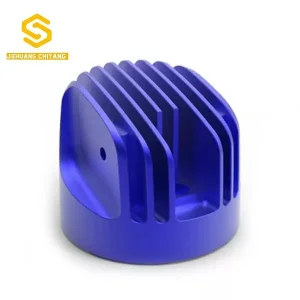
Operating rooms increasingly adopt color-coded instrumentation systems to streamline nurse pass-offs and prevent surgical errors. Titanium scalpels undergo electrolytic Type II/III anodization to create vibrant, non-fading biocompatible colors (Gold, Sapphire Blue, Emerald, Violet) without applying synthetic chemical dyes or paints.
3. High-Performance Hybrid Scalpels (Ti Handle + Ceramic Blade)
Combining reusable TiMIM Grade 5 Titanium handles with ultra-sharp Zirconia (ZrO₂) or Silicon Nitride (Si₃N₄) ceramic micro-blades creates non-metallic, anti-corrosive, ultra-sharp scalpel assemblies capable of performing delicate incisions without dulling across long surgical cases.
4. Sustainable Packaging & Reusable Eco-Scalpels
With hospitals facing pressure to cut single-use medical plastic waste, high-durability Titanium scalpels designed for 1,000+ steam autoclave cycles offer significantly lower total cost of ownership (TCO) and reduced carbon footprint over a 5-year device lifecycle.
Specialized Clinical Use-Cases for Titanium Scalpels
Different surgical specialties mandate unique scalpel geometries, weight distributions, and blade fitting mechanisms. Chinese OEM factories support full customization for diverse medical disciplines.
Ophthalmic & Micro-Corneal Surgery
Micro-scalpels with titanium alloy handles allow ophthalmic surgeons to execute precise corneal tunnel incisions, capsulorhexis, and vitreoretinal micro-steps with zero hand tremor, aided by titanium's light mass and balanced center of gravity.
Neurosurgery & Spinal Surgery
In close proximity to delicate brain tissue and spinal cords, non-magnetic titanium scalpels prevent dangerous magnetic attraction when operating inside intraoperative MRI (iMRI) suites, protecting vital neural pathways.
Cardiovascular & Plastic Surgery
Cardiovascular micro-arteriotomies and cosmetic reconstructive procedures require steady fluid motion. Titanium's biological inertness prevents tissue adhesion and localized chemical reactions during prolonged surgical field exposure.
Additional Precision OEM Products & Components
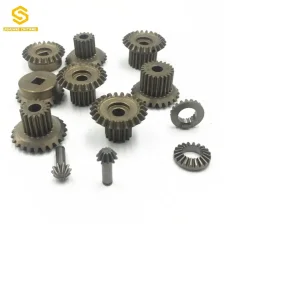
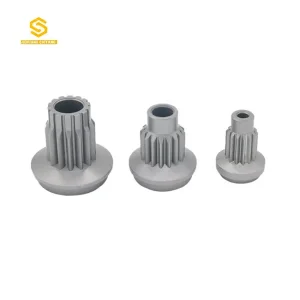
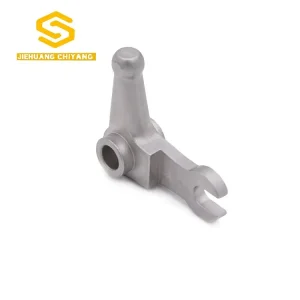
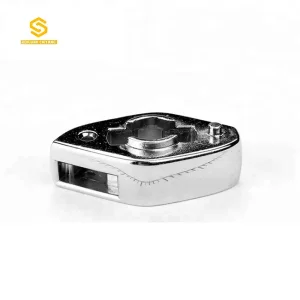
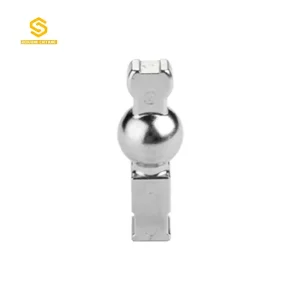
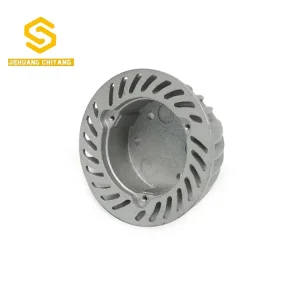
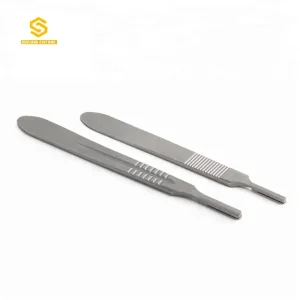
Browse our broader range of OEM metal processing capabilities, including powder metallurgy, die casting, micro-injection molding, and specialized titanium component manufacturing.
Frequently Asked Questions (FAQ) for OEM Buyers
Technical and commercial clarifications for medical device procurement managers, OEM product engineers, and international distributors.