
Precision Engineering OEM Product Lineup
Integrated manufacturing capabilities across precision powder metallurgy, MIM, advanced ceramics, and custom die casting components.






Global Industrial Landscape of Zirconia Ceramic Tubes
How Advanced Y-TZP Microstructures Are Replacing Legacy Metals and Alumina in Next-Generation Industrial Engineering
The Evolution of Technical Ceramics
In modern industrial applications, conventional metals and standard oxide ceramics frequently reach their physical limits when subjected to severe mechanical wear, thermal shock, and aggressive chemical reagents. Zirconia Ceramic Tubes (primarily Yttria-Stabilized Tetragonal Zirconia Polycrystals, or Y-TZP) have emerged as the premier engineering material for critical fluid handling, high-vacuum thermal insulation, and sensor protection sleeve assemblies.
Unlike traditional ceramic compositions such as coarse-grained alumina ($\text{Al}_2\text{O}_3$), zirconium dioxide ($\text{ZrO}_2$) possesses an extraordinary mechanical characteristic known as transformation toughening. This lattice phase shift capability allows zirconia tubes to arrest micro-crack propagation under intense mechanical strain, yielding flexural strengths exceeding **1,000 MPa** and fracture toughness values ($K_{IC}$) up to **8–10 $\text{MPa}\cdot\text{m}^{1/2}$**.
Key International Market Drivers
Global demand for high-precision zirconia ceramic tubing is surging across several primary high-tech vectors:
- Semiconductor Manufacturing: Plasma etching shield tubes, wafer handling sleeves, and ultra-pure gas delivery conduits free from metallic ionic contamination.
- Energy & SOFC Systems: Solid Oxide Fuel Cell tubular electrolyte substrates demanding thermal expansion matching ($\alpha \approx 10.5 \times 10^{-6}/\text{K}$) and gas tightness.
- Chemical Processing & Oil/Gas: Sub-surface pump liners, high-pressure liquid chromatography (HPLC) sleeves, and metering valve plungers resisting strong acids and alkalis.
- Medical & Life Sciences: Biocompatible analytical sleeves, blood analyzer dosing tubes, and surgical tool insulations.
Material Physics: Phase Transformation & Microstructure
A Technical Breakdown of Yttria Stabilization, Crystal Lattice Geometry, and Comparative Engineering Metrics
Transformation Toughening Mechanics ($t \rightarrow m$ Phase Shift)
Pure Zirconia ($\text{ZrO}_2$) exhibits three crystal allotropes depending on temperature: monoclinic ($m$, stable up to 1170°C), tetragonal ($t$, stable from 1170°C to 2370°C), and cubic ($c$, stable above 2370°C). When cooling pure zirconia, the tetragonal-to-monoclinic transformation causes a destructive volumetric expansion of approximately 3% to 5%, inducing catastrophic cracking in sintered parts.
To stabilize the high-strength tetragonal phase at room temperature, China's advanced ceramic engineers introduce precise concentrations of stabilizing oxides, most notably 3 mol% Yttria ($\text{Y}_2\text{O}_3$). When a micro-crack initiates under external tension within a 3YSZ tube, the local stress concentration trips metastable tetragonal grains to convert into monoclinic grains. The accompanying localized volume expansion squeezes the crack tip shut, effectively shielding the component from brittle failure.
| Material Parameter / Property | 3YSZ (Yttria-TZP Zirconia) | Mg-PSZ (Magnesia Stabilized) | 99.5% Alumina ($\text{Al}_2\text{O}_3$) | Silicon Nitride ($\text{Si}_3\text{N}_4$) |
|---|---|---|---|---|
| Density ($\text{g/cm}^3$) | 6.02 – 6.05 | 5.75 – 5.85 | 3.92 – 3.96 | 3.20 – 3.25 |
| Flexural Strength (MPa) | 1000 – 1200 | 600 – 750 | 350 – 450 | 800 – 950 |
| Fracture Toughness $K_{IC}$ ($\text{MPa}\cdot\text{m}^{1/2}$) | 7.0 – 10.0 | 8.0 – 11.0 | 4.0 – 5.0 | 6.0 – 7.5 |
| Thermal Expansion Coefficient ($\times 10^{-6}/\text{K}$) | 10.5 | 10.0 | 8.1 | 3.2 |
| Thermal Conductivity ($\text{W/m}\cdot\text{K}$) | 2.5 – 3.0 (Insulating) | 2.5 – 3.0 | 25 – 30 | 20 – 30 |
| Vickers Hardness (GPa) | 12.5 – 13.0 | 11.5 – 12.0 | 15.0 – 16.0 | 14.5 – 15.5 |
| Maximum Operating Temp (°C) | 1000 (Low-temp degradation limits) | 1400 | 1650 | 1300 |
Engineering Insight (E-E-A-T Note): For liquid phase low-temperature hydro-thermal environments (150°C to 300°C), standard Y-TZP zirconia may undergo aging degradation (LTD). Our engineering team formulates specialized alumina-toughened zirconia (ATZ) or ceria-stabilized zirconia (Ce-TZP) to completely eliminate lattice degradation while maintaining high mechanical strength.
China's Manufacturing Supremacy & Factory Efficiency
From Raw Powder Synthesis to High-Precision Diamond Grinding: How Chinese Factories Deliver Unmatched Cost-to-Performance Ratio
1. Raw Material Integration
China commands over 80% of the global rare-earth refining capacity, including yttrium and zirconium ore processing. Chinese zirconia tube factories benefit from direct access to nano-sized, spray-dried sub-micron $\text{ZrO}_2$ powders, guaranteeing batch-to-batch chemical purity ($\ge 99.9\%$) without Western supply chain markups.
2. Advanced Forming Technologies
Leading Chinese ceramic facilities employ multi-axis Cold Isostatic Pressing (CIP) at pressures exceeding **200 MPa**. This produces a green body with exceptionally uniform compact density, eliminating voids, inner wall delamination, and warpage during the subsequent high-temperature vacuum sintering stage.
3. Ultra-Precision Machining
Post-sintering ceramic machining requires state-of-the-art diamond tooling. Modern Chinese OEM plants feature internal honing, high-speed CNC centerless grinding, and lap-polishing machines capable of holding tube inner diameter (ID) and outer diameter (OD) tolerances to **$\pm 0.002\text{ mm}$** ($2\,\mu\text{m}$).
Standard Operational Flow of Zirconia Tube Production
Our standardized production protocol guarantees rigorous quality control at every phase of OEM manufacturing:
Nano Powder Preparation & Spray Drying
Extrusion / CIP Forming (200 MPa)
Green Machining & CNC Profiling
High-Temp Sintering (1550°C Kiln)
Diamond Honing & CMM Inspection
Global Enterprise Procurement Guide & Technical Specifications
Critical Engineering Parameters to Evaluate Before Partnering with a Custom OEM Zirconia Factory
Custom Geometries & Dimensional Capabilities
Overseas procurement directors must ensure their factory supplier can support non-standard structural geometry. Chinese specialized factories offer the following custom manufacturing ranges:
- Outer Diameter Range: $\Phi 0.5\text{ mm}$ (Micro-bore capillary tubing) up to $\Phi 250\text{ mm}$ (Large industrial liners).
- Inner Diameter Range: $\Phi 0.2\text{ mm}$ micro-fluidic bores up to $\Phi 230\text{ mm}$.
- Wall Thickness Tolerance: Controlled down to $\pm 0.005\text{ mm}$ for critical concentricity demands.
- Single Tube Max Length: Up to $1500\text{ mm}$ depending on aspect ratio and CIP kiln volume.
- Special Configurations: Closed-one-end furnace protection tubes, multi-bore internal channels (2 to 6 bores), slotted/threaded OD profiles, step-down diameter tubes.
Surface Quality & Metrology Inspection Standards
For sealing rings, dynamic plunger sleeves, and fiber optic ferrules, surface micro-finish dictates system longevity:
- As-Sintered Surface Finish: $Ra \, 0.8 - 1.6\,\mu\text{m}$.
- Precision Diamond Honed/Ground: $Ra \, 0.1 - 0.4\,\mu\text{m}$.
- Optical Mirror Lapping: $Ra < 0.01\,\mu\text{m}$ ($10\,\text{nm}$) for frictionless dynamic fluid seals.
- Concentricity & Runout: Inspected via Zeiss 3D CMM (Coordinate Measuring Machine) and laser interferometers, ensuring straightness within $0.005\text{ mm}$ per $100\text{ mm}$ length.
Industry Application Matrix & Case Scenarios
Where High-Strength Zirconia Ceramic Tubes Excel Beyond Traditional Metallic Alloys
Semiconductor & Vacuum
Utilized as plasma chamber insulation rings, gas delivery nozzles, and RF isolator tubes in chemical vapor deposition (CVD) equipment. Zirconia resists plasma fluorination erosion and prevents particulate contamination.
High-Pressure Chemical Pumps
Serving as plunger sleeves and dosing check valve tubes for aggressive acid/alkali slurry transport. Zirconia's near-zero friction coefficient against PTFE seals extends pump life by 500% over 316L stainless steel.
High-Temp Thermal Sensing
Closed-one-end zirconia protection sheaths insulate noble metal thermocouples (Type R/S/B) in aggressive metal-melting kilns up to 1600°C, offering superior thermal gradient crack immunity.
Future Trends & R&D Innovations in Technical Ceramics
Extending Boundaries via Additive Manufacturing and Advanced Nanocomposite Matrices
1. Additive Manufacturing (Ceramic 3D Printing)
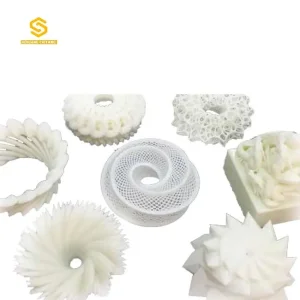
Traditional ceramic tube fabrication is constrained by extrusion and grinding geometry limitations. Next-generation Chinese research centers are deploying Stereolithography (SLA) and Digital Light Processing (DLP) ceramic 3D printing. By suspending sub-micron $\text{ZrO}_2$ particles in photo-curable resins, complex internal spiral cooling channels and lattice-structured internal conduits can now be formed seamlessly with density levels reaching **99.2%** of theoretical max post-sintering.
2. Nanostructured & Hybrid Matrix Formulations
To overcome low-temperature degradation (LTD) while pushing thermal barrier thresholds past 1800°C, material research is shifting toward Zirconia-Toughened Alumina (ZTA) and Silicon Carbide-Zirconia (SiC-ZrO2) nanocomposites. These hybrid ceramics offer customized thermal expansion matching for aerospace turbo-jet fuel injectors and nuclear coolant bypass tubing.
Technical FAQ: Engineering & Procurement Directives
Direct Answers to Common Purchasing, Tolerancing, and Thermal Performance Inquiries
Y-TZP (3 mol% Yttria-Stabilized Tetragonal Zirconia Polycrystal) offers superior fine-grain density, higher room-temperature flexural strength (1000–1200 MPa), and an ultra-smooth polish capability ($Ra < 0.01\,\mu\text{m}$). Mg-PSZ (Magnesia-Partially Stabilized Zirconia) features a coarser grain structure that excels at higher continuous temperatures (up to 1400°C) and demonstrates better resistance to thermal shock in metallurgy casting operations.
Yes. External and internal precision metric threads (e.g., M4 to M32) can be machined either in the "green state" prior to sintering or via 5-axis CNC diamond grinding post-sintering. For fine threads, diamond grinding ensures zero edge chipping and strict pitch precision.
Zirconia has a moderate thermal expansion coefficient ($\approx 10.5 \times 10^{-6}/\text{K}$) and relatively low thermal conductivity ($\approx 2.5 - 3\,\text{W/m}\cdot\text{K}$). Consequently, rapid thermal quenching ($\Delta T > 250^\circ\text{C}$ instantaneous drop) can induce stress. For extreme thermal cycling applications, wall thicknesses should be minimized, or an Alumina-Toughened Zirconia (ATZ) formulation should be specified.
Prototype samples using stock CIP ceramic blanks typically require 10 to 15 working days. Full custom tooling and mass production runs (1,000 to 50,000 units) generally span 3 to 4 weeks, including high-temperature sintering cycles and 100% CMM dimensional quality verification.
Every precision tube undergoes centerless diamond grinding while rotated on air-bearing spindles. Inner diameter concentricity is verified using pneumatic bore gauges and Coordinate Measuring Machines (CMM). Straightness is guaranteed to within $\pm 0.01\text{ mm}$ per $100\text{ mm}$ of length.
Additional OEM & Powder Metallurgy Product Solutions
Explore our complete range of precision MIM structural parts, die cast components, and sintered mechanical hardware.






Partner with China's Leading Zirconia Ceramic & MIM Manufacturer
Submit your CAD drawings (STEP/IGES/PDF) for a free Design for Manufacturability (DFM) review, material consultation, and competitive wholesale factory quotation within 48 hours.