
High-Precision Metal Components Catalog (Part I)
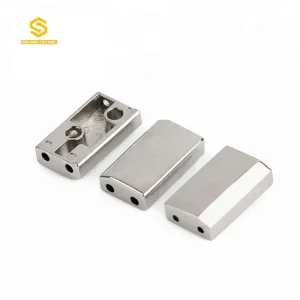
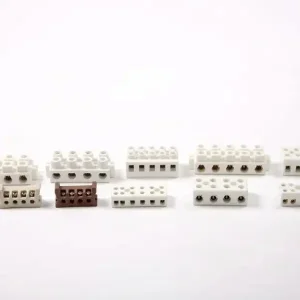
Explore our custom-engineered MIM, CNC machined, powder metallurgy, and die-cast industrial hardware manufactured under strict IATF 16949 quality controls.






Global Commercial & Industrial Status of Actuator Arms and Linkage Levers
Understanding Kinematic Leverage, Mechanical Efficiency, and Advanced Metallurgy in Next-Generation Motion Control Systems.
Macro Market Landscape & Demand Drivers
Actuator arms and linkage levers constitute the mechanical backbone of automated power transmission and fluid control. In modern industrial ecosystems, the demand for precision-engineered linkages has experienced an unprecedented surge driven by automotive electrification, Variable Geometry Turbocharger (VGT) wastegate regulation, aerospace flight control surface actuators, smart HVAC duct dampers, and surgical robotics.
As motion control systems transition toward higher operating speeds, extreme thermal thresholds, and zero-backlash requirements, traditional stamped sheet metal assemblies and heavy sand castings are rapidly becoming obsolete. Today's Tier-1 procurement teams actively seek OEM manufacturers capable of producing high-density near-net-shape components that deliver wrought-like mechanical properties at significantly scaled unit economics.
Kinematic Performance & Tolerance Challenges
The primary function of an actuator arm or linkage lever is to translate linear pneumatic, hydraulic, or electromechanical force into controlled rotational movement—or vice versa. This requires strict geometric dimensioning and tolerancing (GD&T) across pivot pinholes, keyway slots, and ball-joint interfaces.
Key manufacturing challenges include maintaining axial concentricity, preventing pin-hole elongation under high cyclic loading (fatigue resistance), and minimizing torsional hysteresis. Ningbo Jiehuang Chiyang Electronic Tech Co., Ltd. (JHMIM) resolves these challenges by integrating ultra-precise Metal Injection Molding (MIM) and automated CNC secondary machining, guaranteeing tolerances down to ±0.01mm (±0.0004 in) and pinhole surface finishes superior to Ra 0.8 µm.
Critical Information Gain: Why Metal Injection Molding (MIM) Dominates Actuator Arm Production
Compared to conventional 5-axis CNC milling from solid billet—which suffers from material waste exceeding 70%—or investment casting—which suffers from localized porosity and dimensional inconsistency—MIM enables complex 3D contours, multi-axis pin bosses, and weight-reduction cavities in a single mold cavity. Sintered densities reaching 96–99% deliver tensile strengths matching wrought steel at a 30% to 50% lower overall unit cost.
Manufacturing Route Comparison for Actuator Arms & Levers
Selecting the optimal production process based on part geometry, mechanical requirements, annual volume, and total tooling amortization.
| Manufacturing Process | Dimensional Accuracy | Material Density & Strength | Geometric Complexity | Economic Volume Threshold | Unit Cost (High Volume) |
|---|---|---|---|---|---|
| Metal Injection Molding (MIM) | ±0.3% to ±0.5% (Down to ±0.01mm with CNC) | 95% – 99% (Wrought Equivalent) | Extreme (Internal splines, 3D curves, dual bosses) | > 2,000 pcs / year | Lowest |
| Sintered Powder Metallurgy (PM) | ±0.2% (Axial direction) | 85% – 92% (Oil impregnable) | Moderate (2.5D stepped profiles) | > 5,000 pcs / year | Very Low |
| Aluminum / Zinc Die Casting | ±0.05mm – ±0.1mm | Cast density (Non-ferrous) | High (Thin walls, ribbing, housings) | > 2,000 pcs / year | Low |
| Investment Casting (Lost Wax) | ±0.5% – ±1.0% | 92% – 96% (Potential shrinkage voids) | High (Requires manual grinding) | > 500 pcs / year | Medium to High |
| 5-Axis CNC Machining | ±0.005mm (Ultra Precision) | 100% (Solid Billet) | High (Limited by tool access angles) | 1 – 1,000 pcs (Prototypes) | Extremely High |
Advanced Metallurgy Options
17-4PH Stainless Steel: Precipitate-hardened alloy providing exceptional yield strength (> 1100 MPa) and superior corrosion resistance. Ideal for automotive VGT wastegate arms and aerospace linkages.
316L Austenitic Stainless Steel: Non-magnetic, highly ductile, and highly resistant to aggressive chemical and saltwater environments. Preferred for marine valve levers and medical device actuators.
Fe-Ni Low-Alloy Steels (FN-0205 / FN-0208): Heat-treatable alloys offering extreme impact hardness and surface wear resistance for heavy industrial gearboxes and agricultural linkages.
Design for Manufacturability (DFM) Guidelines
Uniform Wall Thickness: Maintain consistent cross-sectional thickness (typically 1.0mm to 5.0mm) to eliminate sink marks and thermal warpage during debinding and sintering.
Generous Radii & Fillets: Incorporate internal fillets (R ≥ 0.5mm) at arm-to-boss junctions to prevent stress concentrations and enhance fatigue life under dynamic cyclical loads.
Draft Angles & Pin Alignment: Design 0.5° to 1° draft angles on deep cores. Integrate self-locating alignment features to streamline secondary press-fit bushings or over-molded ball studs.
Macro-Industry Solutions & Localized Deployment
Custom-engineered actuator arms and linkage assemblies operating under demanding real-world conditions.
1. Automotive Powertrain & Turbocharger VGT Systems
Scenario: Variable Geometry Turbochargers (VGT) and electronic wastegates operate continuously at temperatures exceeding 800°C under aggressive vibration and corrosive exhaust gases.
JHMIM Solution: We supply heat-resistant nickel-base superalloy and 17-4PH MIM actuator levers with integrated anti-galling pivot points. High-density sintering prevents high-temperature oxidation, eliminating linkage binding and ensuring emission compliance across 150,000+ mile operational lifespans.
2. Aerospace Flight Controls & UAV Gimbal Linkages
Scenario: Unmanned Aerial Vehicles (UAVs) and commercial aircraft require lightweight, zero-backlash control arm linkages for flap actuation and payload stabilizing gimbals.
JHMIM Solution: Utilizing Titanium Metal Injection Molding (TiMIM) with Ti-6Al-4V alloys, JHMIM delivers structural linkages offering a 40% mass reduction compared to steel while maintaining equivalent tensile strength, certified with complete 3D CMM inspection data.
3. Heavy Machinery, Hydraulics & Agricultural Valves
Scenario: Off-highway construction equipment and hydraulic pumps demand rugged actuator arms capable of sustaining impulse pressure spikes and heavy shock loads.
JHMIM Solution: Sintered Fe-Ni-C steel linkage arms subjected to specialized carburizing heat treatment yield surface hardnesses exceeding 60 HRC while preserving a ductile core, eliminating brittle fracture risks during heavy hydraulic actuation.
4. Surgical Robotics & Precision Medical Devices
Scenario: Minimally invasive robotic surgical arms require miniature linkage levers capable of executing micro-stepping motions without elastic deflection or magnetic interference.
JHMIM Solution: Micro-MIM fabrication of custom 316L stainless steel arms with feature sizes as small as 0.2mm. Secondary electropolishing produces mirror-finish biocompatible surfaces suitable for repeated autoclave sterilization routines.
Future Trends & Technological Outlook (2025–2035)
Pioneering smart manufacturing, additive metal printing integration, and sustainable metallurgy for next-generation kinematic systems.
1. Hybrid Additive Manufacturing & Tool-Less Prototyping
The boundary between metal 3D printing and high-volume MIM is rapidly dissolving. JHMIM leverages Binder Jetting (BJT) and Direct Metal Laser Sintering (DMLS) to produce functional metal prototypes within days, utilizing identical MIM alloy powders. Once design verification is complete, production seamlessly transitions to multi-cavity injection tooling without metallurgical discrepancy.
2. Smart Actuator Links with Embedded Sensors
Future industrial linkages are transforming from passive structural elements into active diagnostic nodes. Advanced research at JHMIM involves co-sintering ceramic channels inside actuator arms to accommodate miniature strain gauges and temperature sensors, providing real-time telemetry on joint wear, thermal expansion, and torque loading in Industry 4.0 automated factories.
3. Sustainable Powder Metallurgy & Carbon Neutrality
Near-net-shape manufacturing naturally dramatically reduces raw material usage compared to traditional machining. JHMIM is committing to 100% recycled feedstock utilization in select alloy lines, high-efficiency continuous vacuum debinding-sintering furnaces, and closed-loop solvent recovery, reducing energy consumption per part by up to 45%.
End-to-End Quality Assurance & Technical Rigor
Why Tier-1 automotive and industrial OEMs choose Ningbo Jiehuang Chiyang Electronic Tech Co., Ltd. (JHMIM) as their long-term supply chain partner.
IATF 16949 & ISO 9001 Certified Quality Ecosystem
Quality control is embedded into every stage of our production process—from incoming powder spectrum analysis using X-ray fluorescence (XRF) to automated in-line optical inspection and coordinate measuring machine (CMM) dimensional verification.
Every shipment is delivered with comprehensive Material Test Reports (MTR), First Article Inspection (FAI) reports, PPAP Level 3 documentation, and 100% key-dimension verification protocols.
In-House R&D & Metallurgical Patents
Supported by a dedicated engineering team where over 85% of personnel hold 6+ years of direct powder metallurgy experience, JHMIM collaborates directly with the Chinese Academy of Sciences (CAS Ningbo) and Tianjin University.
Our facility holds 8 material invention patents, enabling customized alloy formulations tailored to client-specific fatigue thresholds, magnetic permeability, or thermal expansion coefficients.
High-Precision Metal Components Catalog (Part II)
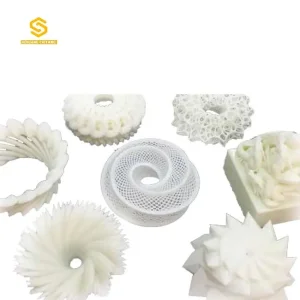
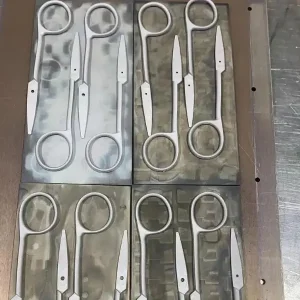
Explore our full range of custom OEM hardware, CNC turning, zinc/aluminum die-casting, and MIM assembly solutions.






Frequently Asked Questions (FAQ)
Key technical, commercial, and engineering questions answered by JHMIM senior metallurgical specialists.
What is the typical Minimum Order Quantity (MOQ) for custom actuator arms?
Our baseline MOQ is 2,000 pieces for MIM parts, 2,000 pieces for CNC machined and aluminum/zinc die-cast components, and 5,000 pieces for conventional powder metallurgy parts. However, for specialized prototype verification or low-volume pilot runs prior to mass production, custom terms can be evaluated alongside tooling quotes.
Can JHMIM execute a Non-Disclosure Agreement (NDA) before reviewing CAD files?
Yes, absolutely. We routinely execute bilateral or client-standard NDAs before receiving 2D drawings (PDF) or 3D CAD files (STEP/IGES). All design data, engineering calculations, and proprietary product specs remain completely confidential under strict restricted-access server protocols.
How fast can I get a detailed DFM review and quotation?
Upon receipt of your complete 2D drawing (with material specs and tolerances) and 3D STEP file, our engineering team returns a complete DFM (Design for Manufacturability) feasibility report and itemized quotation (part price vs tooling price) within 48 hours.
What dimensional tolerances can be held on MIM actuator levers?
As-sintered MIM tolerances are typically ±0.3% to ±0.5% of nominal dimension. For critical features such as pinhole diameters, pivot journals, or keyways, we integrate automated secondary CNC milling, reaming, or grinding to reliably hold tight tolerances down to ±0.01mm (±0.0004 in).
What secondary surface finishing options are available?
We provide comprehensive surface treatments in-house or through certified sub-tier partners, including heat treatments (case hardening, nitriding, vacuum quenching), electroplating (Ni, Cr, Zn), PVD coating, electropolishing, passivation, and salt-spray resistant black oxide finishes.
Ready to Optimize Your Actuator Arm Manufacturing Cost?
Send us your 2D/3D drawings today. Receive a free engineering DFM analysis and a competitive direct factory quote within 48 hours.
Request Free DFM Review & Quote