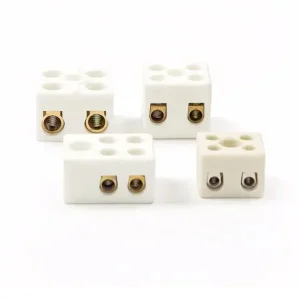
Featured Precision Engineered Components (Batch 1)
Explore our OEM/ODM portfolio of high-density powder metallurgy components, micro-MIM structural parts, and precision aluminum/zinc die-castings tailored for global industrial supply chains.








Macro-Industry Analysis: The Convergence of Additive Manufacturing & Powder Metallurgy
The global advanced manufacturing ecosystem is experiencing a structural paradigm shift. Industrial original equipment manufacturers (OEMs) across North America, Europe, and Asia-Pacific are increasingly moving away from high-waste subtractive CNC machining in favor of near-net-shape metallurgy technologies. At the center of this transformation is the strategic integration of Additive Manufacturing (AM) and Powder Metallurgy (PM)—specifically Metal Injection Molding (MIM), Binder Jetting (BJM), and Laser Powder Bed Fusion (LPBF).
Historically, conventional press-and-sinter powder metallurgy dominated high-volume, lower-complexity automotive gears and self-lubricating bearings. However, modern engineering mandates demand lightweight geometries, topological optimization, zero material waste, and exceptional mechanical strength. By utilizing micro-fine atomized metal powders combined with state-of-the-art thermal debinding and high-vacuum sintering, manufacturers can now achieve component densities exceeding 98.5% of theoretical density—delivering wrought-like tensile strength, fatigue resistance, and magnetic performance.
Strategic Sourcing Insight: Integrating metal additive manufacturing with secondary MIM tooling allows global procurement teams to drastically shorten product development cycles. Prototypes can be 3D printed via direct metal printing within 72 hours, while production tooling for 100,000+ unit runs is simultaneously fabricated, reducing overall time-to-market by up to 50%.
Technical Selection Matrix: AM vs. MIM vs. Press & Sinter vs. Die Casting
Selecting the optimal manufacturing route requires a multi-variable analysis of volume, geometric complexity, material properties, surface finish (Ra), and tooling investment. The matrix below outlines key engineering metrics across primary manufacturing routes.
| Manufacturing Technology | Ideal Economic Lot Size | Relative Component Density | Surface Roughness (Ra) | Dimensional Tolerance | Geometric Freedom |
|---|---|---|---|---|---|
| Metal Injection Molding (MIM) | 2,000 – 1,000,000+ pcs | 96.0% – 99.0% | 0.8 – 1.6 µm | ±0.3% to ±0.5% | Extreme (Internal cavities, undercuts) |
| Binder Jetting (Metal AM) | 1 – 5,000 pcs (Tool-less) | 95.0% – 98.0% | 3.2 – 6.3 µm | ±0.5% to ±1.0% | Maximum (Lattice, organic design) |
| Laser Powder Bed Fusion (LPBF) | 1 – 500 pcs | 99.2% – 99.8% | 6.3 – 12.5 µm | ±0.1 mm | Maximum (Complex internal cooling) |
| Press & Sinter PM | 5,000 – 500,000+ pcs | 85.0% – 92.0% | 1.6 – 3.2 µm | ±0.2% to ±0.4% | Moderate (2.5D stepped geometries) |
| Aluminum / Zinc Die Casting | 2,000 – 500,000+ pcs | Cast Density (Porosity risk) | 0.8 – 3.2 µm | ±0.1 mm | High (Thin walls, large housings) |
Metallurgical Science: Grain Boundaries & Sintering Kinetics
In powder metallurgy and additive manufacturing, final mechanical behavior is governed by powder particle size distribution (PSD), morphology (spherical gas atomized vs. water atomized), and thermal sintering kinetics. During vacuum sintering at temperatures typically between 1200°C and 1380°C, solid-state diffusion occurs across metal powder boundaries. Atoms migrate from particle necks to void space, resulting in isotropic shrinkage (typically 12% to 20% by volume) and near-full densification.
For demanding applications in aerospace and medical devices, post-sintering Hot Isostatic Pressing (HIP) can be applied at high pressures (100–200 MPa) to eliminate internal microporosity, bringing dynamic fatigue resistance up to 100% of wrought alloy equivalents.
Targeted Industry Solutions & Specialized Application Scenarios
Our engineering teams customize material formulations and sintering protocols to meet rigorous global engineering standards across primary industrial domains.
Automotive & Electric Vehicles (EV)
High-strength sintered planetary gears, variable valve timing (VVT) rotors, seat recliner locks, turbocharger vanes, and EV battery thermal management brackets engineered under strict IATF 16949 quality controls.
Medical Devices & Surgical Instruments
Biocompatible 316L and 17-4PH surgical scissors jaws, endoscopic stapler components, orthopedic implant trial sizing tools, and dental instruments manufactured with zero surface defects.
Industrial Automation & Fluid Power
Heavy-duty micro gears, hydraulic directional valve spools, pneumatics fittings, power tool drive shafts, and high-wear tungsten-carbide composite parts engineered for 24/7 continuous duty cycles.
Aerospace & Defense
Titanium alloy (Ti-6Al-4V) structural brackets, fuel injection nozzles, lightweight drone hinges, and high-temperature Inconel 718 superalloy components built to withstand extreme mechanical stress.
Consumer Electronics & Smart Wearables
Folding smartphone hinges, smart-watch metallic cases, optical camera lens bezels, high-density tungsten acoustic counterweights, and decorative stainless steel hardware with mirror polishing.
Energy, Oil & Gas
Sintered porous stainless steel filter elements for high-pressure gas/liquid separation, downhole sensor housings, anti-corrosive Hastelloy pump impellers, and wear plates.
Quality Management System, International Compliance & Supply Chain Security
Quality assurance in powder metallurgy and additive manufacturing begins at the elemental powder level. Our facility enforces complete material traceability from raw powder batching through final surface treatment. Utilizing advanced testing laboratories equipped with CMM (Coordinate Measuring Machines), X-ray fluorescence spectrum analyzers, carbon-sulfur determinators, metallographic image analysis, and density testing instruments, we guarantee 100% adherence to customer specifications.
Certified Quality Governance
Our manufacturing facilities operate under fully audited ISO 9001:2015 and IATF 16949:2016 quality management frameworks, backed by full PPAP (Production Part Approval Process) Level 3 documentation, FMEA analyses, and Control Plans.
Environmental & Material Compliance
All sintered metal alloys, binder formulations, and secondary coatings comply strictly with European REACH, RoHS Directive 2011/65/EU, and Conflict Minerals regulations, facilitating effortless compliance for global export.
Localized OEM Engineering Support
We maintain dedicated English-fluent technical sales engineers and localized logistics partners across North America and Europe to offer seamless DFM consulting, local inventory stocking (VMI), and fast EXW/FOB/DDP door-to-door delivery.
Technology Roadmap: Next-Generation Additive Powder Metallurgy (2025–2030)
The frontier of metal manufacturing lies at the intersection of artificial intelligence, high-speed binder jetting, and advanced multi-material sintering.
1. AI-Powered Generative DFM & Simulation: By leveraging finite element sintering simulation software, our engineering team predicts volumetric thermal shrinkage and furnace distortion down to the micron level before cutting mold steel. This reduces tooling modification iterations from 4 cycles down to 1.
2. High-Speed Metal Binder Jetting (BJM) Scaling: BJM is rapidly emerging as the bridge between prototyping and mass MIM production. By printing liquid binding agents onto atomized powder layers without high thermal stress, manufacturers eliminate tooling costs entirely for mid-volume production runs (1,000 to 20,000 pieces).
3. Novel High-Entropy & Refractory Alloys: Ongoing material development focuses on processing non-weldable superalloys, high-conductivity copper-chromium alloys for electric vehicle powertrains, and biocompatible porous titanium structures designed for enhanced osseointegration.
Comprehensive Technical FAQ & Engineering Procurement Guide
Answers to key technical and commercial questions raised by global engineering directors, supply chain buyers, and quality executives.
Featured Precision Engineered Components (Batch 2)
Discover more of our specialized metal injection molded parts, sintered gears, die-cast hardware, and custom OEM structural solutions.