
Featured Advanced Sintered Metal Components
Explore our high-density powder metallurgy, metal injection molding (MIM), and custom die-casting OEM product solutions tailored for international automotive, medical, and electronic applications.

China Hot sale Customized/Designing Zinc/Aluminium Die Casting Parts for Auto/Hardware/Medical/LED Light
View Details & Spec Sheet
Wholesale Medical Scalpel By Metal Injection Molding Process MIM Manufacturers, Factories
View Details & Spec Sheet
Wholesale Stainless Steel Sintered Powder Metallurgy Parts PM Metal Injection Molding MIM Gear Part
View Details & Spec Sheet
China Gold Supplier for Metal Injection Molding MIM PIM Remanufactured Diesel Engine Parts for Auto Aftermarket
View Details & Spec Sheet
China OEM Customized ATV Parts Auto Aluminum Alloy Die Casting Household Appliance Cooling Fan Casing
View Details & Spec Sheet
Wholesale High quality Metal Injection Molding MIM Process for Titanium Alloy OEM Parts Factory
View Details & Spec Sheet
China Price Sheet for Hebei Supplier Zinc Aluminum Alloy Die Casting for Auto Part Manufacturer
View Details & Spec Sheet
Wholesale Chinese Professional OEM Part Manufacturer Aluminum/Zinc/Brass/Alloy Metal Gravity Sand Die Casting
View Details & Spec SheetGlobal Landscape of Advanced Sinter Metal Technologies
Analyzing the metallurgical shifts driving high-density sintered alloys, OEM component mini-sizing, and global procurement efficiency in complex manufacturing ecosystems.
Global Market Expansion & Demand Drivers
The global market for advanced sintered metal technologies is experiencing unprecedented growth, driven by the aggressive lightweighting and miniaturization demands of the Automotive Electric Vehicle (EV) evolution, next-generation medical surgical instruments, and aerospace avionics. Modern manufacturing paradigms mandate net-shape metal components capable of matching wrought alloy mechanical properties while achieving material utilization rates exceeding 95%.
High-Density Powder Metallurgy Evolution
Transitioning beyond traditional low-density press-and-sinter parts, advanced sinter technologies now utilize ultra-fine gas-atomized powders, warm compaction, and liquid-phase vacuum sintering. This enables relative densities reaching 98% to 99.5% of theoretical limits, drastically closing the fatigue strength gap between sintered components and fully forged steel alloys.
Supply Chain Resiliency & Wholesale Dynamics
Tier-1 and OEM purchasing directors require agile international partners who combine scalable mass-production capacity with stringent DFM engineering support. By leveraging integrated tool design, multi-cavity press automation, and continuous atmosphere debinding-sintering furnaces, certified suppliers eliminate secondary machining bottlenecks while reducing overall unit costs by up to 50%.
Engineering Principles of Sintered Metal Technologies
Understanding powder morphology, solid-state diffusion kinetics, debinding parameters, and alloy microstructural transformation.
1. Solid-State Diffusion & Neck Growth Dynamics
Sintering is fundamentally driven by surface energy reduction. As metal powders (such as 316L, 17-4PH, or Fe-Ni-Mo alloys) are subjected to temperatures ranging from 1150°C to 1380°C in controlled protective atmospheres (Pure H₂, N₂/H₂ blends, or high vacuum), atomic transport occurs across powder contact points. Surface diffusion, grain boundary diffusion, and volume diffusion drive the growth of interparticle necks, eliminating interconnected porosity and transforming loose compacts into dense, isotropic metallic structures.
2. Metal Injection Molding (MIM) Feedstock Mechanics
For complex 3D geometries unachievable through axial die compaction, Metal Injection Molding (MIM) combines fine metal powders (d50 < 15 µm) with thermoplastic polymer binders. The compounded feedstock is molded at precise temperatures into green components. A rigorous two-stage debinding process—combining solvent extraction and thermal degradation—removes the organic matrix before high-temperature consolidation, yielding complex features like internal threads, cross-bores, and micro-thin walls.
Selecting the Right Metallurgical Process
Evaluating Advanced Sintering against conventional manufacturing processes to maximize performance and minimize unit cost.
| Manufacturing Technology | Geometric Complexity | Material Efficiency | Dimensional Tolerance | Relative Density Range | Ideal Production Volume |
|---|---|---|---|---|---|
| Advanced Sintered Powder Metallurgy (PM) | Medium (2.5D Axial Shapes) | 95% - 98% | ±0.05 mm | 88% - 95% | 5,000 to 1,000,000+ units |
| Metal Injection Molding (MIM) | Very High (Complex 3D Geometry) | 92% - 96% | ±0.03 mm - ±0.05 mm | 96% - 99.5% | 2,000 to 500,000+ units |
| Zinc & Aluminum Die Casting | High (Thin Walls, Housings) | 85% - 90% | ±0.08 mm | Non-Ferrous Alloys Only | 2,000 to 500,000+ units |
| 5-Axis CNC Machining | Medium - High | 15% - 40% (High Scrap) | ±0.005 mm | 100% (Wrought Stock) | Low Volume / Prototypes (<1,000) |
Global Standards with Local Engineering Integration
Delivering full regulatory compliance, rigorous material certification, and seamless cross-border supply support.
IATF 16949 & ISO 9001 Audited
Our production processes follow IATF 16949 quality management protocols. Every lot undergoes advanced coordinate measuring machine (CMM) analysis, optical profile verification, density testing via Archimedes principle, and metallographic grain inspection to ensure zero-defect shipment integrity.
RoHS, REACH & Material Traceability
All raw alloy powders, binders, and surface finishing treatments are verified fully compliant with EU RoHS and REACH regulations. We provide certified Material Test Reports (MTR), melt lot traceability, and salt-spray corrosion test documentation with every commercial batch.
Localized Technical Support & Rapid DFM
Bridging global manufacturing efficiency with localized responsiveness, our engineering teams provide complete Design for Manufacturability (DFM) reviews within 24–48 hours. We assist client engineers in optimizing wall thickness, draft angles, radii, and binder burn-out behavior prior to mold steel cutting.
High-Performance Applications & Case Scenarios
Custom sintered metal solutions engineered for critical reliability in extreme operating environments.
Automotive Powertrain & EV Actuators
High-density PM planetary gears, variable valve timing (VVT) rotors, oil pump gears, and door lock latches manufactured using Fe-Ni and alloy steels. High dynamic torque resistance and exceptional wear characteristics without secondary tooth machining.
Medical Surgical Instruments & Implants
Bio-compatible 316L and 17-4PH stainless steel endoscopic grasper jaws, surgical scalpel handles, and custom Titanium alloy (TiMIM) orthopaedic component brackets offering ultra-fine surface finishes and high corrosion resistance under repeated autoclave sterilization.
Consumer Electronics & Smart Devices
Miniature MIM laptop hinges, smartphone camera ring brackets, smartwatch casings, and fiber-optic connector housings. Precise micro-features, thin-wall structures down to 0.5mm, and high aesthetic finish compatibility via PVD coating or electroplating.
Industrial Hardware & Heavy Machinery
Sintered carbide tool inserts, hydraulic valve spools, heavy-duty bush bearings, and power tool impact ratchets. Engineered to handle intense mechanical shock, sliding friction, and elevated operational pressures with consistent long-term durability.
Aerospace & Defense Avionics
High-strength titanium and nickel superalloy sintered components for flight control linkages, sensor housings, and drone propulsion assemblies where weight optimization and extreme thermal stability are non-negotiable parameters.
Fluid Control & Valve Technology
Precision sintered porous metal filter plates, stainless steel mini ball valve cores, and pump impellers designed with micro-meter pore size control for optimized liquid separation and pressure regulation in chemical and industrial processing plants.
Technology Roadmap: Sintering Innovations 2025–2030
Pioneering advancements in hybrid additive manufacturing, green hydrogen sintering, and nano-grained powder alloys.
1. Binder Jetting & Sintering Hybrids
Integrating 3D Binder Jetting (BJT) directly with conventional high-temperature sintering furnaces. This hybrid roadmap eliminates hard tooling costs for low-to-medium volume runs while keeping the isotropic structural density and metallurgical integrity of traditional MIM alloys.
2. Green Hydrogen Furnace Integration
Transitioning debinding and sintering atmospheres to 100% green hydrogen generated via renewable water electrolysis. This carbon-neutral heating initiative dramatically lowers net carbon emissions while enhancing oxide reduction and metallurgical purity during high-temperature grain coalescence.
3. Nano-Grained High-Entropy Alloys (HEA)
Developing proprietary nano-structured powder atomization methods that introduce High-Entropy Alloys into standard MIM feedstock. The resulting microstructures offer unprecedented yield strength, severe impact resistance, and corrosion resistance exceeding standard duplex stainless steels.
Additional Advanced Metal Components & Tooling
Direct OEM manufacturing capabilities across compacting molds, low/high-pressure die castings, and specialized sintered bronze bearings.
Wholesale Supply OEM/ODM China Customized Powder Metallurgy Compacting Mold for Sale – Powder Metallurgy Mold & Parts Manufacturer
View Details & Spec Sheet
China High reputation Die Casting Manufacturers Wholesale Low Pressure Casting of Aluminum Castings Manufacturers
View Details & Spec Sheet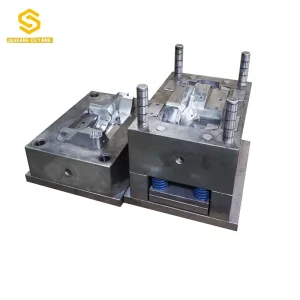
Wholesale Wholesale ODM China OEM Customized High Pressure Metal Die Casting Molds Manufacturer
View Details & Spec Sheet
China Rapid Delivery for Custom Stainless Steel Die Casting Parts Metal Work Shenzhen Supplier
View Details & Spec Sheet
Wholesale Best-Selling Aluminum Die Casting Factory Manufacturer for Valve/Pump/Motor Housing Suppliers
View Details & Spec Sheet
Wholesale Leading Manufacturer for Customized MIM Injection Molds Metal Aviation Parts CNC Machining Process
View Details & Spec Sheet
Wholesale OEM China OEM Sintered Bronze Bush PM Copper Powdered Metallurgy Bearings Metal Sintering Gear Parts
View Details & Spec Sheet
China Sintered Metal Parts For High Quality Medical Manufacturers, Suppliers
View Details & Spec SheetEngineering & Procurement FAQ
Direct answers to crucial technical queries regarding sintering densities, tooling timelines, tolerances, and process selection.
What is the maximum part size and weight suitable for Metal Injection Molding (MIM)?
MIM is economically and process-optimized for small to medium-sized metal components, typically weighing under 100 grams per piece. However, with our advanced binder system formulation and controlled thermal debinding equipment, JHMIM has mass-produced high-density structural components weighing up to 286 grams. For components exceeding this mass or measuring larger than 150 mm in length, conventional high-tonnage powder metallurgy or die casting is usually recommended.
How does sintered part density correlate with mechanical properties?
Density is the single most critical factor governing mechanical strength, impact toughness, and fatigue life in sintered metal components. Standard press-and-sinter parts (88%–93% dense) retain microscopic micro-voids, making them ideal for oil-impregnated self-lubricating bronze bushes. Advanced MIM and vacuum-sintered components achieve 96% to 99.5% theoretical density, delivering tensile yield strength, elongation, and magnetic permeability virtually identical to traditional wrought bar stock.
Why are both 2D (PDF) and 3D (STEP/IGES) files required for a full DFM quote?
The 3D CAD model provides our mold design team with complete geometric volumetric data to calculate accurate mold shrinkage, binder volume fraction, and flow simulation. The 2D engineering PDF defines essential manufacturing callouts: critical dimensional tolerances (GD&T), target surface roughness (Ra), heat treatment hardness specs (HRC/HV), non-destructive testing requirements, and localized plating or passivation standards.
What are the typical tooling lead times and prototype verification options?
Production tooling design and CNC EDM cavity cutting typically require 25 to 35 calendar days depending on multi-cavity complexity. To validate design functionality before committing to hard steel molds, we utilize internal metal 3D printing (Selective Laser Melting / Direct Metal Laser Sintering) to deliver functional metal prototypes within 5 to 7 business days.
How do you guarantee strict dimensional consistency across high-volume production batches?
Dimensional consistency is guaranteed through strict closed-loop control across three primary stages: 1) Thermal homogeneity within continuous sintering furnaces (±2°C temperature band control); 2) Automated optical sorting machines checking 100% of critical outer diameters and heights; 3) Statistical Process Control (SPC) monitoring with real-time Cpk analysis exceeding 1.67 for automotive IATF 16949 lines.