Featured Precision Tooling & OEM Manufacturing Solutions (Catalog I)
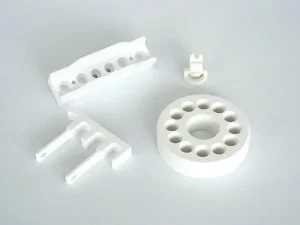
Explore our global export portfolio covering high-pressure die casting tooling, powder metallurgy (PM), metal injection molding (MIM), and ultra-precision CNC machined alloy components designed for international tier-1 OEM specifications.






1. Global Commercial & Industrial Status of Aluminium Die Casting Tooling
The global aluminum die casting mold manufacturing market is experiencing a profound paradigm shift. Driven by aggressive automotive lightweighting mandates, the rapid proliferation of Electric Vehicles (EVs), next-generation 5G/6G telecom infrastructure, and industrial automation, high-pressure die casting (HPDC) tooling has evolved from traditional localized components into massive, highly integrated multi-cavity structural molds. Modern B2B procurement managers and lead tooling engineers require far more than basic CNC machining capabilities; they demand deep metallurgical control, optimized fluid dynamics simulation (PQ2 curve analysis), conformal cooling engineering, and guaranteed tool life exceeding 100,000 to 150,000 shots under severe thermal cycling conditions.
Macroeconomic Demand Drivers across Key Trade Blocs
Regional manufacturing centers display distinct technical priorities when sourcing wholesale aluminum die casting moulds:
North America (EV & Structural Megacasts)
Focuses heavily on Gigacasting tooling design (6,000T to 12,000T press compatibility), single-piece rear underbody structures, and reducing vehicle curb weight to maximize battery range per charge cycle.
European Union (Ultra-Low Porosity & Green Alloys)
Emphasizes strict environmental compliance, vacuum-assisted HPDC tooling for T6 heat-treatable structural alloys (AlSi10MnMg), zero-leakage hydraulic housings, and secondary recycled aluminum compatibility.
Asia-Pacific (High-Density Telecom & Electronics)
Leads in ultra-thin wall (0.8mm–1.2mm) heat sink tooling, micro-die-casting components, high thermal conductivity aluminum formulations (ADC12, A380), and rapid mold manufacturing throughput.
2. Technology Roadmap & Industry Innovation Trends (2025–2035)
The aluminum die casting tooling industry is transitioning from empirical experience-driven mold making to digital twin-driven computational manufacturing. Below is the technical roadmap detailing core technology shifts over the next decade.
| Technology Vector | Legacy Industry Standard | Current Advanced Standard (2025) | Next-Gen Horizon (2030–2035) |
|---|---|---|---|
| Mold Thermal Management | Straight gun-drilled cooling channels | SLM/DMLS 3D-printed Conformal Cooling Inserts | AI-Controlled Dynamic Fluid Thermal Regulation |
| Tool Steel Metallurgy | Standard AISI H13 (ESR) | Premium Cr-Mo-V Steels (Dievar / W400 / 8407) | Nano-structured Powder Metallurgy High-Conductivity Steels |
| Cavity Surface Engineering | Single-layer PVD CrN / Nitriding | Multi-layer Duplex PVD (TiAlN / DLC + Ion Nitriding) | Self-Healing Ceramic Coatings & Nano-Textured Surfaces |
| Simulation & Verification | Basic 3D Flow Simulation (Post-design) | Real-Time Flow, Thermal Stress & Shrinkance Co-Simulation | Digital Twin In-Situ Cavity Sensor Dynamic Feedback Systems |
| Gigacasting Tooling Architecture | Modular multi-part assemblies (< 2,500T) | Integrated Monolithic Core Blocks (4,000T to 9,000T) | Self-Adjusting Modular Gigamolds (> 12,000T Compatibility) |
Deep-Dive: Additive Conformal Cooling & Porosity Control
Thermal equilibrium inside an aluminum die casting mold directly dictates cycle times, casting dimensional stability, and die lifespan. Traditional straight-line drilled water jackets leave thermal hot spots in deep cavities and core pins, causing localized shrinkage porosity and soldering (molten aluminum adhering to tool steel). By utilizing Selective Laser Melting (SLM) metal 3D printing, tool manufacturers can print curved conformal cooling lines that mirror exact 3D cavity profiles within 2mm to 3mm from the surface. This technique achieves:
20% to 35% Reduction in Cycle Time
Rapid heat extraction during solidification dramatically speeds up part ejection readiness without sacrificing grain structure tightness.
Elimination of Thermal Hotspots
Uniform heat dissipation prevents internal shrink voids and surface sinks, ensuring parts meet class-A X-ray porosity standards (ASTM E505 Level 1/2).
Extended Tool Lifecycle
Minimizing severe temperature deltas across die inserts lowers thermal expansion gradient stress, effectively delaying heat-checking cracking.
3. Localized Industrial Application Scenarios & Engineering Case Studies
Aluminium die casting moulds are tailored specifically to match casting alloy properties (e.g., A380, ADC12, AlSi9Cu3, Silafont-36) and localized operational environments. Below are critical engineering use cases showing exact tooling performance requirements.
Automotive Electric Powertrain Housings
Part Specs: Integrated E-Motor stator housings with internal spiral cooling jackets.
Tooling Challenge: High-precision moving core slides to form intricate coolant channels without water leakage risk.
Solution: Mold built with hydraulic core pull sequence, vacuum venting blocks, and zero-draft angle core pin coatings, delivering over 120,000 tight-tolerance shots.
5G Telecom Outdoor Heat Sink Enclosures
Part Specs: High pin density thermal heat dissipation fins with wall thicknesses down to 0.9mm.
Tooling Challenge: Extreme molten alloy friction leading to severe tool erosion in thin fin slots.
Solution: Core inserts using high thermal conductivity metal powder metallurgy alloys treated with multi-layer PVD TiAlN coating, reducing filling pressure requirements by 18%.
Solar Inverter & Renewable Energy Junction Boxes
Part Specs: IP68 weather-sealed aluminium die-cast housings for outdoor photovoltaic plants.
Tooling Challenge: Complex parting line sealing to eliminate flash formation and avoid costly secondary CNC perimeter milling.
Solution: High-rigidity mold base (C45/P20 hardened plate) with precision CNC optical profile ground shut-off land surfaces maintaining 0.015mm flatness alignment.
4. Macro Industrial Solutions & Total Cost of Ownership (TCO) Optimization
For global procurement buyers, evaluating an aluminum die casting mold manufacturer based purely on initial tooling quotation price leads to hidden downstream costs. Premature tool failure, excessive scrap rates due to gas porosity, and unexpected downtime for mold repair drastically balloon total piece-part cost over volume runs.
Zero-Defect Quality Control & Tooling Lifespan Assurance Protocol
A robust die casting factory maintains rigorous quality gates at every stage of tooling manufacture:
1. Ultrasonic Steel Defect Inspection
100% volumetric ultrasonic testing (UT) of incoming forged tool steel blocks according to SEP 1921 Group 3 Class E/e standards to eliminate internal micro-voids prior to CNC machining.
2. Vacuum Heat Treatment & Stress Relief
Computerized multi-stage vacuum quenching followed by double/triple tempering cycles to achieve an optimal balance of hardness (44-48 HRC) and fracture toughness (> 25 J/cm²).
3. CMM & Optical Profile Verification
Zeiss Coordinate Measuring Machines (CMM) verify core and cavity 3D surface profiles against native STEP files with 3D deviation heat maps supplied with T1 trial samples.
5. Frequently Asked Questions (Technical Sourcing Guide)
Comprehensive answers to essential tooling engineering, metallurgical, and commercial procurement questions.
Complete Manufacturing & Custom Component Portfolio (Catalog II)
Discover our secondary specialized production capabilities including sintered metal powder metallurgy, alumina ceramics, high-density titanium parts, and high-precision CNC finished aluminum die castings.