
Featured High-Pressure Moulds & Custom Castings
Engineered for structural integrity, extreme shot life, and thermal efficiency. Certified under IATF 16949 and ISO 9001 quality management protocols.





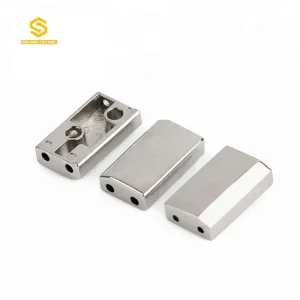


Global Enterprise Procurement Landscape for Aluminium Die Casting Tooling
An analytical overview of shift vectors in modern automotive lightweighting, structural casting requirements, and high-pressure die casting (HPDC) mould manufacturing ecosystems.
Structural Lightweighting & Megacasting Shifts
The global industrial sectors—particularly New Energy Vehicles (NEVs), telecommunications infrastructure, and aerospace—are undergoing a fundamental structural transition toward monolithic die-cast aluminium components. Sourcing high-integrity aluminium die casting moulds has shifted from basic geometric containment to complex thermodynamic engineering capable of handling clamping forces from 800 to over 9,000 tons in modern Giga-press installations.
Total Cost of Ownership (TCO) Optimization
For strategic procurement directors, the purchase order value of an aluminium die casting mould represents less than 15% of its total operational cost impact. Micro-cracking, thermal fatigue (heat checking), premature wash out, and runner imbalance directly induce scrap rates and unscheduled press downtime. Procurement criteria now demand verified metallurgical certifications, advanced thermal simulation, and predictable tool life warranties.
High-Pressure Aluminium Die Casting Mould Design Architecture
Designing and manufacturing wholesale aluminium die casting moulds demands a rigorous multi-physics engineering approach. The core challenge in High-Pressure Die Casting (HPDC) lies in managing the extreme kinetic energy and heat flux when molten aluminium alloys (typically A380, ADC12, AlSi9Cu3) are injected at velocities ranging from 30 to 60 meters per second under intensification pressures exceeding 1,000 bar.
1. Computational Rheology & DFM
Utilizing MAGMASoft and FLOW-3D simulation engines, mould designers analyze fluid fronts, porosity formation, shot curve profiles, and air entrapment dynamics prior to steel cutting. Gating and venting systems are calculated down to micron-level tolerances.
2. Conformal Thermal Management
Direct Metal Laser Sintering (DMLS) 3D printing enables internal conformal cooling channels within core inserts. Maintaining homogeneous surface temperature fields eliminates hot spots, shrinks cycle times by up to 40%, and prevents soldering.
3. Vacuum-Assisted Venting Architecture
High-integrity structural die castings (e.g., automotive shock towers, battery trays) mandate mechanical vacuum valves (Chill Blocks or Active Hydraulic Valves) to pull cavity pressure below 30 mbar prior to liquid shot arrival.
Metallurgical Selection & Tool Steel Benchmark Matrix
The lifespan of a high-pressure aluminium die casting mould is governed directly by the quality of core/cavity steel grades, vacuum heat treatment, and surface modification treatments. Below is an engineering comparison matrix executed by tier-1 toolmakers:
| Steel Grade Standard | Chemical Profile Highlights | Working Hardness | Thermal Conductivity | Shot Life Expectancy | Primary Application |
|---|---|---|---|---|---|
| AISI H13 / 1.2344 | Cr-Mo-V Standard Hot Work Steel | 44 - 48 HRC | 24.5 W/m·K | 80,000 - 100,000 | Standard commercial aluminium castings |
| Bohler W302 / SKD61 | Refined Premium Electro-Slag Remelt (ESR) | 46 - 50 HRC | 26.0 W/m·K | 100,000 - 120,000 | Medium-volume automotive & industrial parts |
| Uddeholm Dievar | High Toughness & Ductility Proprietary Grade | 48 - 52 HRC | 29.0 W/m·K | 150,000 - 200,000+ | High-stress structural NEV & engine components |
| Bohler W403 VMR | Vacuum Melted Ultra-Clean Steel | 48 - 52 HRC | 30.0 W/m·K | 180,000 - 220,000+ | High-surface finish aesthetic housings & light covers |
PVD & Duplex Surface Treatment Technology Roadmap
To resist chemical erosion, liquid aluminum soldering, and thermo-mechanical fatigue, leading Chinese mold suppliers employ multi-layer Duplex Surface Treatments. Combining Plasma Nitriding with Physical Vapor Deposition (PVD) coatings like CrN, TiAlN, or AlCrN creates an extremely hard boundary layer (up to 3,000 HV) that extends tool life by 300% over conventional non-coated tool steels.
China Mould Tooling Manufacturing Advantages & TCO Analysis
Navigating the global supply chain for wholesale aluminium die casting moulds requires evaluating regional tooling ecosystems. Over the past two decades, Chinese tooling hubs—specifically in the Ningbo, Shenzhen, and Kunshan manufacturing clusters—have developed comprehensive infrastructure integrating steel mills, high-speed 5-axis CNC machining, deep-hole drilling, and CMM inspection laboratories.
Cost Efficiency & Lead Time Dynamics
Procuring die casting moulds from premier Chinese suppliers yields a 30% to 50% capital cost reduction compared to North American or Western European tool shops. Furthermore, aggressive project management cycles reduce lead times for complex T0 sampling from 16-20 weeks down to 6-10 weeks without sacrificing dimensional precision or metallurgical integrity.
5-Axis High-Speed CNC Machining Capabilities
Equipped with imported European and Japanese machining centers (e.g., Mikron, Hermle, Makino), Chinese mould factories routinely achieve machining tolerances of ±0.005mm and surface roughness values of Ra 0.4 µm. High-speed cutter spindles operating at 20,000+ RPM eliminate post-machining bench polishing, maintaining true CAD geometry on 3D contoured surfaces.
Total Cost of Ownership (TCO) Model for Procurement Officers
When issuing RFQs for custom aluminium die casting moulds, procurement committees must apply a holistic TCO evaluation framework:
- Direct Tooling Cost: Initial mold design, steel material purchase, machining, heat treatment, and trial runs (T0, T1, PPAP).
- Consumable & Maintenance Costs: Availability of modular spare parts (core pins, ejector pins, slide inserts, runner blocks).
- Operational Efficiency Yield: Mold cooling cycle optimization, auto-spraying accessibility, and flash reduction.
- Logistics & Duty Considerations: Freight, tariff structures, and localized technical servicing agreements.
Specialized Components, MIM, & Sintered Metal Systems
Integrating advanced metal powder compacting, powder metallurgy (PM), metal injection molding (MIM), and custom CNC machining for high-volume industrial production.






Quality Control Standards & Global Compliance Framework
Ensuring absolute zero-defect delivery across international supply lines requires strict operational compliance with IATF 16949 (Automotive Quality Management System) and ISO 9001 protocols. Leading aluminium die casting mould factories execute a five-tier quality assurance pipeline:
1. Raw Steel Ultrasonics
100% Ultrasonic Testing (UT per SEP 1921 Class E/e) on raw tool steel blocks ensures zero internal voids, slag inclusions, or segregation flaws before CNC roughing begins.
2. CMM & 3D Laser Scanning
Coordinate Measuring Machines (Zeiss / Zeiss PRISMA) record core, cavity, and slide dimensions at every machining state, verifying geometric tolerances down to 5 microns.
3. T0/T1 Trial Sampling & X-Ray
First Article Inspection (FAI) sample castings undergo non-destructive Industrial X-Ray Computed Tomography (CT) scanning to detect gas porosity and shrinkage voids.
Environmental & Regulatory Compliance (ESG)
Industrial enterprise buyers must comply with environmental directives including REACH, RoHS, and Conflict Minerals regulations. Top-tier mould factories integrate eco-conscious manufacturing practices, includingclosed-loop CNC coolant recycling, energy-efficient induction heat treatment facilities, and low-VOC surface finishing systems.
Industrial Sourcing & Engineering Q&A
Expert answers to common technical queries encountered by global procurement managers and die casting engineers.