

Featured Engineering Solutions
Top-Tier OEM Precision Product Showcase
Select components from our ISO 9001 and IATF 16949 certified manufacturing facilities, engineered for zero porosity, tight tolerances, and cost-efficient mass production.

Wholesale Sintered Parts For Auto Components Suppliers, Factories
View Specs
Wholesale Factory For Chinese Factory Precision Custom Hardware Accessories Magnesium Zinc Aluminum Parts Die Casting Investment Casting Manufacturer, Factories
View Specs
China High Performance China Customized Sintered Powder Metallurgy Ring Gear with Cheap Factory Price Suppliers, Factory
View Specs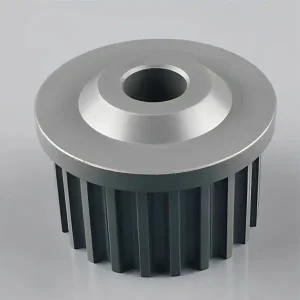
China China Water Pump Pulley Supplier Manufacturers, Suppliers
View Specs
Wholesale Leading Manufacturer for Customized MIM Injection Molds Metal Aviation Parts CNC Machining Process Manufacturers, Supplier
View Specs
China Discountable price Metal Injection Molding MIM Sintered Parts Manufacturer for Precision Machinery Steel Components Manufacturers, Factories
View Specs
China Fast delivery China Precision Sintered High Quality Drinking Water Filter Funnel Suppliers, Factories
View Specs
Metallurgical Engineering Insight
What is the Aluminum Injection Molding (AIM) Process?
A comprehensive paradigm shift in lightweight component manufacturing combining plastic injection geometry with light alloy performance.
The Aluminum Injection Molding Process (AIM)—often categorized under the broader umbrella of powder metallurgy and specialized Metal Injection Molding (MIM)—represents an advanced manufacturing technology designed to produce complex, high-precision, net-shape aluminum alloy components. Traditionally, metal injection molding focused heavily on stainless steels (such as 17-4PH and 316L), low-alloy steels, and titanium alloys. However, global procurement demands for lightweighting, thermal conductivity, and structural integrity have propelled aluminum-based powder metallurgy into the spotlight.
As an established wholesale aluminum injection molding process manufacturer & supplier, Ningbo Jiehuang Chiyang Electronic Tech Co., Ltd. (JHMIM) bridges the historical gap between plastic injection molding versatility and structural metal performance. By combining ultra-fine spherical aluminum alloy powders (e.g., AlSi10Mg, Al-6061 equivalent, Al-7075 systems) with thermoplastic binder matrixes, the AIM process facilitates complex 3D geometries—such as internal fluid channels, micro-thin cooling fins, undercuts, and cross-drilled bosses—that are either physically impossible or financially prohibitive via conventional CNC machining or High-Pressure Die Casting (HPDC).
98%+
Sintered Relative Density
±0.3%
Precision Tolerances (CCT)
95%
Raw Material Utilization
30-50%
Unit Cost Reduction vs CNC
Overcoming the Oxide Layer Challenge in Aluminum Powder Metallurgy
Historically, aluminum was considered notoriously difficult for injection molding sintering due to the stable, refractory oxide layer ($\text{Al}_2\text{O}_3$) that naturally envelopes fine aluminum particles. This oxide shell acts as a diffusion barrier during thermal consolidation. Modern AIM breakthroughs overcome this barrier using proprietary liquid phase sintering additives (typically magnesium, silicon, or trace rare-earth elements) coupled with high-purity nitrogen/argon vacuum sintering atmospheres. This metallurgical mechanism breaks down the oxide interface, achieving sintered densities exceeding 98% of theoretical density and yielding mechanical properties comparable to wrought aluminum stock.
Macro Procurement Dynamics
Global Industry Trends & Procurement Demands
Analyzing why Tier-1 automotive, telecom, aerospace, and medical OEMs are shifting toward custom powder metallurgy and lightweight aluminum injection molded components.
Automotive EV Lightweighting
With the rapid transition toward Electric Vehicles (EVs), reducing kerb weight directly extends battery range. Wholesale aluminum injection molding allows OEM designers to replace heavy cast iron or stamped steel brackets, pump gears, electronic control unit (ECU) heat sinks, and battery sensor housings with ultra-light, high-strength aluminum parts.
5G & Optical Communications
Next-gen 5G micro base stations, optical transceivers, and radar modules generate substantial thermal flux in compact envelopes. Aluminum MIM components provide thermal conductivity up to $160–200 \text{ W/m}\cdot\text{K}$, enabling integrated micro-cooling fins with complex geometry that standard die casting cannot match without flash or porosity.
Supply Chain Resilience & TCO
Global procurement managers face intense pressure to reduce Total Cost of Ownership (TCO). Aluminum injection molding delivers net-shape execution, eliminating multi-axis CNC machining passes, reducing raw material waste from 70% down to under 5%, and minimizing supply chain single-point failure risks.
Manufacturing Engineering
Step-by-Step Aluminum Injection Molding Workflow
How Ningbo Jiehuang Chiyang Electronic Tech Co., Ltd. transforms raw metal powder into ultra-precise OEM components.
01
Feedstock Preparation
Gas-atomized spherical aluminum powder (average particle size 10–25 $\mu\text{m}$) is homogeneously blended with a multi-component polymer/wax binder at controlled shear temperatures, producing thermal-stable feedstock pellets.
02
Precision Injection Molding
Feedstock pellets are injected into multi-cavity hardened steel molds on specialized MIM machines, forming a "Green Part" with exact dimensional expansion factors to account for sintering shrinkage.
03
Two-Stage Debinding
Solvent immersion removes the primary wax constituent, followed by controlled thermal debinding to eliminate residual binder polymers, producing a porous yet cohesive "Brown Part".
04
Atmospheric Sintering
Brown parts undergo solid-state / liquid-phase sintering in vacuum nitrogen furnaces at precise temperatures (580°C–630°C). Metallurgical bonding yields fully dense metal parts.
Technical Benchmarking
AIM vs High-Pressure Die Casting vs CNC Machining
Selecting the optimum manufacturing technology based on annual production volume, wall thickness, thermal performance, and geometric complexity.
| Process Parameter | Aluminum Injection Molding (AIM) | High-Pressure Die Casting (HPDC) | CNC Precision Machining |
|---|---|---|---|
| Min. Wall Thickness | 0.5 mm - 1.0 mm | 1.5 mm - 2.5 mm | 0.8 mm (risk of chatter/warp) |
| Dimensional Tolerance | ±0.3% - ±0.5% (CT3-CT5) | ±0.5% - ±0.8% (CT6-CT8) | ±0.005 mm - ±0.01 mm |
| Internal Porosity | Near zero (>98% density) | High gas/shrinkage porosity | Zero (wrought billet stock) |
| Geometric Freedom | Extreme (3D internal features, undercuts) | Moderate (draft angles required) | Limited by tool reach & setup |
| Material Scrap Rate | < 5% (recyclable sprue) | 10% - 20% (gates/runners) | 50% - 85% (chip waste) |
| Economic Production Volume | 2,000 to 1,000,000+ pcs | 10,000+ pcs | 1 to 2,000 pcs |
| Secondary Machining Needs | Minimal to None | High (flash removal, trimming, threads) | Primary Operation |
Material Metallurgy & Applications
Engineering Material Matrix & OEM Applications
Selecting specialized metal formulations tailored to specific mechanical, thermal, and environmental stress profiles.
Ningbo Jiehuang Chiyang Electronic Tech Co., Ltd. (JHMIM) offers a versatile portfolio of powder metallurgy alloys. In addition to our core aluminum MIM (AlSi10Mg, Al-6061, Al-7075), we manufacture high-density stainless steel, low-alloy steel, titanium, and ceramic injection molded components:
AlSi10Mg & Al-6061 AIM Alloys
Key Properties: High strength-to-weight ratio, thermal conductivity up to $170 \text{ W/m}\cdot\text{K}$, excellent anodizing response, density $\approx 2.68 \text{ g/cm}^3$.
Target Applications: Drone frame hinges, EV inverter micro-coolers, optical transceiver brackets, handheld power tool housings, handheld gimbal joints.
17-4PH & 316L Stainless Steel MIM
Key Properties: Tensile strength up to $1150 \text{ MPa}$ (17-4PH H900), superior corrosion resistance, high hardness, yield stress integrity.
Target Applications: Medical surgical handles, laparoscopic instrument jaws, automotive VVT sprockets, firearm triggers, industrial mini valve bodies.
E-E-A-T Quality Assurance
Quality Control, Compliance & Global Support
Strict adherence to international automotive, medical, and industrial standards supported by an experienced in-house engineering team.
IATF 16949 & ISO 9001 Certified
Our 28,000 m² Ningbo manufacturing plant operates under audited quality control management systems, featuring zero-defect APQP, PPAP Level 3 documentation, and lot-level MES traceability.
Advanced Metrology Lab
Equipped with Zeiss CMM 3D scanning, optical profile projectors, metallographic micro-structure analyzers, salt spray test chambers, and helium leak detection for pressure-tight components.
Free Engineering DFM Review
Every 2D/3D drawing submitted is audited by senior metallurgical engineers within 24–48 hours to optimize draft angles, radii, wall uniformity, and tooling cost efficiency before cutting steel.
Next-Gen Powder Metallurgy
Technology Roadmap & Future Outlook
Pioneering innovations in aluminum feedstock chemistry, eco-friendly debinding systems, and hybrid additive-MIM tooling.
The trajectory of aluminum metal injection molding is rapidly accelerating, driven by breakthroughs in nanoscale metal powder synthesis and green manufacturing protocols:
- Ultra-Fine Nano Powders: Sub-micron aluminum alloy powders are enabling sintering temperatures below 550°C, drastically lowering energy consumption while improving grain boundary cohesion.
- Water-Soluble Environmentally Friendly Binders: Shifting away from solvent-based debinding toward non-toxic, water-extractable binder systems reduces VOC emissions by 90%.
- Hybrid Additive-MIM Manufacturing: Utilizing metal 3D printing (SLM/DMLS) for rapid pre-series functional prototypes, seamlessly transitioning to high-cavitation AIM tooling once designs are validated.
Complete Wholesale Catalog
Advanced MIM & Powder Metallurgy Hardware
Explore our broader range of custom engineered sintered components, titanium MIM, and precision gear solutions.

Wholesale Trending Products China Spherical Ta1 Alloy Powder for Spraying/Weldable Supplier, Suppliers
View Specs
China Super Lowest Price Powder Metallurgy Micro Precision Machining for Auto Metal Truck Stainless Stee Accessory Auto Parts by MIM Suppliers, Factories
View Specs
China Rapid Delivery for Custom Stainless Steel Die Casting Parts Metal Work Shenzhen Supplier Manufacturers, Supplier
View Specs
China Discount wholesale Customizing Service 304 316 Stainless Steel Precision Casting Machinery Component Manufacturer, Factories
View Specs
China Massive Selection for China OEM ODM Stainless Steel MIM Parts Wireless Headphones Headsets Ear Cap Manufacturer, Factory
View Specs
China Factory Selling Powder Metallurgy Sintering Parts for Car Camshaft Vvt Engine Chain Sprocket Manufacturer, Manufacturers
View Specs
China Online Exporter China OEM Plastic Injection Molding Factory Plastic Molding Company Manufacturer, Suppliers
View Specs
Wholesale Customized alloy metal metallurgy machinery sintered powder metallurgy auto parts Supplier, Factories
View Specs
Technical & Procurement Insights
Frequently Asked Questions (FAQ)
Detailed technical answers to common queries regarding Aluminum Injection Molding and custom MIM manufacturing.
Accelerate Your Hardware Development
Request a Free Engineering DFM & Quotation in 48 Hours
Partner with Ningbo Jiehuang Chiyang Electronic Tech Co., Ltd. (JHMIM)—your trusted wholesale aluminum injection molding process manufacturer & global supplier. Send us your STEP/PDF drawings today.
Direct Sales Email: [email protected] | Phone/WhatsApp: +86-13605745108