
Featured Sintered Metallurgy & Precision OEM Products
Explore our certified inventory and OEM custom capability portfolio engineered for severe industrial applications.

China Best-Selling Zinc Die Cast Set Screw Galvanized Steel Pipe Conduit EMT Coupling Hot Sale Factory
View Specifications
Wholesale Supply ODM Cutomized OEM Precision Parts Die Casting Auto Parts Manufacturer
View Specifications
China Quality Inspection Powder Metallurgy Pressed Copper Oil Bearing for Motor Supplier
View Specifications
Wholesale Factory Customized OEM Titanium Alloy Parts by MIM Sintering Process Manufacturers
View Specifications
Wholesale Precision Custom Hardware Accessories Magnesium Zinc Aluminum Parts Die Casting
View Specifications
China ODM CNC Custom MIM Stainless Steel Parts Sintering Metal Parts for Machinery Spare Parts
View Specifications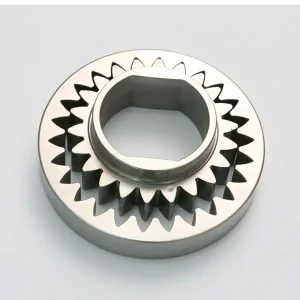
China Sintered Oil Pump Gear Supplier Manufacturer & High Precision Gear Factory
View Specifications
Wholesale Best-Selling Aluminum Die Casting Factory for Valve/Pump/Motor Housing
View SpecificationsThe Tribological Metallurgy of Sintered Bronze: Industrial State & Market Analysis
A comprehensive analysis of powder metallurgy bronze alloys, capillary lubrication dynamics, and global supply economics.
Executive Overview: Why Sintered Bronze Dominates Modern Tribology
Sintered bronze represents the apex of porous powder metallurgy (PM), offering an unprecedented synergy of mechanical load-bearing capacity and self-contained lubrication. Manufactured primarily through the consolidation of atomized copper-tin elemental or pre-alloyed powders, the process relies on solid-state thermal diffusion to bond metal particles without melting the primary matrix. The resulting porous network acts as an interconnected microscopic reservoir capable of holding up to 30% oil by volume through vacuum impregnation.
In modern mechanical design, components utilizing sintered bronze (such as bushings, flange bearings, thrust washers, and porous filter media) solve critical failure points associated with boundary friction. As shaft speeds increase, frictional heat induces thermal expansion within the retained lubricant. The oil expands out of the porous bronze network onto the bearing surface, establishing a continuous hydrodynamic fluid film. When rotation ceases, capillary forces draw the lubricant back into the sintered bronze structure, completely eliminating dry-start wear and liquid leakage risks inherent to conventional grease nipples.
Capillary Lubrication Mechanics
Interconnected porosity acts as a microscopic network of capillary channels. Vacuum-impregnated synthetic or mineral oils (ISO VG 68 to VG 150) automatically bleed to the surface under thermal shear stress, forming a friction coefficient (μ) as low as 0.04 to 0.12.
High Pressure-Velocity (PV) Limits
Engineered for harsh kinetic dynamics, standardized SAE 841 sintered bronze handles continuous PV values up to 50,000 psi-fpm (static pressure limits exceeding 2,000 PSI), making it optimal for high-rpm fractional horsepower motors.
Corrosion & Wear Resistance
Unlike iron-based sintered materials (FC-0208), tin-bronze matrices (CuSn10, 89-11 composition) exhibit exceptional resistance to atmospheric oxidation, weak acids, and marine salt environments without requiring electroplating.
Technical Process Roadmap: Powder to Precision Component
Inside the metallurgical synthesis: Controlling density gradients, sintering atmospheres, and dimensional calibration.
Stage 1: High-Purity Atomized Powder Preparation & Blending
The manufacturing cycle begins with spherical or irregular electrolytic copper powder (purity >99.7%) combined with atomized tin powder (90/10 nominal weight ratio). Solid lubricants such as synthetic graphite (0.5%–1.5%) or metallic stearates are blended in high-shear V-mixers to ensure uniform particle dispersion and optimal green strength during compaction.
Stage 2: Precision Multi-Axial Powder Compaction
Blended powder is automatically fed into tungsten-carbide die sets on advanced CNC multi-action mechanical or hydraulic press systems (ranging from 40 to 1,000 tons). Compaction pressures of 200–400 MPa consolidate the powder into a "green compact." Precise control over compaction speed prevents density gradients and ensures target volume porosity (typically 20%–25%).
Stage 3: Atmosphere-Controlled Liquid-Phase Sintering
Green compacts enter continuous mesh-belt furnaces under endothermic gas or dissociated ammonia protective atmospheres (N2/H2 balance) at temperatures between 780°C and 830°C. Tin melts (melting point 232°C) and diffuses into the copper matrix, forming alpha-phase bronze necking. Pore morphology shifts from angular to smooth, spherical geometries, retaining structural integrity.
Stage 4: Coining (Sizing) & Secondary Oil Impregnation
Post-sintered bronze components undergo sizing (coining) in high-precision press dies to collapse surface irregularities, guaranteeing ISO h6/h7 shaft tolerances and IT6/IT7 housing tolerances. Finally, parts are transferred to vacuum-pressure oil impregnation chambers, saturating internal micropores with specialized lubricants (such as synthetic ester or MIL-L-6085 oils).
Standardized Sintered Bronze Alloy Comparison
Selection matrix based on ASTM B438, SAE 841, SAE 863, and ISO 2795 industrial standards.
| Material Grade | Composition (Cu/Sn/Other) | Density (g/cm³) | Porosity (% vol) | Tensile Strength (MPa) | Max PV Value (PSI-FPM) | Primary Applications |
|---|---|---|---|---|---|---|
| SAE 841 (CuSn10) | 88-90% Cu / 9-11% Sn / 1.5% Max C | 6.4 - 6.8 | 18 - 26% | 130 - 160 | 50,000 | Standard self-lubricating bearings, electric motor bushings, HVAC fans. |
| SAE 863 (Bronze-Iron) | 18-22% Cu / Balance Fe / 1% C | 5.8 - 6.2 | 18 - 24% | 220 - 280 | 35,000 | Heavy-duty farm equipment, high-impact linkages, off-highway pivots. |
| CuSn6Pb6Zn3 (Leaded Bronze) | 85% Cu / 6% Sn / 6% Pb / 3% Zn | 6.8 - 7.2 | 12 - 18% | 170 - 210 | 40,000 | Hydraulic piston shoes, high-load thrust washers, wear plates. |
| High-Purity Sintered Cu | 99.5% Min Cu | 7.2 - 7.6 | 10 - 15% | 110 - 140 | 20,000 | Electrical contacts, heat sink substrates, thermal dissipation blocks. |
Localized Industrial Application Scenarios
Where OEM manufacturers deploy sintered bronze components for maintenance-free service lives.
Automotive Subsystems
Widely utilized in starter motor armature bushings, windshield wiper pivot arms, electronic throttle control actuators, and seat adjustment gearboxes. Sintered bronze withstands temperature swings from -40°C to +150°C without lubricant breakdown.
HVAC & Home Appliances
Crucial for ultra-quiet operation in electric fan motors, washing machine drain pumps, kitchen range hoods, and air conditioner compressor actuators. Porous bronze eliminates acoustic chatter associated with ball bearings.
Industrial Automation & Robotics
Deployed as precision guide bushings in pneumatic cylinders, linear actuators, packaging equipment, and conveyor rollers where liquid grease risks contaminating cleanroom environments or foodstuffs.
China Factory Supply Chain Resilience & Cost Efficiency
Unlocking competitive OEM advantages through vertical metallurgical integration and advanced automated pressing infrastructure.
Vertical Metal Powder Ecosystem
Our strategic industrial footprint in Ningbo connects directly with China's largest electrolytic copper and atomized powder refining hubs. Raw material hedging and bulk storage ensure stable pricing structures even during international metal exchange volatility.
In-House Tooling & EDM Fast-Track
Equipped with modern CNC wire-EDM, high-speed milling, and carbide die polishing facilities, our tooling lead times average just 15 to 20 business days—reducing time-to-market by 50% compared to Western manufacturing setups.
Mass Automation & Low Unit Cost
By leveraging fully automated multi-stage presses integrated with machine-vision inspection systems, labor costs per part are drastically reduced, enabling wholesale buyers to achieve 30% to 45% margin enhancements.
Global Quality Assurance & Localized Compliance
Rigorous metallurgical testing and environmental certifications guaranteeing seamless international supply chain integration.
IATF 16949 & ISO 9001 Certified Quality
Every batch of sintered bronze undergoes rigorous Quality Control (QC) checkpoints. From incoming powder mesh size distribution to post-sintering radial crush strength tests (per ASTM B438), quality is verified in ISO/IEC 17025 accredited labs.
Full Environmental & Chemical Compliance
All bronze formulations comply strictly with EU RoHS, REACH, and Conflict Minerals regulations. Lead-free alloys (such as CuSn10 eco-variants) are readily available for food-contact, medical, and potable water application compliance.
Global Logistics & Localized Engineering Support
We offer global DDP, FOB, and CIF shipping with dedicated engineering assistance across North America, Europe, and Asia-Pacific. Sample validation reports include CMM dimensional analysis, porosity checks, and chemical spectral data.
Future Outlook: Next-Generation Sintered Bronze Innovations
Pioneering the next era of tribology: Nano-additives, green sintering technologies, and hybrid solid-matrix formulations.
Graphene & MoS₂ Self-Lubricating Matrices
Integrating nano-graphene nanoplatelets and molybdenum disulfide directly into the bronze matrix during powder blending. This innovation creates dry-film operating capabilities exceeding 400°C where liquid oils breakdown or vaporize.
AI-Driven Compaction Density Modeling
Deploying finite element analysis (FEA) and machine learning algorithms to simulate powder flow and compaction dynamics in complex, multi-tiered dies, eliminating internal stress concentrations prior to physical tooling.
Zero-Emission Hydrogen Sintering Furnaces
Transitioning mesh-belt sintering lines to 100% green hydrogen protective atmospheres, completely removing carbon monoxide emissions while increasing copper-tin lattice bonding strength by up to 15%.
Expanded Precision Components & Die-Casting Catalog
Discover our complementary custom OEM capabilities, including precision aluminum die casting, MIM parts, and gear assemblies.

Wholesale Cheap PriceList Precision Aluminum Vacuum Casting ADC12 Motor Housing Manufacturer
View Specifications
Wholesale Sintered Process Powder Metallurgy Parts for Auto Steering Gear Rack Gears
View Specifications

China Online Exporter OEM Plastic Injection Molding Factory Manufacturer Suppliers
View Specifications

China Custom High Precision Metal Injection Mold MIM PM Gear Structure Powder Metal Parts
View SpecificationsTechnical & OEM Procurement FAQ
Addressing common engineering, manufacturing, and supply chain queries regarding sintered bronze components.
What is the standard porosity range for self-lubricating sintered bronze bearings?
Standard SAE 841 sintered bronze bearings maintain an interconnected volume porosity between 18% and 28%. This porosity level allows vacuum oil impregnation of up to 30% by volume while retaining radial crush strengths suitable for continuous industrial duty (minimum 130 MPa tensile equivalent).
How does sintered bronze differ from solid cast bronze (e.g., C93200 SAE 660)?
Solid cast bronze relies entirely on external grease or oil fittings for lubrication and requires machining from solid bars. Sintered bronze is pressed to near-net shape from metal powders, featuring porous internal micro-reservoirs filled with oil that provide maintenance-free self-lubrication, while significantly reducing raw material waste and unit cost.
Can sintered bronze components be re-machined or ground by the end user?
Secondary machining of porous sintered bronze requires extreme care. Standard turning or grinding tools tend to smear the soft copper-tin matrix across the surface, closing off surface micropores and ruining the self-lubricating function. Diamond-tipped tooling or specialized burnishing tools are recommended if post-machining is mandatory.
What types of oil are used for factory vacuum impregnation?
The standard lubricant is high-refinement non-detergent mineral oil with viscosity grades ISO VG 68 or ISO VG 100 containing anti-oxidation and anti-foaming additives. For extreme temperature applications (-40°C to +200°C), synthetic diester or fluorinated lubricants (PFPE) are utilized.
What dimensional tolerances can be achieved via coining/sizing?
Post-sintering coining achieves outer diameter (OD) and inner diameter (ID) tolerances within ±0.012 mm (ISO h6/IT7). Concentricity and perpendicularity are routinely held under 0.02 mm, eliminating the need for expensive finishing operations.
What is your typical minimum order quantity (MOQ) and sample lead time?
Standard production MOQ for custom sintered bronze parts is 2,000 pieces for MIM/PM setups and 5,000 pieces for standard bushings. Tooling design and initial prototype samples are completed within 15 to 25 calendar days, with rapid DFM reports returned within 48 hours.