Wholesale Chemical & Gas Filtration Elements Manufacturers & Factories

Industrial Engineering Whitepaper & OEM Global Procurement Guide: Advanced Sintered Metals, Porous Alloys, and High-Purity Gas & Liquid Separation Matrices.

Macro Industry Solutions & Global Industrial Context

In modern process manufacturing, gas purification, and chemical processing, **chemical & gas filtration elements** serve as essential safeguards for mechanical equipment, process purity, and environmental safety. As worldwide manufacturing transitions toward tighter emission controls, decarbonization, and extreme sub-micron processing tolerances, the global market for specialized filtration media has expanded dramatically.

99.999%
Gas Capture Efficiency
1,000 °C
Max Operating Temp
300+ Bar
Differential Pressure Tolerance
ISO 9001
IATF 16949 Certified

Industrial buyers, engineering contractors (EPCs), and plant operators face complex challenges: increasing chemical aggressiveness, high fluid viscosity, elevated pressure gradients, and thermal shocks. Traditional polymer membranes often fail in high-temperature or organic solvent applications. Consequently, **sintered metal powder elements, porous alloys, and metal injection molding (MIM) filtration matrices** have become critical components across global supply chains.

Petrochemical & Refining

Used in catalyst recovery units, fluid catalytic cracking (FCC) slurry filtration, and aggressive sour gas stripping. Sintered 316L and Hastelloy elements prevent downstream compressor fouling and catalytic bed contamination.

Semiconductor & Ultra-Pure Gas

Micro-electronics manufacturing relies on ultra-high purity (UHP) gas distribution lines. Porous nickel and stainless steel elements remove particles down to 0.003 µm in corrosive gases such as Silane (SiH4), Ammonia (NH3), and Hydrogen Chloride (HCl).

Green Hydrogen & Energy

As hydrogen electrolyzers scale globally, sintered porous transport layers (PTL) and titanium gas diffusion elements provide key structural support and chemical stability under electrolysis conditions.

Metallurgical Physics, Porosity Control & Material Engineering

The performance of wholesale filtration elements depends directly on precise powder metallurgy (PM), metal injection molding (MIM), and controlled vacuum sintering processes. Engineering teams evaluate key physical metrics including **bubble point pressure (ASTM F316)**, **absolute pore size distribution (MPS)**, and **Darcy's permeability coefficient (k)**.

Information Gain Insight: Unlike surface-membrane filters that accumulate cake rapidly and suffer catastrophic pressure drops ($\Delta P$), sintered porous metal elements offer *depth filtration*. Particles are trapped across a controlled 3D matrix. This structure enables hydraulic backwashing and sonic cleaning, extending element service life by up to 500% over synthetic polymer cartridges.
Material Specification Operational Temp Range Corrosion Resistance Profile Typical Application Scenarios
316L Stainless Steel -200 °C to 450 °C Excellent in organic solvents, mild acids, alkaline gases General chemical liquids, steam filtration, hydraulic systems
Hastelloy C-276 -100 °C to 650 °C Exceptional resistance to wet chlorine, ferric acid, sulfur oxides Sour gas stripping, flue gas desulfurization, fine chemical processing
Titanium Grade 1 & 2 -150 °C to 300 °C Superior in nitric acid, sea water, active oxidizing environments Medical gas purification, marine desalination, ozone gas injection
Inconel 600 / 625 Cryogenic to 900 °C Outstanding high-temperature oxidation & carburization resistance High-temp synthetic gas filtration, nuclear waste gas processing
Porous Pure Nickel (Ni 200) -100 °C to 500 °C High resistance to anhydrous fluorides and caustic alkalis UHP electronic grade gas delivery, caustic soda processing

Localized Application Scenarios & Installation Engineering

Global industrial buyers require tailored configurations based on localized operating conditions, ambient environmental factors, and regional safety mandates. Direct integration into process lines relies on precise end-cap fitting designs, fluid flow geometry, and mechanical housing compatibility.

1. Industrial Off-Gas Purification

In European and North American chemical parks, plants must comply with stringent particulate emission limits (< 1 mg/Nm³). High-temperature sintered filter candles are integrated into thermal oxidizers and waste-to-energy exhaust flues to capture toxic particulate matter without requiring pre-cooling stages.

2. High-Pressure Gas Injection

In Middle Eastern oil & gas fields, gas sparging elements require high structural strength to inject carbon dioxide or natural gas into deep reservoirs at differential pressures exceeding 200 Bar. Sintered metal elements handle these pressure differentials without risking fiber migration or structural collapse.

3. Pharmaceutical Liquid Clarification

Sterile chemical manufacturing in North America and Asia-Pacific relies on cGMP-compliant porous titanium funnel filters and MIM housing housings. These components offer low protein absorption, complete steam-in-place (SIP) sterilizability, and smooth surface finishes down to Ra < 0.4 µm.

Regulatory Compliance, QA Protocols & OEM Localization Support

For global procurement managers, sourcing chemical & gas filtration elements from overseas factories requires rigorous verification of product quality, traceability, and localized engineering support. Ningbo Jiehuang Chiyang Electronic Tech Co., Ltd. (JHMIM) maintains complete operational compliance with international engineering standards.

Pressure Vessel Certifications

All OEM filtration elements and pressure housings can be manufactured to conform with **ASME Section VIII Division 1** and **EU Pressure Equipment Directive (PED 2014/68/EU)** requirements, complete with non-destructive testing (NDT) documentation.

Quality System Traceability

Operating under **ISO 9001:2015** and **IATF 16949:2016** quality systems, every manufacturing batch undergoes full material spectrographic analysis, coordinate measuring machine (CMM) dimensional verification, and bubble-point integrity testing.

Chemical & Environmental Audits

Materials comply fully with **REACH**, **RoHS**, and **FDA 21 CFR 177.2600** standards for food and pharmaceutical contact, ensuring smooth regulatory clearance across customs jurisdictions in North America, Europe, and Asia.

Technology Roadmap & Future Outlook (2025–2035)

The next decade of industrial filtration technology is defined by advanced additive manufacturing, micro-structural gradient design, and real-time operational sensing. Industrial buyers who adopt modern filtration technologies gain distinct operational advantages through lower total cost of ownership (TCO) and reduced energy consumption.

Gradient Porosity via SLM 3D Printing

Using Selective Laser Melting (SLM), next-generation elements feature continuous pore gradient structures—coarse on the exterior to trap macro-contaminants, and fine in the interior for absolute retention. This design lowers initial pressure drop ($\Delta P$) by up to 40% while doubling dirt-holding capacity.

AI-Powered Predictive Maintenance

Integrating differential pressure sensors directly into smart filtration manifolds allows AI telemetry models to predict cake build-up rate, calculate remaining useful life (RUL), and schedule automated backwashing cycles without human intervention.

Functionalized Surface Coatings

Applying hydrophobic, oleophobic, or catalytic coatings via Atomic Layer Deposition (ALD) transforms passive porous metal elements into active catalytic reactors, enabling simultaneous gas filtration and inline VOC destruction.

Frequently Asked Questions (OEM & Technical Procurement)

Answers to common engineering, ordering, and material verification questions encountered by procurement officers and plant engineers.

Q: What is the main operational advantage of sintered metal filtration elements over polymer or glass fiber elements?

A: Sintered metal elements provide mechanical strength, thermal stability (up to 1,000 °C depending on alloy choice), and chemical inertness. Unlike polymer media, metal elements withstand severe pressure spikes, can be backwashed or chemically regenerated repeatedly, and eliminate fiber shedding down the process line.

Q: How do you determine the correct pore size (micron rating) for a specific gas or liquid application?

A: Pore size selection balances retention efficiency against allowable initial pressure drop ($\Delta P$). Our engineering team evaluates particle size distributions using laser diffraction analysis and applies Darcy's Law equations to calculate the exact pore diameter required for your desired flow rate and gas viscosity.

Q: Can Ningbo Jiehuang (JHMIM) produce custom geometries and proprietary OEM designs?

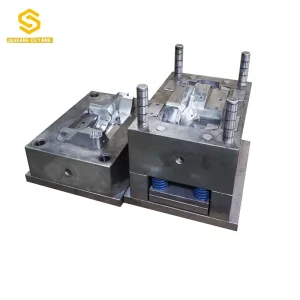
A: Yes. We specialize in custom OEM manufacturing. Utilizing in-house metal injection molding (MIM), powder metallurgy tooling, selective laser melting (SLM) 3D printing, and precision CNC finishing, we produce custom filter candles, disc matrices, threaded caps, and porous spargers directly from your 2D (PDF) and 3D (STEP) CAD models.

Q: What non-destructive testing (NDT) methods are used to verify filter element integrity?

A: Every batch undergoes Bubble Point Pressure testing according to ASTM F316 standards to verify maximum pore size integrity. Additionally, we conduct helium mass spectrometer leak detection, air permeability testing, and coordinate measuring machine (CMM) dimensional verification.

Q: What are the typical minimum order quantities (MOQs) and production lead times?

A: Standard MOQs are 2,000 pieces for MIM and custom CNC-machined components, and 5,000 pieces for conventional powder metallurgy items. Prototyping and pilot quantities via metal 3D printing can be accommodated. Tooling and initial sample production generally take 30 days, followed by rapid full-scale manufacturing.