
High-Precision Sintered & Molded Components
Explore our flagship OEM & Wholesale component capabilities engineered for critical industrial, automotive, and 3C applications.

China Trending Products Metal Foundry Customized Aluminum Die Casting
View Details
China Precision Sinter MIM 3C Industrial Hardware Component
View Details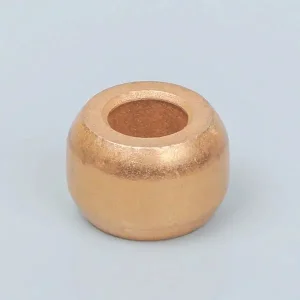
Wholesale High-Load Self-Lubricating Sintered Bushings
View Details
Precision Custom Hardware Accessories & Die Casting Alloys
View Details
Custom Sintering Metal Injection Molding MIM Auto & CNC Parts
View Details
Wholesale High Precision Mechanical CAM Design Sintered Parts
View Details
Customized Zinc & Aluminum Die Casting Components for Automotive
View Details
High Volume Production MIM Stainless Steel CNC Turning & Milling Parts
View DetailsPrecision Sintered Component Design & Powder Metallurgy Principles
Achieving near-net-shape perfection through thermal diffusion, controlled porosity, and tailored alloy matrices.
In high-volume component manufacturing, the transition from conventional subtractive CNC machining to Custom Sintered Component Design represents one of the most substantial efficiency gains available to modern mechanical engineers. Powder Metallurgy (PM) and Metal Injection Molding (MIM) utilize heat and pressure below the major melting point of the metal to fuse elemental or pre-alloyed powders into dense, highly complex geometries. Understanding the fundamentals of sintering thermodynamics is essential when specifying components for critical load-bearing, automotive powertrain, or surgical tool applications.
Solid-State vs. Liquid-Phase Sintering Kinetics
During the sintering process inside continuous mesh-belt or vacuum furnaces, two primary sintering mechanisms occur depending on the alloy system selected:
1. Solid-State Sintering: Applied predominantly to iron-copper powders, stainless steels (17-4PH, 316L), and structural iron-nickel alloys. Atomic transport takes place through surface diffusion, grain boundary diffusion, and volume diffusion. Temperature control within ±2°C is required across multi-zone sintering furnaces to prevent uneven volumetric contraction.
2. Liquid-Phase Sintering (LPS): Utilizing a low-melting constituent (such as copper in iron-copper systems or nickel-boron eutectic phases in heavy alloys) to form a microscopic liquid layer between solid grains. This liquid layer pulls particles together via capillary action, dramatically accelerating densification and yielding uniform isotropic mechanical properties across complex 3D profiles.
Design for Manufacturability (DFM) Rules for Sintered Components
Optimizing geometry for tooling press release, shrinkage control, and zero-defect mass production.
Wall Thickness & Uniformity
Maintain consistent cross-sectional thickness between 0.8 mm and 12 mm. Abrupt transitions cause differential thermal shrinkage during debinding and sintering, leading to micro-cracking or warping.
Internal & External Fillets
Always specify a minimum internal corner radius of 0.3 mm to 0.5 mm. Sharp corners create localized stress concentration points during high-pressure powder compaction and post-sinter quenching.
Draft Angles & Tool Ejection
For press-and-sinter conventional PM, specify a 0.5° to 1.5° draft angle along die walls. For MIM parts using multi-slide molds, undercuts are permissible via collapsible cores, eliminating post-machining.
Thread & Hole Integration
Holes parallel to the pressing direction can be pressed directly. Tapped threads or cross-hole features are co-molded in MIM or quickly completed via secondary CNC tapping or thread rolling.
Shrinkage Factor Compensation
MIM components shrink by 14% to 22% uniformly from green mold to final sintered part. Our engineering team builds CAD mold cavities using precise volumetric shrinkage algorithms for exact net tolerances.
Surface Roughness & Finishing
As-sintered components achieve Ra 1.6 to 3.2 µm. Secondary tumbling, electropolishing, or micro-bead blasting can reduce surface roughness down to Ra 0.4 µm for medical-grade or cosmetic specifications.
Engineering Alloys & Mechanical Properties Comparison
Comprehensive standard material grade selection for Powder Metallurgy (PM) and Metal Injection Molding (MIM).
| Material Alloy System | Common Standard Grade | Sintered Density (g/cm³) | Tensile Strength (MPa) | Yield Strength (MPa) | Hardness Range | Primary Target Applications |
|---|---|---|---|---|---|---|
| Precipitation Hardening SS | 17-4PH (UNS S17400 / MIM 17-4) | 7.60 - 7.78 | 1,150 - 1,350 | 1,000 - 1,200 | 38 - 45 HRC | Medical surgical instruments, aerospace latches, high-load gears |
| Austenitic Stainless Steel | 316L (UNS S31603 / MIM 316L) | 7.80 - 7.92 | 520 - 620 | 220 - 280 | 75 - 85 HRB | Marine hardware, chemical mini ball valves, wearable smart watch frames |
| Low Alloy Steel | Fe-2Ni-0.5C (MIM 4605 / FN-0205) | 7.50 - 7.65 | 1,450 - 1,650 (Q&T) | 1,250 - 1,400 | 45 - 55 HRC | Automotive transmission cams, power tool bevel gears, lock ratchets |
| Titanium Alloy | Ti-6Al-4V (Grade 5 TiMIM) | 4.40 - 4.45 | 890 - 980 | 820 - 900 | 30 - 36 HRC | Orthopedic implants, aerospace fasteners, ultralight sport hardware |
| Sintered Copper-Iron | FC-0208 (MPIF Standard 35) | 6.80 - 7.20 | 400 - 550 | 320 - 420 | 65 - 80 HRB | Self-lubricating engine bushings, timing belt pulleys, appliance oil-less bearings |
| Tungsten Heavy Alloy | W-Ni-Fe (ASTM B777 Class 3) | 17.5 - 18.5 | 850 - 1,050 | 600 - 750 | 28 - 34 HRC | Balance counterweights, radiation shielding inserts, vibration damping masses |
Why Sourcing Sintered Components from China Drives Competitive Edge
Combining world-class metallurgy R&D, rapid toolmaking capabilities, and complete turnkey finishing under one roof.
Integrated Ningbo Industrial Ecosystem
Located in the heart of East China's advanced manufacturing corridor (Ningbo-Shandong-Guangdong metal clusters), our facility accesses localized atomized powder suppliers, tooling shops, and surface platers, slashing lead times by 40%.
Capital Efficiency in Multi-Cavity Tooling
Custom MIM and PM molds produced in North America or Western Europe often incur heavy upfront tooling costs ($15,000–$45,000). Our in-house CNC wire-EDM mold shops deliver precision hardened D2/H13 tooling at a fraction of Western costs.
Strict Quality Assurance & Certifications
Operating under rigorous ISO 9001:2015 and IATF 16949 quality management frameworks. We perform 100% CMM dimensional checks, X-ray flaw detection for internal porosity, and 1-year product warranty coverage on all production batches.
Macro Industry Trends & Global Enterprise Procurement Dynamics
Understanding shifting manufacturing paradigms from subtractive machining to sustainable net-shape sintering.
1. The Rapid Acceleration of Green Energy & EV Lightweighting
Global automotive OEMs are redesigning transmission and actuator assemblies to eliminate unnecessary weight and reduce carbon footprints. Sintered component design allows engineers to integrate multiple discrete parts—such as dual-tier spur gears combined with splined shafts—into a single molded component. This reduces vehicle assembly steps, lowers overall system mass, and minimizes material scrap rates to less than 3% (compared to 40%–60% scrap material generated during conventional CNC milling from solid bar stock).
2. Miniaturization of Robotics & Wearable Biocompatible Hardware
The exponential growth of surgical robotics, human-robot interaction gearboxes, and wearable consumer electronics requires ultra-small components with highly complex contours. Metal Injection Molding (MIM) using fine powders (d50 < 10 µm) enables mass manufacture of micro-levers, planetary gearbox pinions, and stainless steel frames with wall thicknesses down to 0.4 mm while maintaining high mechanical strength and corrosion resistance.
3. Resilient Sourcing: Dual-Track Supply Chain Management
Fortune 500 industrial buyers are adopting strategic procurement models where initial prototype verification and pilot series utilize rapid metal 3D printing (Direct Metal Laser Sintering), followed by seamless transition into production multi-cavity sintering molds in China. Partnering with an established factory capable of offering both DFM engineering review and volume production protects global clients against supply bottlenecks while preserving capital flexibility.
Turnkey Industry Solutions & Application Scenarios
Tailored metallurgical component solutions engineered for demanding global operating environments.
Automotive Powertrain
Variable Valve Timing (VVT) rotors, oil pump gears, transmission sync rings, and seat recliner mechanisms made from high-density heat-treated steel.
Medical Technology
Endoscopic surgical stapler jaws, laparoscopic graspers, scalpel handles, and dental handpiece gears utilizing 17-4PH and Ti-6Al-4V powders.
Hardware & Security
High-security lock cylinders, deadbolt cams, smart door lock clutch hubs, and padlocks sintered for wear resistance and anti-drill protection.
Industrial Power Tools
Planetary gear carriers, impact wrench anvils, bevel gears, and hammer drill cams subjected to extreme cyclic fatigue loads and high-torque transmission.
Advanced Sintering, Ceramic & Hardware Products
Browse our specialized product lines manufactured with precision sintering and molding equipment.

Wholesale High-Purity Ceramic Injection Molding (CIM) Custom Parts
View Details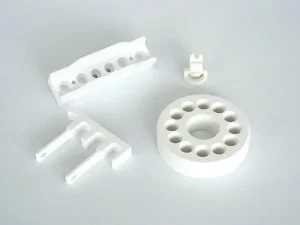
Precision Sintered Alumina Ceramic Components for Wear Resistance
View Details
Custom SS304 SS316 SS17-4 Metal Injection Molding Hardware Components
View Details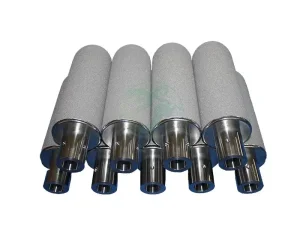
China Porous Sintered Stainless Steel Metal Filter Elements
View Details
Custom Powder Metallurgy Stainless Steel MIM Hardware Components
View Details
High Precision Stainless Steel Watch Frame MIM Components Supplier
View Details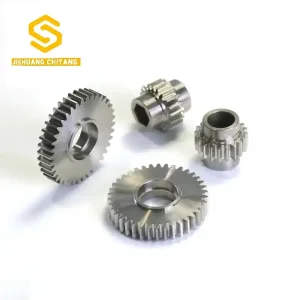
China OEM Precision Automotive Powder Metallurgy Gears Factory
View Details
Stainless Steel Sintered Powder Metallurgy PM MIM Electronic Gear Part
View DetailsFrequently Asked Questions on Custom Sintered Component Engineering
In-depth responses from our engineering team to assist your technical evaluation and sourcing decisions.
What is the primary technical difference between Powder Metallurgy (PM) and Metal Injection Molding (MIM)?
Conventional Powder Metallurgy (PM) utilizes uniaxial pressing of coarse powders in rigid steel dies, making it ideal for 2.5D geometries like spur gears, bushings, and flat plates. Metal Injection Molding (MIM) mixes ultra-fine metal powders with a polymeric binder system to inject complex 3D shapes (undercuts, cross-holes, thin walls) using modified plastic injection tooling.
What standard tolerances can be maintained on custom sintered components?
As-sintered tolerances for conventional PM components typically achieve ISO 2768-m (±0.05 mm to ±0.1 mm per 25 mm). For MIM parts, standard tolerances range between ±0.3% to ±0.5% of nominal dimension. Where tighter tolerances (e.g., ±0.005 mm) are required for bearing seats or gear journals, secondary sizing, coining, or CNC grinding operations are applied.
Can sintered stainless steel (316L / 17-4PH) achieve high corrosion resistance?
Yes. When sintered in high-vacuum or hydrogen atmosphere furnaces at temperatures above 1,300°C, MIM 316L achieves densities exceeding 7.8 g/cm³ (over 98% of wrought density). This high density eliminates interconnected surface porosity, passing standard 96-hour to 480-hour salt spray corrosion tests under ASTM B117 standards.
What is the typical prototype-to-production lead time for new custom tooling?
We offer rapid metal 3D printing (DMLS/SLM) or fast soft-tooling for initial design validation within 7 to 10 days. Production multi-cavity hardened steel tooling (H13/D2) and First Article Inspection (FAI) sample submittal typically require 25 to 35 calendar days, supported by full PPAP Level 3 documentation upon request.
Request Your Free DFM Engineering Review & Quotation
Upload your 2D (PDF) and 3D (STEP/IGES) CAD drawings today. Our senior metallurgical engineers will evaluate your part geometry, recommend optimal alloy selection, and deliver a detailed commercial quote within 48 hours.