
Featured Precision Components & Tooling Portfolio
Explore our top-tier manufactured tooling assemblies, powder metallurgy components, and custom die cast housings configured for high-volume global distribution.







The Engineering Paradigm of Modern Die Cast Tooling Manufacturing
Evaluating global market dynamics, thermal stress physics, tool steel metallurgy, and lifecycle optimization strategies for OEM buyers.
Global Tooling Reality
Die cast tooling serves as the structural backbone of lightweight metal alloy fabrication across North America, Europe, and Asia-Pacific. Modern high-pressure die casting (HPDC) tooling operates under brutal thermodynamic conditions, enduring rapid cycling between 200°C and 700°C within fractions of a second. Tier-1 buyers demand mold life exceeding 100,000 shots for aluminum and upwards of 500,000 shots for zinc tooling.
Metallurgical Selection
Tool steel choice dictates yield resistance and heat checking protection. High-grade premium AISI H13, Dievar, Orvar, and 1.2344 ESR (Electro-Slag Remelted) steels undergo rigorous ultrasonic defect scanning and vacuum heat treatments. Precision tempering ensures microstructural homogeneity, eliminating premature thermal fatigue cracking during high-velocity molten alloy injection.
Thermal Fatigue Management
Thermal checking accounts for over 75% of tool replacements globally. Engineered gating systems, finite element thermal simulation (FEA), and balanced dielectric flow control are critical to controlling delta-T across the cavity insert surface. Minimizing localized hot spots extends mold operational parameters significantly while safeguarding dimensional repeatability.
Why Global Procurement Teams Source Tooling from China
Integrating dense industrial supply clusters, ultra-high-speed 5-axis CNC machining, and streamlined engineering feedback loops.
Rapid T1 Lead Times
Chinese tooling specialists leverage concentrated regional clusters for specialty steels, heat treatment, EDM wire-cutting, and standard mold bases (HASCO/DME). This structural ecosystem drops prototype tooling development cycles to as few as 20 to 30 days from final CAD sign-off.
High-Speed 5-Axis Milling
By implementing high-RPM (20,000+ RPM) graphite electrode machining and high-speed direct milling of hardened tool steels (up to HRC 54-58), toolmakers achieve pristine surface finishes (Ra 0.4 µm) without requiring labor-intensive manual polishing that distorts tight geometry.
Cost Density Efficiency
Tooling CAPEX in Western facilities can quickly erode ROI for OEM product launches. Chinese tooling suppliers provide a 30% to 50% capital efficiency ratio while maintaining rigorous CMM dimensional control, material certification, and international standard mold compliance.
Single-Source Turnkey Capabilities
From initial design-for-manufacturability (DFM) reporting and mold flow modeling to high-volume injection die casting, post-CNC precision machining, and custom surface plating, China's integrated tooling hub minimizes supply chain friction.
Die Cast Tooling vs. Alternative Production Tooling Systems
Comprehensive metallurgical, dimensional, and financial breakdown for selecting optimal tooling architectures based on material and volume requirements.
| Tooling Class / Process | Primary Alloys Cast | Tool Steel Materials | Mold Life Expectancy | Dimensional Tolerance | Relative Tooling CAPEX |
|---|---|---|---|---|---|
| Aluminum High-Pressure Die Tooling | A380, A360, ADC12, AlSi10Mg | AISI H13, Dievar, 1.2344 ESR | 100,000 – 150,000 Shots | ±0.025 mm to ±0.05 mm | Moderate to High |
| Zinc Precision Die Tooling | Zamak 3, Zamak 5, ZA-8 | P20, H13 Pre-hardened | 500,000 – 1,000,000+ Shots | ±0.015 mm to ±0.03 mm | Moderate |
| Magnesium Ultra-Light Tooling | AZ91D, AM60B | Specialty Premium H13 | 120,000 – 180,000 Shots | ±0.03 mm to ±0.06 mm | High |
| Metal Injection Molding (MIM) Tooling | 316L, 17-4PH, Titanium, Fe-Ni | S136, NAK80, H13 Hardened | 300,000 – 500,000 Shots | ±0.005 mm to ±0.02 mm | Moderate |
| Low-Pressure Sand/Gravity Tooling | A356, Cast Irons | Gray Iron, Steel, Aluminum | 5,000 – 25,000 Shots | ±0.20 mm to ±0.50 mm | Low |
Mission-Critical Industry Applications for Die Cast Tooling
Custom engineered mold solutions designed for severe operating parameters and high-precision mechanical performance.
Automotive Powertrain & EV
Tooling engineered for structural engine blocks, transmission cases, battery pack enclosures, motor end shields, and inverter housings. Multi-slide hydraulic core-pull systems handle intricate cooling passages and weight-reduction web structures.
5G Telecom & Electronics
High-cavitation molds built for thin-wall aluminum thermal heat sinks, outdoor transceiver chassis, RF shielding units, and micro laptop frames. High thermal conductivity tool inserts prevent localized casting distortion.
Medical Equipment Assemblies
Precision zinc and stainless steel MIM tooling generating biocompatible surgical tool frames, diagnostic equipment chassis, ventilator valves, and structural monitor mounts requiring fine cosmetic polish and tight tolerances.
Industrial Pneumatics & Hardware
Heavy-duty tooling for hydraulic valve bodies, high-pressure pump housings, pneumatic actuator cylinders, door architectural hardware, and heavy power tool gears designed for severe fatigue environments.
Emerging Industry Trends Shaping Tooling Fabrication
Integration of additive manufacturing, predictive AI flow simulations, and specialized surface coatings to maximize tool productivity.
3D Conformal Cooling Inserts
By leveraging Selective Laser Melting (SLM) metal 3D printing, toolmakers print internal cooling channels that follow the exact geometric contour of the die cavity. This reduces shot cycle times by up to 20-30% while drastically decreasing internal porosity and thermal warpage in thick-wall aluminum castings.
MAGMASOFT AI Flow Simulation
Advanced computational fluid dynamics (CFD) and thermal analysis algorithms evaluate molten alloy velocity, thermal gradients, air entrapment risk, and solidification behavior prior to cutting steel. AI-guided gate placement eliminates costly tool modification iterations during T1 sampling.
PVD & Duplex Surface Treatments
Physical Vapor Deposition (PVD) coatings such as CrN, TiAlN, and specialized nitriding treatments are applied directly to core pins and slider faces. This nano-layered barrier drastically minimizes soldering (metal sticking) and erosion in high-velocity gate zones.
Step-by-Step Quality Audit & Procurement Workflow
How global procurement teams mitigate risk and ensure high precision from quote to mass production.
DFM Audit
Engineering review of wall thickness uniformity, draft angles, rib ratios, and parting line placement.
Mold Flow Analysis
Simulating thermal fill paths, air vent locations, overflow placement, and thermal check risks.
Steel Certification
Verifying steel origin (e.g., Assab, Uddeholm) via spectral analysis, ultrasonic testing, and heat-treat logs.
T1 Sample & CMM
First article inspection report (FAIR) paired with 3D coordinate measuring machine scans and X-ray inspection.
Tool Sign-Off
Final endurance testing approval, tool hardening checks, spare core pin provisioning, and shipment.
Frequently Asked Questions: Die Cast Tooling & Manufacturing
Expert responses to critical tooling selection, maintenance, design, and purchasing queries.
Wholesale Die Casting & Powder Metallurgy Components
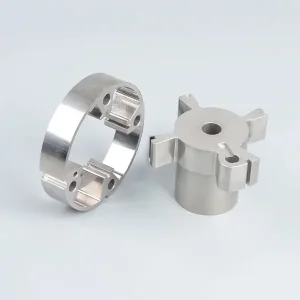
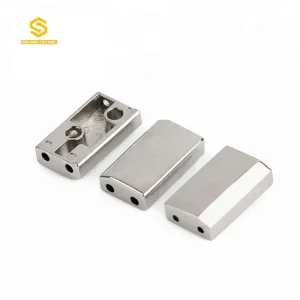
Review our additional range of precision engineered MIM parts, die casting assemblies, structural engine components, and custom metal fittings.




Ready to Optimize Your Die Cast Tooling Supply Chain?
Send your 3D CAD models (STEP/IGES) and 2D drawing specifications today for a comprehensive DFM audit, flow analysis, and transparent quotation within 48 hours.