
Featured Wholesale Die-Casting & Precision Metallurgy Products
Engineered for high-stress automotive structural applications, complex electronic enclosures, and durable industrial machinery.
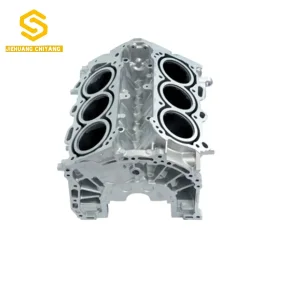
China OEM Metal Die Casting Products Custom Zinc Aluminum Alloy Die Casting Parts Manufacturer, Factories
Request Specification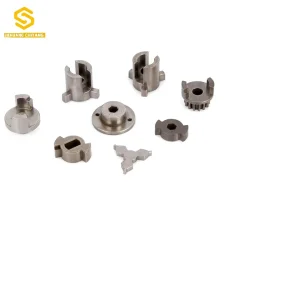
China OEM Manufacturer Custom Stainless Steel Hardware Special Parts Non-Standard Powder Metallurgy Metal Injection Molding MIM Process for Machinery Components CNC Turning Parts Manufacturers, Supplier
Request Specification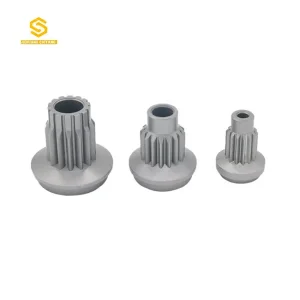
China High Performance China Pm Motorcycle Sintered Gear Wheel Parts by Iron Alloy Powder Sintered Manufacturer, Manufacturers
Request Specification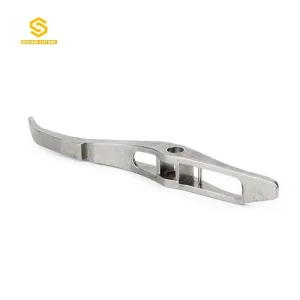
Wholesale Wholesale OEM High Precision CNC Powder Metallurgy Machining Parts Manufacturers, Factory
Request Specification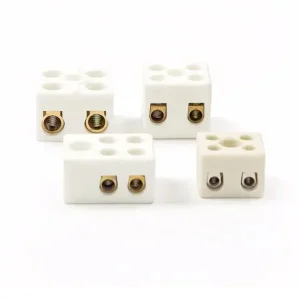
Wholesale Ceramic Resistance Manufacturers, Supplier
Request Specification
Wholesale Factory Customized OEM Titanium Alloy Parts by Metal Injection Molding MIM Sintering Process Manufacturers, Supplier
Request Specification
Wholesale Quality Inspection for Precision CNC Pressure Aluminum Zinc Auto Household Die Casting Manufacturer, Factories
Request Specification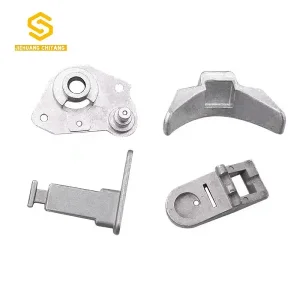
China Custom Sintered Titanium MIM Parts for Auto Parts Supplier, Suppliers
Request SpecificationNavigating Global Procurement Needs: Total Cost of Ownership (TCO) & Value Engineering
In the contemporary industrial procurement paradigm, selecting a wholesale die-casting supplier extends far beyond calculating the piece-price quote. Tier-1 automotive OEMs, industrial equipment conglomerates, and medical instrument developers evaluate partners using a multi-dimensional Total Cost of Ownership (TCO) model.
Global enterprise buyers face complex trade-offs between tooling amortization, cycle time optimization, alloy structural integrity, and long-term regulatory compliance. When sourcing high-pressure aluminum die-casting (HPDC), zinc alloy pressure casting, or hybrid powder metallurgy (PM) solutions, procurement directors must mitigate systemic supply chain risks including porosity defect ratios, dimensional variance, surface finish degradation, and shipping delays.
Design for Manufacturability (DFM)
Advanced DFM simulation identifies potential thermal fatigue, shrinkage porosity, and air entrapment before steel tooling is cut. Early DFM intervention reduces modification iterations by up to 80%.
Intellectual Property Protection
Enterprise-grade IP controls backed by legally binding bilingual Non-Disclosure Agreements (NDAs), isolated digital network CAD storage, and encrypted file-transfer protocols safeguard proprietary designs.
Tooling Lifecycle Management
Multi-cavity H13 steel and premium Böhler die inserts are tracked via digital shot counters. Routine preventative maintenance ensures consistent metallurgical properties across 500,000+ continuous cycles.
"Enterprise procurement strategy must transition from unit-cost bargaining to systemic value engineering. Selecting a manufacturing partner capable of multi-process cross-pollination (Die Casting, MIM, PM, and CNC) unlocks unprecedented weight-to-strength ratios and unit cost optimization."
China Industry 4.0: Supply Chain Resilience & Efficiency Advantage
The Ningbo precision manufacturing ecosystem represents the world's highest concentration of high-pressure die casting technology, mold fabrication expertise, and raw material refining facilities.
Modern Chinese die-casting factories have evolved beyond manual production into fully automated Industry 4.0 smart hubs. By embedding real-time IoT sensors across cold-chamber and hot-chamber casting machinery, automated ladling units, robotic spraying arms, and 5-axis CNC finishing centers, manufacturing units deliver incredible repeatability at globally competitive price points.
Real-Time Process Telemetry & Closed-Loop Control
Sensors inside casting dies continuously monitor plunger speed, shot sleeve temperature, vacuum pressure levels, and cooling line flow rates. Closed-loop feedback systems instantly adjust hydraulic injection profiles, eliminating micro-voids and cold-shuts during high-velocity die filling.
- High-vacuum assisted casting (<50 mbar absolute cavity pressure)
- Real-time pressure-curve monitoring preventing internal gas porosity
- Automated thermographic die temperature profiling
Geographic Cluster & Supply Chain Agility
Located within 50 kilometers of Ningbo-Zhoushan port—the world's busiest container terminal by cargo tonnage—our facilities benefit from an integrated local supply cluster. Sourcing raw alloy ingots, precision tooling steel, surface plating chemical processing, and international freight forwarding takes hours rather than weeks.
- Immediate access to primary ADC12, A380, and Zamak 3 alloy refineries
- In-house tool building combined with emergency localized tooling repair network
- Direct sea-port logistics reducing transit time to EU and North American hubs
Macro Industry Solutions: Precision Casting & Advanced Powder Metallurgy
Every industry presents unique mechanical stress profiles, thermal environmental challenges, and regulatory compliance standards. Our engineering teams customize metallurgical solutions based on application specificities.
Automotive & New Energy Vehicles (NEV)
Weight reduction directly correlates with EV battery range expansion. High-pressure aluminum castings replace multi-piece stamped steel assemblies with single lightweight structural components.
- E-Drive motor housing covers & inverter chill plates
- Structural shock towers and battery pack frame cross-members
- Variable Valve Timing (VVT) sintered PM gears & oil pump rotors
Aerospace & Defense Components
Exacting strength-to-weight demands require zero-internal-defect casting and titanium metal injection molding (TiMIM). High heat tolerance and structural fatigue protection are paramount.
- Avionics heat management enclosures & brackets
- Titanium MIM flight control linkage brackets
- Precision non-ferrous turbine fuel pump housings
Consumer Electronics & Wearables
Cosmetic surface aesthetics combined with micro-scale structural complexity require thin-wall zinc die-casting and stainless steel metal injection molding (MIM).
- Foldable smartphone complex hinge mechanisms
- Smartwatch stainless steel chassis and buckles
- Camera lens frame housings with anodized finish
Comparative Metallurgy Process Matrix
Select the ideal net-shape manufacturing technology for your geometric complexity and annual production volume.
| Parameters / Feature | High Pressure Die Casting (HPDC) | Metal Injection Molding (MIM) | Powder Metallurgy (PM) | 5-Axis CNC Machining |
|---|---|---|---|---|
| Primary Materials | Aluminum (ADC12, A380), Zinc (Zamak 3, 5) | 17-4PH, 316L, Titanium, Fe-Ni Alloys | Iron-Copper Steels, Sintered Bronze | Wrought Aluminum, Stainless, Brass |
| Part Weight Range | 50g to 15,000g+ | 0.2g to 250g (Ideal <100g) | 5g to 2,000g | Unlimited |
| Dimensional Tolerance | ±0.05mm – ±0.10mm | ±0.03mm – ±0.05mm | ±0.04mm – ±0.08mm | ±0.005mm – ±0.01mm |
| Wall Thickness Min. | 1.0mm (Aluminum) / 0.6mm (Zinc) | 0.4mm – 1.0mm | 1.5mm | 0.5mm |
| Production Speed | Very High (30-120 shots/hr) | High (Continuous Sintering) | Very High (up to 1200 pcs/hr) | Low to Medium |
| Material Utilization | 90% (Recyclable runners) | 95%+ (Closed loop binder) | 98%+ (Near zero waste) | 20% – 60% (High scrap) |
Technology Roadmap: Giga-Casting, Eco-Alloys & AI Simulation
The die-casting industry is undergoing a structural technological revolution. Factory engineering teams are pioneering innovations that dramatically lower energy footprint, increase component integration, and eliminate secondary machining operations.
1. Next-Generation Giga-Casting Integration
The evolution of ultra-large tonnage die-casting machines (6,000T to 12,000T clamping force) enables the consolidation of dozens of stamped automotive body components into a single unified casting. This radically simplifies assembly lines, reduces factory floor space requirements, and eliminates thousands of spot welds.
2. Artificial Intelligence in Thermal & Flow Simulation
Incorporating neural networks with finite element analysis (FEA) software allows predictive modeling of liquid metal turbulence, solidification fronts, and residual stress distribution. Real-time AI adjustments to shot sleeve speed curves compensate for micro-variations in molten alloy viscosity before defects form.
3. Low-Carbon Recycled Eco-Alloys
Environmental, Social, and Governance (ESG) mandates drive the adoption of recycled secondary aluminum alloys that require 95% less energy during refining compared to primary virgin aluminum. Specialized refining techniques eliminate iron impurities and grain boundary defects, yielding tensile strengths matching wrought alloys without requiring heat treatment.
4. Hybrid Additive-Casting Tooling
3D metal printing conformal cooling channels directly inside H13 die inserts revolutionizes thermal management inside the mold cavity. Conformal cooling reduces die hot-spots, accelerates cycle time by 20–35%, and dramatically prolongs mold life by preventing thermal check-cracking.
Localized Support, Quality Audits & Regulatory Compliance
International sourcing requires total transparency and rigorous, audit-ready compliance frameworks. We bridge time-zone and communication gaps through dedicated regional engineering teams and internationally recognized accreditation.
IATF 16949 & ISO 9001 Certified
Strict adherence to Automotive Quality Management System standards ensures complete lot traceability, PPAP Level 3 documentation, FMEA defect analysis, and Statistical Process Control (SPC) data logging.
RoHS, REACH & Conflict Minerals
Full compliance with European Union hazardous substance restrictions. Material spectroscopic assay certificates (XRF analysis) and mill reports accompany every shipping batch.
Dedicated Global Engineering Liaisons
English-speaking senior metallurgists and project management staff deliver clear technical communication, fast 24-hour drawing reviews, and weekly production video logs.
Frequently Asked Questions (FAQ)
Addressing essential technical, commercial, and operational questions regarding custom die-casting and wholesale manufacturing.
Specialized Metal Injection Molding & Sintered Hardware
High-precision micro-gears, orthodontic brackets, titanium hardware, and custom sintered mechanical assemblies.
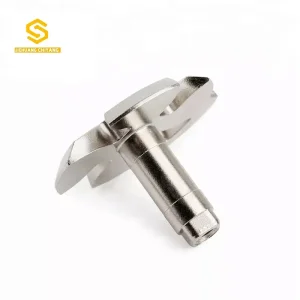
Wholesale Good Wholesale Vendors Factory Custom MIM Metal Injection Molding MIM Gear Part for Electronic Components Manufacturer, Manufacturers
Request Specification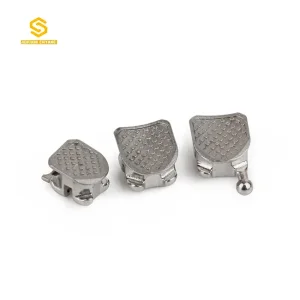
China Fast delivery MIM Mbt Bondable Self-Ligating Dental Orthodontic Bracket Manufacturers, Factories
Request Specification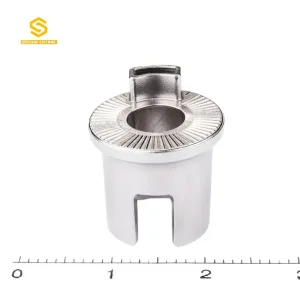
China Chinese Professional Custom Industrial Electromechanical & Power Tools High Quality Iron Based Powder Metallurgy Products Made in China Manufacturer, Suppliers
Request Specification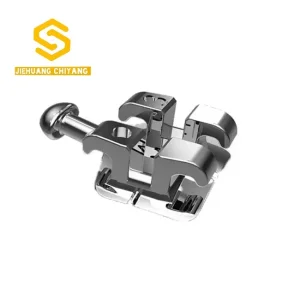
Wholesale dental supplies ortodoncia equipments MIM mesh base metal orthodontic MIM brackets Factory, Factories
Request Specification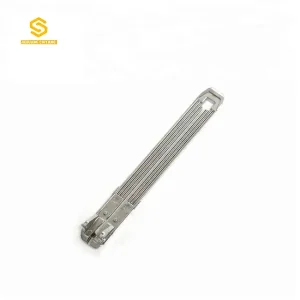
Wholesale China Gold Supplier for OEM High Precision Powder Metallurgy Metal Sintered Parts Manufacturers, Factories
Request Specification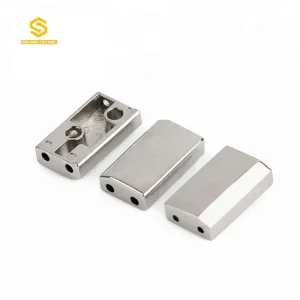
China OEM Custom MIM Stainless Steel Watch Buckles Clasps Supplier, Suppliers
Request Specification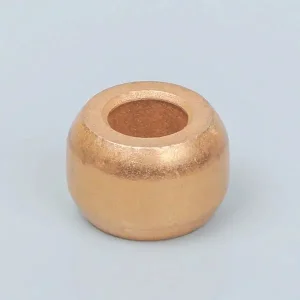
Wholesale Sintered Bushings Manufacturer Factory, Factories
Request Specification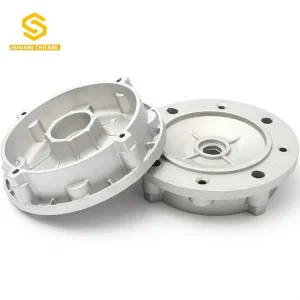
Wholesale China Precision Casting Starter Aluminum Zinc Die Casting Parts Customized Drawing Design Pulley Flywheel Manufacturer, Factories
Request SpecificationRequest an Engineer-Reviewed Quote & DFM Analysis
Submit your 2D engineering drawings (PDF) and 3D CAD files (STEP/IGES). Receive a comprehensive mold flow review, unit pricing, and tooling amortization schedule within 48 hours.