
Featured Wholesale Gears & MIM Parts (Top Products)
Direct factory OEM/ODM custom engineered sintered metal gear components, stainless steel injection molded hardware, and micro-transmission parts.

China Manufacturer for Powder Metallurgy Sintered Parts Metal Injection Molding MIM Custom Parts Manufacturer for High Precision Machinery Parts Metal Parts Manufacturer, Factories
View Product Specs
China Massive Selection for China OEM ODM Stainless Steel MIM Parts Wireless Headphones Headsets Ear Cap Manufacturer, Factory
View Product Specs
China OEM/ODM Supplier High Precision Powder Injection Molding Manufacturer, Factories
View Product Specs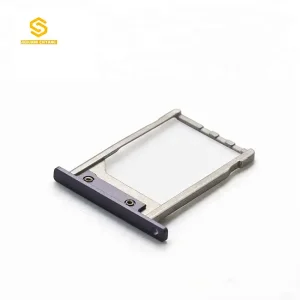
Wholesale SIM Slot by Metal Injection Molding Manufacturer, Manufacturers
View Product Specs
China Chinese Professional OEM Metal Injection Molding Process for Stainless Steel Parts Customized Hardware Suppliers, Factories
View Product Specs
Wholesale 2019 Good Quality China Metal Injection Moulded Copper Base Gears for Automobile Parts Manufacturer, Suppliers
View Product Specs
Wholesale Factory source China Wholesale Custom High Precision MIM Metal Injection Molding Powder Metallurgy MIM Small Metal Parts Manufacturers, Factory
View Product Specs
China Metal injection molding stainless steel parts Manufacturers, Factories
View Product SpecsWholesale Gear Manufacturing: Paradigm Shift in Precision Powertrains
In modern mechanical engineering and power transmission systems, high-precision gears represent the primary backbone of rotational energy transfer, torque multiplication, and motion control. As global original equipment manufacturers (OEMs) demand higher power density, miniaturization, whisper-quiet acoustics, and rigorous energy efficiency, traditional gear manufacturing techniques—such as multi-axis CNC hobbing, gear shaping, and broaching—frequently encounter economic and technical bottlenecks. High material waste, prohibitive cycle times for complex geometries, and tool wear expenses have forced procurement directors to re-evaluate their gear supply chains.
This comprehensive technical report examines how advanced Powder Metallurgy (PM) and Metal Injection Molding (MIM) technologies have revolutionized the global wholesale gear manufacturing landscape. By leveraging near-net-shape metallurgy, micro-pitch geometry control, and high-volume press-and-sinter automation, certified factories like Ningbo Jiehuang Chiyang Electronic Tech Co., Ltd. (JHMIM) deliver high-torque spur gears, helical gears, bevel gears, planetary gearsets, and custom micro-drive components at a 30% to 50% reduced unit cost compared to legacy subtractive machining.
Information Gain Metric: Powder metallurgy and MIM processes eliminate up to 95% of metal scrap compared to solid-bar CNC hobbing. For high-volume automotive actuators and power tool gearboxes exceeding 50,000 units annually, switching to sintered gear manufacturing yields substantial cost savings while maintaining wrought-like mechanical strength (up to 7.5 g/cm³ density).
Evaluating Wholesale Gear Vendors & Supply Chain Risk
How Tier-1 B2B buyers systematically assess manufacturer capabilities, total cost of ownership (TCO), and technical risk mitigation when sourcing custom gears.
Tooling Amortization & Unit Economics
While MIM and PM tooling requires upfront capital expenditure (typically ranging from $3,000 to $15,000 depending on cavity complexity), unit costs scale down dramatically over high-volume production runs. Enterprise buyers calculate break-even points at 2,000 to 5,000 pieces, where capital costs amortize to cents per gear.
Metallurgical Traceability & Quality QA
Top gear buyers demand 100% batch traceability from raw alloy powder atomization to debinding, high-temperature vacuum sintering, and heat treatment. Essential auditing criteria include ISO 9001:2015, IATF 16949 certifications, CMM dimensional checks, and optical gear profile inspection reports.
Supply Chain Resilience & Lead Times
Disruptions in global shipping necessitate rapid prototyping and domestic customer support. Industry-leading Asian gear manufacturers now integrate metal 3D printing (binder jetting / DMLS) for functional prototype testing in 5–7 days before cutting hardened steel molds.
Custom Gear Solutions Across Global Industries
From automotive powertrain variable valve timing (VVT) modules to surgical micro-drives and industrial power tool gearboxes.
Automotive & Electric Vehicle (EV) Systems
OEM automakers require sintered iron-nickel gears, oil-impregnated bronze bushings, and copper-infiltrated steel gears for electronic parking brakes (EPB), power seat adjusters, tailgate actuators, and VVT sprockets. High fatigue resistance and thermal stability under severe cyclic vibration are non-negotiable.
Medical Devices & Surgical Robotics
Surgical staplers, laparoscopic graspers, and robotic end-effectors require biocompatible 316L and 17-4PH stainless steel micro-gears. Metal Injection Molding produces module gears below 0.2 mm pitch with intricate internal keyways and D-shaped bores that CNC mills cannot replicate.
Industrial Power Tools & Automation
Cordless drills, impact drivers, and industrial planetary gearboxes demand high-hardness sinter-hardened steel gears capable of handling dynamic torque spikes exceeding 120 Nm. Surface induction hardening or carbonitriding elevates surface hardness to HRC 58-62.
Smart Consumer Hardware & Wearables
Foldable smartphone display hinges, smartwatch bezel drives, and high-end camera focus mechanisms require ultra-compact gears manufactured with zero-backlash tolerances, superior cosmetic polish, and custom corrosion protection coatings.
Manufacturing Roadmap: Powder Metallurgy vs. MIM vs. Machining
Choosing the correct manufacturing process depends heavily on gear size, tooth pitch, mechanical density targets, and overall order volume. The technical matrix below contrasts the three primary gear manufacturing routes used in modern B2B manufacturing plants.
| Engineering Attribute | Powder Metallurgy (PM Press & Sinter) | Metal Injection Molding (MIM) | 5-Axis CNC Gear Hobbing |
|---|---|---|---|
| Target Part Weight | 10g to 2,000g (Up to 150mm Diameter) | 0.1g to 100g (Max 286g produced) | 10g to 50kg+ (Unlimited) |
| Geometric Complexity | Medium (2.5D shapes, axial pressing) | Ultra-High (3D complex, undercuts, micro-threads) | Medium to High (Subtractive limitations) |
| Density & Strength | 6.8 – 7.3 g/cm³ (High density with re-pressing) | 7.5 – 7.8 g/cm³ (Near-wrought 98%+ density) | 7.85 g/cm³ (100% Solid Wrought Stock) |
| Tooth Tolerance Class | AGMA 7 - 9 (DIN 8 - 10) | AGMA 8 - 10 (DIN 7 - 9) | AGMA 10 - 12 (DIN 5 - 7) |
| Material Scrap Rate | < 3% (Near Net Shape) | < 2% (Recyclable Feedstock runner) | 40% – 70% Material Waste |
| Optimal Production Run | 5,000 to 1,000,000+ units | 2,000 to 500,000+ units | 1 to 1,000 units (Low volume) |
Advanced Metallurgical Processing at JHMIM
The manufacture of wholesale gear components requires strict control over alloy powder chemistry and thermal kinetics:
1. Feedstock Preparation & Compaction: Elemental or pre-alloyed metal powders (such as Fe-Cu-C, MPIF FC-0208, FN-0205, or 17-4PH stainless steel) are blended with solid organic binders. High-tonnage CNC automatic presses (up to 1,000 tons capacity) compact the powder into a green compact with uniform green density.
2. Thermal Debinding & High-Temperature Sintering: Green gear compacts pass through continuous belt or vacuum sintering furnaces operated at temperatures ranging from 1,120°C to 1,350°C. Controlled endothermic or pure hydrogen atmospheres reduce oxides, cause atomic diffusion between powder particles, and eliminate remaining binder phase.
3. Sinter-Hardening & Secondary Operations: Rapid cooling within the sintering furnace converts microstructures directly into hard martensite, eliminating the need for separate quenching and minimizing thermal distortion. Secondary operations include sizing (coining) for AGMA Class 10 tooth accuracy, oil impregnation, resin sealing, and protective zinc-nickel or black oxide electroplating.
Global Standards, Compliance & Regulatory Frameworks
Ensuring full operational compliance for seamless integration into Western European and North American OEM production lines.
IATF 16949 & ISO 9001 Certification
Our manufacturing lines operate strictly under audited ISO 9001:2015 and automotive IATF 16949 quality management systems. Every gear production batch undergoes PPAP Level 3 documentation, APQP planning, and FMEA risk controls.
RoHS, REACH & CMRT Compliance
All metal powder formulations comply with EU RoHS 3 (Directive 2015/863) and REACH SVHC requirements. Conflict Mineral Reporting Templates (CMRT) verify 3TG supply transparency for global corporate compliance reporting.
IP Security & NDA Safeguards
We enforce strict non-disclosure agreements (NDAs) and encrypted digital asset storage to protect customer 3D CAD files, proprietary gear profiles, and custom mold tooling intellectual property.
Frequently Asked Questions by Global Buyers
Direct technical answers from senior powder metallurgy engineers and B2B sourcing specialists.
What is the typical lead time for custom wholesale gear tooling and samples?
Design for Manufacturability (DFM) analysis and 3D tooling mold construction typically take 25 to 30 days. Initial T1 sample inspection reports along with FAI dimension sheets are delivered immediately following first-article trial runs.
What Minimum Order Quantity (MOQ) applies to wholesale gear orders?
Standard MOQs are 2,000 pieces for MIM micro-gears and stainless steel components, 5,000 pieces for powder metallurgy sintered gears, and 2,000 pieces for die cast gear housings. Prototype pilot batches are accommodated upon evaluation.
How does sintered gear strength compare to solid machined carbon steel gears?
With high-density compaction and sinter-hardening, powder metallurgy gears achieve tensile strengths exceeding 850-1,200 MPa and densities up to 7.5 g/cm³. For maximum torque loads, copper infiltration or warm compaction yields fatigue life comparable to wrought AISI 8620 steel.
Can you manufacture custom gear profiles according to AGMA or DIN standards?
Yes. Our engineering software calculates precise involute modification, tip relief, and crowning tolerances. We manufacture custom spur, helical, bevel, and internal ring gears complying with AGMA 7 through AGMA 10 precision standards.
Explore Additional Sintered Metal & Die Cast Products (Bottom Catalog)
Full operational range of zinc aluminum die castings, sintered construction hardware, power tool components, and ceramic injection molded parts.

China Supply ODM High Precision China Customized Zinc Aluminum Die Casting Products Manufacturers, Factories
View Product Specs
China Professional China China Custom Sintered Construction Hardware Parts Metal Injection Molding Spare Parts CNC Machining Prototype Machine Components Engine Parts Toy Parts Buckles Manufacturers, Suppliers
View Product Specs
China Chinese Professional Custom Industrial Electromechanical & Power Tools High Quality Iron Based Powder Metallurgy Products Made in China Manufacturer, Suppliers
View Product Specs
China China Factory for OEM MIM Sheet Metal Powder Injection Molding Machine Steel Stainless Custom Parts Suppliers, Factories
View Product Specs
China Good quality Powdered Metallurgy Metal Part Powder Metallurgy Manufacturer, Suppliers
View Product Specs
China ODM Factory China Powder Metallurgy Mold for High Shape Complexity Headset Factory, Factories
View Product Specs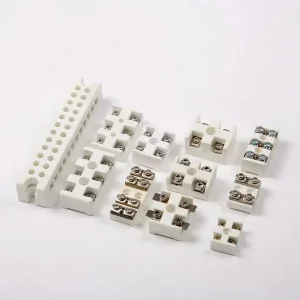
Wholesale ceramic connector block Manufacturers, Factory
View Product Specs