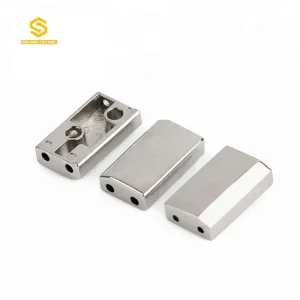
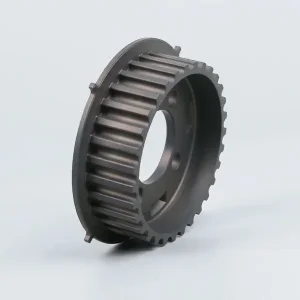
Featured High-Precision OEM Insulator Components
Select from our precision-manufactured metal injection molded (MIM) and powder metallurgy high-temperature insulator components engineered for heavy industrial deployment.

Wholesale Manufacturer for Mechanical Joint Element for Metal Injection Molding
View Product Details

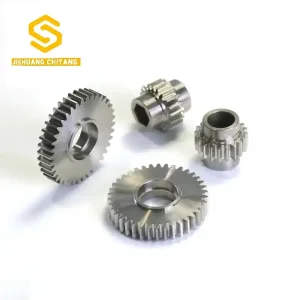



Global Commercial & Industrial Landscape of High-Temp Industrial Insulators
In the modern industrial ecosystem, extreme thermal environments demand materials capable of surviving continuous operating temperatures exceeding 1000°C without mechanical degradation, electrical breakdown, or chemical oxidation. High-Temperature Industrial Insulators serve as critical enablers across semiconductor processing, aerospace propulsion, power generation, electric vehicle (EV) powertrains, and heavy metallurgical kilns.
Market Acceleration
Driven by global decarbonization mandates and the surge in high-efficiency thermal processing, the demand for advanced engineered insulators (Alumina, Zirconia, Silicon Nitride, and Sintered Metal-Ceramic Matrices) is expanding at a CAGR of 7.4% globally.
Thermal Shock Resilience
Legacy insulation media (such as standard quartz or low-grade refractory firebricks) fail under rapid thermal cycling. High-temp ceramic insulators produced via Powder Metallurgy and Ceramic Injection Molding (CIM) offer near-zero thermal expansion and high fracture toughness.
Dielectric Reliability
Modern power electronics and industrial heating systems operate at ultra-high voltages (kV scale) alongside extreme heat. Advanced insulators prevent electrical arc-over, thermal runaway, and dielectric degradation in heavy-duty plasma torch and induction systems.
Material Science & Technical Matrix: High-Temp Insulator Formulations
Selecting the correct high-temperature insulator requires balancing mechanical toughness, thermal conductivity, electrical resistance, and manufacturability. As an established OEM manufacturer, we specialize in shaping high-purity inorganic ceramics and refractory sintered metals using advanced powder metallurgy and injection molding techniques.
| Material Grade | Max Service Temp (°C) | Thermal Conductivity (W/m·K) | Dielectric Strength (kV/mm) | Flexural Strength (MPa) | Primary Industrial Applications |
|---|---|---|---|---|---|
| Alumina 99.8% (Al₂O₃) | 1700°C | 30 @ 25°C / 6 @ 1000°C | 25 - 30 | 380 | Semiconductor wafer chucks, high-voltage kiln feedthroughs, spark plug cores. |
| Yttria-Stabilized Zirconia (YSZ) | 1500°C | 2.2 - 3.0 | 12 - 15 | 1000 - 1200 | Extremely high toughness requirements, molten metal nozzles, oxygen sensors. |
| Silicon Nitride (Si₃N₄) | 1400°C | 20 - 32 | 18 - 22 | 850 - 950 | Severe thermal shock environments, turbine components, bearing sleeves. |
| Steatite (C-220 Ceramic) | 1000°C | 2.5 | 15 - 20 | 160 | Cost-effective electrical heating element supports, thermostat switches, OEM appliances. |
| Refractory MIM Alloy / Ceramic Matrix | 1600°C | Tailored (4.5 - 12) | 30+ | 550 - 700 | Complex 3D structural insulating joints, high-temp aerospace mechanical actuators. |
Microstructural Integrity & Debinding Dynamics
Our proprietary thermal catalytic debinding process ensures complete extraction of organic binder systems from complex molded insulators prior to high-temperature vacuum sintering. This guarantees 0% micro-void formation and achieves near-theoretical density (>99.5%), preventing dielectric breakdown under high voltage.
Diamond Grinding & Precision CNC Finishing
Sintered ceramic insulators exhibit extreme hardness (Mohs 8.5 to 9). Using 5-axis CNC ultrasonic diamond grinding workstations, we achieve dimensional tolerances up to ±0.005mm and surface roughness of Ra 0.2 µm for hermetic vacuum seals and optical-grade contact surfaces.
Technical Roadmap & Future Outlook: 2025–2035
As industrial machinery pushes toward higher energy densities, extreme operating temperatures, and miniaturization, our R&D roadmap focuses on four key technological advancements in high-temperature insulation engineering:
Nano-Composite Sintering
Integrating silicon carbide whiskers and carbon nanotube (CNT) networks into ceramic powder matrices to increase fracture toughness by over 40% while maintaining high electrical resistivity above 1200°C.
Additive-MIM Hybridization
Combining 3D ceramic printing for ultra-complex internal cooling channels with high-speed MIM mass production tooling, enabling next-generation turbine thermal barriers.
Multi-Layer Gradient Coatings
PVD and plasma spray deposition of YSZ and Rare-Earth Disilicates onto powder metallurgy substrates to prevent thermal fatigue in oxygen-rich high-velocity plasma environments.
Zero-Carbon Furnace Linings
Development of ultra-low heat capacity insulating bricks and fiber-reinforced ceramic sleeves designed specifically for green-hydrogen burner combustion zones reaching up to 1850°C.
Localized Application Scenarios & Engineering Case Deployment
High-temperature industrial insulators manufactured by our facilities are customized to fulfill exact regional and sector-specific operational criteria across global markets.
Aerospace & Defense: Turbine Combustor Insulators
Deployment: North America & Europe. Applied inside jet engine combustors, auxiliary power units (APUs), and hypersonic thermal protection structures.
Technical Impact: Custom MIM titanium-aluminide structural mounts paired with high-purity YSZ thermal ceramic insulators withstand severe vibration, acoustic stress, and sudden heat spikes exceeding 1450°C without mechanical delamination.
Semiconductor Manufacturing: Plasma Chamber Rings & Wafer Holders
Deployment: East Asia (Taiwan, Japan, South Korea) & US Silicon Valley.
Technical Impact: High-purity Al2O3 (99.8%) and sintered AlN insulators prevent plasma etching degradation in CVD and atomic layer deposition (ALD) chambers. Ultra-low outgassing keeps wafer defect rates below sub-nanometer industrial thresholds.
Heavy Metallurgy: Continuous Sintering Kiln Supports
Deployment: Global Industrial Manufacturing Zones.
Technical Impact: Sintered Silicon Nitride beams and Alumina hearth plates support heavy powder metal workloads inside continuous pusher furnaces operating at 1350°C. Resists thermal sagging, creep, and corrosive reducing gas atmospheres (H2 / N2 dissociated ammonia).
Electric Vehicle (EV) Powertrain: High-Voltage Busbar Insulation
Deployment: Worldwide Automotive OEMs (Germany, China, US).
Technical Impact: Precision-molded ceramic isolators withstand 800V+ fast-charging voltage surges and localized electrical arc conditions within compact motor controllers and battery pack junction boxes, ensuring total passenger safety.
China Manufacturing Supply Chain Resilience & Cost-Efficiency Advantages
Navigating global procurement requires balancing rigid quality metrics with cost control and lead-time stability. Operating out of Ningbo’s advanced manufacturing hub, our facilities offer distinct supply chain advantages for global OEM buyers:
Vertical Integration
We control the entire manufacturing lifecycle under one 28,000 m² umbrella: raw powder synthesis, feedstock compounding, MIM tooling fabrication, debinding, vacuum sintering, CNC diamond grinding, and optical automated inspection (AOI).
30%–45% Cost Optimization
By leveraging domestic raw material reserves (high-purity alumina and titanium powders) and high-automation batch sintering kilns, we deliver OEM components with superior physical specs at 30% to 45% lower unit costs than Western counterparts.
Rapid Tooling & Prototype Turnaround
Equipped with in-house metal and ceramic 3D printers, we evaluate and prototype insulator designs within 5 to 7 days. Production mold tooling is completed in under 30 days, rapidly reducing your time-to-market.
Quality Assurance, International Compliance & Localized Support
Our quality management system is anchored by IATF 16949 and ISO 9001 certifications. Every batch of industrial insulators undergoes rigorous physical, thermal, and electrical testing prior to export dispatch.
Comprehensive Quality Testing Suite
- Thermal Diffusivity: Laser Flash Analysis (LFA) up to 1600°C.
- Dielectric Breakdown: High-voltage withstand testing up to 50 kV AC/DC.
- Microstructural Inspection: Scanning Electron Microscopy (SEM) & X-ray CT internal void analysis.
- Dimensional Accuracy: Hexagon 3D CMM & Keyence Automated Optical Profilers.
Global Regulatory Compliance & Logistics
- Environmental: Fully compliant with EU RoHS 3 (Directive 2015/863) and REACH standards.
- Standards Alignment: Built according to ASTM C1161 (Flexural Strength) and IEC 60672 (Insulating Materials).
- Protective Packaging: Vacuum-sealed anti-static and shock-absorbent custom foam export packaging.
- Global Engineering Support: Direct English-speaking engineering DFM consultation and fast customer support turnaround within 24 hours.
Frequently Asked Questions: High-Temp Industrial Insulator Engineering
Explore key technical considerations and procurement details for wholesale high-temperature industrial insulator components.
The maximum service temperature depends on the material grade selected. Our 99.8% Alumina (Al2O3) insulators operate continuously up to 1700°C in air and reducing atmospheres. For extreme thermal shock environments, Silicon Nitride (Si3N4) operates up to 1400°C, while Yttria-Stabilized Zirconia (YSZ) handles up to 1500°C with exceptional fracture toughness.
Legacy CNC machining of ceramic or refractory metal insulators requires diamond tooling, leading to high tool wear, long cycle times, and scrap rates up to 60%. MIM (and Ceramic Injection Molding - CIM) molds near-net complex geometries—including internal threads, thin walls down to 0.4mm, and cross-holes—in a single step, reducing unit costs by 30% to 50% for high-volume orders.
Our standard MOQ for OEM customized MIM/CIM high-temp insulators is 2,000 pieces. For prototype testing prior to mass tooling, we utilize 3D metal/ceramic additive manufacturing to deliver 5 to 10 sample pieces within 7 to 10 business days. Production mold tooling typically requires 25 to 30 days.
Dielectric failure is primarily caused by internal micro-voids, moisture absorption, and impurities. We prevent this by enforcing ultra-high density sintering (>99.5% theoretical density), utilizing 100% pure raw powder feedstocks, and conducting automated 50 kV AC/DC dielectric withstand testing on every critical electrical batch.
Absolutely. We uphold strict non-disclosure compliance. We routinely sign bilateral NDAs before reviewing proprietary CAD files or 2D technical specifications. All project data is stored on secure, air-gapped internal servers with restricted engineering access.
Explore Additional Sintered Metal & Ceramic Insulator Products
Review the second series of our high-performance powder metallurgy, MIM, and custom die-cast mechanical components available for wholesale OEM procurement.