
Featured Precision Industrial Components
Engineered OEM/ODM hardware solutions manufactured to exact engineering drawings.






Executive Whitepaper: Modern Industrial Hardware Engineering & Net-Shape Manufacturing
A comprehensive technical analysis of material selection, advanced sintering dynamics, high-pressure casting, and supply chain scaling for tier-1 OEMs.
1. The Paradigm Shift in Wholesale Industrial Machinery Hardware
In the contemporary landscape of global manufacturing, industrial machinery hardware represents far more than rudimentary mechanical fasteners, structural brackets, or cast housings. As industrial equipment shifts toward high-speed automation, cyber-physical systems (CPS), robotics, and extreme-duty fluid power controls, the hardware components driving these platforms must withstand unprecedented mechanical stress, cyclic thermal shocks, and corrosive environments.
Procurement directors and senior manufacturing engineers face a dual imperative: achieving absolute zero-defect reliability under IATF 16949 and ISO 9001 quality frameworks while driving down Total Cost of Ownership (TCO). Traditional subtractive manufacturing (multi-axis CNC milling and turning) often imposes intolerable material waste—frequently exceeding 60% in complex gear, valve, and actuator geometries—alongside soaring cycle times. Consequently, global OEMs are pivoting aggressively toward advanced powder metallurgy (PM), Metal Injection Molding (MIM), Ceramic Injection Molding (CIM), and precision high-pressure aluminum/zinc die casting.
This technical whitepaper examines the core manufacturing paradigms, metallurgical breakthroughs, localized application scenarios, and global supply chain architectures that define world-class industrial machinery hardware production.
Global Commercial & Industrial Landscape
Macroeconomic trends, raw material supply dynamics, and demand patterns across key global regions.
North American Industrial Reshoring & Automation
Driven by energy infrastructure modernization, automated warehousing, and re-shoring initiatives, North American buyers demand high-torque sintered gears, planetary gearboxes, and heavy-duty structural hardware. Strict adherence to MPIF Standard 35 and ASTM specs is non-negotiable.
European Industry 4.0 & Eco-Compliance
EU industrial sectors prioritize carbon footprint reduction, REACH/RoHS environmental compliance, and micro-precision hardware for robotic grippers and medical equipment. High-density MIM stainless steels (316L, 17-4PH) and lightweight Zamak zinc alloys dominate demand.
Asia-Pacific Industrial Expansion
As the engine of global manufacturing, the APAC market (specifically China, Japan, and Southeast Asia) requires rapid tooling development, vast production scalability, and highly integrated multi-process capabilities to support electric vehicle (EV) powertrains and industrial robotics.
Material Volatility Mitigation
Fluctuating global nickel, copper, and aluminum raw material prices necessitate near-net-shape technologies. Powder metallurgy and metal injection molding achieve material utilization rates exceeding 95%, dramatically insulating buyers from raw metal cost surges.
Technology Roadmap: MIM vs. PM vs. Die Casting vs. CNC
Comparative technical analysis enabling design engineers to select the optimal manufacturing pathway based on geometric complexity, mechanical requirements, and production volume.
| Manufacturing Process | Ideal Part Weight / Size | Dimensional Tolerance | Material Density | Geometric Complexity | Economic MOQ |
|---|---|---|---|---|---|
| Metal Injection Molding (MIM) | 0.2g to 250g (Micro to Medium) | ±0.3% to ±0.5% (Down to ±0.01mm) | 95% – 99% Theoretical Density | Extremely High (3D Undercuts, Threads) | 2,000 pcs |
| Powder Metallurgy (PM) | 10g to 5,000g (Gears, Sprockets) | IT 8 – IT 11 Standard | 85% – 95% (Oil-Impregnable) | Medium (2.5D Axial Profiles, Splines) | 5,000 pcs |
| Aluminum / Zinc Die Casting | 20g to 15,000g (Housings, Covers) | ±0.05mm – ±0.1mm | Solid Cast (Structural) | High (Thin-wall Cavities, Ribs) | 2,000 pcs |
| 5-Axis CNC Machining | Unrestricted | ±0.002mm – ±0.005mm | 100% Wrought Material | High (Limited by Tool Access) | 1 to 500 pcs |
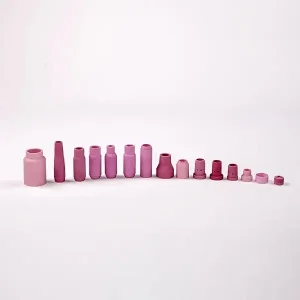
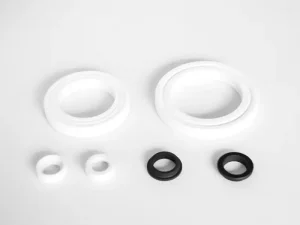
| Ceramic Injection Molding (CIM) | 0.1g to 100g (Wear Rings, Seals) | ±0.3% Precision | >99% Sintered Ceramic | Very High (Extreme Wear/Temp) | 1,000 pcs |
Metallurgical Breakthroughs in Sintered Alloys & Feedstock Chemistry
Modern powder metallurgy has transcended legacy limitations in fatigue strength and impact resistance through advanced vacuum sintering, Sinter-HIP (Hot Isostatic Pressing), and proprietary binder formulations. By controlling dew-point levels and atmospheric cracked-ammonia or argon environments during the 1,350°C thermal cycle, atomized alloy powders (e.g., Fe-Ni-Cu steels, 17-4PH precipitation hardening stainless steel, and Ti-6Al-4V Grade 5 titanium) achieve refined microstructures identical to wrought metals.
Furthermore, multi-component binder systems developed in partnership with leading metallurgical laboratories allow thermal debinding without interstitial carbon distortion, delivering parts with tensile yields exceeding 1,100 MPa after heat treatment.
Localized Application Scenarios in Global Industry
Field-tested deployments of specialized machinery hardware across demanding operating environments.
Industrial Automation & Robotics Actuators
Planetary gearheads, harmonic drive flexsplines, and robotic arm elbow hinges require minimal backlash and high wear tolerance. MIM-fabricated low-alloy steel gears (MPIF FN-0205) provide high surface hardness (60 HRC after carburizing) while reducing inertia by 35% compared to solid cut gears.
Automotive Engine VVT & Transmission Hardware
Variable Valve Timing (VVT) rotors, oil pump gears, and wiper motor drives deployed in commercial vehicle fleets must operate continuously under 150°C oil submergence. Sintered iron-copper alloy components guarantee precise fluid pressure sealing and silent acoustic profiles.
Chemical Processing & Food Powder Sieving
Industrial vibratory sieving screens and stainless steel fluid control mini ball valves installed in pharmaceutical and food production plants demand zero-contamination surfaces. Passivated 316L MIM components eliminate micro-porosity traps, satisfying hygienic processing standards.
Heavy Electrical Terminals & Ceramic Insulation
High-voltage power distribution hardware requires supreme dielectric resistance combined with structural mechanical fastening. Steatite and alumina ceramic terminal strips combined with die-cast Zamak terminal blocks provide arc-suppression up to 1,500V DC operating conditions.
China Supply Chain Ecosystem: Resilience, Speed & Scale
Why Ningbo’s industrial manufacturing hub delivers unparalleled lead-time compression and cost competitiveness for global procurement operations.
1. End-to-End Vertical Integration in Ningbo
Situated in Ningbo, Zhejiang Province—the world's capital for precision mold-making and powder metallurgy—our manufacturing complex spans over 28,000 square meters. By integrating rapid tooling design, 1,000-ton compaction presses, continuous mesh-belt sintering furnaces, CNC secondary finishing, and electroplating under a single unified Quality Management System (QMS), we eliminate vendor hand-off delays and third-party markup fees.
This vertical integration reduces tool development lead times from the Western industry standard of 12 weeks down to just 25–30 calendar days.
2. Dynamic Supply Chain Agility & Inventory Buffer
Chinese industrial clusters maintain localized material stockpiles of raw elemental powders (carbonyl iron, pre-alloyed steel, ceramic feedstocks) and ingot alloys (A380, ADC12, Zamak 3/5). Combined with automated 24/7 furnace scheduling and multi-cavity tooling, our facilities absorb sudden demand spikes up to +300% without breaking delivery timelines.
Furthermore, deep relationships with Ningbo-Zhoushan Port—the world's largest port by cargo tonnage—ensure seamless containerized ocean transport and expedited air freight routes directly to North American and European hubs.
Quality Assurance & Localized Compliance Guarantee
Rigorous metrology, international certifications, and technical support designed for overseas engineering teams.
IATF 16949 & ISO 9001 Audited
Production processes conform strictly to automotive tier-1 standard operating procedures. Every production lot is governed by PPAP Level III documentation, FMEA analysis, and Control Plans.
Advanced Metrology Laboratory
Quality inspection centers feature Zeiss 3D Coordinate Measuring Machines (CMM), optical profile projectors, X-ray fluorescence (XRF) material analyzers, micro-Vickers hardness testers, and salt-spray corrosion chambers.
48-Hour DFM Engineering Review
Every submitted 2D (PDF) and 3D model (STEP/IGES) undergoes immediate Design for Manufacturability (DFM) review. Senior engineers evaluate mold draft angles, wall thickness uniformity, debinding risk points, and shrinkage factors.
NDAs & IP Protection
We enforce strict internal access control systems and execute legally binding Non-Disclosure Agreements (NDAs) prior to drawing reviews, ensuring client intellectual property remains fully protected.
Industrial Hardware Engineering FAQ
Expert answers to critical technical questions asked by B2B procurement professionals, engineers, and OEM buyers.
Powder Metallurgy (PM) uses uniaxial compaction of dry metal powder inside a rigid die cavity, restricting shapes primarily to 2.5D geometries (such as spur gears, bushings, and timing pulleys) pressed along the axial direction. Metal Injection Molding (MIM) blends fine atomized metal powder with a thermoplastic binder system, creating a fluid feedstock that is injected into complex multi-cavity molds. MIM allows 3D geometric freedom equivalent to plastic injection molding (including internal threads, spherical undercuts, cross-holes, and ultra-thin walls down to 0.5mm) while achieving up to 99% theoretical metal density after sintering.
MIM parts shrink by approximately 14% to 20% volumetrically during thermal debinding and high-temperature sintering as binder materials burn off and metal particles fuse. Our tooling engineers utilize proprietary computer-aided simulation software (Moldflow & Sinter Simulation) to calculate precise volumetric scaling factors (oversized mold dimensions). Furthermore, custom ceramic sintering trays (setters) are designed to support complex geometries and prevent sagging or thermal warping during furnace passage, guaranteeing dimensional repeatability within ±0.3% of nominal specs.
Due to setup costs for precision mold tooling and sintering furnace optimization, our standard Minimum Order Quantity (MOQ) is 2,000 pieces for MIM parts, aluminum die casting, and zinc die casting components. For conventional high-volume Powder Metallurgy (PM) gears and sprockets, the standard MOQ is 5,000 pieces. However, for initial design verification, prototype quantities or low-volume pre-production batches can be evaluated on a case-by-case basis using metal 3D printing (DMLS) or short-run CNC machining.
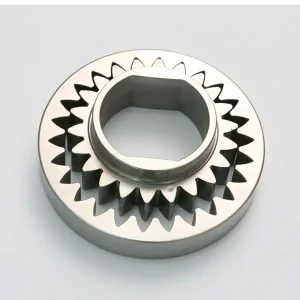
Yes. High-density sintered gears (densities ≥ 7.2 g/cm³) fabricated from pre-alloyed nickel-molybdenum steels (such as MPIF FL-4405 or FD-0405) undergo secondary surface rolling and vacuum carburizing to yield surface hardnesses exceeding 60 HRC with tensile strength above 1,200 MPa. Sintered gears deliver superior sound dampening properties due to micro-porosity damping, reduced wear rates, and up to 40% cost reduction at scale compared to cut-and-hobbed gears.
We provide a complete suite of in-house surface treatments engineered for cosmetic appearance and aggressive environmental protection. Options include electropolishing, passivation (ASTM A967), PVD coating (TiN, DLC), black oxide, zinc/nickel electroplating, anodizing (Type II & Type III hardcoat for aluminum die castings), sandblasting, and thermal deburring.
Additional Wholesale Industrial Hardware Catalog
Explore our comprehensive range of custom sintered, die-cast, and MIM components.





Accelerate Your Industrial Hardware Project Today
Send your 2D/3D engineering drawings to our metallurgical team. Receive a comprehensive DFM manufacturability analysis and itemized quotation within 48 hours.