
Featured Custom Precision Components
Engineered OEM/ODM solutions utilizing metal injection molding (MIM), powder metallurgy, die casting, and technical ceramics for high-reliability applications.

China Hot sale Customized/Designing Zinc/Aluminium Die Casting Parts for Auto/Hardware/Medical/LED Light Manufacturers, Factories

Wholesale Special Price for Customized High Pressure Aluminium ADC12 Die-Casting Parts Manufacturer, Factories

China Short Lead Time for High Quality Aluminum Alloy Die Casting for Auto & Customization OEM China Factory Manufacturers, Suppliers

China Best-Selling Zinc Die Cast Set Screw Galvanized Steel Pipe Conduit EMT Coupling Hot Sale Factory, Factories

China Professional OEM High Precision Custom Die Cast Products Zinc Alloy Aluminum Die Casting Manufacturers, Factory

China 2023 High quality Custom CNC Machine Aluminum Die Casting for Auto Spare Parts Manufacturer, Suppliers

Wholesale Popular Design for Sintered Process Powder Metallurgy Parts for Auto Steering Gear Rack Gears Auto Parts Manufacturer, Factories

Wholesale China Supplier Metal Injection Molding MIM Medical Equipment Scissors Accessories Products, Supplier, Suppliers
Technical Ceramic Injection Molding (CIM): Fundamental Physics & Advantage Analysis
A rigorous examination of how modern ceramic powder injection technologies overcome traditional machining constraints to yield near-net-shape components with micro-scale precision.
The Ceramic Injection Molding (CIM) Process Arc
Ceramic Injection Molding (CIM) represents a paradigm shift in manufacturing engineering, combining the geometric flexibility of plastic injection molding with the extreme mechanical, thermal, and chemical durability of technical ceramics. The process begins by homogenizing sub-micron ceramic powders (such as Yttria-Stabilized Zirconia (Y-TZP) or high-purity Alumina Al₂O₃) with a multi-component thermoplastic binder system.
This feedstock is injected into precision molds at high pressures. The resulting "green body" undergoes solvent or catalytic debinding to extract the organic binder phase without compromising structural integrity. Finally, high-temperature sintering (1400°C to 1750°C) densifies the "brown body," inducing controlled isotropic shrinkage (typically 15-22%) to achieve a final component density exceeding 99.5% of theoretical density.
CIM vs. Traditional Subtractive Machining
Machining dense technical ceramics via diamond tooling or ultrasonic erosion is prohibitively expensive, prone to micro-cracking, and limited in complex internal geometry creation. CIM eliminates diamond tooling cost for mass production, delivering complex features such as helical channels, internal threads, and wall thicknesses down to 0.3mm directly out of the mold.
Compared to traditional cold pressing and machining, CIM offers superior surface finishes (Ra < 0.2 µm as-sintered), vastly superior Weibull modulus (improved reliability), and scalable cost efficiency for annual production volumes exceeding 2,000 units.
Material Selection Matrix for Injection Molded Ceramics
| Ceramic Material | Density (g/cm³) | Flexural Strength (MPa) | Hardness (HV) | Max Temp (°C) | Primary Sourcing Intent |
|---|---|---|---|---|---|
| Y-TZP Zirconia (ZrO₂) | 6.05 | 1,000 - 1,200 | 1,250 | 1,000 | Medical scalpels, wear rings, watch bezels, valve seats |
| Alumina 99.8% (Al₂O₃) | 3.92 | 380 - 450 | 1,600 | 1,600 | Electrical insulators, semiconductor wear parts, seal rings |
| Silicon Nitride (Si₃N₄) | 3.25 | 850 - 950 | 1,500 | 1,200 | EV turbocharger rotors, high-speed bearings, welding nozzles |
| Silicon Carbide (SiC) | 3.10 | 450 - 550 | 2,400 | 1,400 | Corrosive chemical pump seals, heat exchangers, armor plates |
Global OEM Procurement Intent & Sourcing Strategy
Analyzing how tier-1 procurement managers and systems engineers evaluate Wholesale Ceramic Injection Molding suppliers to optimize total cost of ownership (TCO).
Total Cost of Ownership (TCO) Dynamics
When purchasing managers evaluate wholesale injection molding ceramics manufacturers, upfront tooling amortization (NEX/CAPEX) is weighed against unit cost reductions (OPEX). For complex parts, CIM reduces per-unit costs by 40% to 70% compared to 5-axis diamond CNC machining once production surpasses the break-even threshold (typically 2,000 to 5,000 units).
Risk Mitigation & Quality Assurance
Global enterprises demand strict statistical process control (SPC). Sourcing requirements include CMM dimensional verification, non-destructive X-ray flaw detection, and batch density verification via the Archimedes method to guarantee zero internal voids in mission-critical ceramic parts.
Design for Manufacturability (DFM) Collaboration
Leading wholesale suppliers offer early-stage DFM engineering support. By co-engineering uniform wall transitions, internal radii (> 0.2mm), and mold parting line positions, engineering teams prevent differential shrinkage warping during debinding and high-temperature sintering.
China's Industrial Ecosystem & Supply Chain Dominance
Unpacking the competitive moats that allow Chinese advanced ceramic facilities to deliver rapid prototyping, cost efficiency, and unprecedented production scalability.
Vertical Integration from Powder Synthesis to Sintering
China’s advanced ceramics cluster—centered in regions like Zhejiang (Ningbo) and Guangdong—benefits from complete supply chain integration. Localized access to ultra-fine rare earth oxide powders (e.g., high-purity Yttria and Zirconia) eliminates international raw material supply bottlenecks.
Furthermore, domestic toolmakers utilize state-of-the-art Japanese wire-EDM and CNC EDM machines, producing multi-cavity hardened steel molds in weeks rather than months, drastically accelerating time-to-market for global OEMs.
Cost Structure & Energy Economics
High-temperature continuous vacuum sintering furnaces require significant energy throughput. Chinese manufacturing parks feature stabilized power grids and optimized operational overhead, lowering processing costs by 25–35% compared to Western European or North American counterparts.
Combined with deep engineering talent pools experienced in Powder Metallurgy (PM) and Metal/Ceramic Injection Molding (MIM/CIM), Chinese factories deliver uncompromised ISO-certified quality at highly competitive wholesale tier pricing.
Localization Support, Quality Protocols & Global Regulatory Assurance
Ensuring seamless market entry for medical, automotive, and industrial components through certified quality management and environmental compliance.
ISO 9001 & IATF 16949 Certification
Automotive and industrial customers require rigorous quality frameworks. Premier suppliers operate under IATF 16949 audits, utilizing PPAP (Production Part Approval Process) Level 3 documentation, FMEA defect analysis, and statistical process control to maintain zero-defect targets.
ISO 13485 & Cytotoxicity Standards
For medical devices and bio-ceramic implants, compliance with ISO 13485 is mandatory. Injection molded Zirconia components undergo ISO 10993 cytotoxicity, sensitization, and intracutaneous reactivity testing to guarantee biocompatibility in human tissue applications.
RoHS, REACH & Environmental Compliance
All feedstocks, binders, and inorganic pigments comply fully with EU RoHS 3 and REACH SVHC regulations. Products exported to Western markets carry complete conflict-mineral documentation and material safety certifications.
Localized Application Scenarios & Sector Deep-Dives
Exploring real-world deployments where technical ceramic injection molding solves extreme wear, electrical, and thermal engineering challenges.
Automotive & EV
High-voltage ceramic insulator bushings, ceramic turbocharger rotor blades, sensors, and water pump mechanical seals demanding heat resistance up to 1400°C.
Medical & Surgical
Biocompatible Zirconia scalpels, endoscopic articulation links, dental implant abutments, and orthopedic joint replacement micro-components.
Electronics & Wearables
Scratch-proof Zirconia smart watch bezels, 5G signal-transparent ceramic phone backings, fiber optic ferrule connectors, and IC packaging substrates.
Fluid Control & Industrial
Corrosive acid pump impellers, extreme-wear ceramic valve disks, spray nozzles, texturing thread guides, and wire drawing capstans.
Emerging Trends in Advanced Ceramic Molding
Key technological shifts reshaping the next decade of technical ceramic manufacturing and high-volume production.
Nanocrystalline Ceramic Powders
The adoption of sub-50nm ceramic grain powders enables lower sintering temperatures and produces ultra-dense microstructures with flexural strengths exceeding 1,400 MPa, vastly reducing brittleness risks.
Additive-CIM Hybrid Manufacturing
Integrating 3D ceramic printing (SLA/DLP stereolithography) for ultra-rapid functional prototyping before cutting multi-cavity injection production molds reduces client R&D validation cycles by up to 80%.
Water-Soluble & Water-Debinding Binders
Next-generation environmentally friendly binder systems allow eco-friendly water debinding instead of solvent extraction, decreasing processing times, reducing volatile emissions, and lowering total energy requirements.
Frequently Asked Questions (FAQ) for Procurement Engineers
In-depth answers to common technical, commercial, and logistical questions regarding wholesale ceramic injection molding contracts.
What dimensional tolerances can be held in as-sintered ceramic injection molding?
Standard as-sintered tolerances for ceramic injection molding (CIM) are typically ±0.3% to ±0.5% of nominal dimensions. For critical features requiring tighter tolerances (such as ±0.005mm or ±0.001in), secondary diamond grinding, lapping, or CMP (Chemical-Mechanical Planarization) post-processing operations are performed on specialized CNC ceramic grinding centers.
How do you compensate for the high shrinkage rate (15%-22%) during sintering?
Shrinkage compensation is achieved through precise volumetric mold scaling calculation (Oversize Factor / OSF). Our engineering team uses advanced mold-flow simulation software combined with strict control over feedstock powder load consistency (batch-to-batch solids loading variance kept within ±0.1%). This ensures predictable, isotropic shrinkage during the thermal densification phase.
What is the Minimum Order Quantity (MOQ) for wholesale ceramic injection molding projects?
For standard OEM ceramic molding tooling, our typical MOQ starts at 2,000 pieces per production run due to setup and thermal cycle batch optimizations. However, for high-value medical components or specialized industrial parts, pilot prototype orders (100–500 pieces) can be supported under specialized development agreements.
How does Zirconia (ZrO₂) compare to Alumina (Al₂O₃) in mechanical performance?
Zirconia (specifically Y-TZP) possesses significantly higher flexural strength (900-1200 MPa vs. 300-450 MPa) and fracture toughness ($K_{1c} \approx 7-10 \text{ MPa}\cdot\text{m}^{1/2}$) compared to Alumina, making it far superior for impact resistance, knife edges, and wear rings. Alumina, however, offers higher thermal conductivity, higher hardness (1600 HV vs 1250 HV), superior electrical insulation properties at elevated temperatures, and lower raw material cost.
Can internal threads or undercuts be directly molded into ceramic parts?
Yes. One of CIM's primary competitive advantages is the ability to directly mold internal threads, external threads, and complex undercuts using automated unscrewing cores or collapsible core slides within the injection mold tooling, bypassing expensive diamond tapping or ultrasonic thread cutting operations.
More OEM Manufacturing Solutions & Custom Components
Explore our broader manufacturing line covering powder injection molding, specialized ceramic seals, and die-casting structural parts.

China China Factory for OEM MIM Sheet Metal Powder Injection Molding Machine Steel Stainless Custom Parts Suppliers, Factories
China Super Lowest Price Powder Metallurgy Micro Precision Machining for Auto Metal Truck Stainless Stee Accessory Auto Parts by MIM Suppliers, Factories
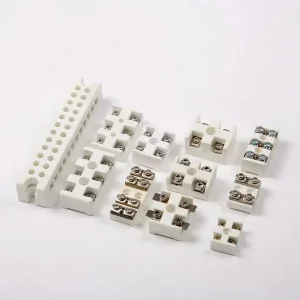
Wholesale ceramic connector block Manufacturers, Factory
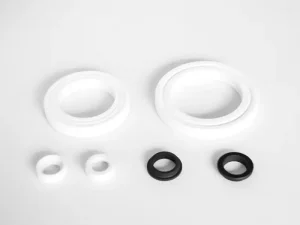
China Ceramic seal Supplier, Factories
China One of Hottest for Custom Zinc Die Casting Parts, Aluminum Casting Products, Die Casting Manufacturer OEM Manufacturer, Supplier

China Manufacturer Custom Metal Brass Zinc Die Casting Mould Parts Anodizing Aluminum Die Casting Suppliers, Factory

China Online Exporter China OEM Plastic Injection Molding Factory Plastic Molding Company Manufacturer, Suppliers
