
Featured Precision Injection Molded & Cast Parts
Direct factory manufacturing delivering net-shape precision, complex geometry execution, and scaled volume economics across titanium, stainless steel, aluminum, and powder metallurgy alloys.





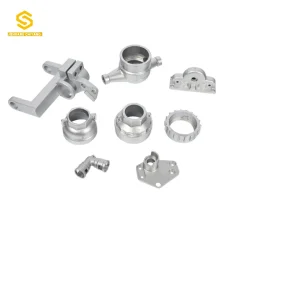

1. Executive Overview & Process Selection Matrix
In high-volume precision manufacturing, choosing between Metal Injection Molding (MIM), Powder Metallurgy (PM), Precision Plastic Injection Molding, and Die Casting dictates product structural reliability, unit economics, and time-to-market performance.
The Engineering Shift to Net-Shape Fabrication
Modern engineering demands components with increasingly micro-scale geometries, thin-wall structures, high dynamic mechanical loads, and zero-defect surface finishes. Traditional subtractive manufacturing methods such as multi-axis CNC milling encounter significant cost barriers when production scales into tens or hundreds of thousands of units per month. Material scrap rates exceeding 60%, rapid tool wear on difficult-to-machine superalloys (such as 17-4PH, 316L, and Titanium Grade 5), and excessive spindle cycle times severely restrict margins for global OEMs.
Wholesale injection molding services—spanning high-density metal injection molding (MIM) and advanced engineered polymer molding—resolve this economic dilemma by transitioning part creation into a high-speed, repeatable net-shape molding process. By homogenizing elemental metal powders or polymer resins with high-performance binder systems, complex 3D features including internal helical threads, undercuts, blind channels, and knurled surfaces are produced in a single molding shot.
Metrology & Mechanical Property Integration
At Ningbo Jiehuang Chiyang Electronic Tech Co., Ltd. (JHMIM), our certified OEM operations unify raw feedstock formulation, thermal debinding, high-temperature sintering, and automated co-sizing within a single IATF 16949-audited ecosystem. Parts produced via our MIM process regularly achieve sintered densities between 96% and 99% of theoretical density, achieving tensile strengths, corrosion resistance, and magnetic permeability levels that match or exceed wrought metals.
For larger structural enclosures and lightweight thermal frames, our aluminum and zinc pressure die casting facilities deliver robust housing solutions. This complementary technology matrix ensures engineering procurement teams receive impartial, data-driven process recommendations tailored strictly to part volume, geometry, tolerance stackups, and total cost of ownership (TCO) targets.
2. Global Enterprise Procurement Needs & Total Cost Optimization
Procurement executives and strategic sourcing directors must navigate multi-dimensional trade-offs between tooling investment, piece price amortizations, supply chain resilience, and rigorous quality compliance.
Unit Cost Amortization Curves
While multi-cavity injection molds or high-pressure die casting dies represent upfront capital expenditure (CapEx), the unit cost drops rapidly beyond 5,000 to 10,000 pieces. For complex geometries, MIM tooling ROI is often realized within the first production run compared to continuous machine-hour charges on CNC equipment.
Design for Manufacturability (DFM)
Every drawing submitted to JHMIM undergoes a rigorous 14-point DFM gating review. Our engineers evaluate gate locations, draft angles, wall thickness uniformity (preventing sink marks or void formation), parting lines, and shrinkage factors (typically 12% to 20% depending on powder loading).
Supply Chain Traceability
Enterprise buyers require end-to-end material integrity. From raw elemental powder lot certificate validation (OES analysis) to post-sintering mechanical destructive testing, batch-level traceability is maintained in accordance with ISO 9001 and IATF 16949 audit frameworks.
| Evaluation Parameter | Metal Injection Molding (MIM) | Powder Metallurgy (PM) | Aluminum / Zinc Die Casting | Multi-Axis CNC Machining |
|---|---|---|---|---|
| Economic Production Volume | 2,000 to 5,000,000+ units | 5,000 to 10,000,000+ units | 2,000 to 1,000,000+ units | 1 to 2,000 units |
| Geometric Complexity | Extremely High (3D shapes) | Medium (2.5D stepped axial) | High (Thin-walled housings) | High (Tool access restricted) |
| Dimensional Tolerance | ±0.3% to ±0.5% (±0.02 mm reamed) | ±0.1% to ±0.3% | ±0.05 mm to ±0.1 mm | ±0.005 mm to ±0.01 mm |
| Material Utilization Rate | 95% – 98% (Scrap recycled) | 95% – 99% | 90% – 95% (Runners remelted) | 15% – 40% (60%+ swarf loss) |
| Surface Finish (Ra) | 0.8 µm – 1.6 µm | 1.6 µm – 3.2 µm | 0.8 µm – 1.6 µm | 0.4 µm – 1.6 µm |
3. Technical Trends Reshaping Injection Molding Services
Industry 4.0 digitizes the molding workshop. Real-time cavity pressure sensing, AI-driven closed-loop thermal profiling, and micro-scale titanium powder processing define modern injection molding superiority.
AI-Closed Loop Cavity Pressure Control
Modern injection molding machines utilize piezoelectric transducers embedded within mold cavities to measure melt front velocity and pack pressure in real time. Machine learning algorithms automatically adjust velocity-to-pressure switchover points, eliminating flash, short shots, and weight variations caused by batch-to-batch resin or feedstock viscosity shifts.
Titanium MIM (TiMIM) Maturation
Processing reactive metals like Titanium (Ti-6Al-4V) via powder injection molding historically faced oxygen pickup and embrittlement challenges. Advanced vacuum debinding and ultra-pure argon sintering furnaces now allow JHMIM to produce lightweight, biocompatible titanium parts for surgical tools, aerospace latches, and premium wearable consumer devices.
Conformal Cooling Tooling Inserts
By leveraging metal 3D printing (Direct Metal Laser Sintering - DMLS) to manufacture tool steel mold inserts with conformal cooling channels, cycle times in heavy plastic and metal molding are reduced by 20% to 35%. Uniform heat extraction minimizes thermal residual stresses and part warping.
4. Industry-Specific Macro Solutions
Precision component engineering customized to rigorous sector standards—from automotive electrification to medical device biocompatibility.
Automotive Electrification (EV) & Autonomous Systems
Electric powertrains and advanced driver-assistance systems (ADAS) require components that withstand high mechanical vibration, moisture exposure, and thermal cycles. JHMIM provides stainless steel MIM actuator gears, planetary gearheads for power seating and electronic braking systems, and high-conductivity aluminum die-cast housings for radar and sensor assemblies. ISO/TS 16949 processes guarantee PPAP Level 3 compliance and zero-ppm defect rates.
Medical, Surgical & Dental Instrumentation
Surgical tools require extreme corrosion resistance, ergonomic designs, and capability to undergo repeated autoclave sterilization cycles without mechanical degradation. Utilizing medical-grade 17-4PH and 316L stainless steel, JHMIM manufactures endoscopic grasper jaws, surgical stapler components, and high-precision MIM orthodontic brackets with smooth surfaces that optimize patient comfort and clinical force application.
Consumer Electronics, Wearables & Optics
In smartwatches, wireless earbuds, smart glasses, and smartphones, internal space is severely constrained. Miniature hinges, smartwatch titanium housings, camera frame rings, and connector latches are produced via MIM with dimensional tolerances held to ±0.02 mm. Secondary physical vapor deposition (PVD) coating, anodizing, and mirror polishing provide premium cosmetic finishes.
Industrial Automation, Power Tools & Hardware
High-torque planetary power tool gearboxes, hydraulic valve spools, internal lock mechanisms, and pneumatic fittings require exceptional yield strength and wear resistance. Sintered powder metallurgy gears made from iron-nickel and heat-treated alloy steels deliver reliable power transmission under severe impact loads, reducing field failures for tool OEMs.
5. Localization Support & Global Quality Compliance
Navigating global supply chain dynamics requires seamless cross-border logistics, rigorous international material compliance, and dedicated regional engineering support.
Global Regulatory Assurance
All materials processed at JHMIM strictly comply with REACH, RoHS, TSCA, and Conflict Minerals regulations. Complete chemical composition certification, heavy metal test reports (SGS), and raw material lot certificates accompany every production batch, facilitating rapid customs clearance into North American, European, and Asian markets.
Vendor Managed Inventory (VMI)
To insulate global customers from freight disruptions and sudden demand fluctuations, JHMIM offers flexible inventory buffers, consignment stock programs, and safety stock arrangements. We integrate directly with customer ERP networks via EDI to maintain seamless Kanban supply replenishment.
IP Protection & Data Security
Proprietary customer designs, 3D STEP models, and custom tooling parameters are safeguarded under strict non-disclosure agreements (NDAs) and stored on secure, air-gapped internal servers with role-based access controls to prevent unauthorized intellectual property disclosure.
6. Technology Roadmap & 2030 Manufacturing Vision
JHMIM's continuous investment in next-generation manufacturing technologies ensures long-term competitive edge for our global OEM partners.
Digital Twin Integration
Implementation of fully integrated Moldflow and mold-sintering digital twin simulation software to predict thermal shrinkage, powder-binder separation, and warpage with 99% accuracy before cutting steel tools.
Ultra-Micro Injection Molding
Deployment of specialized micro-injection molding units capable of producing metal and plastic components weighing less than 0.01 grams with sub-micron wall thicknesses for next-gen medical implants and micro-robotics.
Green Sintering Technology
Transitioning sintering atmospheres to 100% green hydrogen carrier gas networks and high-efficiency electric vacuum furnaces, reducing carbon footprint per sintered kilogram by over 45%.
Fully Autonomous Smart Factory
End-to-end integration of automated guided vehicles (AGVs), robotic cell debinding/sintering loading, and AI vision 100% dimensional inspection delivering continuous zero-defect output.
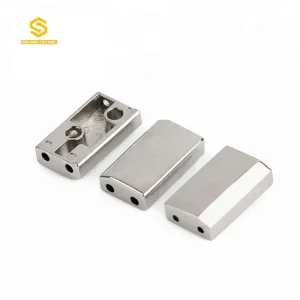
Industrial Component Portfolio (Suite 2)
Explore additional precision sintered parts, die-cast assemblies, and custom metal injection molded components produced directly at our Ningbo facility.





7. Technical FAQ & Sourcing Intelligence
Direct technical answers from our senior engineering team addressing common manufacturing, material performance, tooling lead times, and quality control queries.
What is the maximum part weight and dimensional boundary suitable for MIM?
Metal Injection Molding is economically optimal for complex parts weighing between 0.1 grams up to 100 grams. While JHMIM has mass-produced specialized structural components weighing up to 286 grams, larger parts typically yield better unit economics through traditional Powder Metallurgy (PM) pressing or aluminum/zinc die casting due to binder debinding cycle times and sintering furnace shrinkage dynamics.
How does JHMIM manage linear sintering shrinkage during production?
During high-temperature vacuum sintering (reaching 1,350°C to 1,380°C), MIM parts undergo isotropic shrinkage ranging between 12% and 20% as binder materials burn off and metal particles coalesce. Our tooling engineers utilize precise CAD shrink scaling factors verified through Moldflow thermal analysis and trial tooling iterations to consistently hold sintered tolerances within ±0.3% nominally, down to ±0.02 mm on critical dimensions via secondary co-sizing or CNC finishing.
What documentation and certification accompany production shipments?
Every delivery includes a comprehensive First Article Inspection (FAI) report, CMM dimensional measurement protocol, raw material melt certificate (OES spectrum chemical analysis), hardness test records, and PPAP Level 3 documentation upon request. All manufacturing processes follow certified IATF 16949 and ISO 9001 quality management guidelines.
Can design prototypes be produced before investing in production tooling?
Yes. To validate physical fit, structural assembly, and functional performance prior to committing to production injection or die casting tooling, JHMIM utilizes high-precision metal 3D printing (DMLS/SLM) or single-cavity prototype soft tooling. This enables engineering teams to verify STEP model designs within 5 to 10 working days.
What are the minimum order quantities (MOQ) and lead times for standard OEM orders?
Standard MOQs are 2,000 pieces for MIM and CNC machined parts, 2,000 pieces for aluminum/zinc die casting, and 5,000 pieces for press-and-sinter powder metallurgy components. Tooling design, fabrication, and initial sample delivery require approximately 25 to 35 days, with full-scale mass production orders fulfilled in 2 to 4 weeks depending on batch volume.
Are proprietary project drawings protected under NDA prior to submission?
Absolutely. JHMIM executes formal Non-Disclosure Agreements (NDAs) prior to receiving or evaluating any customer 2D/3D engineering files. All project engineering assets stay under strict internal access control throughout quotation, DFM, tooling, and mass manufacturing phases.
Ready to Optimize Your Part Economics & Performance?
Submit your 2D PDF and 3D STEP drawings today. Our engineering team returns a complete DFM manufacturability assessment and itemized quotation within 48 hours.