
Precision OEM Sintered & Die Cast Components
Explore our high-performance powder metallurgy parts, MIM components, and precision housings engineered for industrial reliability.







Global Business & Industrial Landscape of Sintered Bushings
Strategic overview of iron-copper sintered friction materials, supply chain integration, and market drivers across industrial sectors.
Global Market Expansion
The global demand for self-lubricating iron-copper (Fe-Cu) sintered bushings continues to grow exponentially. As industries shift toward energy-efficient electric drives, lightweight sub-assemblies, and maintenance-free mechanical operations, powdered metal (PM) sleeve bearings serve as critical components in automotive systems, industrial automation, HVAC, and home appliances.
Economic Value & Material Efficiency
Compared to fully machined bronze or cast iron bushings, powder metallurgy iron-copper bearings offer near-net-shape processing with material utilization exceeding 95%. This drastically minimizes raw material waste, lowers unit costs for high-volume wholesale procurement, and eliminates secondary machining operations such as turning, grooving, or drilling.
Tier-1 Automotive & Appliance Adoption
Leading Tier-1 global automotive suppliers and industrial OEMs specify Fe-Cu alloys (such as MPIF FC-0205, FC-0208, and FC-0405) due to their superior load-carrying capacity compared to pure bronze and significantly higher wear resistance than standard sintered iron. Integrated lubricant retention makes them indispensable for inaccessible drive assemblies.
Material Science & Tribological Mechanics of Fe-Cu Bushings
Understanding the microstructural synthesis, liquid-phase sintering dynamics, and oil impregnation physics of iron-copper bearing alloys.
Technical Insight: Why Iron-Copper Powder Metallurgy Outperforms Standard Alloys
During the thermal sintering process at 1120°C–1150°C, elemental copper powder melts (melting point: 1085°C) and diffuses into the iron matrix lattice, creating a solid solution of iron-copper. This liquid-phase sintering mechanism generates copper-rich bridges between iron particles, significantly elevating radial crush strength, impact resistance, and micro-hardness without sacrificing controlled interconnecting porosity.
Self-Lubrication Physics (Hydrodynamic Lubrication)
Iron-copper sintered bushings operate on a self-sustaining hydrodynamic lubrication mechanism. The interconnected pore network (typically 18% to 25% by volume) is vacuum impregnated with high-grade synthetic or mineral oil (SAE 30 / ISO VG 68). Upon shaft rotation, frictional heat and hydrodynamic pressure draw oil from the pores to form a continuous microscopic fluid film. When rotation ceases, capillary forces pull the lubricant back into the sintered matrix, eliminating leakage and dry-start wear.
PV Limit & Tribological Load Capacity
The operational boundary of a self-lubricating bearing is governed by its PV Rating (Pressure × Velocity). Fe-Cu bushings accommodate higher PV limits than pure bronze bearings due to the higher yield strength of the iron phase. With optimized copper content (2% to 10%), these bearings withstand PV ratings up to 2.5 MPa·m/s (50,000 psi·fpm) under continuous running conditions, preventing surface galling and seizure under high radial forces.
| MPIF / ASTM Standard Grade | Nominal Composition | Density Range (g/cm³) | Radial Crush Strength (MPa) | Porosity (Vol. %) | Primary Industrial Application |
|---|---|---|---|---|---|
| FC-0205-50 | Fe + 1.5-2.5% Cu + 0.3-0.6% C | 6.4 – 6.8 | ≥ 320 | 18% – 22% | Automotive wipers, HVAC motors, home appliances |
| FC-0208-60 | Fe + 1.5-2.5% Cu + 0.6-0.9% C | 6.5 – 6.9 | ≥ 400 | 16% – 20% | High-torque gearboxes, starters, power tool drives |
| FC-0405-45 | Fe + 3.0-5.0% Cu + 0.3-0.6% C | 6.4 – 6.8 | ≥ 350 | 18% – 23% | Heavy-duty electric motor bearings, pump sleeves |
| Fe-Cu-Sn (Bronze-Iron Blend) | Fe + 10% Cu + 1% Sn | 6.2 – 6.6 | ≥ 280 | 20% – 25% | Ultra-quiet precision fan bearings, office automation |
Industry Development Trends & Technical Roadmap
Next-generation powder metallurgy technologies shaping high-density, low-noise, and environmentally sustainable bearing manufacturing.
Warm Compaction & High-Density Sintering
Traditional pressing methods achieve green densities around 6.6 g/cm³. Advances in heated tool/powder compaction allow green densities above 7.2 g/cm³. This enables Fe-Cu bushings to handle extreme shock loads previously reserved for solid wrought steel, while preserving interconnected surface micro-pores via automated sizing.
Synthetic Nanocomposite Lubricants
The industry is transitioning from standard mineral oils to fluorinated and synthetic ester oils enriched with nano-PTFE, graphene, or MoS2 solid lubricant additives. These synthetic formulations double the operational thermal ceiling (-40°C to +160°C) and extend maintenance-free service life beyond 15,000 continuous hours.
RoHS / REACH Lead-Free Compliance
Global environmental directives mandate strict elimination of lead (Pb) and toxic heavy metal additives in bearing formulations. Advanced sintering techniques ensure 100% RoHS compliance for pure Fe-Cu matrices, matching traditional leaded-bronze friction characteristics through surface oxidation and micro-geometry control.
Localized Application Scenarios & Industry Solutions
Targeted powder metallurgy solutions optimized for high-volume manufacturing and demanding operational environments.
Automotive Actuators & Sub-Systems
Engineered for wiper motors, seat adjusters, throttle bodies, starter motors, and cooling fan drives. Offers high resistance to vibration wear and cold-temperature cold starting conditions.
Electric Power Tools & Gearboxes
Used as armature shaft supports and planetary gear hub bushings in angle grinders, cordless drills, and impact drivers. Designed to absorb severe axial force and high RPM spikes.
HVAC Blower & Household Appliances
Essential for air conditioner fan motors, washing machine drain pumps, kitchen blenders, and range hoods where low decibel (< 30 dB) acoustic performance and non-drip oil retention are required.
Industrial Automation & Hydraulics
Serves as guide sleeve bearings for pneumatic cylinders, conveyor roller pivots, linear actuator supports, and hydraulic gear pump bushings requiring precise concentricity tolerances.
Precision Manufacturing Process & Factory Capability
From automated powder blending to high-tonnage compaction and vacuum impregnation: how Ningbo Jiehuang guarantees zero-defect quality.
1. Automated Powder Blending & Compaction
High-purity atomized iron and copper powders are blended with organic lubricants in computer-controlled mixers. Compacted on automated mechanical and CNC hydraulic presses (up to 1,000 tons capacity) to ensure uniform density distribution across complex geometric profiles.
2. Controlled Atmosphere Sintering
Green compacts undergo sintering in continuous mesh-belt furnace zones under endothermic or dissociated ammonia protective atmospheres. Precise thermal zoning controls grain growth, ensures complete copper melting diffusion, and optimizes core mechanical strength.
3. Calibration Sizing & Vacuum Impregnation
Post-sintered bushings are processed through high-precision calibration dies (coining) to achieve IT7-IT8 dimensional tolerances on inner/outer diameters. Bushings then undergo multi-stage vacuum oil impregnation to saturate micro-porosity to capacity.
IATF 16949 Quality Control Testing Suite
Every wholesale shipment undergoes rigorous quality verification: 100% automatic optical sorting for dimensions, radial crush strength testing per ISO 2795, density measurement via Archimedes method, oil content percentage evaluation, micro-hardness testing (HRB/HV), and optical spectrographic alloy confirmation.
Complete Powder Metal & MIM Production Portfolio
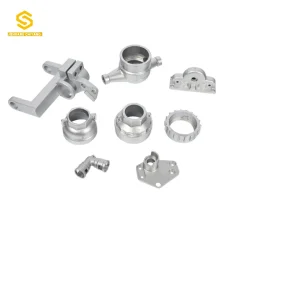
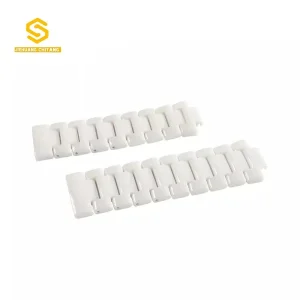
Review additional custom OEM hardware, gears, sintered components, and die casting products available for global wholesale orders.





Technical & Commercial FAQ for Iron-Copper Bushings
In-depth engineering answers addressing purchasing inquiries, material selection, tolerances, and custom OEM manufacturing capabilities.
What is the key advantage of Iron-Copper (Fe-Cu) over pure Sintered Bronze bushings?
Iron-Copper sintered bushings provide a significantly higher load capacity and radial crush strength than pure bronze bearings at a substantially lower raw material cost. While pure bronze offers superior corrosion resistance, the Fe-Cu alloy matrix is optimal for high-torque, heavy-duty applications such as power tools, starters, and industrial gearboxes where cost efficiency and high mechanical yield strength are required.
How does self-lubrication work in iron-copper sintered bearings?
During manufacturing, the porous metallic structure (18% to 25% interconnected porosity by volume) is fully saturated with lubricating oil via vacuum impregnation. When the shaft rotates, friction generates heat and hydrodynamic force, drawing oil to the surface to maintain a low-friction barrier. When the equipment stops, capillary action draws the oil back into the pores, preventing leakage and ensuring lifelong lubrication without manual maintenance.
What dimensional tolerances can Ningbo Jiehuang achieve on wholesale sintered bushings?
Through secondary calibration and sizing dies, we achieve inner diameter (ID) and outer diameter (OD) tolerances down to ISO h7/r7 or IT7-IT8 standards (typically ±0.012 mm to ±0.025 mm depending on part size). Length tolerances are controlled within ±0.05 mm, and concentricity is held within 0.02 mm runout.
What are the minimum order quantities (MOQ) and lead times for custom OEM orders?
Our standard Minimum Order Quantity (MOQ) for custom powder metallurgy sintered bushings is 5,000 pieces. For Metal Injection Molding (MIM) and die casting parts, the MOQ starts at 2,000 pieces. Tooling design and sample production require approximately 30 days, with mass production batch orders fulfilled in 20–30 days.
Can you provide custom lubricant formulations for extreme temperature environments?
Yes. In addition to standard turbine oils (ISO VG 68), we supply synthetic lubricants, fluorinated oils, silicone oils, and high-temperature synthetic grease blends capable of operating across extended thermal ranges from -40°C up to +200°C for automotive under-hood and industrial oven applications.
Do you support NDA agreements and full technical DFM reviews prior to quotation?
Absolutly. We sign non-disclosure agreements (NDAs) prior to receiving proprietary engineering files. Every 2D (PDF) and 3D (STEP/IGES) drawing submitted undergoes a free engineering Design for Manufacturability (DFM) review within 48 hours to optimize geometry and reduce unit production costs.
Partner with Ningbo Jiehuang Precision Manufacturing
Send us your technical drawings today to receive a comprehensive DFM analysis and transparent factory-direct wholesale quotation within 48 hours.