
Featured Precision Engineered Auto Components
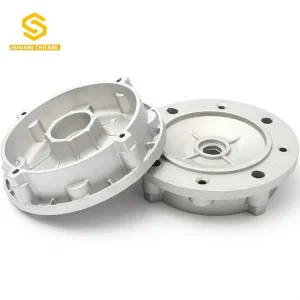
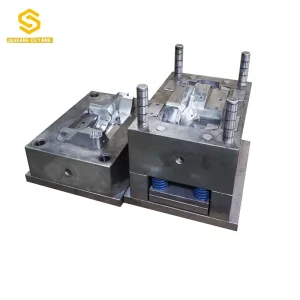
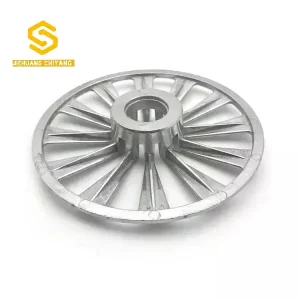
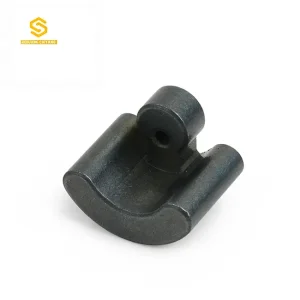
Explore our core manufacturing portfolio spanning high-pressure zinc/aluminum die casting, metal injection molding (MIM), precision powder metallurgy, and custom toolings engineered to Tier-1 automotive standards.

Executive Overview: Automotive Structural Lightweighting Imperative
In the modern era of automotive engineering, structural lightweighting has evolved from a secondary optimization goal to a primary architecture imperative. As global original equipment manufacturers (OEMs) aggressively transition toward electric mobility (EVs), hybrid powertrains, and autonomous driving architectures, the demand for high-integrity, lightweight automotive brackets has reached unprecedented levels. Brackets represent up to 8% of a vehicle's unibody and chassis structural component count. Optimizing these components through advanced metallurgy, topology design, and precision manufacturing directly extends electric vehicle range, reduces carbon footprints, and enhances overall vehicle dynamics.
Macro Industry Solutions: Tailored Engineering for Diverse Sub-Systems
Lightweight automotive brackets act as structural anchors across complex multi-material assemblies. Our manufacturing facilities leverage high-pressure aluminum die casting, zinc die casting, metal injection molding (MIM), and powder metallurgy to deliver bespoke structural solutions tailored to specific vehicle subsystems:
EV Battery & E-Axle Mounts
High-strength aluminum brackets designed to secure heavy battery modules and high-torque electric drive motors. Engineered with exceptional fatigue resistance and thermal conductivity to mitigate thermal buildup and operational vibrations.
ADAS & Autonomous Sensor Mounts
Ultra-precise, vibration-damped bracket assemblies housing LiDAR, RADAR, and optical cameras. Produced via high-precision zinc die casting and MIM to ensure zero thermal warping and dimensional calibration permanence.
Chassis & Suspension Links
Heavy-duty lightweight brackets engineered for control arms, sway bar links, and shock absorber towers. Processed through T6 heat-treated aluminum die casting to deliver maximum yield strength under high dynamic loads.
Technical Roadmap & Advanced Metallurgy Breakdown
Selecting the optimal material and manufacturing process is crucial for achieving the perfect synthesis between weight reduction, mechanical durability, and cost efficiency. Our engineering team utilizes finite element analysis (FEA) and mold flow simulations to select and refine lightweight alloys for wholesale automotive bracket production.
| Material Class | Primary Alloys | Tensile Strength (MPa) | Density (g/cm³) | Core Process Method | Target Automotive Application |
|---|---|---|---|---|---|
| High-Grade Aluminum Alloys | A356, A380, AlSi10Mg | 290 - 350 | 2.68 - 2.72 | High-Pressure Die Casting (HPDC) | Engine Mounts, Battery Tray Brackets, Steering Gear Mounts |
| Magnesium Die Casting Alloys | AZ91D, AM60B | 230 - 260 | 1.78 - 1.81 | Hot/Cold Chamber Die Casting | Instrument Panel Brackets, Steering Column Brackets, Tailgate Hinges |
| Stainless Steel (MIM) | 17-4PH, 316L, 420 | 900 - 1150 | 7.75 - 7.85 | Metal Injection Molding (MIM) | Turbocharger Actuator Brackets, Door Lock Latches, Sensor Housings |
| Sintered Steel Powder Alloys | FC-0208, FN-0205 | 450 - 750 | 6.9 - 7.4 | Compaction & High-Temp Sintering | Camshaft Timing Brackets, ABS Brake Ring Mounts, Transmission Brackets |
| Hybrid Multi-Material | Aluminum + Carbon Insert | 420 - 580 | 2.10 - 2.35 | Insert Molding & CNC Finishing | Structural Crash-Box Mounts, Suspension Tower Cross-Braces |
Topology Optimization & Generative Design Evolution
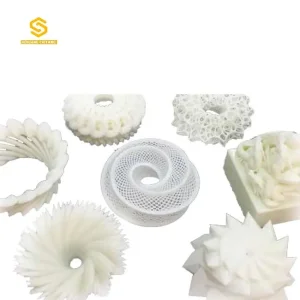
Traditional automotive bracket manufacturing often results in excess material placement due to conventional machining limitations. By integrating generative topology design into our tooling design, our engineering team removes non-load-bearing mass, replacing solid blocks with lattice structures and variable wall thicknesses. The resulting brackets retain 100% of their structural load capacity while achieving up to a 42% decrease in net component weight.
China Factory 4.0: Supply Chain Resilience & Manufacturing Efficiency
As a leading China-based wholesale manufacturer and OEM facility, our smart factory ecosystem in Ningbo leverages fully automated production lines, real-time MES tracking, and vertically integrated tool-making capabilities. This enables global buyers to unlock substantial total cost of ownership (TCO) reductions while securing robust supply chain continuity.
End-to-End Vertical Integration
We eliminate intermediary margins by housing mold manufacturing, high-pressure die casting, MIM debinding/sintering, 5-axis CNC machining, surface finishing, and automated CMM inspection under a unified 28,000 m² infrastructure.
Automated Robotic Production
Equipped with robotic casting extractors, automated trimming presses, and closed-loop sintering furnaces that run 24/7. Continuous process monitoring ensures zero defect escaping across million-unit wholesale production runs.
Raw Material Security & Cost Lead
Direct long-term procurement contracts with premier primary ingot producers guarantee stable alloy pricing, guarding our tier-1 global partners against sudden commodity exchange price swings.
Global Enterprise Procurement: Streamlined Sourcing Matrix
Navigating international OEM procurement demands more than competitive piece-part pricing; it requires absolute operational transparency, engineering feedback, and risk mitigation. Our dedicated international project management teams work directly with procurement directors and engineering leads across North America, Europe, and Asia-Pacific.
1. Design for Manufacturability (DFM)
Within 48 hours of drawing submission (STEP/IGES/PDF), our tooling engineers provide comprehensive DFM analysis detailing draft angles, wall thickness uniformity, parting line positioning, and potential sink mark mitigation.
2. Rapid Metal Prototyping
Accelerate your vehicle validation milestones. We offer fast-turnaround SLA/SLM 3D metal printing and prototype machining to provide functional physical bracket samples prior to hard tooling investment.
3. Transparent Tooling Lifecycle
We guarantee mold life expectancy up to 500,000 shots for die casting and MIM tooling, maintaining and refurbishing tooling at zero added cost to our long-term wholesale customers.
Localized Support, Quality Assurance & Compliance Standards
Quality is non-negotiable in automotive safety components. Our manufacturing protocols strict adherence to international automotive standards, ensuring seamless integration into your automated assembly lines.
IATF 16949 & ISO 9001 Certified
Our entire facility operates under audited quality systems featuring continuous APQP, FMEA, MSA, and SPC tracking. Every production lot is traceable back to the specific raw material melt batch.
PPAP Level 3 Documentation
We supply complete Production Part Approval Process (PPAP) Level 3 packages, including Full Dimensional Inspection Reports, Material Certifications, Process Flow Diagrams, and Control Plans.
Global Environmental Compliance
All alloys, coatings, and surface treatments (e.g., anodizing, e-coating, passivation) comply with global EU RoHS, REACH, and IMDS (International Material Data System) logging requirements.
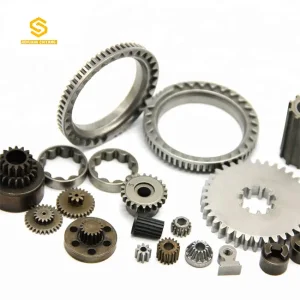
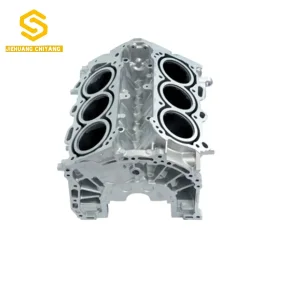
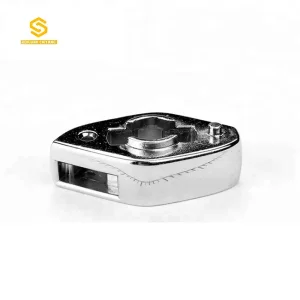
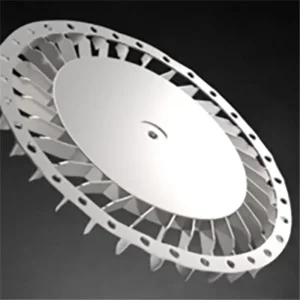
Expanded Metal Injection Molding & Sintered OEM Catalog
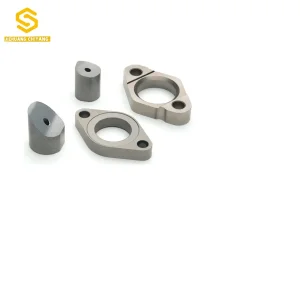
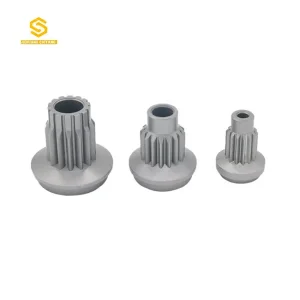
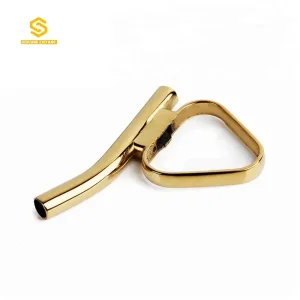
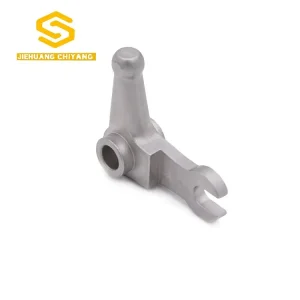
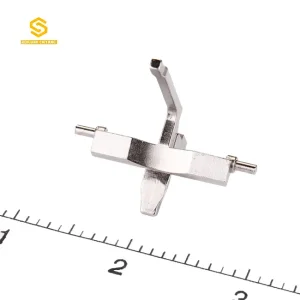
Discover our full array of specialized MIM parts, powder metallurgy sintered components, medical grade sub-assemblies, and cooling hardware designed for multi-industry application excellence.
Frequently Asked Questions: Technical Engineering & Sourcing
Find authoritative answers to critical engineering, manufacturing, and logistics questions concerning custom lightweight automotive bracket production.
MIM is ideal for small, highly complex structural brackets (typically under 250 grams) requiring high tensile strength (> 900 MPa) using stainless steel or titanium. Die casting (aluminum/magnesium) excels for larger structural brackets (up to several kilograms) where rapid cycle times, high thermal conductivity, and thin-wall geometric capabilities are paramount.
Directly replacing multi-piece welded steel assemblies with single-piece topology-optimized aluminum die-cast brackets yields a weight reduction of 40% to 55%. Transitioning to magnesium alloys can achieve weight savings up to 65% while simultaneously improving NVH (Noise, Vibration, and Harshness) damping characteristics.
As-cast aluminum die-cast tolerances conform to ISO 8062-3 Grade DCTG 4 to 6. For critical mounting faces and bearing bores finished via in-house 5-axis CNC machining, we comfortably achieve tight tolerances within ±0.010 mm to ±0.015 mm.
Standard tooling development and initial sample production take approximately 30 to 45 calendar days depending on mold complexity. Upon first-off sample approval, full PPAP Level 3 documentation packages and initial mass-production shipments are executed within 14 business days.
We provide customized surface treatments tailored to OEM joint environments, including KTL e-coating, anodic oxidation, zinc-flake coating, and dielectric isolation shims to completely block galvanic interaction between dissimilar metals.