
Featured Metal Injection Molding & Sintered Products
Explore our engineering-grade OEM custom parts produced via advanced metal injection molding and powder metallurgy powder metallurgy processes.




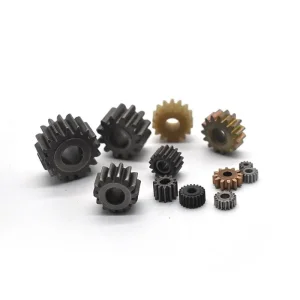

1. Evolution of Metal Injection Molding (MIM) in Global Precision Manufacturing
Metal Injection Molding (MIM) represents a pivotal convergence of plastic injection molding versatility and the isotropic mechanical integrity of powder metallurgy. Designed specifically to overcome the physical boundaries of conventional CNC machining, investment casting, and press-and-sinter powder metallurgy, MIM offers a near-net-shape manufacturing framework capable of volume-producing highly complex three-dimensional geometries in high-performance alloys.
Information Gain Insight: Modern MIM processes achieve structural densities between 95% and 99% of theoretical wrought density. This eliminates internal voids and micro-porosity, yielding mechanical properties, tensile strengths, and corrosion resistance profiles virtually indistinguishable from bar-stock metal alloys while cutting material waste by up to 60%.
The Metallurgical Mechanics of MIM
The MIM manufacturing cycle combines fine metal powders (typically 0.5 to 20 micrometers in diameter, produced via gas or water atomization) with a thermoplastic binder system consisting of paraffin waxes, polyethylene, and catalytic polymers. This blend creates an engineered feedstock. The feedstock undergoes standard injection molding at elevated temperatures to form a green part.
Subsequent debinding removes the binder matrix through chemical, thermal, or catalytic solvent extraction, yielding a porous brown part. Finally, high-temperature sintering in vacuum or hydrogen-reducing atmospheres coalesces the metal particles just below their melting point. Controlled linear shrinkage of 15% to 22% consolidates the structure into a fully dense, high-strength metal component with tight dimensional repeatability (±0.3% to ±0.5%).
| Manufacturing Parameter | Metal Injection Molding (MIM) | Multi-Axis CNC Machining | Investment Casting | Press & Sinter PM |
|---|---|---|---|---|
| Geometric Complexity | Extremely High (Undercuts, Micro-holes) | High (Constrained by Tool Access) | Moderate to High | Low to Moderate (2.5D Axial) |
| Annual Production Scale | 10,000 to 10,000,000+ Units | 1 to 5,000 Units (Low Volume) | 1,000 to 50,000 Units | 50,000 to 1,000,000+ Units |
| Material Utilization Rate | 95% – 98% (Recyclable Feedstock) | 15% – 40% (High Scrap Rate) | 70% – 85% (Sprue Waste) | 90% – 95% |
| Relative Cost (High Volume) | Lowest (Tooling Amortized) | Extremely High | Moderate to High | Low |
| Mechanical Density Ratio | 95% – 99% (Near Wrought) | 100% (Solid Bar Stock) | 92% – 96% (Potential Porosity) | 80% – 90% (Porous Interior) |
2. Global Industrial Applications & Market Penetration
Analyzing key commercial vectors driving high-volume demand for wholesale MIM components across major global manufacturing hubs.
Automotive & EV Powertrains
MIM components serve mission-critical applications in Variable Valve Timing (VVT) systems, turbocharger wastegate actuators, seat adjustment mechanisms, ABS sensor bodies, and electric vehicle (EV) battery busbar connectors requiring high thermal and electrical conductivity.
Medical & Surgical Instrumentation
Minimally invasive surgical (MIS) tools, endoscopic graspers, laparoscopic shears, knife handles, and dental brackets benefit from MIM's ability to produce complex, biocompatible stainless steel (316L, 17-4PH) and titanium (Ti-6Al-4V) components with smooth surface finishes.
Consumer Electronics & Wearables
High-end consumer hardware relies on MIM for foldable smartphone hinges, smartwatch casings, fiber optic connectors, camera ring frames, and charging port bezels where high cosmetic appeal, structural stiffness, and miniature sizes are essential.
Aerospace & Defense Systems
MIM titanium micro-components, lock components, firing pins, safety switches, and drone mounting hardware demand supreme fatigue resistance and strict adherence to ISO 9001 and AS9100 quality management standards.
Industrial Hardware & Micro-Gears
Robotic joint mechanisms, planetary micro-gears, pneumatic control valves, and heavy-duty locking pawls leverage tungsten and tool-steel MIM alloys for superior wear resistance and long operational cycle life.
3. China Factory Efficiency & Cost Optimization Framework
China has established itself as the world’s premier hub for Metal Injection Molding manufacturing, representing over 45% of global MIM production capacity. The competitive edge provided by top-tier Chinese OEM factories extends far beyond low labor costs, grounding itself in end-to-end supply chain integration, aggressive technological modernizations, and rapid tooling cycles.
1. Complete Vertical Integration of Metal Powder Feedstock
Leading Chinese MIM manufacturers maintain direct partnerships with domestic gas and water atomization powder suppliers, ensuring immediate access to high-purity iron, stainless steel, and nickel alloy powders. In-house feedstock compounding guarantees tight control over binder chemistry and powder-loading fractions (typically 60-65% metal powder by volume), allowing precise adjustments to shrinkage factors before mass tooling begins.
2. Advanced Automated Debinding and Sintering Infrastructure
To deliver flawless repeatability across millions of units, Chinese factories utilize continuous catalytic debinding lines operating with nitric acid vapor systems, coupled with multi-zone computer-controlled continuous vacuum sintering furnaces. Automated robotic arms manage green-part pick-and-place operations, eliminating manual handling defects and maintaining consistent green-density distribution.
3. Rapid Mold Tooling & Concurrent DFM Engineering
By deploying multi-cavity hot runner injection molds built from high-grade hardened tool steels (such as NAK80 or S136), Chinese engineering teams reduce tooling lead times from 8–12 weeks down to just 3–4 weeks. Concurrent Design for Manufacturability (DFM) reviews flag potential wall thickness discrepancies, sink marks, and parting line flash points before steel is cut, drastically accelerating speed-to-market for international buyers.
4. Material Science Specification & Engineering Grades
Selection guide for selecting optimal MIM material formulations based on mechanical loads, environmental exposure, and post-processing requirements.
17-4PH Stainless Steel
Precipitation Hardening: Delivers exceptional mechanical strength (tensile strength up to 1150 MPa post H900 heat treatment) combined with excellent corrosion resistance. Ideal for surgical tools, aerospace latches, and high-load gears.
316L Stainless Steel
Austenitic Non-Magnetic Grade: Offers superior resistance to chloride pitting and chemical corrosion. Non-magnetic characteristics make it the gold standard for medical implants, consumer watch cases, and marine hardware.
Titanium Alloys (Ti-6Al-4V / Ti-CP)
High Strength-to-Weight Ratio: Titanium Metal Injection Molding (TiMIM) delivers 40% weight reduction compared to steel alongside supreme biocompatibility. Perfect for wearable electronics, aerospace fittings, and medical implants.
Fe-Ni Low Alloy Steels (Fe-2Ni, Fe-8Ni)
High Toughness & Hardness: Excellent response to carburizing and heat treatment processes. Widely used for high-impact industrial power tool gears, automotive transmission components, and locking mechanisms.
Tungsten & Heavy Alloys
High Density & Radiation Shielding: Offers extreme density (up to 18.5 g/cm³). Used for balance weights in automotive crankshafts, smartphone vibration motors, and medical radiation collimators.
5. OEM Procurement Strategy & DFM Checklist for Sourcing MIM Parts
Sourcing wholesale MIM parts internationally requires strict adherence to technical parameters during the initial RFQ (Request for Quotation) phase. Mechanical procurement engineers must evaluate factory capability based on design rules, quality assurance equipment, and international standard compliance.
Essential Design for Manufacturability (DFM) Rules for MIM
- Uniform Wall Thickness: Maintain wall thicknesses between 0.5 mm and 4.0 mm. Abrupt transitions in thickness induce localized differential shrinkage, leading to internal voids or warping during sintering.
- Draft Angles: Incorporate 0.5° to 1.0° draft angles on sidewalls parallel to mold opening direction to facilitate clean ejection without drag marks on green parts.
- Gate Placement: Position injection gates on non-functional, non-cosmetic surfaces. Gate residue (vestige) must be accounted for in drawing tolerances.
- Internal Threads & Undercuts: MIM easily forms external threads and complex internal undercuts via collapsible cores or side-actions, eliminating secondary lathe operations.
Quality Assurance Protocols & Certifications
A qualified tier-1 OEM factory must demonstrate robust Quality Management Systems (QMS) backed by IATF 16949 (Automotive Quality Management Standard) and ISO 9001 certification. On-site inspection laboratories should be equipped with 3D Coordinate Measuring Machines (CMM), Optical Profilometers, X-Ray Fluorescence (XRF) material analyzers, and Automated Optical Inspection (AOI) sorting machines capable of checking 100% of critical dimensions at line speed.
6. Emerging Innovations & Future Outlook for MIM
Exploring next-generation technologies shaping the future of powder metallurgy and ultra-precision additive component manufacturing.
Micro-MIM Technology
Enables mass production of ultra-small micro-components weighing under 0.1 grams with micro-features down to 10 microns, driving breakthroughs in minimally invasive medical electronics and micro-robotics.
Hybrid Binder Jetting Integration
Combining 3D Metal Binder Jetting with traditional MIM sintering infrastructure allows rapid prototyping without tooling costs, bridging the gap between low-volume R&D and high-volume injection production.
Sustainable Green Manufacturing
Closed-loop solvent recovery systems, bio-based organic binder formulations, and energy-efficient vacuum sintering reduce carbon footprints while lowering overall unit manufacturing costs.
7. Frequently Asked Questions (FAQ) for OEM Sourcing
Comprehensive technical answers to common questions raised by procurement managers and design engineers.
OEM & Precision Metal Engineering Products
Explore specialized sintered gears, titanium components, and custom die castings engineered to exact client specifications.






