





Macro Industry Landscape & Technical Capabilities of MIM
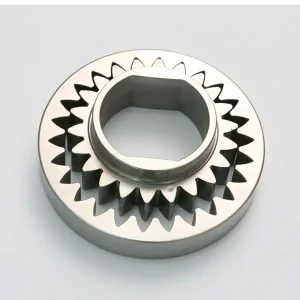
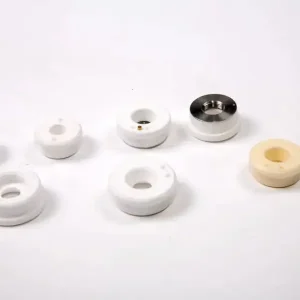
Metal Injection Molding (MIM) fuses the geometric freedom of plastic injection molding with the structural integrity, thermal resistance, and tensile strength of wrought metals.
Global Sourcing Dynamics
Modern OEMs are increasingly shifting away from labor-intensive subtractive CNC milling toward high-volume powder metallurgy and MIM processes. By sintering micro-fine metal powders with tailored organic binder systems, wholesale metal injection molding component factories eliminate up to 98% of material waste (scrap rate) while manufacturing highly complex 3D geometries.
Complex Micro-Geometry Fabrication
MIM allows for internal threads, blind holes, knurling, thin wall sections down to 0.5mm, undercut features, and custom aesthetic branding to be molded directly into a single unified part. This eliminates secondary machining steps, sub-assembly labor, and fastener requirements for critical industrial applications.
Advanced Metallurgy & Material Synthesis
Through custom alloy blending with fine spherical powders (d50 typically between 4 µm to 15 µm), JHMIM achieves isotropic physical properties. Available alloys span austenitic and martensitic stainless steels (316L, 17-4PH), low alloy steels (FN0205, 4140), titanium alloys (Ti-6Al-4V), and tungsten heavy alloys.
The 4-Stage MIM Manufacturing Process
Step-by-step transformation from raw metal powder to high-density sintered structural components.
1. Feedstock Formulation
Elemental or pre-alloyed metal powders are kneaded at high temperature with a multi-component binder matrix (thermoplastics, paraffin wax, polyacetal) to create a homogeneous feedstock mixture.
2. Precision Injection
Feedstock is injected into custom-designed multi-cavity molds using specialized injection molding machines to form "green parts". Oversized tooling accommodates predictable sintering shrinkage (typically 15-20%).
3. Solvent/Catalytic Debinding
Primary binder agents are chemically or thermally extracted using nitric acid vapor or solvent baths, yielding porous "brown parts" held together by a backbone secondary binder system.
4. High-Temp Vacuum Sintering
Brown components are heated under controlled hydrogen/argon or vacuum atmospheres up to 1350°C. Diffusion bonding densifies the component up to 99% theoretical density, delivering near-wrought strength.
Metal Injection Molding vs. Alternative Manufacturing
Comparative analysis for design engineers, purchasing managers, and industrial OEMs selecting manufacturing pathways.
| Evaluation Parameter | Metal Injection Molding (MIM) | CNC Machining | Powder Metallurgy (Press & Sinter) | Aluminum/Zinc Die Casting |
|---|---|---|---|---|
| Design Complexity | Very High (3D Shapes, Undercuts) | Moderate to Low (Tool Access Limited) | Medium (2.5D Axial Press Shapes) | High (Draft Angle Required) |
| Production Volume Feasibility | 2,000 to 5,000,000+ units/yr | Low to Medium (1 - 5,000 units) | High Volume (>10,000 units) | High Volume (>5,000 units) |
| Material Utilization Rate | >95% (Near-Net-Shape) | 15% - 50% (High Scrap Rate) | >95% | >90% (Runners Remelted) |
| Density & Tensile Strength | 96% - 99% (Wrought Equivalent) | 100% (Wrought Parent Stock) | 80% - 92% (Porous unless infiltrated) | Cast density (Porosity risks) |
| Surface Finish (As-Sintered) | Ra 1.0 µm - 3.2 µm | Ra 0.8 µm - 1.6 µm | Ra 2.0 µm - 5.0 µm | Ra 1.6 µm - 3.2 µm |
| Unit Cost at High Volume | Lowest for Complex Geometries | Very High (Driven by machine time) | Low | Low to Moderate |
Localized Application Scenarios & Sector Solutions
Tailored metallurgical properties engineered for critical global sectors.
Automotive Systems
IATF 16949 certified manufacturing of Variable Valve Timing (VVT) rotors, turbocharger vanes, seat lock ratchets, sensor bosses, and door lock latch mechanisms. Sintered steel components resist extreme thermal cycling and wear.
Medical & Surgical Devices
Biocompatible 316L and 17-4PH surgical handle grips, endoscopic biopsy forceps jaws, scissors joints, and dental orthodontic brackets. Provides chemical resistance to autoclave sterilization and passivated surface purity.
Consumer Electronics
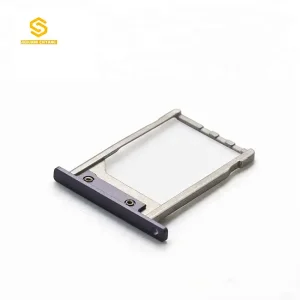
Complex foldable phone hinge modules, wearable smart band enclosures, fiber-optic connector housings, camera bezel rings, and laptop heat-dissipation structural brackets with pristine electroplated finishes.
Industrial Hardware & Power Tools
High-torque planetary gear gearboxes, hydraulic valve spools, pneumatic impact wrench hammers, lock cylinder pins, and heavy-duty fastener components fabricated to handle high cyclic impact stress.
Aerospace & Defense
Lightweight Titanium MIM (TiMIM) structural fasteners, trigger assembly parts, optical target brackets, and guidance fin pivots capable of handling high temperature and harsh environmental forces.
Green & Renewable Energy
Solar tracker pivot bushings, hydrogen fuel cell fluid distribution plates, and wind turbine actuator hardware requiring long service life and zero operational maintenance.
Localized Support & International Compliance Safeguards
From DFM drawing verification to overseas warehousing, JHMIM ensures seamless risk-free procurement.
Certified Quality Control
Operating under strict ISO 9001:2015 and IATF 16949 quality management protocols. Every production run undergoes CMM dimensional inspection, density testing, metallographic grain structure analysis, and salt-spray corrosion testing.
Free DFM & Rapid Prototyping
Our engineering team performs a complimentary Design for Manufacturability (DFM) assessment on all STEP/IGES/PDF files within 48 hours. Metal 3D printing (SLM) prototypes can be produced prior to tooling commitment.
Global Regulatory Assurance
Full compliance with RoHS, REACH, and Conflict-Free Minerals directives. Full material test reports (MTR), chemical composition certs, and certificates of conformance (CoC) accompany every batch shipment.
Technology Roadmap & Future Outlook (2025–2030)
Innovating at the intersection of material science, powder synthesis, and intelligent automation.
Micro-MIM & Ultra-Thin Walls
Development of ultra-fine sub-micron metal powders allowing mold wall thicknesses under 0.2mm and micro-gear module sizes down to 0.1mm for micro-medical robotics and minimally invasive surgical tools.
Titanium MIM (TiMIM) Expansion
Advancing vacuum debinding technology for Ti-6Al-4V and commercially pure titanium powders. Achieving interstitial oxygen levels below 0.15% to deliver high ductility for orthopedic and aerospace applications.
Hybrid Binder Jetting Integration
Combining traditional high-volume MIM mold press technology with Binder Jetting 3D printing (BJM) for seamless tooling-free low-volume pilot builds prior to full tooling investments.
Frequently Asked Questions (Q&A)
Expert insights addressing common engineering, quality, and procurement inquiries.
What is the typical part weight and size range optimal for Metal Injection Molding?
MIM is most cost-effective for small to medium complex metal parts weighing between 0.1 grams and 100 grams. However, JHMIM has successfully mass-produced larger structural components weighing up to 286 grams. Dimensions up to 100mm in length are ideal, as furnace thermal uniformity and shrinkage management are easiest to control within this window.
How does MIM manage shrinkage during high-temperature sintering?
During sintering, organic binders are removed and metal particles fuse together, causing isotropic volumetric shrinkage of 15% to 20%. JHMIM utilizes high-precision CAD software and Moldflow simulation tools to enlarge the tooling cavity geometry precisely by the calculated shrinkage factor (e.g., 1.18x to 1.22x), achieving high final tolerances of ±0.3% of nominal dimensions without machining.
Are mechanical properties of MIM components comparable to CNC machined bar stock?
Yes. Because sintering densifies MIM components to 96%–99% of theoretical density, their mechanical performance (yield strength, tensile strength, elongation, and hardness) closely matches forged or wrought alloys. Secondary processes like Hot Isostatic Pressing (HIP) can further increase density to ~100% for critical aerospace or medical applications.
What is the standard tooling lead time and MOQ for OEM orders?
Tooling design, mold fabrication, and initial sample submission (FAI) typically take 25 to 35 days. Our standard Minimum Order Quantity (MOQ) for production is 2,000 pieces per batch for MIM parts, though prototype sample lots can be produced for engineering qualification.





Start Your MIM Project Today
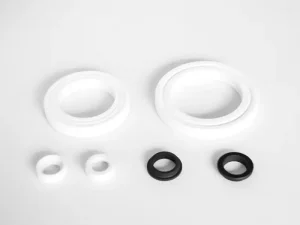
Submit your 2D engineering drawings (PDF) and 3D CAD models (STEP/IGES) for a complimentary DFM feasibility evaluation and transparent wholesale quotation within 48 hours.
Submit Engineering Drawings for Quotation