
Featured Metal Powder & Molding Components
Explore our high-precision sintered components, vacuum castings, and custom metal injection molded parts engineered for heavy-duty industrial applications.



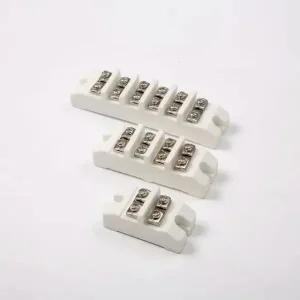



Comprehensive Engineering Guide to Wholesale Metal Powder Forming
An authoritative industrial whitepaper detailing powder metallurgy, metal injection molding (MIM), sintering science, and precision custom component manufacturing.
Modern advanced manufacturing relies heavily on metal powder forming technology—a versatile umbrella encompassing Conventional Powder Metallurgy (PM), Metal Injection Molding (MIM), Direct Energy Deposition (DED), and Isostatic Pressing. As a leading China-based wholesale metal powder forming manufacturer and global OEM supplier, our facility integrates complete material formulation, high-tonnage compaction pressing, multi-stage debinding, and continuous atmosphere-controlled sintering furnaces to produce high-density, complex-geometry components at scale.
Information Gain Insight: Unlike subtractive CNC machining which yields up to 50% material waste, metal powder forming achieves a material utilization rate exceeding 95% (Near-Net-Shape manufacturing). Through precise control over powder atomization grain size, binder system composition, and thermal sintering parameters, mechanical strength matching wrought alloys is achieved at dramatically lower unit costs.
Core Metallurgical Processes Explained
Metal Injection Molding (MIM)
Combines plastic injection molding design freedom with the material strength of metals. Microfine metal powders are mixed with thermoplastic binders to form a feedstock, injected into complex mold cavities, debinded, and sintered to near 98%+ theoretical density.
Press & Sinter Powder Metallurgy
Elemental or pre-alloyed powders are axially compacted under extreme pressure (up to 800 MPa) within solid tooling dies, forming a "green part" that undergoes high-temperature furnace sintering to achieve solid-state diffusion bonding.
Precision Die Casting & Machining
Complementary aluminum, zinc, and magnesium alloy pressure die casting capabilities integrated with secondary 5-axis CNC finishing. Provides lightweight structural housings, heat sinks, and tight-tolerance fluid control interfaces.
Industrial Material & Performance Matrix
Comprehensive engineering specifications for metal alloys utilized across custom OEM sintering and molding operations.
| Material Grade | Yield Strength (MPa) | Tensile Strength (MPa) | Density (g/cm³) | Primary Industrial Applications |
|---|---|---|---|---|
| 17-4PH Stainless Steel | 700 - 1100 | 900 - 1200 | 7.60 - 7.78 | Surgical instruments, aerospace hinges, high-wear industrial valves |
| 316L Stainless Steel | 220 - 300 | 520 - 620 | 7.80 - 7.95 | Medical implants, luxury watch bands, marine hardware, coffee machines |
| Fe-Ni Alloy Steel (FN-0205) | 350 - 650 | 500 - 900 | 7.20 - 7.55 | Automotive transmission gears, timing pulleys, heavy machinery locks |
| Titanium Ti-6Al-4V (TiMIM) | 825 - 895 | 900 - 1000 | 4.35 - 4.45 | Aerospace structural brackets, biomedical scalpel handles, sports tech |
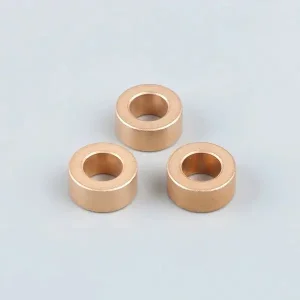
| Sintered Bronze (SAE 841) | 110 - 150 | 180 - 240 | 6.40 - 6.80 | Self-lubricating sleeve bearings, electric motor bushings, oilite filters |
China Manufacturing Supply Chain Advantages & Cost Dynamics
Unlocking competitive total cost of ownership (TCO) through integrated raw powder procurement, automated mass production, and in-house tooling.
Sourcing wholesale metal powder forming solutions directly from certified Chinese manufacturers yields profound economic and operational advantages for international tier-1 and OEM enterprise buyers. China controls over 60% of the world’s refined metal powder supply chain—including elemental iron, copper, nickel, titanium, and rare earth additives—ensuring uninterrupted raw material availability and lower raw powder input costs.
In-House Precision Toolmaker
Our facility houses high-speed CNC spark-erosion EDM, wire-cutting, and 3D CAD/CAM toolmaking centers. Tooling design, mold fabrication, and DFM adjustments occur under one roof, reducing lead times from 12 weeks to under 30 days.
Integrated Post-Processing Ecosystem
Secondary machining, heat treatment (carburizing, vacuum hardening), surface finishing (electroplating, anodizing, PVD coating, passivation), and automated assembly are fully integrated within our industrial cluster.
30% - 50% TCO Reduction
By eliminating excessive CNC machining steps, optimizing binder recovery, and leveraging high-volume automated sintering, total manufacturing costs per piece are dramatically lowered compared to Western counterparts.
Localization Support & Global Regulatory Compliance Safeguards
Meeting rigorous automotive, medical, and industrial quality gates across North American, European, and Asia-Pacific markets.
International procurement managers require seamless localized support, multi-language engineering communication, and absolute compliance with international quality standards. Ningbo Jiehuang Chiyang Electronic Tech Co., Ltd. (JHMIM) bridges global commercial expectations with China's manufacturing power through rigorous documentation and risk mitigation protocols:
- IATF 16949 & ISO 9001 Certification: Audited quality systems covering APQP (Advanced Product Quality Planning), FMEA (Failure Mode and Effects Analysis), and PPAP (Production Part Approval Process Level 1-5) documentation.
- Environmental Compliance (RoHS & REACH): Full spectroscopic certification guaranteeing zero heavy metal contamination or hazardous binder residues across stainless steel, bronze, and aluminum components.
- Strict NDA & IP Safeguards: Encrypted data management systems ensure proprietary 2D/3D CAD geometries and design files remain completely confidential before and after quotation.
- Comprehensive Inspection Equipment: In-house CMM (Coordinate Measuring Machines), optical profile projectors, carbon-sulfur analyzers, density testing apparatus, salt-spray corrosion chambers, and digital torque testers.
- Localized Global Logistics: Flexible DDP (Delivered Duty Paid), FOB, CIF, and Express air shipment arrangements with dedicated account managers speaking fluent English to coordinate custom clearance and warehousing.
Industry Development Trends & Emerging Technologies
How AI digital twin simulations, micro-MIM, and titanium powder sintering are redefining high-precision component manufacturing.
The metal powder forming sector is undergoing a massive technological revolution driven by smart automation, green metallurgy, and advanced materials science. Key innovations shaping the next decade include:
AI-Driven Sintering Thermal Control
Real-time machine vision and thermal imaging monitor furnace zones during debinding and sintering. Automated gas flow adjustments (hydrogen/nitrogen atmosphere) maintain exact carbon potentials, preventing shrinkage distortion.
Micro-MIM & Ultra-Thin Walls
Demands for surgical robotics and micro-electronics drive Micro-MIM capabilities down to individual part weights of 0.01 grams, featuring wall thicknesses as thin as 0.2mm and structural micro-gear teeth impossible to machine conventionally.
Additive Manufacturing & MIM Hybrid
Combining 3D metal printing (SLM/Binder Jetting) for low-volume prototyping with MIM tooling for mass production ensures zero tooling risk during preliminary functional testing stages.
Localized Application Scenarios Across Global Industry Verticals
Custom engineered metal components tailored to strict performance environments in major worldwide markets.
Automotive Powertrain & Chassis
Sintered engine variable valve timing (VVT) rotors, oil pump gears, ABS sensor brackets, steering column lock pawls, and exhaust manifold flange connectors requiring high fatigue resistance.
Medical Instruments & Devices
Biocompatible 316L and 17-4PH endoscopic surgical grasper jaws, scalpel handle adapters, orthopedic instrument hinges, and dental orthodontic bracket systems.
5G Telecom & Hardware
High-density fiber optic connector housings, microwave filter tuning screws, base station heat dissipation brackets, and mobile phone folding screen hinges.
Consumer Goods & Coffee Machines
Precision stainless steel valve bodies, coffee grinder burr mounts, watch case structural lugs, luxury charms, and wear-resistant power tool planetary gear sets.
Industrial Machinery & Filtration
Porous sintered stainless steel bronze filter funnels for water/gas purification, self-lubricating oilite bushings, and high-torque construction hardware components.
Aerospace & Defense
Lightweight TiMIM titanium structural brackets, drone gimbal motor housings, fastener latches, and high-temperature alloy turbine vanes.
Additional Specialized Powder Metallurgy & Die Casting Offerings
Browse our extended catalog of wholesale metal components, titanium watch cases, coffee machine OEM hardware, and sintered bearings.






Frequently Asked Engineering & Sourcing Questions (FAQ)
Detailed technical answers from our senior powder metallurgy engineers to facilitate your DFM review and procurement workflow.
MIM is mathematically optimized for small to medium-sized micro components ranging from 0.01 grams up to 250 grams. While wall thicknesses down to 0.2mm are achievable, the ideal wall thickness range is between 1.0mm and 4.0mm to maintain uniform binder removal and prevent thermal sintering sag. For parts larger than 300 grams or exceeding 150mm in length, conventional Press & Sinter Powder Metallurgy or Die Casting is generally recommended.
Properly sintered MIM parts achieve 96% to 99%+ of theoretical material density. Because micro-porosity is small, closed, and uniformly spherical, the mechanical performance (yield strength, elongation, fatigue limit, and corrosion resistance) is virtually identical to forged or wrought bar stock, making MIM fully compliant for load-bearing automotive engines, surgical scalpels, and high-pressure fluid valves.
Due to automated machine setup and sintering furnace run economies, standard production MOQs are 2,000 pieces for MIM parts, 2,000 pieces for CNC/Die Casting, and 5,000 pieces for press-and-sinter powder metallurgy. Custom tooling design and initial sample fabrication take approximately 25 to 35 days, followed by 14 to 21 days for mass production execution upon PPAP approval.
Yes. We routinely execute bilateral, legally binding Non-Disclosure Agreements (NDAs) prior to reviewing customer STEP/IGES/PDF files. In addition to standard 17-4PH, 316L, and Fe-Ni grades, our research partnerships with Chinese scientific institutions allow custom alloying, including soft magnetic alloys, tungsten heavy metals, and titanium titanium-aluminide blends.
We provide complete turnkey surface solutions, including CNC reaming/tapping, centerless grinding, vacuum carburizing heat treatment, mirror polishing, electro-polishing, passivation, black oxide coating, nickel/chrome plating, physical vapor deposition (PVD), and custom laser marking.