
Industrial Precision Engineering for Global Powder Metal Sintering
An authoritative technical breakdown of net-shape alloy consolidation, micro-grain sintering, and mechanical optimization for critical OEM applications.
Near-Net Shape Efficiency
Consolidating fine metallic powders into high-density components reduces raw material scrap rates by up to 95% compared to subtractive CNC machining, delivering unmatched cost efficiency at OEM scale.
Metallurgical Superiority
By leveraging controlled vacuum debinding and high-temperature sintering, our powder metal products achieve theoretical densities ranging from 95% to 99.5%, yielding exceptional tensile strength and wear resistance.
Micro-Geometries & Tight Tolerances
Capable of producing complex 3D structures, internal splines, micro-gears, and thin-walled features down to ±0.01mm tolerance profiles without secondary machining bottlenecks.
Precision Sintered Parts & MIM Components
High-performance OEM components manufactured directly from optimized alloy formulations.

Custom Metal Injection Molding Watch Band Connector MIM Powder Metallurgy Sintering
View Product Details
Custom CNC Machine Aluminum Die Casting for Auto Spare Parts
View Product Details
Precision Gear Custom Metal PM Powder Metallurgy Gear
View Product Details
Powder Metallurgy Motor Shaft Sleeve Metal Powder Sintered Parts
View Product Details
Sintered Parts Powder Metallurgy Metal Powder Manufacturer
View Product Details
Powder Metal Parts Medical Surgical Handle Component
View Product Details
High Precision Customized Sintered Parts for Garden Tool Accessories
View Product Details
Customized Engine Cylinder Kit Oxidation Aluminium Die Casting Spare Parts
View Product DetailsSelecting the Optimal Process for Metal Powder Products LLC
Understanding the mechanical boundaries, density variations, and economic break-even thresholds of advanced powder engineering.
| Manufacturing Process | Achievable Density | Dimensional Tolerance | Geometric Complexity | Material Utilization | Economic Volume Threshold |
|---|---|---|---|---|---|
| Metal Injection Molding (MIM) | 95% – 99.5% | ±0.3% to ±0.5% (Down to ±0.01mm) | Extreme (Undercuts, 3D curves, micro-holes) | >95% | > 2,000 pcs |
| Press & Sinter Powder Metallurgy (PM) | 85% – 92% (Standard) / >95% (Warm Pressed) | ±0.05mm – ±0.12mm | Moderate (Prismatic, 2.5D stepped gears) | >98% | > 5,000 pcs |
| Aluminum & Zinc Die Casting | Cast Density (Porosity potential) | ±0.08mm – ±0.20mm | High (Thin walls, housings, brackets) | ~90% (Includes runners) | > 2,000 pcs |
| 5-Axis CNC Machining | 100% Wrought Material | ±0.005mm – ±0.02mm | High (Tool accessibility constrained) | 15% – 40% (High Scrap) | 1 – 500 pcs |
Atomization & Powder Morphology
The core of superior metal powder products lies in feedstock preparation. Utilizing Gas Atomization yields spherical powder particles ideally suited for MIM, promoting uniform shrinkage and isotropic mechanical properties. Water Atomization produces irregular geometries perfect for cold compaction pressing in traditional PM operations.
Thermal Processing & Debinding
Our dual-stage catalytic and solvent debinding protocols eliminate binder phase matrices without disrupting green-part geometry. Sintering under vacuum, pure Hydrogen, or Dissociated Ammonia atmospheres enables precise phase transformation and grain growth control, conforming strictly to MPIF Standard 35.
Strategic Competitive Advantages of Our Ningbo Factory
Combining deep metallurgical R&D with the world's premier industrial supply chain infrastructure.
Academic & Industrial R&D Partnerships
In strategic collaboration with the Chinese Academy of Sciences (CAS Ningbo) and leading university metallurgical departments, our factory holds 8 material invention patents. We continuously advance proprietary feedstock formulations for high-temperature stainless steel (316L, 17-4PH) and low-alloy magnetic steels (Fe-Ni-C).
Scale & Automated Compaction Pressing
Equipped with a total manufacturing footprint exceeding 28,000m², our facilities house automated 10,000 kN (1,000-ton) hydraulic press systems and continuous mesh belt sintering furnaces. This allows high-throughput mass production with flawless batch-to-batch consistency.
IATF 16949 & ISO Quality Control
Every lot undergoes rigorous metrological validation using CMM dimensional verification, X-ray fluorescence spectrum analysis, shear testing, and optical profilometers. Full APQP/PPAP Level 3 documentation is standard for Tier-1 automotive and medical buyers.
Macro Trends Shaping Metal Powder Manufacturing
Innovations in powder formulation, additive integration, and sustainable sintering shaping the next decade of industrial engineering.
1. Titanium MIM (TiMIM) & Reactive Metallurgy
Driven by bio-compatibility requirements in surgical tools and lightweight demands in aerospace and luxury wearables, Titanium MIM (Grade 5 Ti-6Al-4V) represents a primary growth vector. Controlling oxygen pickup during sintering guarantees superior fatigue performance.
2. Electrification & EV Drive Modules
Electric vehicle powertrains require high-density powder metallurgy planetary gears, magnetic soft cores (SMC), and rotor sleeves capable of operating up to 20,000 RPM. Sintered iron-nickel alloys lower magnetic core loss while enhancing torque transmission.
3. Hybrid Additive Manufacturing (3D Powder Printing)
Bridging rapid prototyping and high-volume powder tooling, Direct Metal Laser Sintering (DMLS) and Binder Jetting allow rapid validation of part geometries before investing in multi-cavity injection molds or compaction tooling dies.
4. Green Sintering & Decarbonization
Modern powder sintering facilities are transitioning toward closed-loop atmosphere recycling, hydrogen-rich sintering furnaces, and energy-optimized thermal profiles, aligning global OEM supply chains with stringent ESG mandates.
Tailored OEM Solutions across Core Industries
Engineered metal powder components engineered for zero-defect compliance in harsh operational environments.
Automotive & Powertrain Systems
Sintered timing gears, Variable Valve Timing (VVT) rotors, oil pump gears, transmission lock-up hubs, and sensor brackets engineered to endure high cyclic fatigue and extreme thermal gradient stress.
Medical Devices & Surgical Tools
Biocompatible 316L and 17-4PH MIM surgical forceps, endoscopic jaws, scalpel handle connectors, and dental implants requiring complex ergonomic contours and micro-feature execution.
Consumer Electronics & Wearables
High-polish stainless steel foldable smartphone hinges, smartwatch band connectors, camera module rings, and audio driver housings requiring premium aesthetic finish and wear resilience.
Industrial Tools & Hardware
Power tool planetary drive components, motor bushings, garden equipment gear assemblies, ceramic/porcelain terminal blocks, and heavy-duty structural locking latches.
Structured Procurement & DFM Integration Protocol
From initial 2D/3D CAD submission to mass-production delivery, our 5-step engineering pipeline guarantees complete quality control.
CAD & DFM Review (24–48 Hours)
Engineering analysis of 3D STEP and 2D PDF files. We evaluate wall thickness, shrinkage allowances, draft angles, and sintering support features to optimize part cost.
Rapid Prototyping
Verification via metal 3D printing or single-cavity prototype tooling to validate mechanical fit, assembly tolerances, and material properties prior to full tooling release.
Hard Tooling Construction
Precision multi-cavity injection molds or compaction die sets fabricated with tungsten carbide components in-house, ensuring tool life up to 1,000,000 cycles.
PPAP Level 3 Validation
First Article Inspection (FAI), CMM dimensional reports, metallographic micro-structure analysis, and salt-spray corrosion test documentation presented for client sign-off.
Automated Mass Production
Closed-loop MES system monitoring sintering temperatures, debinding cycles, and batch traceability. 100% critical dimension optical sorting before global logistics dispatch.
Die Castings, Tooling & Specialized Alloy Assemblies
Comprehensive powder metal and die casting solutions tailored for international buyer requirements.

Custom Injection Moulding Die Casting Auto Parts Tooling Steel Moulds
View Product Details
OEM Powdered Copper Based Sintered Metal Components
View Product Details
Custom Zinc Die Casting Parts & Aluminum Casting Products
View Product Details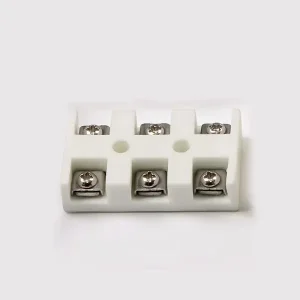
Wholesale Porcelain Terminal Block Components
View Product Details
Custom High Precision CNC Machining & Die Casting Aluminum Alloy Spare Parts
View Product Details
Powder Metallurgy Diesel Engine Oil Pump Rotor Component
View Product Details
Custom Powder Metallurgy Sintered Metals Parts with Sintering Process
View Product Details
High Precision Metal Injection Mold MIM PM Gear Structure Powder Metal Parts
View Product DetailsFrequently Asked Questions for Metal Powder Procurement
Answers to common engineering, commercial, and quality assurance queries raised by global OEM buyers.
What is the structural difference between Metal Injection Molding (MIM) and traditional Press & Sinter Powder Metallurgy (PM)?
MIM utilizes extremely fine spherical metal powders (<20 microns) blended with a thermoplastic binder system, allowing liquid injection molding into complex 3D shapes similar to plastic injection. Traditional PM uses larger, irregular powders compacted uniaxial in a hard metal die, making it best suited for 2.5D shapes such as spur gears, bushings, and flat structural plates.
How do metal powder sintered products achieve high mechanical strength comparable to wrought alloys?
Strength is directly correlated with final sintered density. Through precise temperature control during sintering (typically 1200°C to 1350°C depending on the base alloy), atomic diffusion causes necking between metal particles, closing internal pores. Secondary processes such as Hot Isostatic Pressing (HIP) or heat treatments (carburizing, induction hardening) bring mechanical performance to 95-99% of wrought material standards.
What are the primary material grades available for OEM metal powder products?
Our standard offerings include Stainless Steels (316L, 17-4PH, 304L), Low Alloy Steels (Fe-Ni-C, Fe-Cu-C), Tool Steels (M2, SKD11), Soft Magnetic Alloys (Fe-Ni, Fe-Si), and Non-Ferrous Alloys (Copper-based self-lubricating bronze, Titanium Grade 5 Ti-6Al-4V). Custom chemical formulations can be prepared upon request.
What is the typical lead time for custom tooling and first sample delivery?
Standard tooling development for MIM or PM dies typically requires 25 to 35 days depending on cavity complexity. Upon tooling completion, initial T1 sample parts are produced and dispatched within 5 to 7 days, accompanied by complete FAI and material test certificates.
Can Non-Disclosure Agreements (NDAs) be executed prior to sharing engineering files?
Yes, absolutely. We routinely sign corporate bilateral NDAs prior to evaluating any proprietary 2D/3D technical drawings. All files are hosted on secure, restricted-access internal servers protected under strict data security protocols.
Ready to Optimize Your Component Manufacturing Cost?
Submit your 3D CAD files (STEP/IGES) and 2D engineering drawings today. Receive a comprehensive DFM manufacturability evaluation and transparent quotation within 48 hours.