
Featured Wholesale Sintered & Precision Molded Components
Explore our custom manufacturing solutions covering steel powder metallurgy, sintered timing gears, ceramic components, and die-cast structural assemblies.

Wholesale Hot New Products China 2021 Trending Products Custom Processing Steel Powder Metallurgy Sintered Parts Manufacturers, Supplier
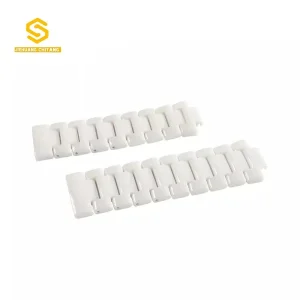
China Ceramic injection molding casting Watch Band For Wrist Strap Manufacturer, Factory

Wholesale Best Price for OEM Custom High Precision CNC Machining/Machined/Machine/Milling/Turning/Stamping/Die Casting Metal Aluminum Alloy Auto Spare Machinery Parts Manufacturers, Supplier

China ODM Manufacturer Sintered Parts Powder Metallurgy Metal Powder Manufacturer Manufacturer, Factory

China Factory Directly supply Sintered Steel Timing Gear Rings Custom Die Casting Parts Manufacturers, Factory
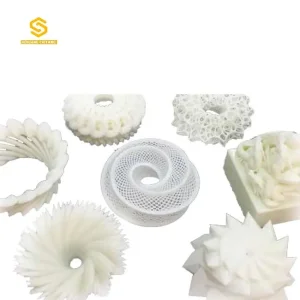
China 3D Printing Manufacturer, Manufacturers

China China Customized Spur Gear Supplier Supplier, Factories

Wholesale Professional Factory for Wholesale Motorcycle Accessories Aluminum Alloy Part Motorcycle Windscreen Die Casting Supplier, Factories
The Macro Economics of Wholesale Metal Sintering Manufacturing
Metal sintering, encompassing conventional Powder Metallurgy (PM), Metal Injection Molding (MIM), and Binder Jetting additive post-sintering, stands as a cornerstone of modern high-precision component manufacturing. The global market for powder metallurgy and metal sintering is projected to scale from $28.4 Billion in 2023 to over $42.8 Billion by 2032, reflecting a steady Compound Annual Growth Rate (CAGR) of 6.2%.
Key Market Drivers & Shift in Demand
The transition toward electrification, miniaturization, and sustainable manufacturing has fundamentally reshaped global procurement criteria. Original Equipment Manufacturers (OEMs) in North America, Europe, and Asia-Pacific are increasingly abandoning traditional multi-axis CNC milling and investment casting in favor of sintered net-shape components.
- Near-Zero Material Scrap: Traditional substractive machining wastes up to 60% of raw metal alloy stock. Sintering achieves over 95% metal yield.
- Automotive Electrification: High-torque electric vehicle gearboxes and thermal management pumps demand sintered soft-magnetic alloys (SMC) and custom high-density steel components.
- Supply Chain Consolidation: OEMs require single-source manufacturing partners capable of handling tooling design, powder atomization blending, sintering, secondary CNC finishing, and surface plating under one roof.
China's Role in Global Sintering Supply Chains
As the premier global hub for metal powder metallurgy, China's advanced manufacturing clusters—particularly in Ningbo and Zhejiang province—offer unmatched vertical integration. Advanced factory automation, coupled with strict adherence to international metallurgical standards (MPIF Standard 35, ISO 9001, IATF 16949), enables Chinese manufacturers to deliver high-volume custom orders at significant cost efficiencies.
Wholesale buyers benefit from optimized tooling development cycles (reduced from 12 weeks to 30 days) and automated continuous atmosphere sintering furnaces that maintain strict microstructural homogeneity across millions of units.
Technical Architecture: How Metal Sintering Works
Sintering is a thermally activated solid-state bonding process where compacted metal powders are fused below their absolute melting temperature. The process transforms porous green compacts into dense, high-strength engineering components through atomic diffusion, pore coalescence, and grain boundary growth.
Powder Atomization & Mixing
High-purity elemental or pre-alloyed powders (Iron, Stainless Steel 17-4PH/316L, Titanium, Copper-Steel) are produced via gas or water atomization. Powders are blended with solid lubricants or polymeric binders to ensure uniform compressibility and flowability.
Compaction & Debinding
For conventional PM, powders are compacted under hydraulic or mechanical presses at pressures ranging from 400 to 800 MPa. In Metal Injection Molding (MIM), feedstocks are molded into intricate shapes, followed by thermal or catalytic debinding to remove primary binders.
Atmosphere Controlled Sintering
Compacts pass through multi-zone continuous mesh belt or high-vacuum batch furnaces at temperatures between 1100°C and 1380°C. Protective atmospheres (100% N2, Dissociated Ammonia, or Argon Vacuum) prevent oxidation and control carbon content.
The Microstructural Kinematics of Pore Shrinkage & Density
During high-temperature sintering, atomic transport occurs predominantly through volume diffusion and grain boundary diffusion. Density increases from green density (approx. 80-85% theoretical) to final sintered density (92% to 99.5% theoretical density depending on process variant).
Localized Application Engineering & Custom OEM Use Cases
Sintered metal manufacturing serves critical sectors requiring intricate geometry, high wear resistance, exceptional fatigue strength, and magnetic permeability.
Automotive Powertrain & Chassis
Variable Valve Timing (VVT) sprockets, engine timing gear rings, oil pump rotors (gerotors), transmission synchronizer hubs, ABS sensor rings, and turbocharger actuator brackets. High-density sintered steel withstands severe cyclical impact and friction.
Medical Devices & Surgical Instruments
Laparoscopic grasper jaws, endoscopic stapler housings, orthopedic bone screws, and scalpel handles. Titanium Metal Injection Molding (TiMIM) and 316L/17-4PH stainless steel deliver bio-compatibility, autoclave resistance, and fine micro-features.
Consumer Electronics & Wearables
Foldable smartphone screen hinges, smartwatch enclosures, camera lens rings, ceramic watch bands, and fiber optic connectors. MIM allows complex 3D contours with cosmetic surface finishes via PVD coating or electroplating.
Industrial Hardware & Power Tools
Planetary gearboxes, cordless drill impact anvils, hydraulic valve spools, door lock cylinders, and pneumatic tool housings. Sinter-hardening heat treatments yield surface hardness exceeding 60 HRC.
Aerospace & Defense Components
High-temperature Inconel superalloy turbine vanes, titanium structural brackets, and missile guidance fins. Sintered components meet stringent aerospace quality protocols with 100% X-ray non-destructive testing.
Green Energy & Filtration
Porous sintered metal filter elements, fuel cell bipolar plates, and solar tracker gear drives. Porous sintering achieves precise pore size distribution (0.5 to 100 microns) for gas-liquid separation.
Metal Sintering vs Alternative Manufacturing Routes
Selecting the optimal process requires balancing geometric complexity, tolerance capability, production volume, and initial tooling expenditure. Review our engineering comparison below:
| Evaluation Metric | MIM Sintering | Conventional PM | 5-Axis CNC Milling | Die Casting (Al/Zn) | Investment Casting |
|---|---|---|---|---|---|
| Geometric Complexity | Very High (3D Undercuts) | Medium (2.5D Axial) | High (Tool Limited) | High (Draft Angle Needed) | High |
| Dimensional Tolerance | ± 0.3% to ± 0.5% | ± 0.1% to ± 0.3% | ± 0.005 mm | ± 0.5% | ± 0.5% |
| Material Density Yield | 96% - 99% | 88% - 95% | 100% (Wrought) | 90% - 95% (Porosity Risk) | 95% - 98% |
| Material Scrap Rate | < 5% | < 3% | 40% - 75% | 10% - 20% | 15% - 25% |
| Surface Finish (Ra) | 1.6 – 3.2 µm | 1.6 – 3.2 µm | 0.8 – 1.6 µm | 0.8 – 1.6 µm | 3.2 – 6.3 µm |
| Optimal Production Volume | 10,000 – 1,000,000+ | 50,000 – 5,000,000+ | 1 – 5,000 | 5,000 – 500,000 | 1,000 – 50,000 |
| Part Cost at High Volume | Extremely Low | Lowest | High (Machine Time) | Low | Moderate |
Technology Roadmap: The Next Era of Sintered Metallurgy
The industrial metal sintering landscape is rapidly evolving through smart automation, hybrid additive processes, and zero-carbon thermal management.
01. Binder Jetting + Sintering
The convergence of 3D print binder jetting with conventional sintering furnaces removes hard tooling costs entirely for low-to-mid volume custom production, enabling rapid prototyping to seamless mass production.
02. AI-Driven Thermal Profiling
Closed-loop pyrometry and optical sensors continuously adjust furnace zone temperatures dynamically, accounting for minor powder lot variations and maintaining isotropic shrinkage within sub-micron limits.
03. Green Hydrogen Sintering
Transitioning furnace reducing atmospheres from hydrocarbon-derived gas to 100% green hydrogen eliminates carbon emissions during the thermal cycle while improving oxide reduction efficiency on stainless and tool steel powders.
Engineered Precision & Rigorous Quality Assurance Protocols
Operating an IATF 16949 and ISO 9001 certified manufacturing facility, our engineering teams enforce strict metrology protocols at every stage from raw powder inspection to final batch release.
Comprehensive In-House Testing Lab
- Archimedes Density Testing: Verifies physical density compliance across all sintered lots.
- Coordinate Measuring Machines (CMM): Automated 3D optical and contact probe measurement for complex geometric tolerances.
- Metallographic Grain Analysis: Cross-sectional microscopic analysis ensuring zero micro-cracks, decarburization, or un-sintered binder voids.
- Tensile & Hardness Benchmarking: Rockwell (HRC/HRB) and Vickers micro-hardness testing alongside tensile strength verification.
Strict Process Controls & Certifications
Every wholesale order includes full Material Test Reports (MTR), Certificate of Conformance (CoC), dimensional inspection sheets, and PPAP Level 3 documentation upon request.
Our direct engineering DFM (Design for Manufacturability) review optimizes part geometry prior to tooling build, eliminating expensive mold modifications down the road.
Custom OEM Metallurgical & Die Casting Portfolio
Review additional precision components manufactured for global automotive, electrical, ceramic, and structural applications.
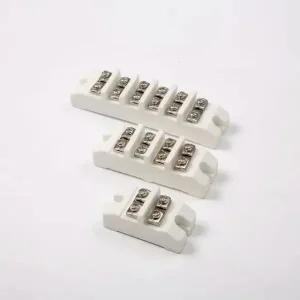
Wholesale Ceramic Terminal Connector Supplier, Factories
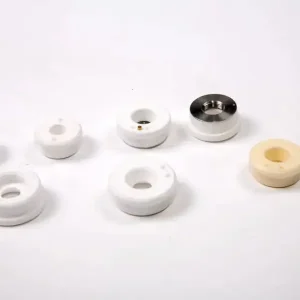
Wholesale Laser Ceramic Manufacturer, Factories

China One of Hottest for Custom Zinc Die Casting Parts, Aluminum Casting Products, Die Casting Manufacturer OEM Manufacturer, Supplier

Wholesale China Precision Casting Starter Aluminum Zinc Die Casting Parts Customized Drawing Design Pulley Flywheel Manufacturer, Factories

Wholesale Popular Design for Sintered Process Powder Metallurgy Parts for Auto Steering Gear Rack Gears Auto Parts Manufacturer, Factories

Wholesale High Quality for Custom Powder Metallurgy Stainless Steel MIM Parts Manufacturers, Suppliers
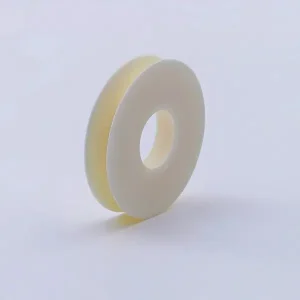
Wholesale What makes JHMIM a favorite for ceramic parts? Supplier, Factory
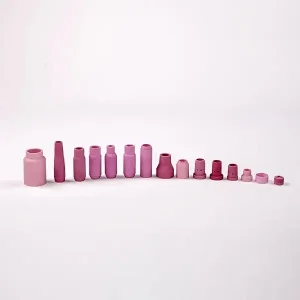
China Ceramic Terminal Strip Manufacturer, Supplier
Frequently Asked Questions (FAQ)
Get technical answers directly from our senior metallurgical engineering team regarding tolerances, material choices, lead times, and MOQ parameters.
Ready to Optimize Your Component Cost & Supply Chain Reliability?
Submit your 2D/3D engineering drawings for a comprehensive Design for Manufacturability (DFM) assessment and an itemized quotation within 48 hours.