
Featured Medical & Precision Engineering Solutions (Part I)
Explore our foundational OEM component capabilities spanning sintered ceramics, high-complexity powder metallurgy molds, die-cast assemblies, and MIM structural parts.
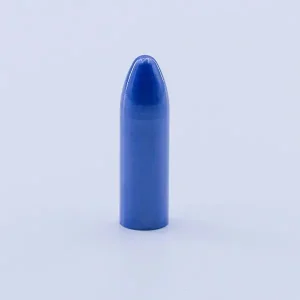

China ODM Factory China Powder Metallurgy Mold for High Shape Complexity Headset Factory, Factories
View Product Details
Wholesale China Factory Automobile Generator End Cover Spare Auto Parts Die Casting Supplier, Factory
View Product Details

Wholesale China Factory Customized Die Casting Parts Aluminum Zinc Brass Magnesium Alloy Die Casting Services Manufacturer, Factory
View Product Details
Wholesale Best Price for OEM Custom High Precision CNC Machining/Machined/Machine/Milling/Turning/Stamping/Die Casting Metal Aluminum Alloy Auto Spare Machinery Parts Manufacturers, Supplier
View Product Details
Wholesale 2023 High quality Metal Injection Molding MIM Process for Titanium Alloy OEM Parts Factory, Factories
View Product Details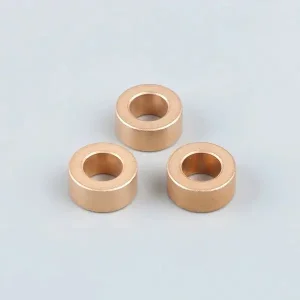
Executive Whitepaper: The Paradigm Shift in Medical Micro-Forceps Manufacturing
Analyzing how Metal Injection Molding (MIM) is overcoming the physical and economic boundaries of conventional CNC machining for surgical micro-instruments, robotic surgery end-effectors, and laparoscopic tooling.
Cost-Volume Optimization
MIM eliminates multi-axis setup charges and expensive micro-cutting tooling consumption. By converting multi-part micro-forceps assemblies into single consolidated MIM molded geometries, unit costs scale down rapidly past 2,000 units.
Bio-Compatible Alloy Metallurgy
Full mastery over medical-grade materials including 17-4PH precipitation hardening stainless steel, 316LVM implantable stainless steel, Ti-6Al-4V ELI (Grade 23), and Cobalt-Chromium alloys guaranteeing zero cytotoxic leachates.
Rapid Prototype Verification
Bridge the gap between design and mass manufacturing using integrated direct metal laser sintering (DMLS) and micro-MIM rapid prototyping before finalizing hard tooling, compressing product launch cycles from months to weeks.
Global Industry Trends Driving Micro-Forceps Procurement Demand
Evaluating macro-economic factors, technological convergences, and supply chain realignments shaping medical device manufacturing across North America, Europe, and Asia-Pacific.
1. Growth in Robotic-Assisted Surgery (RAS)
Surgical robotics platforms require articulated wrist instruments with micro-forceps arms ranging from 3mm to 5mm outer diameters. These components mandate exceptionally high yield strength and torsional stiffness to withstand continuous cable tension without hysteresis or mechanical failure.
2. Component Miniaturization & Design Consolidation
Modern laparoscopic graspers, biopsy punch forceps, and ophthalmic scissors are shifting toward single-piece molded jaws with integrated pinholes and actuation slots. MIM enables Design for Manufacturability (DFM) where three machined parts are combined into one seamless micro-molded part.
3. Supply Chain De-risking & Dual-Sourcing
Global medical original equipment manufacturers (OEMs) are actively diversifying their supply chains away from single-region dependence. Tier-1 buyers require certified manufacturing partners with ISO 13485 and IATF 16949 accreditations capable of consistent, high-volume B2B contract production.
End-to-End MIM Technical Roadmap for Micro Medical Instruments
A rigorous metallurgical journey from feedstock synthesis to high-vacuum sintering, secondary micro-machining, and robotic surface polishing.
Spherical Powder Synthesis & Feedstock Mix
Gas-atomized ultrafine metal powders (D50 particle size < 10µm) are blended with a proprietary multi-component binder system (polymeric & paraffin waxes). This ensures uniform flowability into ultra-thin mold cavity walls down to 0.15mm.
High-Precision Micro Injection Molding
Utilizing specialized micro-molding injection units equipped with optical pressure feedback and multi-cavity hot-runner tooling. The green part is molded with tight weight consistency within ±0.1% tolerance.
Catalytic & Solvent Debinding Systems
Environmentally controlled debinding removes the primary binder system without disturbing the delicate micro-structures. The resulting "brown part" retains structural integrity via a backbone binder mechanism prior to sintering.
High-Vacuum / Controlled Atmosphere Sintering
Thermal sintering conducted in high-vacuum or hydrogen atmosphere furnaces at temperatures exceeding 1350°C. Sintering shrinks the part by approximately 15–20% in a predictable, isotropic fashion, consolidating the alloy density up to 99% of theoretical maximum.
Secondary Precision Machining & Sizing
Critical pivot holes, pin bores, and razor-sharp cutting edges undergo post-sinter CNC wire EDM, laser reaming, or CNC coining to guarantee tight assembly fits within ±0.005mm.
Electropolishing, Passivation & Laser Coating
Chemical passivation per ASTM A967 ensures maximum corrosion resistance against blood and enzymatic cleaners. Surface treatments like electropolishing, Titanium Nitride (TiN) coating, or DLC (Diamond-Like Carbon) coatings enhance hardness and wear durability.
Engineering Specifications & Technology Comparison Matrix
Quantitative analysis comparing MIM with competing micro-manufacturing routes for medical forceps jaw fabrications.
| Manufacturing Parameter | Metal Injection Molding (MIM) | 5-Axis CNC Micro Milling | Fine Precision Stamping | Micro Investment Casting |
|---|---|---|---|---|
| Minimum Wall Thickness | 0.15 mm - 0.20 mm | 0.30 mm | 0.25 mm (flat shapes only) | 0.80 mm |
| Geometric Complexity | Extreme 3D (Undercuts, serrations) | High (Tool access restricted) | Low-Medium (2.5D sheets) | Medium-High |
| Dimensional Tolerance | ±0.3% (±0.015mm post-coining) | ±0.005 mm | ±0.02 mm | ±0.5% |
| Surface Finish (As Sintered / Cast) | Ra 0.8 µm - 1.6 µm | Ra 0.4 µm - 0.8 µm | Ra 0.8 µm | Ra 3.2 µm - 6.3 µm |
| Material Density Relative | 97.5% - 99.2% | 100% (Wrought bar) | 100% (Sheet metal) | 92% - 95% (Porosity risks) |
| Tooling Cost (Initial) | Moderate - High ($5,000 - $18,000) | Very Low (Fixtures only) | High (Progressive dies) | Moderate ($3,000 - $8,000) |
| Unit Cost at High Volume (>10k) | Lowest (Automated cycles) | Extremely High | Low | Moderate-High |
Regulatory Compliance, Cleanroom Manufacturing & QA Infrastructure
Ensuring complete medical device traceability, zero porosity defects, and bio-compatibility verification under ISO 13485 and FDA 21 CFR Part 820 standards.
ISO 13485 & Class 8 Cleanroom Packaging
Our micro-assembly lines and final ultrasonic cleaning stations operate within controlled ISO Class 8 (Class 100,000) cleanroom environments, preventing particulate and bioburden contamination prior to primary packaging.
Full Lot Traceability & Material Certificates
Every MIM batch includes comprehensive material test reports (MTR), heat code tracking, powder lot chemistry analysis, and Certificate of Conformance (CoC) matching ASTM F1086 / ISO 7153-1 surgical instrument standards.
Non-Destructive Testing & Micro-CT Inspection
Equipped with 3D CMM tactile probes, vision measuring systems (VMS), optical profilometers, and industrial X-ray micro-CT scanners to verify 100% internal void-free micro-structures on load-bearing forceps joints.
Future Outlook: MIM Innovations in Next-Gen Micro-Surgical Tools
Exploring tomorrow's manufacturing breakthroughs: Titanium MIM (TiMIM), bio-resorbable alloys, and AI-assisted mold shrinkage simulation.
Titanium MIM (TiMIM) Expansion
Titanium Grade 5 (Ti-6Al-4V) MIM is revolutionizing ultra-lightweight neurosurgical micro-forceps. TiMIM offers a 45% weight reduction compared to stainless steel while matching tensile characteristics, significantly lowering surgeon hand fatigue during multi-hour micro-vascular procedures.
AI Simulation & Digital Twin Tooling
By leveraging Finite Element Analysis (FEA) and mold flow AI simulation engines, engineering teams can model thermal shrinkage gradients and binder burnout kinetics in real time. This guarantees first-time-right mold cavity design, dropping tooling iteration costs by 80%.
Hybrid MIM & Additive Manufacturing
Combining additive 3D metal printing for rapid clinical trial validation with identical metal alloy chemistries prior to cutting hard MIM production dies. This hybrid approach guarantees seamless transition from R&D prototypes to 500,000-unit annual commercial production.
Featured Medical & Precision Engineering Solutions (Part II)
Explore our specialized OEM portfolio including custom powder metallurgy parts, engine timing components, ceramic connectors, filter elements, and watch hardware.

Wholesale Factory wholesale Customized Powder Metallurgy Metal Injection Molding Parts Suppliers, Factories
View Product Details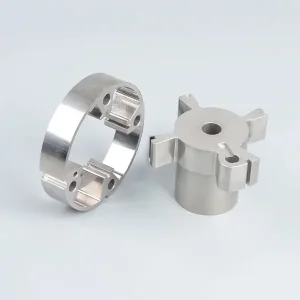
China Engine Variable Timing Systems: PM Parts Outperform Traditional Components Manufacturer, Manufacturers
View Product Details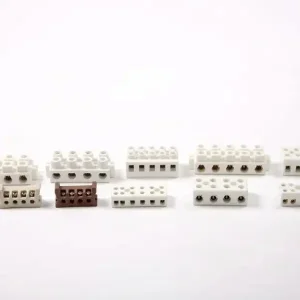
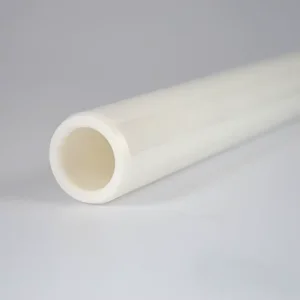
China High Temperature Ceramic Terminal Block Wire Connector Manufacturer, Factories
View Product Details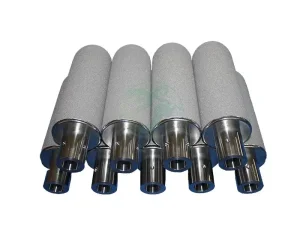


Wholesale Original Factory China Dongguan Plastic Mold Maker Manufacturer Molded Maker Automotive Tooling Supplier, Suppliers
View Product Details
Wholesale Ultra Titanium Case Parts Stainless Steel Watch Band Charms Manufacturers, Factory
View Product DetailsFrequently Asked Technical Questions (FAQ) for B2B Buyers
In-depth responses covering design guidelines, material selection, mold longevity, and quality validation protocols for MIM micro surgical forceps.
What is the typical lead time for custom MIM micro-forceps tooling and initial samples?
Custom MIM tooling for complex micro-forceps generally requires 30 to 45 calendar days. This includes multi-cavity tool steel mold machining, runner optimization, trial injection shots, debinding, and vacuum sintering validation. Rapid 3D printed metal prototypes can be supplied within 7–10 days for early functional fit testing.
How does MIM handle microscopic internal serrations and intermeshing jaw teeth?
MIM excels at replicating micro serrations with pitch widths as small as 0.15mm and draft angles down to 0.5 degrees. Because liquid feedstock fills the mold under precise pressure, edge sharpness and tooth profile fidelity are maintained consistently across hundreds of thousands of production cycles without cutter wear.
What stainless steel grade is recommended for reusable vs single-use medical forceps?
For reusable instruments exposed to autoclaving and repeated mechanical loads, 17-4PH stainless steel heat-treated to H900 condition is ideal, delivering yield strength above 1100 MPa. For single-use, disposable endo-cutters and biopsy forceps, 316L stainless steel provides exceptional corrosion resistance and high ductility at a cost-effective price point.
What is the standard Minimum Order Quantity (MOQ) for custom MIM micro-components?
The standard economic production MOQ for custom MIM parts is 2,000 to 5,000 pieces per batch. This volume amortizes the automated debinding and sintering thermal runs effectively. However, lower pilot quantities (500–1,000 pieces) are supported during clinical testing and regulatory registration phases.
How is isotropic shrinkage controlled during sintering to guarantee part accuracy?
Thermal shrinkage (typically 15% to 20%) is controlled using accurate powder particle sizing, homogeneous binder mixing, and specialized ceramic sintering fixtures (setters). Mold cavity dimensions are oversized using advanced computer-aided scaling factors calibrated for each specific metal alloy batch.
Are non-disclosure agreements (NDAs) standard before reviewing 2D/3D CAD drawings?
Yes. Proprietary medical device designs are fully protected under strict non-disclosure agreements signed prior to receiving step/iges CAD models or technical drawings. All engineering data remains housed in secure, isolated internal servers under ISO 27001 data governance.
Partner with a World-Class Medical MIM OEM Manufacturer
Accelerate your medical instrument project from engineering concept to full-scale commercialization. Request a comprehensive DFM review, material recommendation, and transparent quotation within 48 hours.
Submit Drawings for Free DFM Review