
OEM Metal Powder Metallurgy & Precision Metal Components
Explore our primary manufacturing capabilities across Metal Injection Molding (MIM), sintered powder metallurgy, precision zinc/aluminum die casting, and CNC finishing.








Engineering Precision: MIM Monoblock Brackets Manufacturing Standard
An authoritative engineering breakdown of Metal Injection Molding (MIM) for single-piece orthodontic monoblock brackets, detailing alloy formulations, slot tolerances, debinding kinetics, and sintering mechanics.
Integrated Single-Piece Monoblock Design
Traditional orthodontic brackets utilize a two-piece architecture where a stamped or cast bracket body is brazed or mesh-welded to a separate foil base. In contrast, MIM Monoblock Brackets are molded as a single, seam-free structural entity. This eliminates the risk of joint failure, joint corrosion, or crevice discoloration under oral enzymatic exposure, delivering vastly superior torque control, rotational stiffness, and mechanical reliability.
Advanced Metallurgical Alloys (17-4PH & TiMIM)
Selecting the appropriate feedstock is critical for bio-compatibility and clinical performance. We utilize fine gas-atomized 17-4PH (AISI 630) precipitation-hardening stainless steel powders (d50 < 10 µm) mixed with specialized multi-component wax-polymer binder systems. For nickel-sensitive patients, our advanced Titanium MIM (TiMIM) process utilizing Grade 5 Titanium (Ti-6Al-4V) provides high strength-to-weight ratios with complete bio-inertness.
MIM Monoblock vs. Traditional Welded & Machined Brackets
A quantitative comparison demonstrating why leading global orthodontic brands are transitioning from two-piece welded brackets to single-piece Metal Injection Molded monoblock systems.
| Evaluation Parameter | MIM Monoblock Brackets | Two-Piece Welded Brackets | CNC Machined Brackets |
|---|---|---|---|
| Structural Integrity | Homogeneous Single-Piece (Zero Joints) | Welded/Brazed Interface (Bond Disjunction Risk) | Monolithic Machined Body |
| Base Retention Pattern | Direct 80-Gauge Anatomical Undercut Mesh | Secondary Welded Mesh Foil | Milled Cavities / Chemical Etched Base |
| Archwire Slot Accuracy | ±0.010 mm (CNC Mold Controlled) | ±0.025 mm (Distortion during welding) | ±0.008 mm (High Precision) |
| Rotational Torque Loss | Minimal (< 2.1%) due to rigid tie-wings | Moderate to High (Brazing flexure) | Low (< 2.5%) |
| Mass Production Unit Cost | Extremely Low at High Volume (>50k) | Medium (High labor & assembly steps) | Extremely High (Machining time & tool wear) |
| Surface Smoothness (Ra) | Ra < 0.4 µm (Electro-polished) | Ra 0.8 - 1.2 µm (Heat oxidation marks) | Ra 0.6 - 0.8 µm (Tool marks visible) |
| Biocompatibility Profile | High (No cadmium/brazing flux residues) | Risk of corrosion around braze seam | High (Pure material base) |
China Factory Supply Chain Advantages & Ningbo Cluster
How our centralized Ningbo precision manufacturing hub empowers global medical device distributors and orthodontic brand owners with cost efficiency, rapid scaling, and technological integration.
End-to-End Raw Material Atomization
Leveraging domestic access to ultra-fine spherical metal powders and customized thermal debinding polymers, reducing feedstock procurement lead times by 65% compared to Western suppliers.
In-House Tooling & High-Speed EDM
Equipped with Swiss and Japanese CNC wire-cutting and optical EDM units capable of cutting complex 32-cavity monoblock molds with sub-micron mold core tolerances.
Scalable Sintering Infrastructure
Operating continuous debinding furnace lines and high-vacuum thermal sintering units capable of outputting over 15,000,000 orthodontic monoblock units annually.
Local Support, Regulatory Compliance, & Quality Control
Meeting the world's most stringent medical device regulations. We support OEM buyers with full DFM verification, ISO 13485 quality frameworks, and regulatory filing support across key international jurisdictions.
Regulatory Compliance Blueprint
Navigating medical compliance is seamless with our established certification infrastructure:
- ISO 13485:2016 Certified: Quality management system specifically structured for medical dental devices.
- FDA 510(k) Clearance Support: Complete Material Safety Data Sheets (MSDS), chemical composition certificates, and mechanical testing reports ready for submission.
- EU MDR (2017/745) Ready: Full technical documentation, biocompatibility testing (ISO 10993 cytotoxicity, oral mucosa irritation, systemic toxicity), and clinical evaluation data.
- RoHS & REACH Compliant: Zero heavy metals or prohibited toxic plasticizer residues.
Rigorous Metrology & Quality Inspection
Every production batch undergoes systematic physical, dimensional, and metallurgical validation:
- Laser Profilometry & CMM: Automated optical vision systems verify slot geometry (.018" and .022" slot sizes with Roth/MBT prescriptions) across 100% of batches.
- Shear Bond Strength Testing: Destructive mechanical pulling tests on human teeth substrates to verify undercut mechanical keying strength (>12 MPa).
- Torque & Tie-Wing Fatigue Testing: Simulating real-world clinical ligation cycles to prevent wing fractures.
- X-ray Micro-CT Scanning: Non-destructive testing ensuring zero internal voids or microporosity in sintered parts.
Industry Trends & Global Procurement Strategic Insights
Understanding the macro-shifts in digital dentistry, self-ligating bracket engineering, low-profile aesthetics, and automated OEM contract manufacturing.
Self-Ligating MIM Brackets
Transitioning from traditional elastic ligatures to active/passive sliding door mechanisms integrated directly via micro-MIM assembly.
Mini-Monoblock Geometry
Miniaturized low-profile brackets designed to improve patient comfort while utilizing CAD/CAM mold flow optimization to maintain structural torque strength.
Customized Lingual Systems
Surging demand for invisible, lingual monoblock brackets requiring high-density gold-coated stainless steel or pure titanium MIM fabrication.
CAD/CAM & Direct Bonding
Monoblock bracket bases digitally contoured to fit specific tooth morphology via 3D intraoral scanning data integration.
Nickel-Free Bio-Alloys
Growing European market demand for zero-nickel TiMIM and cobalt-chromium alloys to prevent patient allergic hypersensitivity.
Localized Application Scenarios & B2B Integration
From large-scale Dental Service Organizations (DSOs) to specialized medical OEM distributors, discover how MIM monoblock brackets are applied across diverse market segments.
Clinical Orthodontic Chains & DSOs
Large dental networks require absolute repeatability across millions of brackets. Our MIM monoblock brackets guarantee uniform slot geometry, enabling orthodontists to minimize wire adjustments, shorten treatment times, and enhance patient chairside efficiency.
Private Label Orthodontic Brands
We provide complete OEM/ODM turnkey solutions—including custom laser marking (Roth/MBT torque identifiers, tooth numbers), color-coded positioning dots, custom laser-etched logo branding on bracket bases, and sterile blister packaging.
Pediatric & Surgical Orthodontics
Specially formulated smooth-edge mini monoblock designs reduce intraoral tissue trauma in young patients, while customized traction brackets and surgical hooks serve complex corrective maxillofacial procedures.
Frequently Asked Questions (Technical & Procurement FAQ)
Clear, direct engineering answers to common technical queries raised by OEM procurement directors, medical device engineers, and supply chain managers.
What is the typical mechanical shear bond strength achieved by your MIM Monoblock Brackets?
Our MIM Monoblock Brackets feature an integrated 80-gauge micro-mesh retention pattern or specialized undercut pillar array molded directly during the injection step. When bonded with standard composite resins, they consistently demonstrate shear bond strength (SBS) exceeding 12 to 15 MPa, vastly surpassing the ISO 27020 minimum clinical requirement of 6 to 8 MPa.
How do you compensate for dimensional shrinkage during the MIM sintering phase?
Metal Injection Molding involves isotropic volumetric shrinkage between 15% to 22% during sintering as binder polymers evaporate. We utilize 3D computer simulation software (Moldflow) to design oversized tooling cavities precisely adjusted for feedstock density. Combined with strict vacuum furnace atmosphere control, we maintain final sintered tolerances within ±0.3% of nominal dimensions, or down to ±0.01mm on critical slot dimensions.
Can you manufacture custom prescriptions (Roth, MBT, Edgewise, High/Low Torque)?
Yes. We specialize in custom OEM tool development. You can specify exact torque angles (+17° to -10°), angulation (0° to +13°), in/out offsets, and slot sizes (.018" or .022"). Molds can be created with interchangeable core inserts to produce full 20-bracket sets efficiently.
What materials are available for patients with nickel allergies?
For nickel-sensitive or nickel-allergic patients, we produce brackets using Titanium MIM (Ti6Al4V Grade 5 or CP Titanium) and Cobalt-Chromium (Co-Cr) alloys. Titanium MIM provides complete biocompatibility, zero nickel release, and reduced weight while maintaining high structural strength.
What is the Minimum Order Quantity (MOQ) and lead time for custom tooling?
For standard MIM parts, our standard MOQ is 2,000 pieces per item/prescription. Custom mold tooling development typically takes 25 to 35 days, including initial T1 sample submission and full dimensional measurement reports (FAI). Mass production orders are fulfilled within 15 to 25 days following sample approval.
Do you sign Non-Disclosure Agreements (NDAs) before technical review?
Yes, absolutely. We routinely execute bilateral NDAs prior to receiving 2D PDF or 3D STEP drawings. All proprietary designs, mold geometries, and project data are stored under restricted internal access controls.
Precision Ceramics, Casting, & Dental Product Solutions
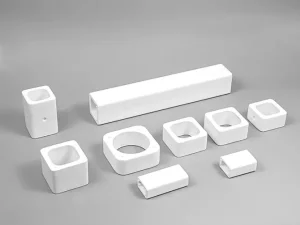
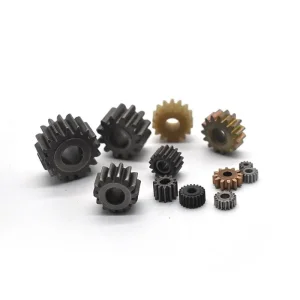
Browse additional high-precision component lines including fuse ceramics, custom die casting, powder metallurgy, micro gears, and orthodontic brackets.






Ready to Optimize Your Medical & MIM Component Supply Chain?
Submit your 2D/3D engineering drawings today. Our senior metallurgical team will provide a comprehensive DFM manufacturability analysis and an itemized quotation within 48 hours under full NDA protection.