
Featured Precision OEM/ODM Metal Components
Explore our engineering capability across Custom Stainless Steel MIM, Orthodontic Hardware, Die Castings, and Powder Metallurgy.






1. Global Industrial Landscape & Market Dynamics of Wholesale MIM Parts
Metal Injection Molding (MIM) stands at the convergence of plastic injection molding versatility and the high metallurgical integrity of wrought metals. As global original equipment manufacturers (OEMs) demand increasingly compact, micro-structural, and geometrically intricate metal components, the global market for Wholesale MIM Parts and Feedstock Fiber Innovations has experienced rapid expansion. According to recent industrial intelligence, the global MIM market is projected to transcend $5.2 Billion by 2030, registering a CAGR exceeding 8.4%.
This explosive growth is driven by structural shifts across four primary end-markets: automotive powertrain/sensor sub-assemblies, medical endosurgical instrumentation, miniaturized 5G/consumer electronics hardware, and aerospace fluidics. Traditional subtractive manufacturing (5-axis CNC machining, EDM milling) encounters severe economic bottlenecks when producing sub-gram or micro-scale geometries at annual volumes exceeding 50,000 units. MIM solves this cost curve by delivering near-net-shape components with density levels between 96% and 99.5% of theoretical metal density.
A pivotal catalyst in modern MIM processing is the advancement of fiber and filler feedstock binder chemistry (often referred to in industrial supply chains as MIM Parts Fibler / Fiber Feedstock Technology). By integrating micro-glass fibers, carbon fiber filler additives, or catalytic binder systems into spherical alloy powders (typically D50 = 4–15 µm), powder loading consistency is dramatically heightened. This drastically reduces green-body distortion during thermal and catalytic debinding, making wholesale production of ultra-thin walls (down to 0.2 mm) commercially scalable.
2. Engineering Deep Dive: Feedstock Formulation, Fiber Mechanics, & Debinding
Achieving structural consistency across batch runs of 100,000+ units requires rigorous control over every stage of the MIM production chain. The process relies on a precise balance of physical metallurgy, rheology, and thermal chemistry.
Gas Atomized Alloy Powders
Super-fine powder particles (typically 17-4PH, 316L, Ti-6Al-4V, or Fe-Ni low alloys) are created via high-pressure inert gas atomization. Sphere tap density and particle size distribution directly impact final volumetric sintering shrinkage.
Fiber Filler & Binder Matrix
Polymer binders blended with micro-fibers, paraffin wax, and polyamorphous resins form a homogeneous feedstock. The fiber additives stabilize shear rates inside injection runners and optimize viscosity during high-speed cavity filling.
Catalytic & Thermal Debinding
Green bodies undergo gaseous nitric acid debinding (catalytic system) or solvent extraction to strip primary binder elements. The remaining backbone binder holds the "brown part" structural shape prior to high-vacuum sintering.
Metallurgical Sintering & Density Kinetics
During high-temperature vacuum sintering (ranging between 1,250°C and 1,380°C depending on base alloy chemistry), atomic diffusion occurs across grain boundaries. The green part contracts isotropically by 15% to 22% in linear dimension, closing internal microporosity and yielding isotropic mechanical properties that equal or exceed conventional wrought metal bar stock.
3. Global Applications & Localized Industrial Use-Cases
Different geopolitical manufacturing hubs exhibit distinct requirements for custom MIM components. Wholesale MIM suppliers must align their engineering capabilities with these localized sector demands:
North America: Surgical & Defense
Demands biocompatible 17-4PH and 316L medical components, including laparoscopic needle drivers, surgical endo-cutters, articulating joints, and specialized firearm trigger assemblies requiring tight tolerance control without secondary grinding.
Europe: Automotive Powertrain & VVT
Focused on high-performance automotive systems—Variable Valve Timing (VVT) vanes, turbocharger actuators, seat belt retractor gears, and sensor housings operating in aggressive high-temperature thermal environments.
Asia-Pacific: Smart Wearables & 5G
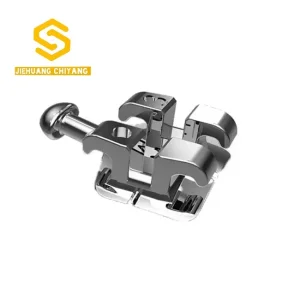
Large-scale production of micro-hinge mechanisms for foldable smartphones, smart-watch bezels, wireless headphone internal structural brackets, and dental orthodontic mesh brackets (MIM mesh base).
4. Total Cost of Ownership (TCO) & Manufacturing Process Comparison
Selecting the optimal manufacturing route requires evaluating geometric complexity against production volume. Below is a comprehensive engineering comparison between MIM, 5-Axis CNC Machining, Investment Casting, and Metal 3D Printing (DMLS/SLM):
| Evaluation Parameter | Metal Injection Molding (MIM) | 5-Axis CNC Machining | Investment Casting | Metal 3D Printing (DMLS) |
|---|---|---|---|---|
| Economic Volume Break-Even | 5,000 to 1,000,000+ pcs | 1 to 2,000 pcs | 500 to 20,000 pcs | 1 to 500 pcs |
| Geometric Complexity | Extremely High (Undercuts, Micro-holes) | Medium (Limited by tool access) | Medium to High | Unlimited (Complex lattice) |
| Material Utilization Rate | > 95% (Runners recyclable) | 15% – 40% (High scrap rate) | 60% – 70% | > 90% (Powder reusable) |
| Dimensional Tolerances | ±0.3% to ±0.5% (±0.05mm) | ±0.005mm to ±0.02mm | ±0.8% to ±1.5% | ±0.1mm to ±0.2mm |
| Surface Finish (As-Sintered) | Ra 0.8 µm – 1.6 µm | Ra 0.4 µm – 1.6 µm | Ra 3.2 µm – 6.3 µm | Ra 6.3 µm – 12.5 µm |
| Initial Tooling Amortization | High Tooling Cost (Hardened Steel Molds) | Zero Tooling (Fixturing only) | Moderate (Wax Molds) | Zero Tooling |
Economic Analysis Takeaway: While initial tooling for MIM requires an investment ranging from $3,000 to $25,000 depending on cavity count and component scale, the per-unit piece cost drops by 40% to 70% compared to CNC machining once production surpasses the 5,000-unit threshold.
5. Advanced Technology Roadmap & Future Trends (2025–2030)
The MIM manufacturing ecosystem is undergoing significant technological evolution. Key technical developments currently reshaping the market include:
2025: Fiber Binder Enhancements & Carbon/Ceramic Additives
Integration of nanostructured ceramic fibers into polymer binder systems to eliminate binder phase separation during high-pressure injection into thin-walled cavity inserts (<0.15mm).
2026–2027: Titanium & Titanium-Alloy MIM (TiMIM) Scale-Up
Overcoming oxygen contamination hurdles during Ti-6Al-4V debinding and sintering. TiMIM delivers 45% weight reduction for aerospace brackets and biocompatible medical implants at scalable commercial pricing.
2028: Additive-MIM Hybrid Tooling & AI Cavity Simulation
Deploying AI-driven finite element analysis (FEA) to predict volumetric shrink vectors dynamically. Conformal cooling channels inside 3D-printed mold tooling reduce cycle times by up to 35%.
2029–2030: Zero-Emission Microwave Assisted Sintering
Transitioning from continuous atmosphere furnaces to ultra-high efficiency microwave sintering systems, reducing carbon intensity per kilogram of sintered metal by over 50%.
6. Comprehensive Metallurgical Quality Control & Material Compliance
Ensuring absolute reliability across high-stress industrial applications requires stringent quality verification at every milestone along the manufacturing path.
Laser CMM & Optical Profilometry
100% automated optical inspection (AOI) and 3D Zeiss Coordinate Measuring Machine (CMM) verification ensure complex multi-axis geometries conform to strict GD&T tolerances.
Metallographic Cross-Sectioning
Destructive polishing and micro-etching verify cross-sectional grain structure, pore distribution, phase composition, and complete freedom from internal voiding or un-sintered binder residue.
ASTM & MPIF Standards Compliance
Full adherence to MPIF Standard 35 (Materials Standards for Metal Injection Molded Parts), ISO 9001, and IATF 16949 quality system certifications for automotive component manufacturing.
Specialized OEM Powder Metallurgy & Die Casting Catalog
Explore our extended wholesale range featuring high-strength sintered gears, aluminum castings, and custom hardware accessories.




7. Comprehensive Technical FAQ & Engineering Knowledge Base
Answers to crucial procurement and engineering questions regarding wholesale MIM parts design, material selection, DFM rules, and lead times.