
Featured OEM Powder Metallurgy & Precision Cast Components
Explore our core catalog of high-precision sintered components, MIM hardware, and custom casting solutions engineered for structural strength and tight tolerances.







Global Powder Metallurgy (PM) Industrial Status & Market Outlook
Powder Metallurgy (PM) and Metal Injection Molding (MIM) represent critical cornerstones of modern net-shape precision manufacturing. As global OEMs demand higher energy efficiency, material utilization rates exceeding 95%, and reduced operational carbon footprints, powder-based metal processing has evolved from basic porous bearings into sophisticated structural components operating in extreme stress and high-temperature environments.
Global Market Expansion
The global powder metallurgy market is projected to grow from USD 9.2 Billion in 2023 to over USD 14.8 Billion by 2032, exhibiting a compound annual growth rate (CAGR) of 5.6%. Key growth drivers include automotive electrification, surgical instrument miniaturization, and aerospace structural consolidation.
Resource Efficiency & ESG Impact
Unlike conventional subtraction machining which generates up to 50–70% material waste (swarf), press-and-sinter and MIM technologies achieve 95% to 98% raw alloy utilization. This drastically reduces scope 3 carbon emissions and lowers energy consumption by up to 40% per manufactured component.
Regional Supply Chain Shifts
China, North America, and Western Europe dominate production capacity. China has emerged as the premier manufacturing hub for complex MIM and high-density PM parts, leveraging integrated supply chains for elemental powders, automated sintering furnaces, and advanced CNC secondary finishing.
Engineering Information Gain: Sintered structural components compliant with MPIF Standard 35 exhibit mechanical performance matching wrought alloys when density levels exceed 7.4 g/cm³ for ferrous alloys and 7.8 g/cm³ for stainless steels (316L / 17-4PH).
Technical Process Metallurgy: Press-and-Sinter vs. MIM vs. CNC
Choosing the right powder metallurgy route requires a comprehensive evaluation of geometric complexity, target density, dynamic strength requirements, annual production volume, and total cost of ownership (TCO).
| Manufacturing Parameter | Conventional Press & Sinter (PM) | Metal Injection Molding (MIM) | Precision Investment Casting | 5-Axis CNC Machining |
|---|---|---|---|---|
| Target Component Density | 6.8 - 7.4 g/cm³ (85 - 95%) | 7.5 - 7.9 g/cm³ (96 - 99%) | 7.8 - 8.1 g/cm³ (99.5%) | 7.85 - 8.1 g/cm³ (100% Wrought) |
| Geometric Complexity | Moderate (2.5D Axial Features) | Ultra-High (Complex 3D Geometry) | High (Internal Cavities) | High (Tool Access Limited) |
| Dimensional Tolerances | ISO 2768-m (±0.05 mm post-sizing) | ±0.3% to ±0.5% nominal size | ±0.5% to ±0.8% nominal size | ±0.005 mm to ±0.01 mm |
| Recommended Annual Volume | > 10,000 units | > 5,000 units | > 1,000 units | 1 to 5,000 units |
| Material Utilization Rate | 95% - 98% | 95% - 97% (Reclaimable Feedstock) | 70% - 80% (Gating Loss) | 15% - 40% (High Chip Volume) |
| Surface Roughness (Ra) | 1.6 - 3.2 µm | 0.8 - 1.6 µm | 3.2 - 6.3 µm | 0.4 - 1.6 µm |
Sector-Specific Powder Metallurgy Solutions
Our powder metallurgy and MIM technology platforms are customized for stringent performance benchmarks across diversified high-tech global industries.
Automotive & EV Powertrain
Engineered components for Variable Valve Timing (VVT) rotors, oil pump gears, planetary gear carriers, dual-clutch transmission hubs, and EV thermal management system brackets, conforming to IATF 16949 requirements.
Medical & Surgical Devices
Biocompatible 316L and 17-4PH MIM parts including endoscopic grasper jaws, surgical stapler components, scalpel handles, and orthopedic implants requiring high tensile strength and passivation finish.
Consumer Electronics
Miniature structural parts for foldable smartphone hinges, smartwatch casings, camera ring housings, and earbud charging contacts manufactured using high-density MIM with cosmetic surface polishing and PVD coating.
Industrial Power Tools & Valves
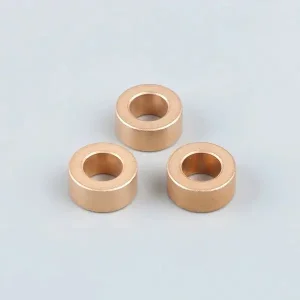
High-torque planetary power tool gearboxes, sintered bronze oil-impregnated self-lubricating bearings, and corrosion-resistant stainless steel mini ball valve bodies designed for long service life under high fatigue loads.
Technology Roadmap & Future Industry Horizons
The convergence of powder metallurgy with advanced digital manufacturing technologies is driving unprecedented innovation in material science, geometric complexity, and production automation.
1. Green Hydrogen Sintering
Transitioning from conventional endothermic gas (CO/H2/N2) sintering atmospheres to 100% green hydrogen closed-loop systems. This eliminates carbon monoxide emissions inside continuous mesh-belt furnaces while superior reduction power optimizes sintered grain boundaries.
2. Binder Jetting Hybridization
Bridging high-volume MIM with toolless Additive Manufacturing. Metal Binder Jetting (MBJ) allows rapid prototyping of complex PM components using standard MIM powders without expensive multi-cavity injection molds.
3. Ultra-High Density Warm Compaction
Utilizing heated dies (120°C–150°C) and engineered polymer lubricants to achieve single-press single-sinter (1P1S) densities above 7.45 g/cm³ for iron-nickel alloy steels, matching double-press double-sinter (2P2S) performance at 30% lower tooling cost.
Precision Sintered Parts & Metal Injection Molding Catalog
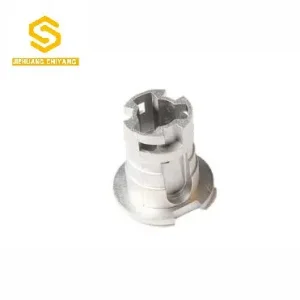
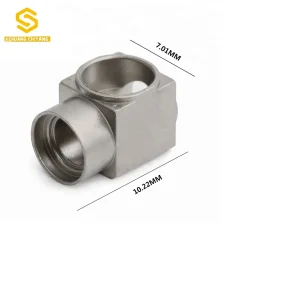
Review our extended product portfolio featuring high-precision medical handles, custom micro-gears, MIM watch cases, and heavy-duty structural machinery parts.




Frequently Asked Questions by OEM Procurement Engineers
Detailed technical insights regarding design for manufacturability (DFM), material standards, sintering tolerances, and quality control protocol.