Precision OEM Components & Die Casting Showcase
Explore our high-volume custom metal parts manufactured via Powder Metallurgy (PM), Metal Injection Molding (MIM), and Die Casting routes.







1. Powder Metallurgy Technical Roadmap & Technological Outlook (2025–2035)
The global manufacturing landscape is undergoing a decisive paradigm shift toward near-net-shape processing, material efficiency, and reduced carbon footprints. As a premier wholesale powdered metal manufacturer and supplier, Ningbo Jiehuang Chiyang Electronic Tech Co., Ltd. (JHMIM) sits at the nexus of advanced powder metallurgy (PM), Metal Injection Molding (MIM), and high-precision casting technologies. Modern industrial applications demand components that not only meet rigid mechanical tolerances but also exhibit exceptional fatigue strength, complex geometry, and localized material tailorability.
Traditional subtractive manufacturing (CNC milling, turning) generates up to 60% scrap material, whereas conventional press-and-sinter powder metallurgy yields over 95% material utilization. Moving into the next decade, the technological roadmap for powdered metal revolves around four key pillars: ultra-high-density compaction, atmosphere-controlled vacuum sintering, hybrid additive-powder metallurgy pathways, and light-alloy development such as Titanium MIM (TiMIM).
Key Technological Frontier: High-Density Solid-State Sintering
Mechanical properties of sintered components directly correlate with density. Through advanced warm compaction, ultra-fine gas-atomized powders, and high-temperature vacuum sintering (reaching 1350°C), JHMIM achieves relative densities exceeding 98% of theoretical density for 17-4PH, 316L, and low-alloy Fe-Cu-C steels, rivaling forged metal strength.
Gas & Water Atomization
Spherical micro-powder morphology control ensures consistent green density, smooth powder flow, and predictable dimensional shrinkage during sintering.
Warm Compaction & Sinter-Hardening
Combines heated press dies (120°C) with continuous mesh-belt sinter-hardening furnaces to achieve high core hardness without secondary quench cycles.
Titanium & Specialty MIM
Advancing Ti-6Al-4V and Nickel-based superalloy processing for biomedical implants, aerospace actuators, and marine anti-corrosion applications.
2. Macro-Industry Solutions & Engineering Applications
As a global powder metallurgy parts manufacturer, JHMIM tailors chemical compositions and physical microstructures to solve critical engineering challenges across tier-1 industrial sectors. By integrating powder metallurgy, die casting, and CNC precision machining under a unified quality system, we remove production bottlenecks and optimize total cost of ownership (TCO).
| Industry Sector | Target Component Examples | Preferred Process / Material | Key Mechanical Properties | OEM Advantage |
|---|---|---|---|---|
| Automotive & EV Powertrain | VVT Rotors, Oil Pump Rotors, Transmission Gears, EPS Sensors | PM Sinter-Hardened Fe-Ni-Cu-Mo (MPIF FL-4608) | Tensile Strength > 850 MPa, Core Hardness HRC 35-45 | 35% lighter, zero scrap rate, silent tooth profile mesh |
| Medical Devices | Endoscopic Stapler Jaws, Scalpel Handles, Orthopedic Hinges | MIM 17-4PH Stainless Steel / Titanium Ti-6Al-4V | Density ≥ 7.65 g/cm³, High Biocompatibility & Corrosion Resistance | Eliminates 5-axis CNC machining, micro-geometry precision |
| Industrial Power Tools | Planetary Gearboxes, Bevel Gears, Impact Clutches, Bushings | Powder Metallurgy + Induction Hardening (MPIF FC-0208) | High Impact Fatigue Strength, Density ≥ 7.1 g/cm³ | Mass volume scalability, self-lubricating oil-impregnated pore option |
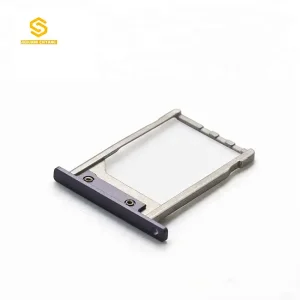
| Consumer Electronics | Smart Watch Frames, Foldable Phone Hinges, SIM Trays | MIM 316L Stainless Steel / Tungsten Heavy Alloys | Mirror Mirror Surface Polishability, Yield Strength > 600 MPa | Ultra-thin wall capability (< 0.4 mm), sleek aesthetic feel |
| Lighting & Energy | LED Heat Sink Housings, Solar Bracket Assemblies | Aluminum Die Casting (A360 / ADC12) & Zinc Alloy | Thermal Conductivity > 96 W/m·K, IP67 Sealed Tightness | Rapid heat dissipation, structural rigidity with reduced weight |
Whether designing low-noise planetary gear trains for automotive steering systems or micro-mim mechanisms for surgical equipment, JHMIM's application engineering team performs rigorous Finite Element Analysis (FEA) and Moldflow simulations prior to tool steel cutting. This ensures mold thermal balance, uniform powder-binder wall stress, and zero internal void defects.
3. China Factory 4.0: Supply Chain Resilience & Manufacturing Superiority
The global automotive and industrial hardware sectors demand uncompromised reliability, lean delivery timelines, and price stability. Operating from Ningbo's world-class industrial corridor, Ningbo Jiehuang Chiyang Electronic Tech Co., Ltd. exemplifies China Factory 4.0 smart manufacturing. Our 28,000 square meter facility integrates fully automated closed-loop powder pressing, digital twin furnace monitoring, and robotic secondary machining lines.
Vertical Raw Material Integration
Direct partnerships with domestic tier-1 elemental powder producers ensure guaranteed batch-to-batch chemical purity, immune to global raw material spikes.
1000-Ton Tonnage Compaction
Equipped with multi-cavity CNC mechanical and hydraulic presses ranging from 15T to 1000T (10,000 kN) to press high-surface-area components without density gradients.
MES Traceability System
Every lot receives a digital barcode containing powder batch data, press pressure curves, debinding profiles, and CMM dimension verification logs.
Agile Lead Times & Rapid Tooling Capabilities
Leveraging in-house high-speed CNC EDM tooling centers and metal 3D printing equipment (SLM/DMLS), JHMIM compresses typical tooling development cycles from 60 days down to 25–30 days. Prototype metal samples can be delivered within 7 business days for initial DFM validation.
4. Quality Assurance, International Compliance & Localization Support
Enterprise procurement teams in North America, Europe, and Japan face rigorous vendor qualification audits. JHMIM operates under strict quality management frameworks, carrying full IATF 16949 (Automotive Quality Standard) and ISO 9001 certifications. We guarantee complete compliance with RoHS, REACH, and Conflict-Free Minerals regulations.
Advanced Metallurgical QC Lab
Equipped with Zeiss CMMs, Optical Emission Spectrometers (OES), Micro-Vickers Hardness testers, Archimedes density testers, and Salt Spray test chambers.
IP & Non-Disclosure Security
We enforce strict multi-level NDA protection and encrypted server protocols for client 2D (PDF/DWG) and 3D (STEP/IGES) CAD files before engineering review.
Global Logistics & DDP Terms
Seamless export support offering FOB Ningbo/Shanghai, CIF, DDU, and DDP (Delivered Duty Paid) directly to client assembly lines across 35+ countries.
5. Global Enterprise Procurement & Total Cost of Ownership (TCO) Framework
When evaluating a wholesale powdered metal supplier, engineering and procurement executives must weigh upfront tooling amortization against piece-price economics and secondary machining expenses. Below is a strategic technical comparison illustrating how Powder Metallurgy and MIM achieve superior financial performance at volume production.
| Evaluation Parameter | CNC Machining | Investment Casting | Powder Metallurgy (PM) | Metal Injection Molding (MIM) |
|---|---|---|---|---|
| Initial Tooling Cost | Zero to Very Low ($0) | Moderate ($1,500 - $4,000) | Moderate-High ($3,000 - $8,000) | High ($4,000 - $12,000) |
| Unit Part Cost (High Vol.) | Very High (Driven by Cycle Time) | Moderate (High Labor Content) | Extremely Low | Low to Moderate |
| Material Scrap Rate | High (40% - 70% wasted chip mass) | Moderate (Sprue & Runner waste) | Near-Zero (< 3%) | Near-Zero (< 2%) |
| Dimensional Repeatability | Excellent (±0.01 mm) | Fair (±0.30 mm) | Good (±0.05 mm) | Excellent (±0.03 mm) |
| Geometric Complexity | Limited by tool access angles | High | Moderate (2.5D Axial Press) | Unlimited (3D Plastic-like freedom) |
| Economic Break-Even Point | 1 - 500 pcs | 500 - 2,000 pcs | > 5,000 pcs | > 2,000 pcs |
By selecting MIM or PM through JHMIM, enterprise buyers typically recover initial tooling costs within 3 to 6 months of full-scale production. Additionally, near-net-shape processing eliminates tertiary grinding, thread tapping, and hobbing operations, driving holistic cost reductions across global assembly supply chains.
6. Technical FAQ: Expert Knowledge Base for Engineers & Buyers
Detailed technical answers compiled by JHMIM's Senior Metallurgical Engineers to address fundamental sourcing and manufacturing queries.
What is the fundamental difference between conventional Powder Metallurgy (PM) and Metal Injection Molding (MIM)?
Conventional Powder Metallurgy relies on rigid die compaction in vertical axes using coarse powder (40–150 µm). It is ideal for 2.5D shapes, gears, and bushings. Metal Injection Molding (MIM) mixes fine gas-atomized metal powder (< 20 µm) with a thermoplastic binder system, allowing the feedstock to be injection molded into highly complex 3D shapes (undercuts, thin walls, internal cross-holes) just like plastic, followed by catalytic debinding and high-temperature vacuum sintering.
How does sintered part density affect mechanical strength and hardness?
Mechanical properties (tensile strength, yield point, elongation, impact toughness, fatigue limit) increase exponentially as sintered density approaches theoretical solid density. At 6.8 g/cm³, porous steel is suitable for light structural loads and self-lubricating bearings. At 7.4–7.6 g/cm³ (achieved via JHMIM warm compaction or MIM), structural components match or exceed wrought steel performance, allowing severe heat treatments (carburizing, nitriding, induction hardening).
What dimensional tolerances can JHMIM achieve as-sintered?
Standard as-sintered tolerances for conventional PM range from ±0.05 mm to ±0.10 mm per inch. For MIM, as-sintered tolerances are typically ±0.3% to ±0.5% of nominal dimension. Where tighter tolerances are required (e.g., ISO IT6 to IT7 grades for bearing fits), JHMIM incorporates secondary sizing (coining), double-press double-sinter (DPDS), or precision CNC grinding.
What materials are available for custom wholesale powdered metal manufacturing?
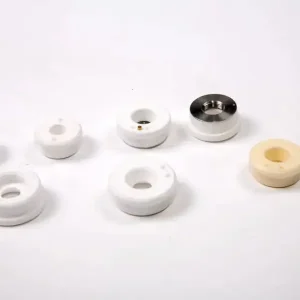
JHMIM works with a vast array of standard and proprietary material grades compliant with MPIF 35, ISO 22068, and ASTM standards. Popular alloys include Stainless Steels (316L, 17-4PH, 304L, 440C), Low Alloy Steels (Fe-Ni, Fe-Cu-C, FN-0205, FL-4608), Soft Magnetic Alloys (Fe-Si, Fe-Ni), Titanium Alloys (Ti-6Al-4V, Ti-CP), Tungsten Heavy Alloys, and Engineering Ceramics (Alumina, Zirconia).
Can powdered metal and MIM parts be plated, heat-treated, or welded?
Yes. High-density sintered components (> 7.4 g/cm³) or MIM parts (> 96% density) behave essentially like wrought metals. They can be electroplated (Ni, Cr, Zn, Au), PVD coated, black oxided, case carburized, vacuum heat-treated, laser welded, and tapped. For lower density PM components, resin impregnation is applied prior to plating to seal microscopic surface pores and prevent chemical entrapment.
What is the Minimum Order Quantity (MOQ) and sample lead time?
For mass production run orders, our standard MOQ is 2,000 pcs for MIM/Die Casting parts and 5,000 pcs for conventional PM parts. For early-stage evaluation, prototype samples via 3D metal printing or single-cavity prototype tooling can be completed in 7 to 15 days, allowing full fit-form-function verification before committing to production mold steel cut.
Sintered Powder Metallurgy & MIM Product Lineup
Direct factory wholesale options for high-precision sintered rotors, SIM slots, MIM structural parts, and specialized automotive spare components.