Top OEM Powder Metallurgy & Precision Casting Products
Technical Whitepaper: Engineering Powdered Metal Bushings
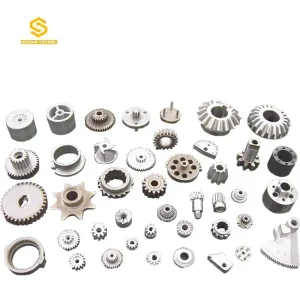
Powdered metal bushings, commonly referred to as sintered metal sleeve bearings or self-lubricating porous bushings, represent a pinnacle of cost-effective tribological engineering. By leveraging advanced powder metallurgy (PM) synthesis—combining high-purity elemental iron, copper, bronze, or alloyed powders through cold compaction and high-temperature solid-state sintering—engineers produce near-net-shape components featuring interconnected capillary porosity structures.
As a premier global wholesale powdered metal bushings supplier, our engineering facilities integrate automated pressing, synthetic vacuum oil impregnation, and secondary precision sizing. Understanding the operational dynamics of Pressure-Velocity (PV) parameters allows us to tailor specific alloy chemistries (such as ASTM B438 Grade 1 Type 2 Bronze or SAE 863 Copper-Iron alloys) to solve catastrophic wear, galling, and acoustic noise challenges across automotive powertrains and industrial actuators.
Comprehensive Material Matrix for Sintered Bushings
| Material Standard | Composition (% wt) | Density (g/cm³) | Max PV Limit (PSI-FPM) | Primary Industrial Application |
|---|---|---|---|---|
| SAE 841 Bronze | 88-90% Cu, 9-11% Sn | 6.4 - 6.8 | 50,000 | Precision electric motors, HVAC blowers, home appliances. |
| SAE 863 Fe-Cu Alloy | 18-22% Cu, Rem. Fe + C | 5.8 - 6.2 | 35,000 | Heavy-duty farm implements, hydraulic linkage pivots. |
| Sintered Iron (FC-0208) | 1.5-2.5% Cu, 0.6-0.9% C, Rem. Fe | 6.5 - 6.9 | 30,000 | Automotive door hinges, wiper gearboxes, shock absorbers. |
| Bronze-Graphite Matrix | Cu-Sn + 1.5% Solid Graphite | 6.2 - 6.6 | 60,000 (Dry) | High-temperature ovens, cleanroom medical devices. |
| Superdense Sintered Steel | Ni-Mo Alloy Steels (MIM/PM) | 7.2 - 7.5 | 85,000+ | Extreme torque planetary gearboxes, aerospace actuators. |
Sintered Bronze (SAE 841)
Industry standard for smooth, silent operation. High thermal conductivity enables rapid dissipation of frictional heat under high rotational speeds.
Iron-Copper (Fe-Cu) Hybrids
Combines the structural yield strength of iron with the conformability of copper. Ideal for high impact loads and oscillatory motions.
Vacuum Oil Impregnation
Utilizes synthetic ISO VG 68 to VG 220 oils treated with anti-oxidation and anti-foaming additives, operating reliably from -40°C to +160°C.
China Factory 4.0: Supply Chain Resilience & Efficiency Advantages
Modern powder metallurgy manufacturing relies heavily on precise process repeatability and rapid material handling. Our China-based Industry 4.0 facilities utilize fully automated closed-loop CNC powder compacting presses ranging from 15 to 1,000 tons. Integrated multi-cavity tooling permits simultaneous pressing of high-density bushings with micro-grooves, oil flanges, and complex spherical shapes at rates surpassing 60 pieces per minute.
Sintering is conducted in computer-controlled continuous mesh-belt furnaces operating under endothermic or dissociated ammonia protective atmospheres. Real-time temperature zone profiling prevents dimensional distortion and ensures uniform carbon distribution throughout the metallic matrix.
MES Lot Traceability
Every batch of metal powder is tracked from raw chemical analysis to final vacuum packaging with full barcode serialization.
Optical Auto-Sorting
High-speed 360-degree vision inspection systems verify length, outer diameter, inner diameter, and surface burrs at 0 PPM defect goals.
Tooling Agility
In-house Wire EDM and CNC sinker machining reduce new sample tooling cycles to just 15 business days.
Economies of Scale
Massive throughput yields raw material and energy cost advantages of 30% to 50% over traditional subtractive machining.
Macro Industry Solutions & Severe Duty Environments
Automotive Powertrain & Chassis
Used extensively in starter motor planetary gears, windshield wiper assemblies, throttle body shafts, and Electronic Power Steering (EPS) systems where silent performance and long life are imperative.
Heavy Machinery & Hydraulics
Sintered iron-copper bushings withstand extreme shock loads and dirty environments in agricultural harvesters, hydraulic gear pumps, and construction equipment linkages.
Smart Appliances & HVAC
Micro sintered bronze bushings for Brushless DC (BLDC) motors deliver near-zero operating noise and zero maintenance over 10-year appliance lifecycles.
Global Enterprise Procurement: Driving Down Total Cost of Ownership
For Tier 1 automotive suppliers and Fortune 500 OEMs, choosing a wholesale powdered metal bushings supplier involves balancing unit price against risk management, quality consistency, and engineering support. Subtractive machining of brass or bronze bar stock wastes up to 60% of expensive raw alloy as turnings and chips. Powder metallurgy achieves material utilization rates exceeding 95%.
Near-Net Shape Conservation
Eliminates secondary turning, boring, and grooving operations. Bushings drop out of the sizing press fully compliant with final dimensional prints.
Consolidated Assemblies
MIM and complex powder metallurgy enable single-piece design of bushings integrated with gears, flanges, or cam profiles, reducing assembly line labor.
Technical Roadmap & Future Outlook in Tribological Metallurgy
Nanocrystalline Powders
Ultra-fine grain boundaries yield up to 40% higher tensile strength and wear resistance, expanding powder metal applications into heavy flight control actuators.
Eco-Friendly Lead-Free Alloys
Developing bismuth and tin-based replacements to comply with evolving REACH/RoHS global toxicity mandates without sacrificing machinability.
Smart Bushings with Sensors
Embedding micro-cavity temperature and vibration sensors within the sintered matrix to support real-time IoT predictive maintenance for Industry 4.0 plants.
Quality Assurance, Certifications & Local Engineering Support
Navigating international cross-border manufacturing requires complete alignment with quality systems and regulatory frameworks. Our facilities operate strictly under ISO 9001:2015 and IATF 16949:2016 automotive quality management standards. Full PPAP (Production Part Approval Process) Level 3 documentation—including FAIR, FMEA, Control Plans, and CMM dimensional inspection reports—is provided with every custom tooling project.
All materials strictly conform to RoHS 3 (Directive 2015/863/EU) and REACH (EC 1907/2006) chemical limits, backed by annual SGS test reports. Conflict-free mineral sourcing guarantees full transparency across all copper, iron, nickel, and tin supply chains.
Global Logistics & Service Infrastructure
- Dedicated English-speaking technical account managers.
- Vendor Managed Inventory (VMI) and safety stock holding.
- DDP (Delivered Duty Paid) door-to-door shipping option.
- Free DFM feedback within 24 hours of drawing upload.