
Featured Precision OEM Metal Components (Batch A)
Explore our core custom-engineered hardware components, from high-pressure die-cast flywheel housings to ultra-dense sintered gears and medical MIM instruments.






1. Global Industrial & Commercial Landscape of Powder Metallurgy
The global precision manufacturing paradigm has undergone a seismic shift. In an era driven by high material efficiency, minimal carbon footprints, and stringent geometrical tolerance constraints, Powder Metallurgy (PM) and Metal Injection Molding (MIM) have emerged as foundational technologies for tier-1 industrial supply chains worldwide.
Modern commercial engineering demands structural parts that deliver wrought-like mechanical properties—such as tensile strength exceeding 1,200 MPa, high fatigue resistance, and complex 3D profiles—without incurring the exorbitant material waste and machine-hour costs of traditional subtractive CNC milling. Leading global original equipment manufacturers (OEMs) across Europe, North America, and the Asia-Pacific region are increasingly sunsetting traditional sand casting, investment casting, and multi-axis CNC machining in favor of near-net-shape powder metal manufacturing.
Material Utilization Optimization
Traditional machining convert up to 70% of high-grade alloy raw bars into useless swarf and metal shavings. Powdered metal processes boast an extraordinary material yield rate exceeding 95%, dramatically cutting raw material overheads in high-cost alloys like 316L, 17-4PH, and Titanium Ti-6Al-4V.
Geometrical Freedom & Mass Production
By leveraging custom-formulated metal-polymer feedstocks and multi-cavity precision molds, powdered metal suppliers can produce hundreds of thousands of intricate helical gears, internal splines, and thin-walled housings per month with absolute lot-to-lot repeatability.
Energy and Carbon Reduction
Sintering metal powders below their melting points consumes significantly less net thermal energy than full liquid-state metal melting and casting, fulfilling modern corporate ESG and decarbonization mandates.
2. Technical Roadmap & Engineering Evolution (2025–2035)
As a premier wholesale powdered metal factory, our technology roadmap converges state-of-the-art materials science with artificial intelligence-assisted process automation. The future of powdered metal lies in pushing densification limits, enhancing microstructural homogeneity, and pioneering advanced alloy systems.
Phase I: High-Density Press & Sintering (MPIF Standard 35 Compliance)
Utilizing 1,000-ton fully automated hydraulic compaction presses and continuous mesh-belt atmosphere-controlled sintering furnaces. Achieving sintered densities of 7.2 to 7.6 g/cm³ in Fe-Ni-Cu alloys and stainless steel powders for high-torque automotive planetary gears and structural transmission parts.
Phase II: Advanced Metal Injection Molding (MIM) & Solvent Debinding
Employing gas-atomized ultra-fine metal powders (<22 µm) blended with catalytic polyoxymethylene (POM) binder systems. Solvent debinding coupled with high-vacuum sintering allows net-shape production of components with up to 99% theoretical density, delivering yield strengths matching forged steels.
Phase III: Titanium MIM (TiMIM) & High-Entropy Alloy Powders
Pioneering argon-atmosphere sintering protocols for Ti-6Al-4V titanium powders to satisfy stringent biocompatibility requirements in medical implants, orthodontic brackets, ultra-light wearable consumer electronics, and military aerospace assemblies.
Phase IV: Hybrid Additive-Sintering Integration & AI Quality Assurance
Blending binder jetting 3D metal printing for rapid tooling validation with high-volume MIM molding. Implementing inline machine-vision inspection powered by neural networks to detect micro-cracks, porosity voids, and dimensional deviations in green-state parts prior to sintering.
Comparative Technical Matrix: Manufacturing Process Selection
| Process Characteristic | Powder Metallurgy (PM) | Metal Injection Molding (MIM) | Aluminum/Zinc Die Casting | 5-Axis CNC Machining |
|---|---|---|---|---|
| Geometrical Complexity | Moderate (2.5D profiles, stepped shapes) | Extreme (Complex 3D, undercuts, micro-holes) | High (Thin wall housings, deep cavities) | High (Limited by tool access angles) |
| Achievable Density | 85% – 92% (Porosity useful for self-lubrication) | 96% – 99% (Wrought-like integrity) | Solid (Potential porosity in heavy sections) | 100% (Solid wrought billet base) |
| Material Yield | > 95% | > 97% | ~ 85% (Includes runner remelting) | 15% – 40% (Significant material loss) |
| Dimensional Tolerance | ±0.05 mm (ISO IT 8-9) | ±0.3% nominal (Tightened to ±0.02 mm via sizing) | ±0.1 mm | ±0.005 mm |
| Economic Batch Size (MOQ) | 5,000+ pcs | 2,000+ pcs | 2,000+ pcs | 1 to 500 pcs |
3. China Factory Supply Chain Resilience & Sourcing Efficiency Advantages
Sourcing powdered metal components directly from specialized Chinese industrial hubs like Ningbo provides global enterprises with unparalleled supply chain stability, agility, and cost-efficiency. Our enterprise leverages Ningbo's world-class deep-water port logistics and an integrated regional manufacturing ecosystem.
1. Vertical Raw Material Atomization Integration
China commands over 60% of global rare-earth element processing and advanced metal powder production. Our supply chain features immediate, direct access to water-atomized and gas-atomized iron, stainless steel (304L, 316L, 17-4PH), tool steel, and titanium powders, shielding our clients from global raw material price volatility and shipping bottlenecks.
2. In-House Precision Tooling & EDM Workshops
Unlike regional suppliers who outsource toolmaking, our factory houses high-speed CNC machining centers, mirror-surface Electrical Discharge Machining (EDM), and Sodick wire-cut equipment under one roof. Tooling lead times are condensed from the industry standard 8 weeks down to a rapid 18–25 business days.
3. End-to-End Secondary Process Clusters
Within a 30-kilometer industrial cluster, our manufacturing operations seamlessly integrate specialized thermal treatments (vacuum carburizing, nitriding, induction hardening), surface finishing (electroplating, PVD coating, passivation, electropolishing), and ultra-precision grinding (centerless grinding, double-disc surface grinding).
4. Localized Micro-Application Scenarios & Deployments
Powdered metal components engineered by Jiehuang are deployed in mission-critical environments globally. Understanding the operational stress, corrosion dynamics, and fatigue limits of each domain guarantees optimal material selection and mechanical performance.
Automotive Powertrains & EV Actuators
Specific Applications: Variable Valve Timing (VVT) rotors and vanes, oil pump gears, transmission synchronizer hubs, electronic parking brake (EPB) planetary gearboxes, EV thermal management valve rotors.
Technical Requirement: High fatigue resistance under cyclic shock loads, surface hardness >58 HRC via case hardening, density >7.5 g/cm³.
Surgical Instruments & Implantable Devices
Specific Applications: Laparoscopic surgical grasper jaws, endoscopic stapler components, titanium dental brackets, articulating wrist joints for robotic surgery.
Technical Requirement: Biocompatibility under ISO 10993, 100% pass rate under salt-spray corrosion tests (ASTM B117), ultra-fine feature reproduction (<0.1 mm wall thicknesses).
Consumer Electronics & Wearables
Specific Applications: Foldable smartphone screen friction hinges, smartwatch titanium housings, earphone sound nozzles, camera module ring actuators.
Technical Requirement: Cosmetic Mirror-finish PVD coating capability, strict yield strength to prevent distortion, tight dimensional tolerance within ±0.015 mm.
Industrial Tools & Smart Hardware
Specific Applications: Cordless power tool impact mechanisms, hydraulic pump gears, smart door lock latch bolts, textile machine wire guides.
Technical Requirement: Exceptional wear resistance, high density to prevent fluid leakage under 30 MPa hydraulic pressure, cost-effective high-volume output.
5. Global Compliance, Quality Assurance & Regional Support Framework
To support tier-1 OEMs in North America, Europe, Japan, and Southeast Asia, our manufacturing framework strictly aligns with international automotive, medical, and industrial governance standards.
Quality System Certifications
Our facilities operate strictly under certified quality management systems:
- IATF 16949:2016: Full automotive quality system coverage including PPAP (Production Part Approval Process) Level 3 documentation, FMEA, and SPC tracking.
- ISO 9001:2015: Enterprise-wide quality management.
- ISO 13485: Medical device component quality assurance.
Advanced Metrology Laboratory
Every manufactured batch undergoes rigorous inspection using state-of-the-art laboratory equipment:
- ZEISS 3D Coordinate Measuring Machines (CMM) for micro-geometrical evaluation.
- X-Ray Computed Tomography (CT) & Porosimetry to detect internal voids.
- Metallographic Grain Analysis to ensure proper phase transformation during heat treatment.
- Inductively Coupled Plasma Optical Emission Spectrometry (ICP-OES) for exact alloy composition verification.
Global Logistics & Regulatory Compliance
We provide absolute peace of mind through complete international regulatory compliance:
- RoHS & REACH Compliance: Guaranteeing absence of hazardous substances.
- Conflict Minerals (3TG) Declaration: Ethical raw material sourcing.
- DDP / DAP Regional Warehousing Support: Flexible incoterms including consignment stock and Kanban delivery models for global buyers.
6. Comprehensive Engineering Q&A (Frequently Asked Questions)
Here are detailed technical responses to the most critical inquiries raised by global procurement managers, metallurgical engineers, and sourcing directors.
The primary distinction lies in feedstock composition, pressing mechanics, and geometrical freedom. Powder Metallurgy (PM) utilizes coarse metal powders compacted uniaxially in a rigid die at high pressure. PM is ideal for 2.5D shapes, gears, and bushings. Metal Injection Molding (MIM) blends fine atomized powder (<22 µm) with a thermoplastic binder to create a flowable feedstock. This is injected into complex multi-cavity molds under heat and pressure, enabling 3D shapes with complex undercuts, thin walls, and cross-holes that would be impossible with traditional uniaxial PM pressing.
Density is the single most decisive factor governing tensile strength, elongation, impact toughness, and fatigue life in powdered metallurgy. Standard PM achieves 85–92% theoretical density, leaving micro-porosity that can act as stress concentrators or serve as oil-retaining pores for self-lubricating bearings. MIM achieves 96–99% theoretical density, virtually eliminating interconnected porosity. Consequently, MIM components display tensile strengths and magnetic permeability comparable to wrought forged alloys.
Yes. Powdered metal and MIM components react to secondary processing similarly to wrought steels. Common secondary operations include case hardening, carburizing, induction hardening, vacuum nitriding, steam treatment (to seal surface pores), electroplating (Ni, Cr, Zn), PVD coating, passivation, and precision CNC machining (grinding, tapping, honing).
MIM components experience isotropic linear shrinkage between 15% and 22% during sintering as the polymer binder decomposes and metal particles coalesce. Precision tooling molds are oversized using sophisticated CAD simulation software to compensate for this shrinkage. By maintaining strict control over powder particle size distribution, binder ratios, and furnace temperature profiles (within ±2°C), our factory guarantees dimensional tolerances within ±0.3% of nominal dimensions.
Our material capabilities encompass a wide spectrum of industrial metals: Stainless Steels (316L, 17-4PH, 304L, 420, 440C), Low-Alloy Steels (Fe-Ni-C, Fe-Cu-C), Tool Steels (M2, SKD11), Titanium Alloys (Ti-6Al-4V, Commercially Pure Ti), Soft Magnetic Alloys (Fe-Si, Fe-Ni, Fe-Co), Tungsten Heavy Alloys, and Engineering Ceramics (Zirconia ZrO2, Alumina Al2O3).
When you submit 2D (PDF) and 3D (STEP/IGES) CAD drawings, our senior metallurgical and tooling engineering team performs a thorough DFM analysis within 48 hours. We analyze wall thickness uniformity, draft angles, corner radii, parting line placement, and sintering support geometry. We provide a detailed technical report flagging potential distortion risks along with an itemized cost estimate for tooling and unit production.
Featured Precision OEM Metal Components (Batch B)
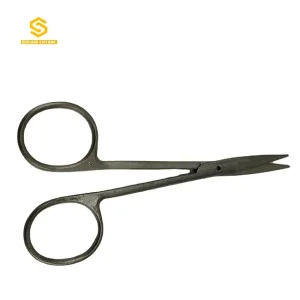
Explore our second selection of specialized powder metallurgy, helical pinion gears, stainless steel medical forceps, and custom die-cast parts.







Partner with a Leading Wholesale Powdered Metal Supplier
Accelerate your product development cycle with our free DFM review, rapid prototyping, and scalable IATF 16949-certified volume production. Submit your engineering drawings today for an itemized quotation within 48 hours.