
Featured Wholesale Powder Metallurgy & Casting Products
High-density sintered components, custom MIM parts, and structural castings manufactured to stringent ISO 9001 and IATF 16949 standards.

China Discount wholesale Customizing Service 304 316 Stainless Steel Precision Casting Machinery Component Manufacturer, Factories
View Product Specs →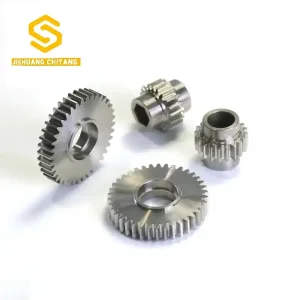
China China Automotive gear manufacturers Manufacturer, Factories
View Product Specs →
China Good User Reputation for Custom Design Precision CNC Mold Part Powder Metallurgy Spare Hardware Machinery Part for Medical Machine Use Manufacturer, Factory
View Product Specs →
China Bottom price Powder Metallurgy Helical Spiral Pinion Bevel Gears Suppliers, Factories
View Product Specs →
Wholesale Cheap PriceList for China Precision Aluminum Vacuum Casting Die Casting A380 Gravity Casting ADC12 Motor Housing Manufacturer, Manufacturers
View Product Specs →
China Factory supplied Injection Molding Metal Parts Accessories Products Manufacturing Supplier Manufacturers Suppliers, Factories
View Product Specs →
China China Gold Supplier for Metal Injection Molding MIM Pim Remanufactured Diesel Engine Parts for Auto Aftermarket Manufacturer, Manufacturers
View Product Specs →
Wholesale Chinese wholesale High Quality Stainless Steel Sintered Iron Powder Metallurgy Parts Suppliers, Factories
View Product Specs →Global Powdered Metal Industry Landscape & Macro Solutions
The global powder metallurgy (PM) and metal injection molding (MIM) sector is undergoing a structural transition toward near-net-shape, low-carbon manufacturing. Discover how wholesale industrial factories are driving cost efficiency for Tier-1 OEMs.
Shift Toward Net-Shape Powdered Metal Solutions
Traditional subtractive machining (CNC milling, turning, and grinding) loses up to 60% of raw material in scrap metal chips while incurring extreme power costs per unit. The modern wholesale powdered metal industry factory leverages powder compaction and sintering thermal dynamics to achieve near-net shapes with up to 98.5% raw material yield.
By transitioning structural hardware, helical gear sets, and complex valve actuators to powder metallurgy, global buyers eliminate secondary multi-axis machining steps, drastically shortening total manufacturing cycle times.
E-E-A-T Sourcing Framework for OEM Purchasing
Under Google Search Quality Rater Guidelines, industrial expertise must be substantiated by real-world engineering metrics. Sourcing powdered metal components requires validating a factory’s mechanical testing lab, atmosphere-controlled continuous furnaces, and metallographic validation.
Leading factories like Ningbo Jiehuang (JHMIM) provide full chemical analysis, micro-hardness gradients (HV0.1 to HV10), and tensile yield curves under MPIF Standard 35 specifications for global buyer peace of mind.
Information Gain Insight: The Sintered Density Advantage
A common misconception in procurement is that powdered metal parts are inherently porous and structurally weak. In reality, modern high-temperature sintering (>1280°C) combined with warm compaction or hot iso-static pressing (HIP) achieves densities exceeding 7.5 to 7.63 g/cm³ (over 97% of theoretical wrought density). This yields tensile strengths matching forged alloy steels at a fraction of the unit cost.
Comparing PM, MIM, Precision Die Casting & CNC Machining
Choosing the optimum production technology for custom metal parts requires evaluating geometric complexity, volume thresholds, and mechanical density demands.
| Manufacturing Technology | Optimal Part Mass | Geometric Complexity | Dimensional Tolerance | Sintered Density | Economic Threshold (MOQ) |
|---|---|---|---|---|---|
| Metal Injection Molding (MIM) | 0.2g – 250g (Max 286g) | Extreme (3D undercuts, micro-threads, thin walls) | ±0.3% to ±0.5% (Up to ±0.02mm secondary) | 95% – 99% Theoretical | 2,000 – 5,000 pcs |
| Powder Metallurgy (Press & Sinter) | 5g – 3,500g | Medium (2.5D stepped profiles, spur gears) | ±0.05mm – ±0.12mm | 85% – 95% (Higher with re-striking) | 5,000 – 10,000 pcs |
| Aluminum / Zinc Die Casting | 15g – 15,000g | High (Thin-walled housings, heat sinks) | ±0.08mm – ±0.15mm | N/A (Solid molten cast structure) | 2,000 – 5,000 pcs |
| Multi-Axis CNC Machining | Unlimited | Medium-High (Tool path limited) | ±0.005mm – ±0.02mm | 100% (Wrought bar stock) | 1 – 500 pcs (High unit cost) |
MIM Process Kinetics
Metal Injection Molding combines fine metal powders (<20µm) with a thermoplastic binder system. The compounded feedstock is molded into a "green part," undergoes solvent or catalytic debinding into a "brown part," and is finally sintered under high vacuum or reducing hydrogen atmospheres.
Press & Sinter PM Dynamics
Conventional PM utilizes uniaxial mechanical and hydraulic presses (up to 1,000 tons / 10,000 kN) to cold-compact elemental or pre-alloyed powders in solid carbide dies. Controlled atmosphere sintering creates solid-state diffusion bonds between metal grains.
Alloy Selection Range
Wholesale factories work with an extensive metallurgical spectrum: Stainless Steel (316L, 17-4PH, 304), Low Alloy Steels (FN-0205, 4140, 8620), Soft Magnetic Alloys (Fe-Ni, Fe-Si), Pure Copper, and Titanium Alloys (Ti-6Al-4V) for medical implants.
Localized Support & Strict Quality Assurance
Navigating global supply chain risk requires working with a verified manufacturer possessing international standard compliance, localized customer service hubs, and end-to-end IP protection protocols.
IATF 16949 Certified
Automotive quality management system governing critical safety parts, APQP tooling phases, PPAP Level 3 documentation, and strict FMEA risk mitigation.
RoHS & REACH Compliance
All raw powders, binders, lubricants, and secondary surface platings undergo heavy-metal spectral checks to comply with EU chemical safety rules.
Strict NDA & IP Protection
Non-Disclosure Agreements signed prior to CAD drawing evaluation. Encrypted engineering storage servers protect proprietary design geometry.
Localized Logistics Hubs
Flexible shipping terms (FOB, CIF, DDP direct to warehouse) backed by technical sales engineers across North America, Europe, and Asia-Pacific.
Real-World Industrial Applications for Powdered Metals
From electric vehicle powertrains to surgical tools, see how customized MIM and PM structural components deliver long-term reliability under severe working conditions.
1. Automotive Powertrain & EV Drive Modules
In modern internal combustion engines and electric vehicle drive modules, components must sustain high rotational torque, cyclic fatigue, and elevated thermal stress. Powder metallurgy provides custom helical gears, variable valve timing (VVT) rotors, oil pump gears, and planetary gear systems.
Case Application: Sinter-hardened Fe-Ni steel gears with integrated tooth crowning eliminate post-heat treatment distortion, delivering sub-65 dB acoustic running noise in EV gearbox assemblies.
2. Medical Equipment & Surgical Instrumentation
Surgical tools demand biological compatibility, high hardness, and corrosion resistance under repeated autoclave sterilization cycles. Metal Injection Molding of 17-4PH and 316L stainless steel allows complex ergonomic handle designs, micro-articulating laparoscopic jaw clamps, and biopsy needles.
Case Application: MIM titanium scalpel handle and micro-jaw assemblies featuring wall thicknesses down to 0.4mm, reaching 99.2% theoretical density with mirror surface polishing.
3. Industrial Hardware, Locksets & Power Tools
Power tools require extreme impact resistance and high wear resistance. Sintered iron-copper steels (FC-0208) and heat-treated low alloy steels yield heavy-duty bevel gears, ratcheting pawls, and planetary carriers capable of enduring high stall torque.
Case Application: 1,000-ton press compacted dual-stage spur gear for pneumatic impact wrenches, tested to over 500,000 impact cycles under max mechanical loading.
4. Consumer Electronics & Smart Wearables
Mobile phone folding hinges, smart-watch housings, and camera ring brackets demand high cosmetic finishing and complex micro geometry. MIM titanium (TiMIM) and high-density stainless steel provide sleek aesthetic aesthetics combined with high yield strength.
Case Application: Multi-axis smartphone hinge linkage manufactured via MIM, achieving ±0.03mm precision with PVD black finish coating.
Technology Roadmap: Next-Gen Powder Metallurgy
How advanced material science, hybrid additive manufacturing, and green sintering technologies are redefining the global wholesale powdered metal factory.
Phase 1: AI-Simulated Thermal Debinding & Sintering Kinetics
Implementing Finite Element Analysis (FEA) computer simulation during mold design stages to predict thermal shrink factors (≈15% to 22%) down to micro-meter precision, eliminating mold trial iterations and cutting prototype delivery to under 15 days.
Phase 2: Hybrid Binder Jetting Additive & MIM Production
Bridging low-volume prototyping and ultra-high volume manufacturing by combining 3D Metal Binder Jetting (BJ) with continuous MIM sintering lines. OEMs can move from CAD design verification to mass production without changing metal powder feedstocks.
Phase 3: High-Temperature Green Sintering & Zero-Carbon Furnaces
Transitioning continuous mesh furnaces to 100% green hydrogen ($H_2$) atmospheres and electric induction sintering reaching 1400°C. This enhances carbon diffusion and grain boundary bonding while reducing factory carbon intensity by over 60%.
Frequently Asked Questions by Industrial Buyers
Get immediate technical clarity on drawing submission, material specs, volume pricing, tooling lifespans, and quality control protocol.
Q: What is the typical shrinkage factor in MIM and how is it controlled?
A: Metal Injection Molding involves an volumetric shrinkage ranging from 15% to 22% during thermal sintering as binder evaporates and metal particles fuse. Modern wholesale factories use precise powder-to-binder volume ratios and AI mold cavity sizing to control final part dimensions within tight ±0.3% tolerances.
Q: Why are 2D PDF and 3D STEP drawings both required for RFQs?
A: The 3D STEP file gives our engineering team exact spatial geometry for mold flow simulation and weight estimation. The 2D PDF defines critical dimensional tolerances, surface roughness requirements (Ra), heat treatment hardness specs, and surface platings.
Q: What is the standard tooling lead time and lifespan for PM / MIM molds?
A: Hardened tool steel molds (using H13 or Tungsten Carbide die inserts) take approximately 25 to 35 days for manufacturing and sample delivery. Standard tooling life ranges from 500,000 to over 1,000,000 shots, backed by full lifetime factory maintenance.
Q: Can sintered powdered metal parts be plated or heat-treated?
A: Yes. Sintered parts with density >7.2 g/cm³ accept conventional heat treatments (carburizing, nitriding, induction hardening) and electroplating (nickel, chrome, zinc, black oxide). For lower density PM parts, resin impregnation is applied prior to plating to seal microscopic pores.
Q: How does Ningbo Jiehuang handle quality inspection before shipment?
A: We operate a 30+ specialist Quality Assurance department equipped with CMM (Coordinate Measuring Machines), optical image measuring tools, XRF alloy analyzers, and micro-hardness testers. Every production batch includes full material test certificates (MTC) and First Article Inspection (FAI) reports.
Q: What are the standard MOQ rules for custom factory production?
A: Minimum Order Quantity is typically 2,000 pieces for MIM parts, 2,000 pieces for die casting, and 5,000 pieces for conventional PM sintered gears due to press setup and sintering furnace cycle economics. Prototype and pilot runs are accommodated during DFM review.
Additional Wholesale Custom Precision Components
Explore our expanded range of OEM aluminum die castings, zinc mold components, and stainless steel sintered hardware.

China Wholesale OEM Factory Customized OEM Aluminium Transmission Casting with 3D Drawings ISO Suppliers, Factory
View Product Specs →
Wholesale Manufacturer for Mechanical Joint Element for Metal Injection Molding Manufacturers, Suppliers
View Product Specs →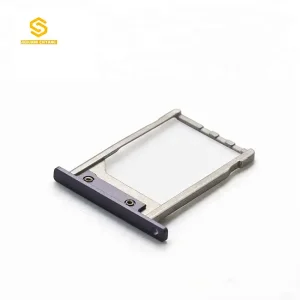
China Special Design for Stainless Steel Custom Metal Parts Powder Injection Molding Components Supplier, Factory
View Product Specs →
China Professional OEM High Precision Custom Die Cast Products Zinc Alloy Aluminum Die Casting Manufacturers, Factory
View Product Specs →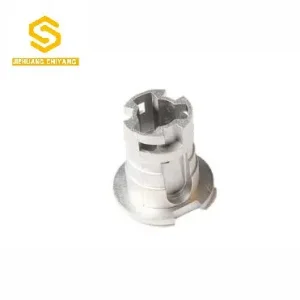
Wholesale metal injection molding parts for medical technology Manufacturer, Factory
View Product Specs →
Wholesale Quality Inspection for Precision CNC Pressure Aluminum Zinc Auto Household Die Casting Manufacturer, Factories
View Product Specs →
Wholesale Hot sale Factory Zamak 3high Quality Customize Aluminum Zinc Alloy Die Castings Product as Per Your Real Need Manufacturer, Factories
View Product Specs →
Wholesale China Factory for Stainless Steel Sintered Powder Metallurgy Parts MIM Metal Injection Molding Gear Part for Electronic Components Supplier, Factories
View Product Specs →Request an Engineer-Led DFM Review & Fast Quotation
Submit your CAD drawings (2D PDF & 3D STEP) today. Receive a comprehensive cost breakdown, tooling plan, and manufacturability assessment within 48 hours.