
Featured Wholesale Sintered & Molded Components
High-volume, OEM-customized powdered metal, metal injection molding (MIM), and high-pressure die casting products delivered directly from certified China foundries.

China OEM Metal Die Casting Part Aluminum CNC Machining Large Flywheel Housing

Powder Metallurgy Sintered Parts Metal Injection Molding MIM Precision Parts

Wholesale Metal Injection Molding (MIM) Components for Industrial Pumps

Precision High Pressure Die Casting Aluminum Alloy Components

High Quality Anodizing Aluminum Die Casting Structural Components

Custom MIM Metal Injection Molding Precision Gear Parts for Electronics
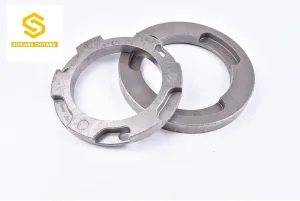
Wholesale High-Strength PM Motorcycle Sintered Transmission Gears

Sintered Bronze Bush PM Copper Bearings & Metal Sintering Gears
State of the Art: Powdered Metal Manufacturing Fundamentals
Decoding mechanical densification, liquid phase sintering thermodynamics, and microstructural homogenization in modern B2B powder metallurgy.
Conventional Powder Metallurgy involves the rigid die compaction of elemental or pre-alloyed metal powders under extreme uniaxial pressures (ranging from 400 to 800 MPa). The compacted green body undergoes continuous mesh-belt sintering under controlled protective atmospheres (Endothermic gas, Pure Nitrogen-Hydrogen blends, or Vacuum) at temperatures below the primary metal's melting point (typically 1120°C to 1280°C for iron-based alloys).
Key metallurgical metrics achieved through advanced PM include controlled interconnecting porosity for self-lubricating bronze bearings (MPIF Standard 35), tensile strengths exceeding 850 MPa via sinter-hardening, and superior material utilization rates reaching up to 95% compared to subtractive CNC turning.
Metal Injection Molding combines the geometric design freedom of plastic injection molding with the mechanical integrity of wrought metals. Extremely fine metal powders (typically d50 < 15 μm) are homogenized with a thermoplastic multi-component binder matrix to synthesize feedstock.
Following high-speed cavity injection, the molded green parts undergo solvent or thermal debinding to remove the primary wax phase, creating a porous brown part structure. High-temperature vacuum sintering (up to 1380°C for 17-4PH and 316L stainless steel) drives isotropic solid-state diffusion, eliminating residual binder and yielding theoretical densities between 96% and 99.5%.
| Metallurgical Parameter | Conventional Press & Sinter PM | Metal Injection Molding (MIM) | CNC Machining (Wrought Bar) |
|---|---|---|---|
| Relative Density Range | 85% – 92% (High-density up to 95%) | 96% – 99.5% | 100% |
| Dimensional Tolerance | ISO IT 8 – IT 10 (Sintered) | ISO IT 9 – IT 11 (±0.3% to ±0.5%) | ISO IT 6 – IT 8 |
| Geometric Complexity | Medium (Press-direction features, step shapes) | Ultra-High (Undercuts, cross-holes, internal threads) | High (Tool accessibility dependent) |
| Material Yield Efficiency | > 95% near-net shape | > 98% (Recyclable runner system) | 15% – 40% (60%+ material waste as chips) |
| Economic Lot Size (MOQ) | 5,000 – 500,000+ pcs | 2,000 – 100,000+ pcs | 1 – 1,000 pcs |
Technology Roadmap & Engineering Innovations
Accelerating next-generation powder metallurgy through binder jetting additive integration, titanium alloy sintering, and micro-MIM manufacturing.
Titanium Metal Injection Molding (Ti-6Al-4V and Commercial Pure Ti) is transforming aerospace and biomedical implant manufacturing. By applying ultra-low oxygen sintering furnaces (< 10 ppm O₂) and customized argon atmospheres, manufacturers achieve high-fatigue strength components with mass reductions of 45% compared to steel alternatives.
Combining industrial 3D Binder Jetting (BJT) with production MIM debinding/sintering lines allows rapid prototyping without hard tooling. Global buyers can validate functional parts in 5 days before tooling investment, cutting prototype lead times by 80% while retaining structural density.
By heating engineered powder blends and die walls to 130°C–150°C during pressing, single-press single-sinter processes achieve uniform green densities up to 7.4 g/cm³. This eliminates costly double-press double-sinter (DPDS) steps while boosting fatigue limits for heavy-duty automotive gears.
Domain-Specific Powdered Metal Applications
Tailored powder metallurgy and MIM component engineering designed to fulfill stringent sector specifications worldwide.
Sintered Variable Valve Timing (VVT) rotors, oil pump gears, transmission synchronizer rings, and electric drive planetary gearboxes. High fatigue limits are achieved through induction hardening and carbonitriding treatments complying with IATF 16949 standards.
Biocompatible surgical forceps jaws, endoscopic shears, needle drivers, and dental instrument joints fabricated in 316L and 17-4PH stainless steel. MIM produces fine serrations and internal passages impossible to execute via traditional milling.
Ultra-thin smartphone hinge mechanisms, smartwatch housings, camera lens rings, and high-wear power tool gear assemblies. Surface treatments include PVD coating, electro-polishing, and satin anodizing.
China Factory 4.0: Supply Chain Resilience & Cost Superiority
How advanced automation, localized raw powder supply networks, and continuous vacuum sintering yield up to 30%–50% cost savings for global OEMs.
Leading Ningbo and Yangtze River Delta powder metal foundries integrate atomized powder blending, precision tool design, automated multi-cavity press molding, continuous debinding-sintering furnace clusters, and post-sinter CNC machining under one roof. This vertically integrated infrastructure minimizes external sub-contractor delays and secures total quality control.
Modern China OEM factories deploy AI-powered Automated Optical Inspection (AOI) systems capable of verifying 100% of critical dimensions and surface defects on continuous conveyor feeds. Combined with Manufacturing Execution Systems (MES), every production batch is logged with furnace temperature profiles, green density logs, and raw material batch heat numbers.
Global Procurement Intent & DFM Technical Checklist
Essential Design for Manufacturability (DFM) rules and technical evaluation criteria for sourcing powdered metal parts.
Ensure a minimum draft angle of 0.5° to 1.0° on internal cores and sidewalls for effortless mold ejection. Internal fillet radii should exceed 0.25 mm to prevent stress concentrations during debinding and high-temperature thermal contraction.
Maintain consistent wall thickness across MIM components (ideally 1.0 mm to 4.0 mm). Sharp transitions between thick and thin sections induce differential shrinkage, micro-cracking, and sink marks during vacuum sintering.
Standard as-sintered tolerances for MIM are ±0.3% to ±0.5% of nominal dimension. Features demanding sub-micron precision (e.g., bearing seats with ±0.005 mm requirements) must incorporate post-sinter secondary CNC reaming or sizing.
Quality Control Standards & International Compliance
Rigorous industrial testing protocols assuring zero-defect batch delivery across global logistics networks.
Certified automotive quality management ensuring systematic APQP, PPAP Level 3 documentation, FMEA analysis, and statistical process control (SPC).
100% full compliance with RoHS 3, REACH SVHC, and Conflict Mineral regulations validated through XRF spectrographic chemical analysis.
Coordinate Measuring Machines (CMM), optical profilometers, metallographic grain structure analyzers, and micro-Vickers hardness testers.
Salt-spray corrosion chamber testing (up to 720+ hours ASTM B117), tensile strength testing, and helium leak testing for pressure vessels.
Comprehensive OEM Manufacturing Portfolio
Explore additional precision sintered components, vacuum furnaces, MIM watch accessories, and zinc die castings.

China OEM Powder Metallurgy & MIM Sintered Machinery Processing Parts

Powder Metallurgy Sintering Parts for Car Camshaft VVT Engine Chain Sprocket
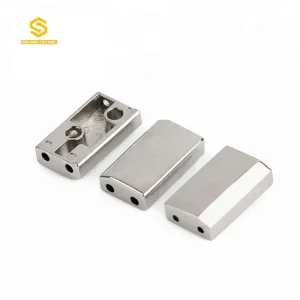
China OEM Custom MIM Stainless Steel Watch Buckles & Structural Clasps

Precision Zinc Alloy Die Casting for Bathroom Faucet Connector Hardware

Industrial 1700C Electric Atmosphere Vacuum Sintering Furnace for PM & MIM

Custom Sintered Titanium MIM Parts for Automotive Performance Systems

High Quality Metal Injection Molding (MIM) Process for Titanium Alloy OEM Parts

Low MOQ Custom Aluminum Alloy Die Casting Precision OEM Components
Frequently Asked Questions (FAQ)
Detailed answers to technical, commercial, and procurement queries regarding wholesale powdered metal manufacturing.