
Precision Powdered Metal & MIM Components
Direct factory wholesale supply for high-density gears, sintered filter elements, titanium MIM parts, and structural automotive hardware.






1. The Global Commercial & Industrial Status of Powdered Metal Manufacturing
The global metal powder parts manufacturing sector has undergone a profound transformation over the past decade. Driven by urgent OEM demands for lightweighting, micro-miniaturization, material efficiency, and complex three-dimensional structural geometries, traditional subtractive machining processes (such as multi-axis CNC milling, turning, and broaching) are increasingly reaching their economic and geometric limits. In contrast, Powder Metallurgy (PM) and Metal Injection Molding (MIM) represent net-shape and near-net-shape manufacturing methodologies that optimize both mechanical performance and unit cost structures.
According to international industrial market data, the global powder metallurgy market size is expanding rapidly, led by automotive powertrain electrification (Variable Valve Timing - VVT, transmission planetary gears, oil pump rotors), medical surgical instrumentation (endoscopic jaws, scalpel handles), consumer electronics (smartwatch frames, foldable smartphone hinges), and aerospace structural hardware. The global demand shift emphasizes high sintered density (exceeding 95% to 98% of theoretical density), narrow dimensional tolerances, and high fatigue resistance under cyclic dynamic loads.
Key Takeaway for Procurement & Engineering Teams
In high-volume component production (exceeding 5,000 units/year), powder metallurgy and MIM processes achieve up to 98% material utilization, virtually eliminating raw material scrap (chips and shavings) generated during subtractive CNC machining. This yields substantial raw material cost reductions, particularly when sourcing expensive stainless steels (316L, 17-4PH), titanium alloys (Ti-6Al-4V), and nickel-based superalloys.
2. Technical Deep-Dive: PM Pressing vs. Metal Injection Molding (MIM)
Engineers often compare conventional Press & Sinter Powder Metallurgy (PM) with Metal Injection Molding (MIM). While both leverage metal powders, their process mechanics, geometric capabilities, and metallurgical characteristics differ significantly.
Conventional Press & Sinter PM
Uniaxial compaction of coarse metal powders (20–150 µm) in rigid die tooling, followed by solid-state furnace sintering below the liquidus temperature.
- Geometric Limits: Ideal for 2.5D shapes, spur gears, timing pulleys, and cylindrical bushings with straight press-direction profiles.
- Density Range: 6.8 to 7.4 g/cm³ (85%–94% theoretical density).
- Tooling Cost: Lower initial tooling investment; optimized for rapid high-tonnage mechanical pressing.
Metal Injection Molding (MIM)
Blends ultra-fine spherical metal powders (< 20 µm) with a thermoplastic binder system to produce a moldable feedstock injected into complex multi-cavity dies.
- Geometric Limits: True 3D design freedom (undercuts, cross-holes, thin wall sections down to 0.5 mm, internal threads).
- Density Range: 7.5 to 7.8 g/cm³ (> 96% to 99% theoretical density).
- Post-Sintering: Solvent/catalytic debinding followed by high-temperature vacuum sintering.
Aluminum & Zinc Die Casting
Molten non-ferrous alloys injected under extreme hydraulic pressure into hardened steel molds. Used when structural mass outweighs strength limits.
- Best Applications: Large thin-wall housings, heat sinks, structural brackets, electrical enclosures.
- Material Scope: ADC12, A380, Zamak 3, Zamak 5.
- Finishing: In-house CNC machining and anodizing for tight fitment interfaces.
Manufacturing Process Comparison Matrix
| Process Parameter | Metal Injection Molding (MIM) | Press & Sinter PM | Aluminum Die Casting | 5-Axis CNC Machining |
|---|---|---|---|---|
| Dimensional Tolerance | ±0.3% to ±0.5% (±0.03 mm micro features) | ±0.1% to ±0.3% (height direction variable) | ±0.2% to ±0.5% | ±0.005 mm to ±0.01 mm |
| Part Weight Range | 0.2 g to 286 g (ideal < 100 g) | 5 g to 5,000 g | 20 g to 15,000 g | Unlimited |
| Relative Density | 96% – 99% (Wrought-like) | 85% – 94% (Porous core) | 90% – 95% (Porosity risk) | 100% (Solid billet) |
| Material Choice | Stainless steel (316L, 17-4PH), Ti, Fe-Ni | Fe-Cu-C, Bronze, Alloy Steels | Aluminum & Zinc Alloys | All metals and polymers |
| Production Volume MOQ | 2,000 pcs | 5,000 pcs | 2,000 pcs | 1 to 500 pcs |
3. China's Powder Metallurgy Cluster Efficiency & Cost Advantages
For international original equipment manufacturers (OEMs), Tier-1 automotive vendors, and medical device designers, sourcing custom powdered metal parts from China presents undeniable strategic and financial advantages. Modern Chinese manufacturing hubs—most notably in Ningbo and the surrounding Yangtze River Delta—have evolved far beyond basic cost-arbitrage into advanced metallurgical centers of excellence.
Aggregated Raw Material Ecosystem
China accounts for a major share of global refined elemental powders (iron, nickel, copper, molybdenum) and gas/water atomized stainless steel powders. Local access reduces feedstock transport lead times and procurement premiums.
Vertical Integration Under One Roof
Leading Chinese facilities combine tooling design, precision EDM wire-cutting, high-tonnage compaction presses, continuous mesh-belt sintering furnaces, HIP (Hot Isostatic Pressing), and secondary CNC machining in-house.
Rapid DFM & Tooling Turnaround
While European or North American mold build lead times typically extend 8 to 12 weeks, Chinese engineering teams turn around completed DFM reports in 48 hours and deliver T1 sample parts within 25 to 30 days.
4. Cross-Industry Applications & Localized OEM Engineering
Powdered metal components are deployed across safety-critical and high-stress industrial applications. Selecting the optimal alloy chemistry and sintering schedule ensures optimal performance under operational fatigue:
Automotive Systems
Variable Valve Timing (VVT) rotors, oil pump gears, transmission planetary carriers, steering column locks, and turbocharger wastegate actuators. High dynamic fatigue endurance achieved via case hardening and steam treatment.
Medical Technology
Laparoscopic surgical stapler jaws, endoscopic articulation joints, ceramic dental tools, and biocompatible Titanium MIM scalpel handles. Strict compliance with ISO 13485 and non-destructive testing (NDT).
Pumps & Fluid Handling
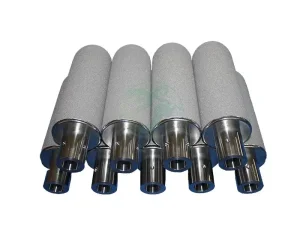
Internal gerotor pump gears, micro-fluidic valve plates, stainless steel 316L mini ball valve bodies, and porous sintered metal gas/liquid filter cartridges with controlled pore sizes from 0.5 to 100 microns.
5. Next-Generation Industry Trends in Powdered Metallurgy
Titanium Metal Injection Molding (TiMIM)
Combining the light weight and biocompatibility of Ti-6Al-4V with the complex design freedom of MIM. Used extensively in aerospace aerospace fasteners, defense, and implantable medical hardware.
Binder Jetting & Metal 3D Hybrid Production
Bridging low-volume prototyping and mass tooling. Metal binder jetting eliminates initial mold investments for pilot runs while allowing identical sintering furnaces to achieve final density.
Micro-MIM for Electronics & Wearables
Fabricating micro-gears, fiber-optic connector ferrules, and smartwatch chassis with wall thicknesses under 0.2 mm, strict surface finish specs (Ra < 0.8 µm), and custom PVD coatings.
6. Global OEM Sourcing Framework & Quality Control Protocols
To mitigate supply chain risks when sourcing custom powdered metal parts internationally, global procurement directors should ensure manufacturers adhere to strict Quality Assurance (QA) and Quality Control (QC) frameworks:
Quality System Certifications
Ensure the supplier maintains active IATF 16949 (Automotive Quality Management System) and ISO 9001 certifications, guaranteeing complete lot traceability from raw metal powder lots to final packaging.
Metallographical & Density Verification
Density must be measured via Archimedes method immersion testing. Core microstructural phases (martensite, austenite, pearlite porosity) should be certified via optical metallography and hardness testing (HRC / HV).
Metrology & CMM Inspection
Key dimensions must undergo 100% automated optical profile screening or 3D CMM (Coordinate Measuring Machine) verification with full PPAP Level 3 documentation provided upon customer request.
Powder Metallurgy, Sintered Alloys & Die Cast Hardware
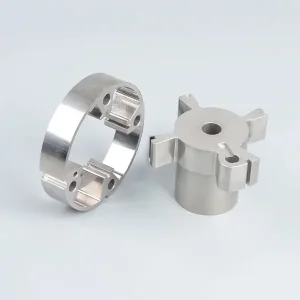
Explore our full line of custom sintered gears, high-precision auto hardware, structural timing rings, and customized die-cast components.







Frequently Asked Questions by Industrial Buyers
Detailed answers regarding technical specifications, minimum order quantities, non-disclosure agreements, and manufacturing workflows.