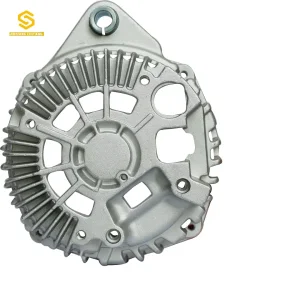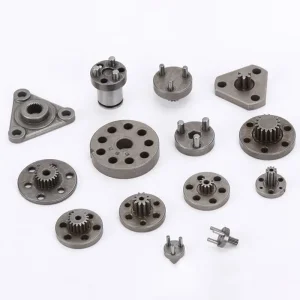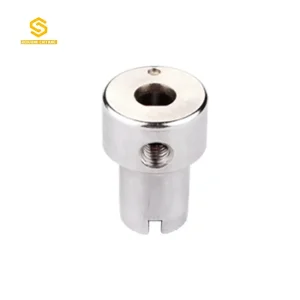
Precision Powdered Metal Components Showcase
Explore our engineered component catalog featuring custom sintered iron parts, high-volume MIM structural components, die castings, and specialized medical/automotive assemblies manufactured under strict IATF 16949 standards.
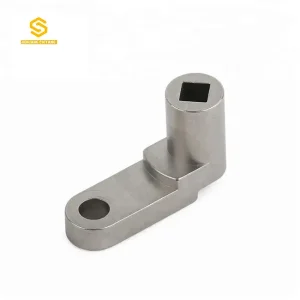
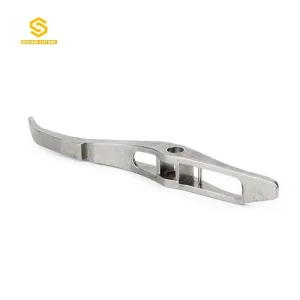
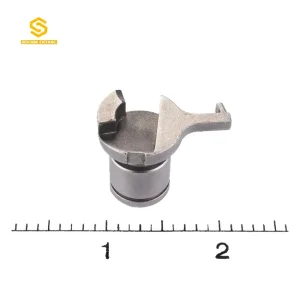
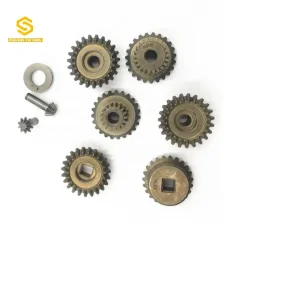
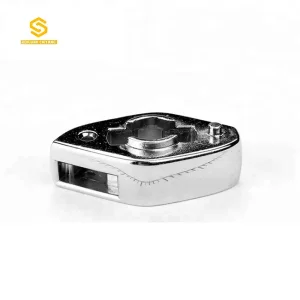
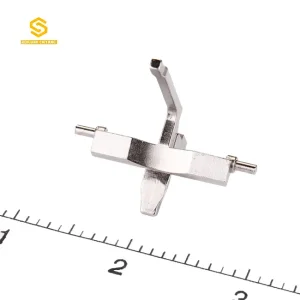
State of Powder Metallurgy & Precision Metal Forming Engineering
In modern industrial manufacturing, the transition from traditional subtractive CNC machining and investment casting toward advanced Powder Metallurgy (PM) and Metal Injection Molding (MIM) represents a fundamental paradigm shift. As global OEMs demand near-net-shape components with complex geometry, tight tolerances, and superior material utilization, custom powder metal technology delivers up to 98% material efficiency while reducing total cost of ownership (TCO) by 30% to 50%.
Press and Sinter Technology (Conventional PM)
Conventional Powder Metallurgy utilizes automated axial compaction presses capable of applying 100 to 1,000 tons of force to consolidate elemental or pre-alloyed metal powders inside precision carbide dies. The resulting "green body" undergoes high-temperature atmospheric sintering in continuous mesh-belt or pusher furnaces at temperatures ranging from 1,120°C to 1,350°C.
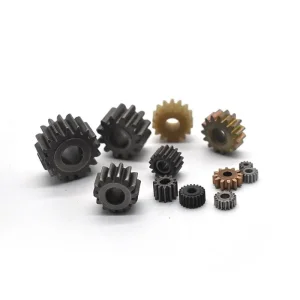
This solid-state diffusion process bonds adjacent metallic particles, eliminating internal void fractions and imparting high mechanical strength, fatigue resistance, and controlled porosity for self-lubricating bearings, automotive timing gears, and structural brackets.
Metal Injection Molding (MIM) & TiMIM Capabilities
Metal Injection Molding combines the geometric design freedom of plastic injection molding with the mechanical integrity of wrought metals. Micro-fine metal powders (<20 microns) are compounded with thermoplastic binder systems to create feedstock. This feedstock is injected into complex multi-cavity molds.
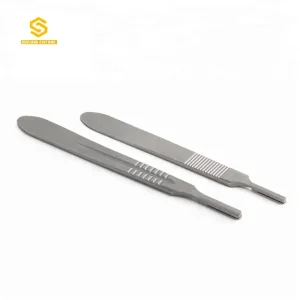
Subsequent debinding (solvent, thermal, or catalytic processing) removes the polymer matrices before high-vacuum sintering shrinks the part by 15-20% into a fully dense (95-99% theoretical density) metal component. Ideal for surgical handles, micro-gears, and aerospace hardware.
Comprehensive Powdered Metal Material Specifications Matrix
Our metallurgical laboratory custom-blends elemental powders, master alloys, and pre-alloyed matrices to comply with international standards including MPIF 35, DIN 30910, ISO 5755, ASTM B883, and SAE J471.
| Material Class | Alloy Grade / Standard | Sintered Density (g/cm³) | Tensile Strength (MPa) | Yield Strength (MPa) | Hardness Range | Primary Industrial Applications |
|---|---|---|---|---|---|---|
| Sintered Iron-Steel | FC-0208-50 (MPIF 35) | 6.8 - 7.2 | 450 - 650 | 350 - 480 | 65 - 85 HRB | Automotive gears, sprockets, oil pump rotors |
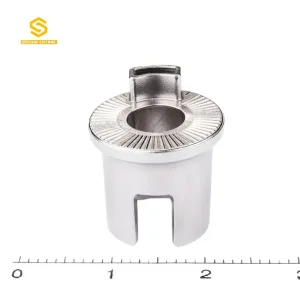
| Austenitic Stainless Steel | MIM-316L (ASTM B883) | 7.6 - 7.9 | 520 - 600 | 220 - 280 | 150 - 200 HV | Medical surgical handles, marine hardware, watch cases |
| Precipitation Hardening SS | MIM-17-4PH (ASTM B883) | 7.5 - 7.8 | 1,150 - 1,350 | 1,000 - 1,180 | 38 - 45 HRC | Firearm components, aerospace latches, power tool gears |
| Copper-Base Alloys | CT-1000 Bronze | 6.4 - 6.8 | 180 - 240 | 110 - 140 | 40 - 60 HB | Self-lubricating sleeve bearings, electrical contacts |
| Titanium Alloy (TiMIM) | Ti-6Al-4V Grade 5 | 4.4 - 4.5 | 890 - 960 | 820 - 880 | 32 - 38 HRC | Biomedical implants, lightweight aerospace hinges |
| Soft Magnetic Alloys | Fe-50Ni / Fe-3Si | 7.5 - 7.7 | 400 - 480 | 240 - 300 | 120 - 160 HV | Solenoid cores, electric motor stators, sensors |
Atmospheric Control
Continuous monitoring of hydrogen, nitrogen, and endothermic gas atmospheres to prevent oxidation and optimize carbon potential during sintering cycles.
Secondary Densification
Post-sintering processes such as Hot Isostatic Pressing (HIP), coining, and sizing increase component density to near 100% of theoretical limits.
Custom Heat Treatment
Carburizing, carbonitriding, induction hardening, and vacuum precipitation aging tailor case hardness and core toughness to exact specifications.
China Factory Supply Chain & Advanced Manufacturing Dominance
Leveraging China’s integrated industrial clusters in the Yangtze River Delta, our manufacturing facilities combine end-to-end production control with raw material sourcing resilience and cost-efficient tooling scaling.
In-House Toolmaking & Rapid EDM
Equipped with ultra-precision CNC EDM, wire-cut EDM, and high-speed CNC machining centers, our tooling shop fabricates multi-cavity carbide compaction dies and MIM injection molds in-house. Tooling lead times are compressed from standard 8 weeks to 18-25 calendar days.
Upstream Atomized Powder Control
Direct partnerships with premier gas and water atomization powder suppliers guarantee stable batch-to-batch chemical compositions, powder particle size distribution (PSD), and spherical morphology critical for predictable mold shrinkage.
Turnkey Surface Finishing & Assembly
From deburring, magnetic tumbling, and shot blasting to electroplating, PVD coating, black oxide, steam oxidation, and sub-assembly, our automated lines provide complete finished products ready for line integration.
Global Buyer Framework: Optimizing TCO & Vendor Qualification
Strategic procurement directors evaluating wholesale powdered metal suppliers must balance piece price against long-term operational resilience, tool life maintenance, and quality assurance workflows.
Total Cost of Ownership (TCO) Metrics
Standard unit cost comparisons often overlook the long-term benefits of powder metallurgy near-net-shape manufacturing:
- Zero Material Waste: Eliminates scrap metal overhead inherent to CNC turning/milling.
- Extended Tooling Lifespan: Carbide PM compaction tooling yields 1,000,000+ cycles before requiring refurbishment.
- Consolidated Multi-Part Assemblies: MIM allows redesigning multi-piece welded assemblies into a single complex part.
- Reduced Secondary Operations: Near-net-shape accuracy eliminates hobbing, broaching, and profiling.
Vendor Evaluation & Risk Mitigation Checklist
Ensure your chosen OEM powdered metal factory maintains rigorous engineering validation pathways:
- Quality Management Systems: Validated IATF 16949 (Automotive), ISO 9001, and ISO 13485 certifications.
- DFM & Moldflow Simulation: Comprehensive Design for Manufacturability reports issued prior to tool cutting.
- Advanced CMM & Metallurgical Inspection: 3D Coordinate Measuring Machines, optical comparators, density testers, and carbon/sulfur analyzers.
- Buffer Stock & VMI Support: Vendor-Managed Inventory programs backed by overseas warehouse buffer logistics.
Powdered Metal Industry Trends: Industry 4.0 & Green Metallurgy
Driven by global decarbonization mandates and the rapid evolution of electric vehicle (EV) architectures, the powdered metal manufacturing landscape is adopting next-generation technological innovations.
High-Temperature Sintering (>1300°C)
Elevating sintering temperatures promotes atom diffusion and pore spheroidization. This enhances dynamic fatigue strength and impact toughness in nickel-free steel alloys, matching the performance of forged steels.
Additive Manufacturing & PM Hybridization
Combining Binder Jetting (3D Metal Printing) with vacuum sintering allows low-volume prototyping without tooling investments, accelerating NPI (New Product Introduction) cycles prior to high-volume MIM mass production.
Soft Magnetic Composites (SMC) for EVs
Iron powder particles insulated with micro-dielectric coatings enable 3D isotropic magnetic properties, high electrical resistivity, and reduced eddy current losses in high-frequency EV traction motors and axial flux actuators.
Industry-Specific Application Scenarios & Real-World Deployment
From medical operating theaters to extreme-duty automotive engines, custom powdered metal components deliver proven reliability across demanding operational environments.
Automotive Powertrains & E-Mobility
Components: Variable Valve Timing (VVT) rotors, oil pump gears, transmission synchronizer hubs, electronic parking lock actuators.
Engineering Impact: Sintered iron-copper alloys provide high fatigue limits while precise oil-impregnated porosity reduces operational friction and acoustic noise levels in engine compartments.
Medical Surgical Instruments & Devices
Components: Endoscopic grasper jaws, surgical stapler housings, titanium scalpel handles, orthopedic instrument hinges.
Engineering Impact: Utilizing MIM-316L and Ti-6Al-4V enables biocompatible, corrosion-resistant surgical instruments capable of undergoing repeated autoclave sterilization without mechanical degradation.
Consumer Electronics & Smart Wearables
Components: Foldable smartphone screen hinges, smartwatch chassis brackets, optical camera ring bezels, earphone sound nozzles.
Engineering Impact: MIM technology delivers ultra-thin wall sections (0.35mm) with mirror-like surface polishing and custom PVD titanium nitride decorative finishes.
Industrial Power Tools & Hardware
Components: Planetary gearboxes, impact driver anvils, door lock latches, pneumatic valve spools, hydraulic pump plates.
Engineering Impact: Heat-treated 17-4PH and carburized alloy steels deliver high wear resistance under heavy torque loads and impact shocks.
Global Compliance Framework & Localized Technical Support
We eliminate cross-border sourcing risks through localized engineering support teams in North America and Europe, combined with full regulatory compliance and transparent quality documentation.
Environmental Compliance
Full adherence to EU RoHS directives, REACH regulations, and Conflict Minerals (3TG) reporting standards with material safety data sheets (MSDS) provided per batch.
Full Traceability
Every shipment is tagged with QR-coded lot numbers linking back to raw material heat certificates, sintering temperature charts, and CMM dimension check sheets.
Localized Logistics
Flexible commercial terms including DDP (Delivered Duty Paid), DAP, FOB Ningbo/Shanghai, and VMI buffer warehousing near major industrial hubs.
Frequently Asked Technical Questions (FAQ)
Find authoritative answers to common engineering, procurement, and manufacturing inquiries regarding custom powdered metal products.
What is the typical dimensional tolerance achievable with Powder Metallurgy and MIM?
How does sintered density affect mechanical properties?
Can powdered metal components be secondary machined or electroplated?
What is the Minimum Order Quantity (MOQ) and lead time for custom tooling?
What documentation is included with every production shipment?
Specialized Sintered & Molded Metal Products
Explore additional specialized component offerings, including custom micro-gears, ceramic injection molding (CIM), titanium MIM parts, and high-volume automotive covers.