
Precision OEM Metallurgical Products
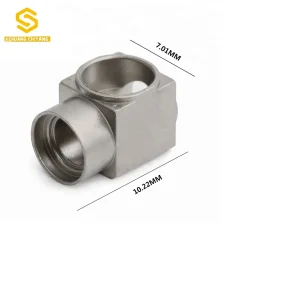
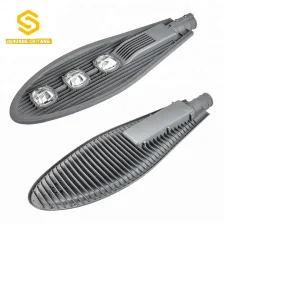
Explore our core OEM production capabilities spanning custom MIM micro-components, titanium sintered parts, and high-pressure die casting solutions.






Macro Industry Solutions & Global Manufacturing Dynamics
The paradigm shift in modern precision engineering toward near-net-shape manufacturing, carbon neutrality, and cost optimization.
Material Efficiency & Decarbonization
Traditional sub-tractive CNC machining wastes up to 40% to 70% of raw bar stock as metal swarf. Powder metallurgy (PM) and Metal Injection Molding (MIM) achieve material utilization rates exceeding 95%. By minimizing scrap generation, wholesale powder metal component manufacturing reduces embedded energy consumption by over 40% per unit, directly driving corporate Scope 3 emission reduction targets for Tier-1 automotive and industrial OEMs worldwide.
Supply Chain Resiliency & Scalability
Global manufacturers face volatile raw material indices and labor shortages. Powder metal fabrication stabilizes component costs by utilizing pre-alloyed micro-powders (Fe, Cu, Ni, Mo, Ti) combined with high-speed automated press compaction. Powder metal factories produce complex gears, sprockets, structural flanges, and soft magnetic components at speeds reaching 1,000 to 3,000 parts per hour per press cell, eliminating machine tool bottleneck constraints.
Advanced Geometry Unlocking
MIM technology bridges plastic injection molding versatility with high-strength metallic properties. Engineers can integrate multi-part subassemblies into single monolithic powder metal castings—featuring internal oil channels, micro-splines, blind keyways, and external cross-holes—without requiring multi-axis secondary CNC milling setups.
Metallurgical Process Comparison Matrix
| Performance Metric | Powder Metallurgy (PM) | Metal Injection Molding (MIM) | High Pressure Die Casting | 5-Axis CNC Machining |
|---|---|---|---|---|
| Material Utilization | 95% – 98% | 95% – 99% | 85% – 90% (with runners) | 30% – 60% |
| Dimensional Tolerance | ±0.03 mm – ±0.05 mm | ±0.3% to ±0.5% nominal | ±0.05 mm – ±0.1 mm | ±0.005 mm – ±0.01 mm |
| Geometric Complexity | Medium (2.5D shapes, keyways) | Extreme (3D undercuts, micro threads) | High (Thin-wall housings) | High (Limited by cutter access) |
| Material Options | Sintered Steels, Stainless, Bronze, Fe-Ni | 17-4PH, 316L, Ti-6Al-4V, Low Alloys | ADC12 Aluminum, A380, Zinc Alloys | Virtually all forgeable metals |
| Mass Production Cost Index | Lowest (at >5,000 pcs) | Very Low (at >2,000 pcs) | Low (High tooling cost) | High (Linear per-unit time) |
Material Science & Process Control Roadmap
Achieving superior fatigue strength, precise sintered density, and defect-free microstructures through rigorous process parameters.
1. Powder Atomization
Raw elemental metals are converted via water atomization or inert gas atomization into precise spherical powder particles ranging from 5 µm to 150 µm, ensuring optimal flowability and uniform green density distribution.
2. Precision Compaction
Using 1,000-ton (10,000 kN) computer-controlled multi-axial hydraulic presses, micro-powder blends mixed with solid lubricants are compacted into precise "green" components under pressures ranging from 400 to 800 MPa.
3. High-Temp Sintering
Green compacts undergo solid-state diffusion bonding inside continuous mesh belt or vacuum furnaces controlled under hydrogen-nitrogen reducing atmospheres at temperatures between 1,120°C and 1,350°C.
4. Secondary Finishing
Components undergo secondary sizing, coining, CNC finish machining, steam blackening treatment, resin impregnation, or vacuum case hardening to achieve final dimensional precision and corrosion resistance.
Industrial Applications & Custom OEM Solutions
Delivering high-performance powder metallurgy components across critical industrial sectors operating in North America, Europe, Japan, and Southeast Asia.
Automotive Powertrain & VVT Systems
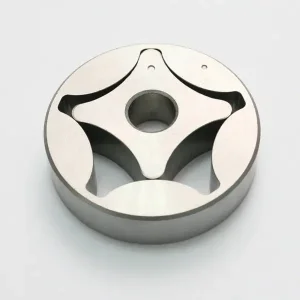
Engineered sintered steel oil pump rotors, Variable Valve Timing (VVT) sprockets, synchronizer rings, and ABS sensor rings. Our MPIF Standard 35 compliant nickel-steel materials (FN-0205 / FC-0208) withstand cyclical torsional fatigue under continuous high-rpm thermal stresses inside combustion and hybrid engines.
Industrial Power Tools & Gearboxes
High-density planetary gear sets, spur gears, bevel gears, and electric tool clutch plates. Utilizing warm compaction and sinter-hardening, our powder metal gears reach surface hardness levels up to HRC 55 to 60 without requiring oil-quenching distortion cycles.
Medical Technology & Instruments
Biocompatible 316L and Titanium alloy (Ti-6Al-4V) components manufactured via titanium metal injection molding (TiMIM). Applications include endoscopic surgical stapler jaws, scalpel handles, dental implant abutments, and orthopedic tool fittings possessing mirror-polished surface finish capabilities.
Compliance, Quality Assurance & Engineering Support
Comprehensive regulatory compliance, transparent quality documentation, and dedicated DFM consultation for overseas procurement teams.
IATF 16949 & ISO 9001
Fully audited quality management system. Every production batch is backed by Full Initial Sample Inspection Reports (ISIR), PPAP Level 3 documentation, and complete material chemical spectro-analysis tracking.
Advanced Metrology Lab
Equipped with Zeiss 3D Coordinate Measuring Machines (CMM), optical image measuring systems, digital hardness testers, density measurement setups, and salt-spray corrosion test chambers.
Rapid DFM Consultation
Receive a comprehensive Design for Manufacturability (DFM) analysis within 48 hours. Our engineering team reviews mold draft angles, wall thickness uniformity, radius optimization, and sintering shrinkage allowances.
Global Logistics & Warehousing
Flexible commercial terms (FOB, CIF, DDP, DAP) with safety stock warehousing options near major port facilities, ensuring zero-line-stoppage performance for international supply chains.
Technology Roadmap & Future Outlook (2025–2030)
Pioneering advancements in powder metallurgy, soft magnetic materials, and hybrid metal 3D printing integration.
Soft Magnetic Composites (SMC) for EV Motors
Next-generation electric vehicle (EV) traction motors and axial flux actuators demand high magnetic permeability and minimal eddy current losses. Our ongoing R&D focuses on surface-insulated iron powder composites designed for 3D magnetic flux paths, boosting electric motor efficiency by up to 3.5% while reducing magnet weight.
Binder Jetting & AM Integration
Bridging rapid prototyping and high-volume powder production. By integrating industrial metal binder jetting (3D printing) with conventional sintering furnaces, we provide tool-less functional metal prototypes in 316L and 17-4PH within days, accelerating client time-to-market prior to hard tooling investment.
AI-Driven Process Monitoring
Implementation of real-time sensor arrays inside continuous sintering furnaces to monitor dew point, hydrogen partial pressure, and thermal profiling dynamically. Closed-loop AI controls eliminate batch-to-batch dimensional variation, achieving Cpk values > 1.67 for critical dimensions.
Specialized Powder Metal & Casting Components
Complete our full portfolio review with our targeted machinery hardware, oil pump rotors, die casting couplings, and thermal cooling parts.






Frequently Asked Technical Questions (FAQ)
Direct engineering answers addressing key sourcing, material selection, tolerance limits, and tooling questions.
Accelerate Your Production With Powder Metal Expertise
Submit your STEP/IGES/PDF engineering drawings today. Our Senior Metallurgical Engineers will provide a free DFM review, material selection report, and comprehensive quotation within 48 hours.