
Featured Precision Metal Products (Batch I)
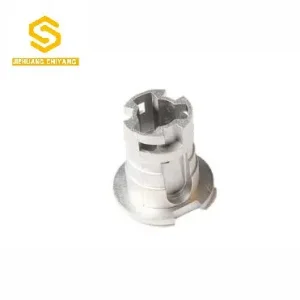
Explore our primary OEM batch component selection, featuring sintered gears, customized MIM medical technology components, and high-density powder metallurgy hardware.





Executive Industry Report: Convergence of Powder Metallurgy & Metal Additive Manufacturing
The modern industrial manufacturing landscape is experiencing a monumental paradigm shift driven by the convergence of conventional Powder Metallurgy (PM), precision Metal Injection Molding (MIM), and industrial-scale Additive Manufacturing (AM). As tier-1 OEMs across aerospace, automotive electrification, medical technology, and robotics demand components with increasingly sophisticated geometries, traditional subtractive CNC machining frequently encounters cost barriers, high material wastage, and thermal stress limitations.
Metal additive manufacturing and advanced sintered powder metallurgy represent near-net-shape manufacturing methodologies that eliminate up to 95% of raw material scrap while achieving density levels exceeding 98.5% of wrought metal performance. By utilizing micro-fine spherical metal powders combined with state-of-the-art binder jetting, laser powder bed fusion (LPBF), and high-pressure compaction sintering, premier B2B manufacturers deliver complex structural parts with unprecedented dimensional accuracy, superior mechanical strength, and drastically shortened time-to-market metrics.
Global procurement teams evaluate wholesale powder metallurgy and additive manufacturing partners based not merely on piece-part costs, but on comprehensive Total Cost of Ownership (TCO), material engineering depth, design for manufacturability (DFM) support, and supply chain audit compliance. As certified Tier-1 suppliers, integrated factories provide the scalability needed to handle high-volume production runs running into millions of units while preserving strict metallurgical consistency.
Technical Benchmarking: Additive Manufacturing, MIM & PM Process Matrix
Selecting the appropriate powder metallurgy process requires a rigorous technical trade-off analysis evaluating production volume, geometry complexity, tolerance requirements, and alloy availability. The matrix below outlines how additive manufacturing (3D metal printing) complements traditional PM and MIM to offer complete full-lifecycle coverage—from rapid engineering prototypes to massive wholesale production.
| Manufacturing Technology | Ideal Annual Volume | Geometric Complexity | Surface Roughness (Ra) | Part Density (%) | Tooling / NDE Setup |
|---|---|---|---|---|---|
| Laser Powder Bed Fusion (LPBF) | 1 – 1,000 units | Extreme (Internal cooling channels) | 6.3 - 12.5 µm | 99.5% - 99.9% | Zero Tooling Required |
| Metal Binder Jetting (MBJ) | 500 – 50,000 units | Very High (Complex undercut geometries) | 4.0 - 6.3 µm | 96.0% - 98.5% | Minimal / Digital Printhead |
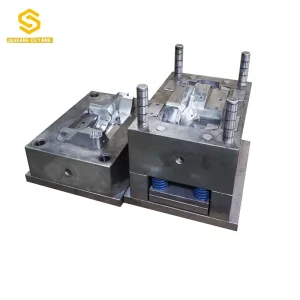
| Metal Injection Molding (MIM) | 2,000 – 5,000,000+ units | High (Complex 3D micro-features) | 0.8 - 1.6 µm | 97.0% - 99.0% | Precision Injection Mold Tooling |
| Press & Sinter Powder Metallurgy | 5,000 – 10,000,000+ units | Moderate (2.5D stepped profiles, gears) | 1.6 - 3.2 µm | 88.0% - 95.0% (Oil Impregnable) | Hardened Die Set Tooling |
By shaping or printing components directly from micro-powder feeds, secondary machining operations are reduced by up to 90%, preserving alloy microstructures and grain flow integrity.
Bridge the gap between R&D and serial manufacturing by using 3D metal additive printing for early verification, followed by smooth migration into automated MIM/PM multi-cavity tooling.
Consolidate complex assemblies containing 10+ machined hardware items into a single, lightweight additive component designed with biomimetic internal lattice structures.
Advanced Powder Chemistry & Metallurgical Science
The ultimate mechanical properties, tensile strength, fatigue resistance, and corrosion behavior of powder metallurgy additive components are fundamentally dictated by particle morphology and chemical purity. Modern wholesale manufacturing utilizes custom-formulated powders produced via Gas Atomization (GA), Water Atomization (WA), and Plasma Atomization (PA) to guarantee uniform sphericity, tight particle size distribution (PSD), and low oxygen content.
Includes 17-4PH, 316L, 304L, and 420 grades. Essential for medical surgical instruments, marine hardware, and automotive turbocharger components requiring high yield strength and exceptional corrosion resistance.
Biocompatible, high strength-to-weight ratio materials suitable for medical orthopedic implants, aerospace bracketry, consumer electronic hinges, and premium military hardware.
Fe-2Ni, Fe-8Ni, and FN-0205 magnetic alloys providing superior magnetic permeability, high density after debinding and vacuum sintering, and extreme fatigue resistance in high-torque gearboxes.
Engineered to withstand extreme thermal environments in aerospace turbines, rocket engine manifolds, energy sector valves, and high-performance automotive exhaust systems.
High-conductivity pure copper and porous bronze alloys used for self-lubricating sleeve bearings, electrical contacts, thermal heat sinks, and industrial electric motor brush gearings.
Ultra-dense materials tailored for vibration dampening counterweights, radiation shielding, defense armor penetrators, and high-wear industrial cutting tooling.
Sector-Specific Engineering & Macro Industry Solutions
Powder metallurgy additive manufacturing serves as the technological back-bone for modern industrial production. Leading factories configure specialized production cells to meet the stringent validation standards of diverse industry domains.
Massive scalable production of variable valve timing (VVT) components, planetary gear carriers, electric drive motor actuators, steering locks, and sensor brackets certified to IATF 16949 standards.
Precision MIM stainless steel and titanium components for laparoscopic graspers, minimally invasive surgical handle assemblies, dental brackets, and porous bone-ingrowth orthopedic implants.
Lightweighted additive components, fuel injector nozzles, flight control linkages, and high-strength defense lock mechanisms complying with AS9100D material traceability protocols.
Miniaturized multi-axis folding smartphone hinges, smartwatch housings, camera bezel rings, and audio connector shells with decorative cosmetic surface treatments (PVD, anodizing, electroplating).
Quality Assurance, Compliance Framework & Localized Global Support
Exporting high-precision powder metallurgy components requires absolute consistency across batch lots. Tier-1 manufacturers implement a multi-layered quality management system encompassing raw powder chemical verification, in-line process monitoring during debinding and sintering, and 100% automated optical inspection for finished parts.
Fully accredited under ISO 9001:2015, IATF 16949:2016 (Automotive), and ISO 13485 (Medical Devices), ensuring complete material lot traceability and standard PPAP Level III documentation.
Equipped with high-resolution Industrial CT Scanning, Metallographic Grain Structure Analysis, Micro-Vickers Hardness Testers, Coordinate Measuring Machines (CMM), and Salt Spray Testing chambers.
Seamless global delivery with VMI (Vendor Managed Inventory), JIT (Just-In-Time) buffer stock management, DDP delivery terms, and dedicated engineering consultation hubs across North America, Europe, and Asia.
Technology Roadmap: The Future of Additive Sintering (2025–2035)
As industrial additive manufacturing matures, the powder metallurgy landscape is evolving toward multi-material printing, zero-carbon green sintering, and closed-loop AI quality control. The key technology vectors shaping the next decade include:
Simultaneous deposition of copper and steel or titanium and nickel alloys, enabling components with localized wear resistance and selective thermal conductivity within a single monolithic part.
Real-time optical thermal imaging during laser powder bed fusion automatically adjusts laser power in milliseconds to eliminate porosity formation and residual stress build-up.
Transitioning from traditional fossil fuel atmosphere gas generators to 100% green hydrogen sintering furnaces, achieving zero carbon emissions while enhancing oxide reduction during sintering.
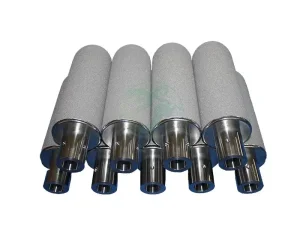
Featured Precision Metal Products (Batch II)
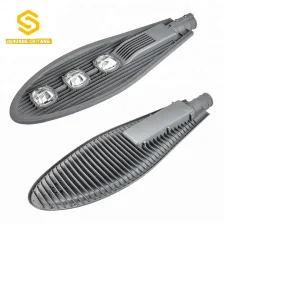
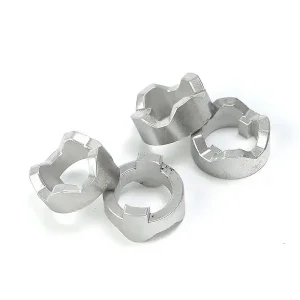
Explore additional core custom components, high-density sintered structural elements, and precision die cast housings available for global wholesale procurement.



Frequently Asked Questions (Procurement & Engineering Insights)
Addressing crucial questions asked by B2B buyers, manufacturing directors, and supply chain managers regarding powder metallurgy, MIM, and 3D metal printing capabilities.
Modern vacuum sintering and Hot Isostatic Pressing (HIP) allow Metal Injection Molding (MIM) and additive sintered parts to achieve densities between 97% and 99.5% of theoretical wrought density. Consequently, tensile strength, yield strength, and fatigue limits closely match standard wrought alloys (e.g., ASTM F3001 standards for Ti-6Al-4V or MPIF Standard 35 for PM structural parts). Secondary heat treatments (such as carburizing, quenching, and tempering) further elevate surface hardness and wear resistance to meet demanding automotive drive-train conditions.
Metal 3D printing (LPBF) eliminates upfront tooling fees, making it the most cost-effective path for small batch production (1 to 1,000 units) and functional engineering prototypes. For high-volume manufacturing (2,000 to 5,000,000+ units), MIM and Press & Sinter PM drastically reduce unit costs by 30% to 60% compared to CNC machining. The upfront tooling cost for MIM molds or PM die sets is rapidly amortized across mass serial production, drastically lowering Total Cost of Ownership (TCO).
Standard as-sintered tolerances for Metal Injection Molding range within ±0.3% to ±0.5% of nominal dimensions (typically ±0.05mm to ±0.02mm for micro-parts). For ultra-precision critical features (such as bearing seats or high-grade gear teeth), secondary sizing, coining, or precision CNC post-machining operations achieve tolerances down to ±0.005mm.
Yes. High-density sintered components support a complete range of secondary finishing operations, including physical vapor deposition (PVD), electroplating (nickel, chrome, gold), black oxide, passivation, anodizing, electro-polishing, and thermal case hardening. For porous PM bushings, vacuum oil impregnation is routinely applied to deliver self-lubricating sleeve bearing functionality.
Factories implement non-destructive industrial X-ray CT scanning to visualize internal structures, detect voids, and confirm 100% density integrity in mission-critical aerospace or medical components. Additionally, destructive metallographic cross-sectioning and micro-hardness testing are performed on every sintered batch to ensure homogeneous grain boundary formation.
Additive metal 3D printed functional prototypes are delivered within 3 to 7 business days following CAD model freeze and DFM approval. For MIM and press-and-sinter projects, multi-cavity tooling fabrication and first article inspection (FAI) samples take approximately 25 to 35 days. Serial mass production orders ship within 2 to 4 weeks depending on order volume and surface finishing requirements.