
Precision Powder Metallurgy Components & Custom Engineering
Direct access to our certified high-volume OEM manufacturing line. Explore sintered steel gears, custom MIM stainless components, lightweight aluminum pressure die castings, and refractory alloy powders.








The Modern Powder Metallurgy Manufacturing Landscape
Powder Metallurgy (PM) has evolved from basic porous oil-impregnated bushings to high-performance structural components with near-wrought mechanical properties. Today's global supply chain relies on advanced powder consolidation technologies to circumvent traditional machining bottlenecks, eliminate material waste, and achieve ultra-precise geometries.
Press & Sinter (Conventional PM)
Uniaxial compaction of elemental or pre-alloyed powders up to 1000 MPa followed by controlled-atmosphere sintering. Optimized for 2.5D geometries, planetary gears, and structural hubs with density ranges of 6.8 - 7.4 g/cm³.
Metal Injection Molding (MIM)
Combines plastic injection molding flexibility with powder metallurgy performance. Uses ultra-fine powders (<20 µm) blended with thermoplastic binders to form complex 3D net-shape parts reaching 96% - 99% theoretical density.
Refractory & Spherical Alloys
Advanced gas atomization produces spherical titanium and intermetallic powders such as Ti45Al8Nb. Essential for lightweight aerospace actuators, high-temperature turbines, and bio-compatible implants.
Global Enterprise Procurement Requirements & Risk Mitigation
Procurement managers and supply chain directors in Fortune 500 enterprises face mounting challenges regarding supplier audit compliance, raw material price index volatility, and rigorous quality validation cycles. Sourcing custom powder metallurgy parts requires a transparent total cost of ownership (TCO) evaluation framework.
TCO Breakdown: Powder Metallurgy vs Multi-Axis CNC
While tooling initial investment (NRE) for powder compaction molds ranges from $3,000 to $25,000, unit production costs drop exponentially at volumes above 5,000 pieces. Eliminating chip scrap, cutter wear, and setup labor lowers the breakeven cost dramatically compared to conventional billet milling.
Furthermore, powder metallurgy offers high repeatability, enabling automated assembly lines to operate without dimensional sorting.
Quality Assurance & Audit Frameworks
Global OEMs demand zero-defect quality systems. A benchmark wholesale supplier maintains comprehensive verification steps:
- IATF 16949 / ISO 9001 Certification: Automotive quality standard compliance.
- PPAP Level III Submissions: Full dimensional reports, capability studies (Cpk > 1.33), and Control Plans.
- Advanced Non-Destructive Testing: X-ray CT scanning for internal void detection and metallurgical grain analysis.
Standard Materials & Mechanical Properties Matrix (MPIF Standard 35 vs ISO 5755)
| Material Designation | Common Process | Density (g/cm³) | Tensile Strength (MPa) | Yield Strength (MPa) | Elongation (%) | Key Application |
|---|---|---|---|---|---|---|
| FN-0208 (Fe-Ni-C Steel) | Press & Sinter | 6.8 - 7.2 | 450 - 650 | 350 - 500 | 1.5 - 3.0 | Automotive gears, power tool sprockets |
| FL-4405 (Hybrid Low Alloy) | Press & Sinter / HT | 7.0 - 7.4 | 750 - 1100 | 650 - 950 | < 1.0 | Heavy-duty planetary carriers, engine sprockets |
| MIM 17-4PH (Stainless Steel) | Metal Injection Molding | 7.5 - 7.7 | 900 - 1150 | 730 - 980 | 4.0 - 8.0 | Medical surgical jaws, firearm mechanisms |
| MIM 316L (Austenitic SS) | Metal Injection Molding | 7.6 - 7.8 | 480 - 580 | 180 - 240 | 40.0 - 50.0 | Corrosion-resistant valves, wearable hardware |
| Ti45Al8Nb (Titanium Aluminide) | HIP / Powder Metallurgy | 3.8 - 3.9 | 600 - 850 | 500 - 700 | 1.0 - 2.5 | Aerospace turbine blades, exhaust valves |
Macro Industry Solutions & Specialized Application Engineering
Powder metallurgy parts serve as structural backbones across multiple high-tech domains. Engineered material selection enables exact performance tailoring under severe mechanical, thermal, and chemical stress.
Automotive Powertrain & EV Actuators
Modern internal combustion and electric vehicles require lightweight, low-noise gear trains. Powder metallurgy delivers Variable Valve Timing (VVT) rotors, oil pump gears, electric park lock actuators, and steering column joint components with integrated oil impregnation for lifetime self-lubrication.
Aerospace Defense & Titanium Components
Weight reduction directly correlates to fuel efficiency in aerospace systems. Spherical Ti45Al8Nb and Ti6Al4V powders processed via MIM or Hot Isostatic Pressing (HIP) produce critical jet engine bracketry, sensor housings, and missile control surface joints maintaining high yield strength up to 700°C.
Medical Instrumentation & Bio-compatible Devices
Medical device OEMs utilize MIM and Ceramic Injection Molding (CIM) to fabricate endoscopic grasper jaws, surgical stapler components, and orthopedic implants. Surgical grade 17-4PH and 316L stainless steels deliver optimal biocompatibility and sterilization resistance.
Electromechanical & Industrial Power Tools
High-torque planetary power gearboxes require impact resistance and anti-fatigue properties. Sinter-hardened iron-based alloys (e.g., FN-0205, FL-4405) provide surface hardness exceeding 55 HRC after secondary induction heat treatment, eliminating post-process grinding.
End-to-End Precision Manufacturing Roadmap
Converting raw elemental powders into high-precision structural components involves interconnected metallurgical stages. Quality controls embedded at each node ensure strict conformity to target engineering drawings.
Powder Synthesis & Characterization
Raw metal powders are synthesized via water atomization (irregular particles for high green compaction strength) or gas atomization (spherical particles for MIM feedstocks). Particle size distribution (PSD), hall flow rates, and apparent density are verified via laser diffraction analyzers.
Tooling Design & Precision Compaction / Molding
Multi-cavity tungsten carbide tooling sets are produced using CNC wire-EDM. Powder mixes containing solid lubricants (wax, stearates) are compressed under 400 - 800 MPa on CNC hydraulic presses. For MIM, feedstock is injected at high pressures into temperature-controlled molds.
Debinding & High-Temperature Atmosphere Sintering
MIM green parts undergo catalytic solvent debinding (removing binder matrices). Parts then enter continuous mesh-belt or high-vacuum sintering furnaces operated at 1120°C - 1380°C under pure Nitrogen-Hydrogen or Argon protective gas to induce solid-state diffusion bonding.
Secondary Operations & Surface Treatment
Sintered blanks undergo secondary sizing (re-pressing) to achieve IT7 dimensional precision. Optional operations include oil impregnation, CNC finishing, steam treatment (forming protective Fe3O4 magnetite layers), electroplating, or Physical Vapor Deposition (PVD) coating.
Global Market Dynamics & Metallurgical Innovation Roadmap
The global powder metallurgy market is projected to expand significantly, driven by electrification, lightweighting demands, and additive manufacturing integration. Industrial supply chains are adopting hybrid manufacturing routes to balance cost and performance.
Green Manufacturing & Net-Zero Footprint
Powder metallurgy generates less than 5% scrap waste compared to over 50% in traditional machining. Reduced energy consumption during low-temperature sintering and recyclable feedstocks position PM as an eco-conscious manufacturing solution for corporate ESG compliance.
Integration with Metal 3D Printing (Binder Jetting)
Industrial Binder Jetting uses standard MIM powders to construct complex parts without hard tooling. Wholesale suppliers utilize Binder Jetting for low-volume production and rapid prototyping before building high-cavity MIM production tooling.
Ultra-High Density Sintering Technologies
High-temperature sintering (>1280°C) combined with warm compaction and surface rolling allows powder metallurgy gears to achieve densities over 7.55 g/cm³, matching forged steel in contact fatigue resistance.
Localized Technical Support & Global Regulatory Compliance
To support cross-border engineering teams, our technical response network provides 24/7 DFM (Design for Manufacturability) analysis, local language engineering reviews, and international customs compliance documentation.
RoHS & REACH
Complete hazardous substance screening on all raw powders and plating chemical bath treatments.
Conflict Minerals
Full supply chain transparency confirming 3TG minerals (Tantalum, Tin, Tungsten, Gold) are responsibly sourced.
Customs & Tariffs
HS Code categorization optimization (e.g., HS 8108.90, HS 7326.90) for streamlined global logistics.
Rapid DFM Feedback
Full engineering feedback on gate location, draft angles, wall thickness, and radius radii within 24–48 hours.
Industrial Metal Molding & Custom Hardware Hardware
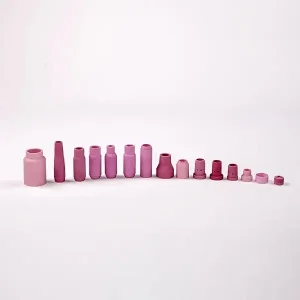
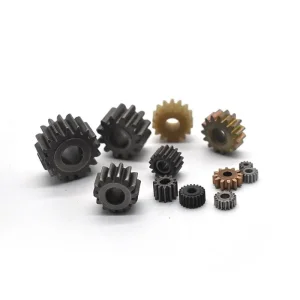
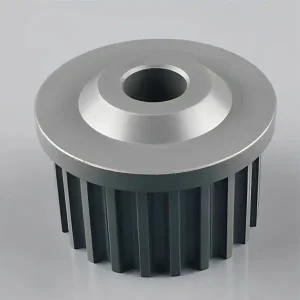
Browse our complete range of specialized industrial solutions, including MIM mechanical elements, iron-based electromechanical parts, micro-gears, and electroplated aluminum panels.





Engineering Questions & Procurement Insights
Detailed technical answers to common queries regarding density limits, tooling lifespans, dimensional tolerances, and material choices in wholesale powder metallurgy manufacturing.