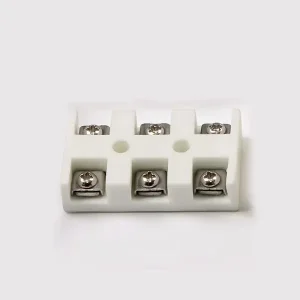
Featured Powder Metal & Precision Components
Explore our engineered sintered metal parts, complex custom geometries, and high-volume structural components manufactured under IATF 16949 & ISO 9001 certified conditions.





1. Executive Summary & Global Procurement Demand Analysis
In modern high-precision engineering, the Powder Metal Sintering Process has transitioned from a traditional cost-reduction strategy to an essential technology for producing complex, structural, and magnetic metal components. Global OEMs across automotive, aerospace, medical devices, robotics, and industrial machinery are increasingly consolidating their supply chains around tier-1 precision powder metallurgy (PM) and Metal Injection Molding (MIM) specialists.
The international demand for wholesale powder metal sintering solutions is driven by three core economic imperatives: material utilization approaching 95%, elimination of multi-axis CNC machining passes, and the unique capability to alloy custom microstructures that are impossible through conventional ingot casting. Global procurement teams require suppliers that not only deliver high-volume piece price advantages but also offer comprehensive Design for Manufacturability (DFM) support, reliable material traceability, and robust quality management systems.
Automotive Sector
High demand for Variable Valve Timing (VVT) rotors, oil pump gears, transmission synchronizer rings, and EV drivetrain components requiring high fatigue strength and wear resistance.
Medical Technology
Biocompatible 316L and 17-4PH stainless steel surgical handle components, endoscopic articulators, and orthodontic brackets produced via micro-sintering and TiMIM.
Consumer Electronics
Complex smart-lock internal cams, foldable smartphone hinges, smartwatch casings, and tactile feedback mechanisms demanding mirror-like surface polishes.
Power Tools & Industrial
Epicyclic planetary gearboxes, impact driver anvils, and heavy-duty structural levers synthesized from high-alloy copper-steels and sinter-hardened grades.
2. Metallurgy, Solid-State Diffusion & Furnace Thermodynamics
The mechanics of powder metal sintering represent a precise synthesis of thermal engineering, chemical equilibrium, and physical metallurgy. Sintering is essentially a thermally activated solid-state bonding process occurring below the primary melting point of the major constituent metal (typically between 70% and 90% of the absolute melting temperature, $T_m$).
Three Core Stages of Sintering Kinetics
When green compacts (formed via mechanical compaction or binder removal in MIM) enter the continuous mesh-belt or vacuum furnace zone, the consolidation progresses through three distinctive stages:
Stage I: Initial Neck Formation
Atomic transport begins at interparticle contact points. Driven by surface energy reduction, neck formation occurs via vapor transport, surface diffusion, and volume diffusion. Dimensional shrinkage is minimal (<1%), but electrical conductivity and mechanical green strength increase exponentially.
Stage II: Intermediate Pore Rounding
As neck growth continues, the original powder boundaries merge into a continuous cylindrical pore network. Grain boundaries form across the necks. High volume diffusion and grain boundary migration trigger significant density growth, resulting in anisotropic dimensional shrinkage (typically 12%–20% in MIM, 0.5%–2% in conventional PM).
Stage III: Final Pore Closure & Isolation
Pore channels pinch off, becoming spherical, isolated voids along grain boundaries or trapped inside grains. Density approaches asymptotic limits (7.2 - 7.6 g/cm³). Controlling grain growth during this stage is vital to preventing pore entrapment, which degrades dynamic fatigue properties.
Atmosphere Chemistry & Carbon Potential Control
Preventing oxidation and controlling surface decarburization requires strict atmospheric equilibrium inside the furnace thermal zones. Industrial sintering environments utilize four dominant gas regimes:
- Endothermic Gas (Endo-gas): Composed of ~40% $H_2$, 20% $CO$, and 40% $N_2$. Carbon potential is precisely regulated via $CO_2$ infra-red analyzer loops or oxygen sensors to match the combined carbon content of iron-copper-carbon alloys (e.g., FC-0208).
- Synthetic Nitrogen-Hydrogen Blends ($90\% N_2 / 10\% H_2$): Offers superior dew-point control (< -50°C), providing an ultra-clean reducing environment for stainless steels (316L, 17-4PH) and low-alloy high-strength steels.
- Pure Hydrogen Atmosphere: Essential for high-reactivity refractory alloys, magnetic soft irons, and titanium MIM (TiMIM), facilitating deep oxide reduction and binder radical removal.
- High-Vacuum Sintering ($10^{-3}$ to $10^{-5}$ mbar): Applied in cold-wall furnace chambers for titanium, nickel-based superalloys, and tool steels sensitive to interstitial gas absorption ($O_2, N_2, H_2$).
3. Comprehensive Sintered Material Specification & Property Matrix
Selecting the correct powder metallurgy alloy grade requires balancing yield strength, ductility, hardness, corrosion resistance, and total processing cost. The table below outlines standard international grades according to MPIF Standard 35 and ISO 5755 standards, manufactured across our facility network:
| Material Class | MPIF / Standard Grade | Sintered Density (g/cm³) | Tensile Strength (MPa) | Yield Strength (MPa) | Hardness Range | Typical OEM Applications |
|---|---|---|---|---|---|---|
| Iron-Copper Steel | FC-0208-60 | 6.8 - 7.1 | 450 - 550 | 380 - 440 | 65 - 80 HRB | Structural gears, automotive oil pump rotors |
| Sinter-Hardened Steel | FLC-4608-110HT | 7.0 - 7.3 | 850 - 1100 | 750 - 950 | 35 - 45 HRC | High-torque transmission sprockets, power tool anvils |
| Austenitic Stainless | MIM-316L | 7.6 - 7.8 | 520 - 600 | 200 - 250 | 140 - 180 HV | Medical surgical instruments, watch connectors |
| Precipitation Hardening | MIM-17-4PH (H900) | 7.5 - 7.7 | 1150 - 1350 | 1050 - 1200 | 38 - 44 HRC | Aerospace latches, high-load gear mechanisms |
| Soft Magnetic Alloy | Fe-50Ni (MIM) | 7.5 - 7.7 | 420 - 480 | 160 - 200 | 120 - 150 HV | Solenoid valves, relay cores, sensors |
| Copper-Infiltrated Steel | FX-1008-110HT | 7.2 - 7.5 | 750 - 880 | 650 - 780 | 28 - 36 HRC | Gas-tight hydraulic valve plates, high-impact caps |
4. Design for Manufacturability (DFM) Rules for Sintered Components
Achieving tight dimensional repeatability without expensive secondary CNC finishing operations requires adhering to strict powder metallurgy DFM principles. Sintering involves thermal shrinkage and tool ejection dynamics that dictate part geometry constraints.
Wall Thickness Uniformity
Avoid rapid transitions between thick and thin sections. Non-uniform cross-sections lead to differential cooling rates, thermal gradients, and distortion during furnace sintering. Maintain minimum wall thickness above 0.8 mm for MIM and 1.5 mm for conventional press-and-sinter parts.
Corner Radii & Chamfers
Sharp internal corners create severe stress concentration points during ejection and thermal contraction. Always specify a minimum internal fillet radius of R 0.38 mm. Outer edges should feature $45^\circ$ chamfers rather than radii to simplify tooling punch geometry.
Draft Angles & Undercuts
Conventional press-sinter tooling cannot eject true perpendicular undercuts; secondary machining or MIM process routes must be selected. For conventional PM pressing, draft angles of 0.5° to 1.0° on outer walls prolong punch die service life.
Tolerance Expectations
As-sintered dimensional capability typically achieves IT8 to IT10 tolerance grades. Incorporating secondary sizing, coining, or CNC grinding passes elevates precision to IT6 - IT7 for critical bearing seats and gear pitch circles.
5. Macro Industry Solutions & Component Case Studies
Our integrated manufacturing hubs provide customized engineering solutions tailored to complex structural challenges faced by Tier-1 OEM vendors worldwide:
Case 1: Automotive Engine VVT Stator & Rotor Assembly
Challenge: Traditional machining from solid steel bar stock resulted in 65% scrap rate and excessive cycle times.
Solution: Converted to high-density ($>7.2$ g/cm³) FC-0208 copper-steel powder compaction followed by sinter-hardening. Integrated complex oil passages directly into the press tooling.
Outcome: 42% cost reduction, 100% dynamic balancing compliance.
Case 2: Minimally Invasive Surgical Endoscopic Jaw Clips
Challenge: Multi-articulating surgical jaw requiring yield strength exceeding 1000 MPa with micro teeth ($0.15$ mm height).
Solution: Custom MIM formulation using 17-4PH stainless steel powder, thermal debinding, and vacuum sintering followed by H900 heat treatment.
Outcome: Delivered ±0.03mm profile precision, zero machining needed.
6. Technological Roadmap & Future Outlook (2025–2035)
The powder metallurgy industry is undergoing a major evolution driven by digitalization, green manufacturing, and hybrid processing technologies:
Metal Binder Jetting (MBJ) Integration
Combining 3D printing speed with standard powder metal furnace sintering. Eliminates tooling costs for medium-volume runs, enabling topological optimization and light-weight internal lattice geometries.
High-Temperature Vacuum Sintering (>1300°C)
Advancing beyond standard 1120°C mesh belt limits. High-temperature processing facilitates complete pore spheroidization and oxide breakdown in chromium and manganese-alloyed low-cost steels.
AI-Driven Closed-Loop Thermal Profiles
Implementing optical pyrometer sensors and continuous machine learning algorithms inside multi-zone sintering furnaces to dynamically adjust conveyor speed and gas flows, maintaining zero thermal variation.
7. Global Operations, Localized Support & Compliance Standards
Operating as an international wholesale manufacturer requires complete alignment with global trade regulations, automotive standards, and environmental frameworks:
Quality Management Systems
Fully audited under IATF 16949:2016 for automotive production and ISO 9001:2015 for industrial manufacturing. Complete PPAP (Production Part Approval Process) Level 3 documentation provided for all OEM projects.
Environmental Compliance
All raw powder materials, lubricants, and binders are 100% compliant with RoHS Directive 2011/65/EU and REACH (EC 1907/2006). Full material safety verification and Conflict Mineral reporting standard.
Logistics & VMI Warehousing
Flexible commercial agreements supporting FOB China, CIF, DDP delivery terms, and localized Vendor-Managed Inventory (VMI) hub buffer stock systems near major industrial regions in North America and Europe.
8. Frequently Asked Questions (Technical & Commercial FAQ)
Complete Sintering & Precision Metal Catalog
Explore our complete catalog of OEM industrial parts, powder granules, sintered gears, and custom hardware modules: