
Direct access to high-density sintered parts, custom die-cast alloys, and Metal Injection Molded (MIM) assemblies engineered to ISO 9001 and IATF 16949 standards.






Technical Executive Summary: State of Modern Powder Metallurgy & MIM Processing
As global OEM manufacturing transitions toward near-net-shape processing, material utilization efficiency, and complex structural geometries, wholesale precision powdered metal parts have become the bedrock of advanced mechanical engineering. Powder metallurgy (PM) and Metal Injection Molding (MIM) replace energy-intensive subtractive machining, delivering substantial unit cost reductions while preserving mechanical integrity.
Metallurgical Fundamentals: Press-and-Sinter vs. Metal Injection Molding (MIM)
Precision powdered metal components are primarily manufactured via two core technology pathways: Conventional Powder Metallurgy (Press-and-Sinter) and Metal Injection Molding (MIM). Selecting the optimal route requires evaluating part volume, geometric complexity, cross-sectional thickness, and target density.
Conventional Press-and-Sinter Metallurgy
In conventional PM, elemental or pre-alloyed metallic powders (such as Fe-Cu-C, Fe-Ni, or stainless steel) are blended with solid organic lubricants. High-tonnage hydraulic or mechanical presses compact the powder inside precision carbide dies at pressures ranging from 400 to 800 MPa.
- Compaction Kinetics: Achieves green density ranging from 6.8 to 7.3 g/cm³.
- Geometric Limits: Ideal for 2.5D geometries, gears, sprockets, timing pulleys, and axial bushings.
- Sintering Mechanism: Continuous mesh-belt furnaces operating under endothermic or dissociated ammonia atmospheres promote solid-state necking between metallic particles.
Metal Injection Molding (MIM) Technology
MIM bridges plastic injection molding versatility with physical metallurgy performance. Fine spherical metal powders (<20 μm, atomized via gas or water) are compounded with thermoplastic and wax binder systems to create a homogeneous feedstock.
- Complex Geometries: Enables internal threads, undercuts, multi-axis cross-holes, and wall thicknesses down to 0.5 mm.
- Thermal Debinding & Sintering: Solvent extraction removes primary wax binders; thermal vacuum furnaces burn out residual polymers and sinter the metal matrix to near-wrought density (>96% to 99% theoretical density).
- Isotropic Shrinkage: Controlled thermal profiles accommodate linear shrinkage factors (typically 15% to 20%) while maintaining strict GD&T precision.
China Supply Chain Advantages: Ningbo Precision Manufacturing Hub
Sourcing wholesale precision powdered metal parts from specialized OEM factories in Ningbo, China provides global enterprises with unexcelled supply chain agility, cost competitiveness, and vertical technical integration.
Raw Material Supply Synergy
Direct proximity to major gas- and water-atomization alloy powder producers guarantees consistent feedstock quality, reduced raw material lead times, and competitive volumetric pricing for iron, stainless steel, and titanium powders.
In-House Tooling & Mold Making
Equipped with high-speed CNC milling, Japanese Sodick wire EDM, and mirror-surface EDM machines, China-based OEM factories manufacture multi-cavity press dies and injection molds in-house within 25 to 35 days.
End-to-End Secondary Finishing
From coining (resizing), vacuum oil impregnation, and steam treatment to CNC precision turning, gear hobbing, heat treatment (carburizing, nitriding), and PVD coating, all operations are integrated under unified quality control.
Process Selection & Material Property Comparison Matrix
To assist procurement specialists and engineering directors in selecting the optimal custom metal manufacturing process, the table below provides benchmarking data across key industrial parameters.
| Manufacturing Process | Typical Materials | Sintered/Part Density | Dimensional Tolerance | Economic Volume (MOQ) | Geometric Flexibility |
|---|---|---|---|---|---|
| Metal Injection Molding (MIM) | 17-4PH, 316L, Fe-Ni alloys, Titanium, Ti-6Al-4V | 7.50 – 7.85 g/cm³ (96%–99%) | ±0.3% to ±0.5% (±0.03mm) | 2,000 – 5,000 pcs | Extremely High (3D complex, micro-features) |
| Press & Sinter (PM) | Fe-Cu-C, FN-0205, Stainless steel, Bronze | 6.40 – 7.20 g/cm³ (82%–92%) | IT 8 to IT 11 (±0.05mm) | 5,000 – 10,000 pcs | Moderate (2.5D stepped profiles, gears) |
| Aluminum / Zinc Die Casting | ADC12, A380, Zamak 3, Zamak 5 | Full Liquid Density (Solidified) | ±0.05mm to ±0.1mm | 2,000 – 5,000 pcs | High (Thin-walled housings, enclosures) |
| Precision CNC Machining | Stainless Steels, Carbon Steels, Brass, Aluminum | 100% Wrought Bar Density | ±0.005mm to ±0.01mm | 100 – 1,000 pcs | Moderate (Tool accessibility constrained) |
| Ceramic Injection Molding (CIM) | Zirconia (ZrO₂), Alumina (Al₂O₃) | >99% Theoretical Density | ±0.3% to ±0.5% | 2,000 pcs | Very High (Wear-resistant, insulating parts) |
Global Enterprise Procurement: Total Cost of Ownership (TCO) & Risk Mitigation
Evaluating wholesale suppliers of precision powdered metal parts extends beyond initial piece-price quotations. Global enterprises require robust supplier selection frameworks that balance engineering risks, tooling amortizations, quality compliance, and long-term delivery reliability.
Design for Manufacturability (DFM)
Every engineering drawing undergoes upfront computer-aided DFM simulation. Mold flow dynamics, sintering shrinkage modeling, and stress distribution analyses are conducted prior to tooling fabrication, preventing costly design revisions downstream.
Tooling Longevity & Maintenance
Using premium tungsten carbide and Japanese SKD11 mold steels, our powder metallurgy presses and injection molds withstand 500,000 to 1,000,000 compression cycles. Routine preventative tooling maintenance is fully guaranteed for life under mass production contracts.
Dual-Sourcing & Buffer Stocks
To hedge against global supply chain disruptions, we establish safety stock inventory programs (VMI/consignment warehousing) and provide localized customer service hubs for North American, European, and Asia-Pacific OEM clients.
Localization Support & International Compliance Assurance
Ensuring total alignment with global quality benchmarks, our manufacturing facility operates under strict international certifications, supported by specialized localized engineering representatives.
Certified Quality Management Systems
Our production facilities are certified according to IATF 16949:2016 (Automotive Quality Management System) and ISO 9001:2015. All metal powders and chemical lubricants comply with European Union REACH and RoHS 3.0 environmental directives.
- Material Traceability: Complete heat-number traceability from raw powder batch to finished shipment.
- Advanced Testing Equipment: In-house CMM coordinate measuring machines, optical projectors, X-ray fluorescence (XRF) alloy analyzers, metallographic micro-hardness testers, and salt spray testing chambers.
- PPAP Documentation: Production Part Approval Process (PPAP Level 3) documentation including FMEA, Control Plans, and Full Dimensional Measurement Reports supplied standard for automotive and medical orders.
Localized Engineering & Logistics Support
We bridge cross-border communications by deploying dedicated English and Japanese-fluent technical account managers. Seamless DDP (Delivered Duty Paid), FOB Ningbo, and CIF global shipping channels ensure stress-free customs clearance and door-to-door delivery.
- NDA Security: Strict Non-Disclosure Agreement (NDA) protocols protect your proprietary 3D CAD drawings and intellectual property.
- Rapid Prototyping: Direct Metal Laser Sintering (DMLS) 3D printing services for rapid prototype verification before committing to permanent tooling.
- Warranty Guarantee: 1-Year comprehensive product defect warranty with immediate expedited replacement support.
Industry Development Trends: Next-Gen Powder Metallurgy Innovations
The global powder metallurgy landscape is undergoing rapid technological evolution driven by vehicle electrification, miniaturization of medical devices, and green manufacturing mandates.
Titanium MIM (TiMIM)
Processing Ti-6Al-4V powder via titanium MIM offers lightweight, ultra-high strength, and biocompatibility for medical implants, aerospace fasteners, and luxury wearables.
EV Soft Magnetic Composites
Soft Magnetic Composites (SMC) with electrically insulated iron powder grains enable high-frequency electric motor rotors and axial flux motors with minimal eddy current losses.
Micro-MIM Technology
Micro-Metal Injection Molding fabricates miniature components weighing under 0.05 grams with sub-millimeter features for endoscopic surgical tools and micro-actuators.
Sinter-Hardening Alloys
Accelerated gas-quench cooling in sintering furnaces eliminates secondary heat treatment steps, producing high-hardness (>45 HRC) structural gears directly from the furnace.
Target Application Scenarios: Where Precision PM & MIM Deliver Maximum ROI
Custom engineered powdered metal components serve demanding environments across major global industrial sectors.
1. Automotive Powertrain & EV Drive Systems
Engine variable valve timing (VVT) rotors, oil pump drive gears, transmission synchronizer rings, EPS steering column gears, and electric vehicle parking lock latches benefit from high fatigue strength and self-lubricating porous microstructures.
2. Medical & Surgical Instrumentation
Stainless steel 17-4PH and 316L MIM components are widely specified for surgical scissors, laparoscopy jaws, endoscopic articulation joints, orthopedic staplers, and dental bracket mounts requiring full corrosion resistance and bio-sterilization capability.
3. High-End Industrial Power Tools & Hardware
Planetary gearboxes, bevel gears, impact driver anvils, ratchet mechanisms, and heavy-duty lock cylinders pressed from high-density nickel-steel alloys absorb severe shock loads and repetitive torque stress.
4. Consumer Electronics & Smart Wearables
Complex 3D smartphone folding screen hinges, smartwatch chassis brackets, camera lens bezel gear trains, and earphone acoustic chambers achieve lightweight structural rigidity with fine cosmetic surface polishing.
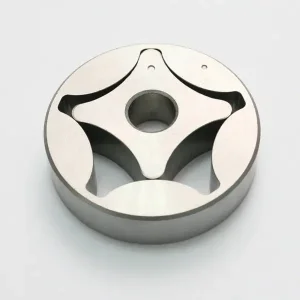
Explore our extended portfolio of sintered steel timing rings, precision oil pump rotors, die-cast aluminum hardware, and custom MIM connectors.





Frequently Asked Questions: Technical Engineering & Procurement FAQ
Addressing common intent queries from engineering teams, sourcing directors, and quality auditors regarding custom powdered metal manufacturing.
Our standard production MOQ is 2,000 pieces for Metal Injection Molding (MIM), 2,000 pieces for CNC / Die-Casting components, and 5,000 pieces for press-and-sinter powder metallurgy gears. Prototype quantities for design validation can be accommodated via 3D metal printing prior to tooling setup.
Upon receipt of your 3D STEP/IGES model and 2D engineering drawing (with material specs and GD&T tolerances), our engineering team returns a complete itemized quotation and free Design for Manufacturability (DFM) review within 48 hours.
Yes. We strictly respect global client intellectual property rights. We execute custom or standard corporate NDAs prior to receiving any proprietary CAD drawings or project documentation.
Standard MIM dimensional tolerances range from ±0.3% to ±0.5% of nominal dimension (e.g., ±0.03 mm on a 10 mm feature). Critical dimensions requiring tighter tolerances (down to ±0.005 mm, such as bearing seats or shaft diameters) are achieved via secondary in-house CNC turning, sizing, or CNC grinding.
Tensile strength, fatigue resistance, and impact toughness scale exponentially with sintered density. Standard PM parts (6.8 g/cm³) provide 80% of wrought steel strength suitable for moderate loads. High-density MIM and warm-compacted parts (>7.5 g/cm³) reach 95% to 99% of wrought mechanical properties, making them ideal for high-torque automotive gears and structural components.
Standard tooling fabrication (including multi-cavity injection molds or carbide pressing dies) and First Article Inspection (FAI) sample production typically require 30 to 35 calendar days. Accelerated 20-day tooling options are available for urgent project deadlines.
Our IATF 16949 quality framework incorporates Statistical Process Control (SPC), automated vision sorting machines, CMM dimensional auditing, and 100% key-dimension checking prior to packaging. Every batch includes chemical composition certificates and FAI dimension reports.