
Featured Precision Sintering & Molded Components
Explore our top-tier wholesale products engineered for high structural integrity, tight tolerances, and seamless integration across automotive, medical, and industrial electronics sectors.



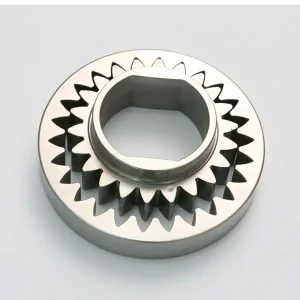

Selective Laser Sintering (SLS): Engineering Mechanics & Powder Metallurgy Synergy
An authoritative analysis of powder bed fusion mechanics, material isotropic characteristics, and how wholesale manufacturers achieve high-volume repeatability.
Selective Laser Sintering (SLS) has evolved from a rapid prototyping medium into a primary industrial manufacturing technology for end-use functional components. Utilizing high-power CO2 or fiber lasers, SLS selectively fuses powdered materials—ranging from engineering thermoplastics like Polyamide 12 (PA12) and Polyamide 11 (PA11) to metallic and ceramic formulations—layer by layer within a tightly regulated thermal chamber. Unlike stereolithography (SLA) or fused deposition modeling (FDM), SLS requires no support structures because the surrounding unsintered powder bed continuously braces complex overhangs, internal channels, and negative geometry during the build process.
Core Advantage for Global OEM Buyers: SLS technology eliminates the requirement for costly injection molding or die-casting tooling while delivering near-isotropic mechanical properties (up to 95% of injection-molded equivalent strength) with standard dimensional tolerances governed by ISO 2768-m.
Comparative Technical Analysis: SLS vs. Alternative Additive & Subtractive Technologies
To assist procurement managers and mechanical engineers in process selection, the table below delineates the critical operational parameters of SLS in contrast with Metal Injection Molding (MIM), Direct Metal Laser Sintering (DMLS/SLM), and conventional CNC Precision Machining.
| Parameter / Feature | Selective Laser Sintering (SLS) | Metal Injection Molding (MIM) | DMLS / SLM (Metal 3D) | CNC Precision Machining |
|---|---|---|---|---|
| Primary Materials | PA12, PA11, TPU, PEEK, Al-filled Nylon | 17-4PH, 316L, Ti-6Al-4V, Low-Alloy Steel | Stainless Steel, Titanium, Inconel, AlSi10Mg | Aluminum alloys, Brass, Steel, Plastics |
| Tooling Cost (USD) | $0 (Direct digital manufacturing) | $5,000 – $25,000 (Hard Molds) | $0 (Direct digital manufacturing) | $0 (Requires fixtures/custom tooling) |
| Geometrical Complexity | Exceptional (Internal voids, lattices) | High (Draft angles & undercuts limited) | Maximum (Requires support removal) | Moderate (Limited by cutter access) |
| Typical Lead Time | 3 to 5 Days | 30 to 45 Days (Tooling + Samples) | 5 to 7 Days | 5 to 10 Days |
| Economic Batch Size | 1 to 5,000 Units | 5,000 to 500,000+ Units | 1 to 500 Units | 1 to 1,000 Units |
China's Factory Supply Chain Advantages in Powder Metallurgy & SLS
How localized manufacturing clusters, integrated material synthesis, and advanced post-processing hubs drive unmatched cost efficiencies and operational speed for global buyers.
Integrated Ecosystems
China's coastal manufacturing hubs (e.g., Ningbo, Shenzhen, Suzhou) consolidate powder atomization, laser equipment assembly, heat treatment, and surface finishing within a 50-kilometer radius, drastically reducing transport lead times and component overhead.
Cost Rationalization
By utilizing localized high-capacity multi-laser powder bed fusion systems and automated powder reclamation loops, Chinese OEMs reduce raw material waste to under 5%, offering end products at 30% to 50% lower unit costs than Western counterparts.
24/7 Rapid Prototyping
Industrial-scale printing farms operate continuously on automated shift patterns. Automated Design for Additive Manufacturing (DFAM) checks allow engineers to evaluate 3D CAD models, issue quotes, and initiate printing within 24 hours of RFQ submission.
Meeting Global Enterprise Sourcing & DFM Requirements
International buyers require rigorous technical vetting, transparent cost breakdowns, zero defect rates, and predictable shipping logistics. Here is how our OEM workflow aligns with enterprise standards.
1. Strict Tolerancing & Post-Processing Standards
While standard as-printed SLS parts achieve Ra 8–12 µm surface roughness, enterprise applications demand smoother finishes. We provide secondary CNC milling, chemical vapor smoothing, bead blasting, and automated mass tumbling to lower surface roughness to Ra < 1.5 µm, fulfilling strict aerospace and medical sealing requirements.
2. Robust Design for Additive Manufacturing (DFAM)
Our engineering team performs automated DFM simulations prior to build setup. Key guidelines include maintaining minimum wall thicknesses of 0.8 mm, designing powder escape holes (> 3.0 mm diameter) for hollow internal geometries, and strategically orienting parts along Z-axes to optimize tensile loads and minimize step-layer staircase effects.
3. High-Batch Repeatability & Material Traceability
Every batch of raw polymer powder or metallic feedstock undergoes melt flow index (MFI) testing, particle size distribution (PSD) analysis, and density verification. Unused powder is strictly blended at calibrated virgin-to-recycled ratios (typically 30/70) to prevent thermal degradation and guarantee consistent structural performance batch after batch.
4. Complete Custom Logistics & IP Protection
Enterprise clients benefit from non-disclosure agreements (NDAs) enforced at all operational levels. Digital files reside on encrypted local servers. Packaging solutions include custom vacuum sealing, anti-static polybagging, and drop-tested export cartons designed for global sea and air freight.
Key Innovations Driving the Future of Sintered Products
Additive manufacturing is rapidly integrating artificial intelligence, advanced high-temp polymers, and circular sustainability models to redefine mass-scale production.
AI Generative Design
Generative algorithms create complex, organic lattice structures that reduce part weight by 30–60% without compromising load-bearing capability. SLS excels at producing these non-geometric, algorithmically derived topologies without tooling limitations.
High-Performance Materials
The adoption of ultra-polymers like PEEK, PEKK, and flame-retardant (UL94-V0) PA12 formulations allows SLS products to replace die-cast aluminum and machined stainless steel in high-temperature, flame-sensitive aerospace and automotive environments.
Vapor Smoothing
Automated chemical vapor smoothing seals surface microporosity, making polyamides completely water-tight and gas-impermeable while boosting elongation-at-break metrics and delivering a glossy aesthetic comparable to injection molding.
Localized Industry Application Scenarios
Selective Laser Sintering and powder metallurgy products serve mission-critical roles across diverse global industries.
Automotive & EV Systems
Applications: Custom air intake manifolds, complex wire harness conduits, fluid reservoirs, and dashboard trim brackets.
Impact: Replaces heavy metallic assemblies with durable glass-filled PA12-GF components, drastically reducing vehicle curb weight and accelerating thermal management prototyping cycles for electric vehicles.
Medical & Patient-Specific Orthotics
Applications: Surgical drill guides, custom orthopedic braces, prosthetic limb sockets, and anatomical study models derived from CT scans.
Impact: Biocompatible PA11 materials (certified under ISO 10993) enable breathable, lightweight, patient-tailored medical devices that enhance healing comfort and fit.
Aerospace & UAV Airframes
Applications: Environmental Control System (ECS) ducting, internal drone structural frames, fuel line brackets, and antenna mounts.
Impact: Flame-retardant polyamide compounds meeting FAR 25.853 requirements allow complex one-piece duct designs that consolidate 10+ sub-assemblies into a single printed component.
Consumer Hardware & Electronics
Applications: Snap-fit device enclosures, rugged power tool handles, complex internal gear mechanisms, and PCB connector housings.
Impact: Enables rapid functional field testing, small-batch market validation, and quick design revisions prior to committing to high-capacity steel injection tooling.
Rigorous Compliance Assurance & Metrology Validation
Our manufacturing plants operate under strict global quality control frameworks, combining automated inspection equipment with standardized material testing protocols.
IATF 16949 & ISO 9001
Full automotive-grade quality control framework covering APQP, PPAP level 3 documentation, FMEA analysis, and statistical process control (SPC) across all sintering build volumes.
CMM & 3D Laser Scanning
High-precision Coordinate Measuring Machines (CMM) and structured-light 3D laser scanners inspect nominal geometry against CAD models to guarantee tight dimensional accuracy.
Material & Environmental Safety
All raw polyamides, metallic powders, and chemical post-processing agents fully comply with EU RoHS, REACH, and California Proposition 65 environmental standards.
Additional Sintered Structural & Die-Cast Components
Browse our extended product portfolio engineered for severe-duty performance, structural rigidity, and precision high-volume manufacturing.






Frequently Asked Questions for Wholesale Sintering Sourcing
Direct technical answers addressing lead times, material performance, DFM considerations, and order fulfillment policies for procurement officers.
What is the minimum order quantity (MOQ) for wholesale SLS parts versus MIM parts?
Because Selective Laser Sintering requires no physical tooling, the MOQ for custom SLS products is as low as 1 unit for prototyping and 50–100 units for batch production runs. Conversely, Metal Injection Molding (MIM) and Die Casting involve custom mold creation, requiring typical MOQs of 2,000 to 5,000 units to amortize initial tooling expenditures efficiently.
How do mechanical properties of SLS PA12 compare to standard injection-molded PA12?
SLS PA12 components achieve approximately 90% to 95% of the tensile strength (typically 45–50 MPa) and flexural modulus of injection-molded polyamide. Because sintering occurs without support structures under consistent nitrogen heat control, directional anisotropy (Z-axis weakness) is kept under 10%, making SLS parts suitable for structural engineering applications.
What post-processing surface options are available for SLS wholesale products?
Standard post-processing includes depowdering, media bead blasting, and automated vibration tumbling. For enhanced aesthetics and performance, we offer chemical vapor smoothing (yielding a smooth, water-tight Ra < 1.0 µm finish), mass color dyeing (black, red, blue, green), electroplating, and protective polyurethane clear-coating.
How fast can I receive a quotation and full DFM feedback for my 3D CAD drawing?
Upon uploading STEP, IGES, or STL files, our engineering team executes automated DFM geometry checks and returns a comprehensive quotation alongside part orientation and wall-thickness feedback within 24 to 48 hours.
What standard dimensional tolerances can be maintained on production orders?
Standard SLS tolerances conform to ISO 2768-m, delivering ±0.15 mm for features up to 100 mm, and ±0.15% for dimensions above 100 mm. For critical mating surfaces or tight pin fits, post-sintering secondary CNC machining can achieve precision tolerances down to ±0.01 mm.