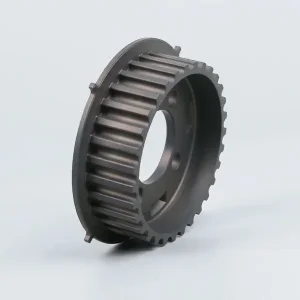
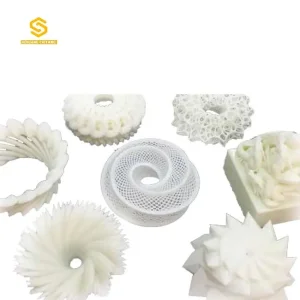
High-Density OEM Sintered Components & Precision Moldings
Explore our core OEM production capabilities including sintered structural gears, high-density MIM components, precision die-cast housings, and custom metal tooling.








Executive Technical Overview: The Evolution of Sintered Structural Components
A comprehensive analysis of near-net-shape metallurgy, high-density pressing technologies, and strategic wholesale sourcing protocols for modern industrial manufacturing.
1. Strategic Paradigm Shift in Structural Metallurgy
In the contemporary global manufacturing landscape, Sintered Structural Components represent a crucial leap in structural engineering efficiency. Traditional subtractive manufacturing—such as multi-axis CNC milling and turning—incurs catastrophic raw material wastage (often generating scrap rates exceeding 60% for complex structural geometries). As global OEMs face compounding pressures surrounding carbon neutrality, supply chain volatility, and margin compression, the wholesale adoption of Press-and-Sinter Powder Metallurgy (PM) and Metal Injection Molding (MIM) has transformed from a cost-reduction initiative into a core strategic necessity.
Sintered structural parts utilize precision alloy powders (Fe-Ni-Cu-Mo, Stainless Steels, Titanium alloys, and copper-infiltrated steels) compacted under ultra-high pressures (ranging from 400 to 1,000 MPa) and thermal-processed below the primary alloy melting point in atmosphere-controlled continuous furnaces. The result is a near-net-shape or net-shape component with mechanical properties directly competing with forged or wrought metals, but produced with unrivaled repeatability and near-zero material waste.
Microstructure Densification
Advanced sintering achieves relative densities up to 98% of theoretical limits. Double-press double-sinter (DPDS) and warm compaction techniques eliminate internal voids, dramatically increasing fatigue life and impact resistance.
Complex Geometry Mastery
Consolidating multi-piece mechanical assemblies into single sintered components. Complex features such as internal helical gear teeth, blind keyways, and multi-level splines are produced effortlessly in a single pressing stroke.
Dimensional Stability
Automated press monitoring with closed-loop feedback systems guarantees strict CPK values (CPK ≥ 1.67) across massive wholesale order volumes exceeding tens of millions of units.
Powder Chemistry, MPIF 35 Standards & Material Benchmarks
High-performance sintered components demand uncompromising control over elemental composition, particle size distribution, and sintering atmosphere conditions.
2. Elemental Alloy Formulation & Performance
The mechanical performance of a sintered structural component is governed by its chemical makeup and phase transformation during the cooling stage of the sintering cycle. Premier Chinese manufacturers leverage atomized steel powders with pre-alloyed or diffusion-alloyed elements:
- Fe-Ni-Cu Alloys (MPIF FN-0205 / FN-0208): Delivers exceptional tensile strength (up to 850 MPa post-heat treatment) and toughness, heavily relied upon in power tool transmission systems.
- Sinter-Hardening Steels (MPIF FLC-4608): Eliminates the need for post-sinter heat treatment by forming a fully martensitic structure during accelerated cooling in the sintering furnace, controlling dimensional distortion.
- Stainless Steels (316L, 17-4PH via MIM): Engineered for aggressive corrosive environments, medical surgical tooling, and high-wear automotive sensors requiring density > 7.5 g/cm³.
- Copper-Infiltrated Steels (MPIF FX-2008): Molten copper penetrates open porosity via capillary action, raising component density, sealing parts against pressure leaks, and boosting tensile limits.
Sintering Thermodynamics & Atmosphere Control
Sintering is not merely drying or gluing; it is atomic diffusion across particle boundaries. State-of-the-art continuous mesh-belt furnaces utilize synthetic vacuum or endothermic gas atmospheres ($N_2 + H_2$ mixtures) to strictly maintain carbon potential and prevent surface oxidation.
Metallurgical Integrity Protocol
Every wholesale batch undergoes metallurgical cross-sectioning to measure micro-hardness (Vickers HV0.5), effective case depth, grain size, and pore geometry distribution in accordance with ISO 4499 and DIN ISO 3927 guidelines.
Comprehensive Metallurgy & Manufacturing Process Matrix
| Manufacturing Technology | Achievable Density | Dimensional Tolerance | Geometric Complexity | Material Utilization | Cost Efficiency (Volume > 10k) |
|---|---|---|---|---|---|
| Powder Metallurgy (PM Pressing) | 6.8 - 7.4 g/cm³ | IT 8 - IT 10 (±0.03 mm) | Medium to High (2.5D geometries) | 95% - 98% | Extremely High |
| Metal Injection Molding (MIM) | 7.5 - 7.8 g/cm³ (96-99%) | IT 7 - IT 9 (±0.02 mm) | Extreme (Complex 3D features) | 90% - 95% | High (Small complex parts) |
| Aluminum/Zinc Die Casting | 2.7 - 6.6 g/cm³ | IT 9 - IT 11 (±0.08 mm) | High (Thin-walled housings) | 85% - 90% | High (Non-ferrous parts) |
| 5-Axis CNC Machining | 100% (Solid Stock) | IT 5 - IT 7 (±0.005 mm) | Very High (Limited by tool access) | 15% - 40% | Very Low (High scrap & wear) |
China Industry 4.0: Supply Chain Resilience & Sourcing Architecture
How Tier-1 global buyers leverage China's advanced manufacturing ecosystems to secure supply continuity, superior quality CPK, and landed-cost optimization.
Automated Press Infrastructure
Leading Chinese OEM factories house fully automated CNC mechanical and hydraulic compaction presses ranging from 20 tons to 1,000 tons (10,000 kN). Closed-loop multi-axial compaction ensures uniform green density even across steep step-level structural changes.
End-to-End Digital Twin QC
Integration of MES (Manufacturing Execution Systems) tracking every batch from raw powder blending to final oil impregnation. 3D Coordinate Measuring Machines (CMM), optical sorting units, and magnetic particle crack detectors eliminate defective units prior to export.
Supply Chain Cluster Synergy
Situated in key industrial hubs (such as Ningbo and Dongguan), manufacturers benefit from immediate proximity to fine chemical suppliers, tooling specialists, heat treatment centers, and deep-water commercial ports like Ningbo-Zhoushan Port.
3. Total Cost of Ownership (TCO) & Global Sourcing Optimization
When procurement managers evaluate wholesale suppliers for sintered structural components, landed unit price is only one vector of the equation. A complete Total Cost of Ownership evaluation accounts for tooling amortization, scrap allowances, lead-time reliability, and international engineering support.
Top-tier Chinese manufacturers now offer comprehensive early-stage Design for Manufacturability (DFM) support. By reviewing STEP files and 2D engineering drawings prior to tooling release, engineers frequently suggest subtle modifications—such as adding slight edge chamfers, eliminating sharp internal radiuses, or combining assembled press-fit parts into a single sintered blank. These DFM optimizations routinely reduce total tooling expenditure by 20-30% while improving structural fatigue limits.
Global Industrial Scenarios & Localized Usage Case Studies
From automotive Variable Valve Timing (VVT) phasers to heavy-duty cordless power tools and medical instruments—sintered components power modern mechanical infrastructure.
Automotive Powertrain & EV Actuators
Automotive OEMs enforce strict IATF 16949 quality standards. Sintered components are universally deployed in Variable Valve Timing (VVT) rotors and vanes, oil pump gears, ABS sensor rings, seat adjustment gearboxes, and EV thermal management valve actuators. High fatigue strength and oil-impregnated self-lubricating bronze bearings minimize friction loss across millions of operational cycles.
Power Tools & Industrial Gearboxes
High-torque cordless impact drivers, hammer drills, and lawn machinery rely heavily on multi-stage planetary gear trains. Sintered spur gears, planet carriers, and internal ring gears manufactured via powder metallurgy absorb violent peak shock loads while maintaining whisper-quiet mesh acoustics through customized tooth surface crowning.
Consumer Electronics & Wearable Hardware
Miniature stainless steel hinges for foldable smartphones, smart lock deadbolts, and camera bracket sliders require intricate shapes that cannot be cost-effectively machined. Metal Injection Molding (MIM) using 17-4PH or 316L provides polished cosmetic surface finishes combined with high surface hardness.
Medical Instruments & Surgical Handles
Biocompatible surgical shears, endoscopic articulators, and dental tool components require 100% corrosion resistance, autoclave sterilizability, and extreme mechanical yield strength. Sintered titanium (TiMIM) and surgical stainless steels fulfill rigorous ISO 13485 regulatory demands.
Frequently Asked Questions & Sourcing Guidance
Direct technical answers to common engineering, procurement, quality assurance, and commercial policy questions.
Due to the specialized setup time of automated compaction presses, die set alignment, and continuous sintering furnace thermal profiling, the typical minimum order quantity (MOQ) is 2,000 to 5,000 units for standard powder metallurgy components, and 2,000 units for Metal Injection Molding (MIM) parts. Prototype runs via 3D metal printing or single-cavity prototype tooling can be arranged for early design validation.
When sintered components undergo secondary densification (such as double-pressing or copper infiltration) or MIM processing, relative density reaches 95% to 98%. At these levels, the tensile strength and hardness match or exceed standard wrought and forged metals (e.g., sintered Fe-Ni-Cu alloy tensile strengths exceed 850 MPa after heat treatment). For extreme load applications, sinter-hardening technology generates fully martensitic grain matrices.
We routinely sign legally binding bi-lateral Non-Disclosure Agreements (NDAs) prior to receiving proprietary 2D/3D CAD drawings (STEP, IGES, PDF). All client engineering files are managed inside encrypted PLM servers with restricted role-based internal access control to ensure complete intellectual property security.
Standard powder metallurgy tooling (die sets, upper/lower punches, core rods) design and CNC/EDM fabrication typically requires 25 to 30 calendar days. First Article Inspection (FAI) sample parts, accompanied by full CMM dimensional measurement reports and material test certificates, are shipped immediately following trial pressing and sintering validation.
Porosity level and pore distribution are governed by initial powder particle sizing, compaction tonnage, and furnace temperature profiles. We utilize Archimedes density testing (MPIF Standard 42), micro-structural image analysis, and oil-impregnation measurement systems (MPIF Standard 57) to guarantee consistent density across all critical gear teeth and structural load zones.
High-Precision Metal Components & Custom OEM Solutions
Browse additional custom components produced in our IATF 16949 and ISO 9001 certified manufacturing facility.