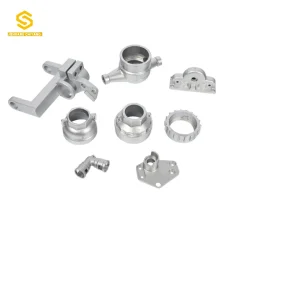
Featured Sintered Metallurgy & OEM Component Catalog
Explore our core engineering capabilities spanning sintered bronze, powder metallurgy, metal injection molding (MIM), and high-precision alloy casting manufactured under ISO 9001 and IATF 16949 quality standards.







1. Global Commercial Status & Macro Industrial Analysis of Sintered Bronze
The global market for sintered bronze components is currently experiencing a profound structural expansion, driven by the aggressive modernization of industrial automation, automotive electrification, aerospace fluid control, and heavy machinery manufacturing. Sintered bronze—a metallic alloy manufactured through high-pressure powder compaction followed by thermal consolidation below the copper melting point—occupies a unique engineering niche. Unlike conventional cast bronzes, sintered bronze possesses a micro-porous matrix capable of being permanently impregnated with liquid synthetic lubricants or engineered dry fluoropolymers.
Market Drivers & Demand Drivers
Global supply chain demand has shifted towards zero-maintenance friction systems. OEM engineering teams are replacing cast bronze bushings requiring external grease points with self-lubricating sintered bronze bearings (such as SAE 841 / CuSn10 grade alloys). This shift eliminates manual servicing costs and environmental contamination risks in food processing, packaging, automotive chassis, and medical diagnostic equipment.
Economic Efficiency vs. Machining
From a financial perspective, powder metallurgy (PM) sintered bronze offers near-net-shape processing with material utilization rates exceeding 95%, compared to 40%–60% for traditional subtractive CNC machining of bar stock. For high-volume enterprise buyers, this yields up to a 45% reduction in total cost of ownership (TCO) across multi-thousand unit order cycles.
Industrial Growth Imperative
The global powder metallurgy bronze market is projected to expand at a compound annual growth rate (CAGR) of 6.2% over the next decade. Strategic growth is localized primarily across Asia-Pacific OEM hubs (China, Japan, South Korea), European precision engineering corridors (Germany, Italy, Switzerland), and North American automotive/defense supply networks.
2. Technical Specifications & Metallurgy Performance Matrix
Sintered bronze properties are dictated by the precise balance of copper-tin powder ratios, compact density, sintering atmosphere, and vacuum oil impregnation profiles. Below is an authoritative technical benchmark matrix according to international standard ASTM B438 and MPIF Standard 35.
| Material Grade | Composition (Wt %) | Density (g/cm³) | Interconnected Porosity | Tensile Strength (MPa) | Max PV Limit (MPa·m/s) | Primary Industrial Application |
|---|---|---|---|---|---|---|
| SAE 841 (Standard) | 88-90% Cu, 9-11% Sn | 6.4 - 6.8 | 18% - 22% (Oil Volume) | 130 - 160 | 1.75 | General Self-Lubricating Bushings, Electric Motors |
| High-Density Sintered Bronze | 89% Cu, 11% Sn | 6.8 - 7.2 | 12% - 16% | 180 - 220 | 2.20 | Heavy-Duty Gear Train Bushings, Hydraulic Pumps |
| Porous Bronze Filter Grade | 90% Cu, 10% Sn (Spherical) | 4.5 - 5.5 | 35% - 50% (Open Air) | 40 - 70 | N/A (Flow Metric) | Pneumatic Silencers, Flame Arrestors, Fluid Filters |
| Bronze-Graphite Composite | 87% Cu, 10% Sn, 3% C | 6.2 - 6.6 | 15% - 20% | 110 - 140 | 2.00 | High-Temperature Dry Running Bearings, Oven Conveyors |
| Leaded Sintered Bronze | 80% Cu, 10% Sn, 10% Pb | 6.6 - 7.0 | 15% - 19% | 120 - 150 | 1.90 | High Sliding Velocity Shaft Supports, Marine Propulsion |
Micro-Porosity & Hydrodynamic Lubrication Kinetics
The operational mechanism of oil-impregnated sintered bronze relies on capillary action and thermal expansion. During rotation, friction generates micro-heat within the bearing contact zone. The trapped lubricating oil expands at a higher coefficient of thermal expansion than the surrounding bronze matrix, forcing oil through interconnected pores directly onto the shaft surface to create a hydrodynamic oil film. When rotation ceases, cooling occurs, and capillary forces draw excess lubricant back into the microscopic pore structure, preventing oil spillage and oxidation.
Atmosphere-Controlled Liquid Phase Sintering
High-performance sintered bronze requires tight atmospheric regulation during the furnace thermal profile. Sintering takes place between 780°C and 840°C in an endothermic gas mixture or dissociated ammonia (75% H₂, 25% N₂). Liquid phase sintering kinetics allow the tin powder component to melt completely and alloy with the copper solid grains, building robust metallurgical necks without collapsing the engineered internal porosity network.
3. Localized & Industry-Specific Application Scenarios
Sintered bronze is engineered into diverse OEM component profiles based on specialized tribological, structural, and filtration needs. Below is an in-depth breakdown of how strategic industrial sectors deploy wholesale sintered bronze components.
Automotive Powertrain & Actuators
Utilized extensively in starter motor bearings, windshield wiper linkages, throttle bodies, electronic park brakes (EPB), and HVAC blower motors. Sintered bronze bearings withstand high vibration, cold starts (-40°C), and high rotational velocities while maintaining silent operation.
Pneumatics & Fluid Filtration
Spherical sintered bronze powder is molded to produce pneumatic exhaust mufflers, inline hydraulic fluid filters, gas diffusers, and sensor protection caps. Controlled micron ratings (from 5 to 100 microns) allow optimal pressure drop control and particle containment.
Medical Devices & Diagnostics
High-purity sintered bronze components function in laboratory centrifuges, surgical table adjustment mechanisms, and peristaltic pumps. Self-lubrication ensures cleanroom compliance by eliminating particulate-attracting wet grease lubricants.
Aerospace & Defense Flight Control
Custom sintered bronze-graphite bushings support landing gear linkages, flap actuators, and cockpit instrumentation controls where extreme thermal variance (-55°C to +180°C) renders regular lubricants non-functional.
Home Appliances & Power Tools
Washing machine drive systems, lawn care power equipment, handheld electric drills, and coffee machine grinders depend on mass-produced sintered bronze flanged bushings for extended service life under cyclic loads.
Industrial Automation & Robotics
Robotic joint pivots, conveyor roller bearings, and automated guided vehicle (AGV) wheel hubs deploy vacuum-impregnated bronze parts for continuous 24/7 duty cycles with zero maintenance intervention.
4. Powder Metallurgy Technology Roadmap & Future Outlook (2025–2035)
As OEM specifications tighten and global environmental regulations evolve, manufacturers of wholesale sintered bronze components are pioneering advanced metallurgical processing routes. The technology roadmap focuses on environmental compliance, microstructural refinement, and hybrid manufacturing integration.
Lead-Free & Eco-Friendly Alloy Formulations
Phasing out traditional leaded bronze alloys (such as CuSn10Pb10) in compliance with EU RoHS and REACH mandates. Development of copper-tin-bismuth (Cu-Sn-Bi) and copper-tin-graphite formulations that deliver equivalent machinability and anti-galling performance without toxic heavy metals.
AI-Optimized Closed-Loop Sintering & Micro-Morphology
Implementation of artificial intelligence (AI) computer vision and thermal sensor arrays inside continuous mesh-belt sintering furnaces. Digital twins actively adjust atmosphere flow and heating zone speed in real time, reducing inter-batch porosity deviation by over 60%.
Binder Jetting Additive Manufacturing for Complex Bronze Geometries
Convergence of 3D metal printing (Binder Jetting) with conventional sintering. Enables internal conformal cooling channels, non-linear capillary pore distribution, and lightweight hollow bronze structures without requiring dedicated compaction tooling.
5. Macro Industry Solutions & Strategic Sourcing Best Practices
Procuring wholesale sintered bronze components at enterprise scale requires rigorous evaluation of manufacturer capabilities, tooling technology, quality assurance protocols, and supply chain logistics. Procurement leaders should align with suppliers who offer turnkey engineering integration from raw powder synthesis to finished assembly.
Design for Manufacturability (DFM)
Early engineering involvement optimizes part geometry for uniaxial powder pressing. Avoiding sharp internal corners, severe wall thickness transitions, and deep undercuts reduces tool wear and eliminates secondary machining operations.
Automated Quality Assurance
Leading manufacturers utilize automated CMM dimensional checking, Archimedes porosity testing (ISO 2738), eddy-current flaw detection, and micro-hardness testing to guarantee zero-defect shipments across million-part orders.
Global Supply Chain Resilience
Establishing buffer stock agreements (VMI), standardized packaging with anti-corrosion VCI liners, and dual-sourcing options ensures continuous production flow against raw material market volatility.
6. Frequently Asked Questions (FAQ) – Sintered Bronze Engineering
Answers to essential technical and commercial questions submitted by B2B buyers, design engineers, and procurement directors searching for wholesale sintered bronze solutions.
Expanded Metal Injection Molding & Precision Parts Solutions
Browse our additional OEM component line, including titanium alloy MIM parts, high-torque powder metallurgy gears, and specialized automotive hardware.